Artist / Band
David Clayton-Thomas
Biography
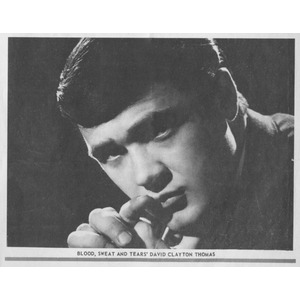
David Clayton-Thomas was one of the most powerful voices ever to emerge from the Canadian music scene, a singer, songwriter, bandleader, and survivor whose life seemed almost impossible in its extremes. Before the Grammy Awards, before Woodstock, before Blood, Sweat & Tears became one of the biggest bands in the world, he was a runaway teenager from Willowdale, living rough in Toronto, learning guitar in prison, and finding his way into music through the hard rhythm-and-blues bars of Yonge Street. His story belongs not only to international rock history, but to the deeper Canadian story of second chances, street-level talent, and the rough, combustible Toronto scene that helped shape him.
Born David Henry Thomsett on September 13, 1941, in Surrey, England, he came to Canada as a child after the Second World War and grew up in the Toronto suburb of Willowdale. His home life was difficult and violent, and by his teens he was on the street, sleeping in abandoned buildings and cars, stealing food and clothing, and moving in and out of reformatories and correctional institutions. Music became the first thing that offered him direction. While incarcerated, he taught himself to play guitar on an old instrument left behind by another inmate and began singing for other prisoners. That rough beginning gave his voice a quality that could not be manufactured: wounded, physical, defiant, and deeply connected to blues and working-class song.
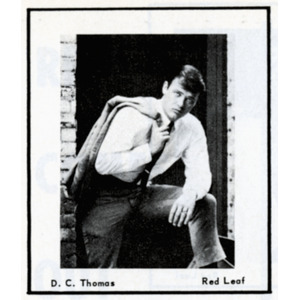
After his release in the early 1960s, he gravitated to Toronto’s Yonge Street strip, then a loud, bawdy stretch of bars, clubs, strip joints, hustlers, travelling workers, and rhythm-and-blues bands. As a teenager, he had watched Ronnie Hawkins and The Hawks at underage matinees at Le Coq d’Or, where young fans could get close to the band even before they were old enough for the night-time bar scene. The Hawks — including musicians who would later become part of The Band — were a revelation. Clayton-Thomas kept pushing for a chance to sing with Hawkins, and when he finally got up with the band, the door opened.
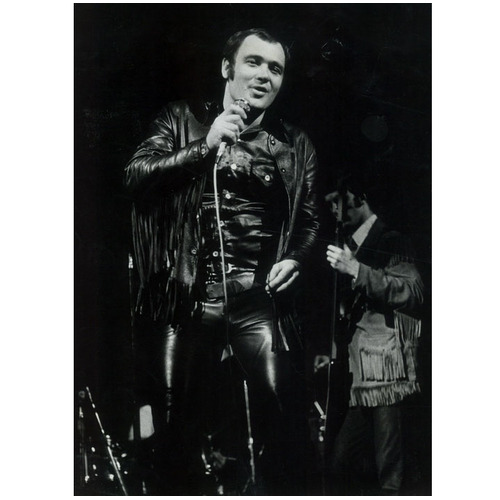
Performing first as Sonny Thomas and then as David Clayton-Thomas, he absorbed the music of John Lee Hooker, Jimmy Reed, Lightnin’ Hopkins, Lonnie Johnson, Sonny Terry and Brownie McGhee, Ray Charles, and the tough bar-band energy of Hawkins and The Hawks. Hawkins recognized his talent, and Clayton-Thomas quickly became known as a leather-clad, Telecaster-playing blues singer with a voice that could stop a room.
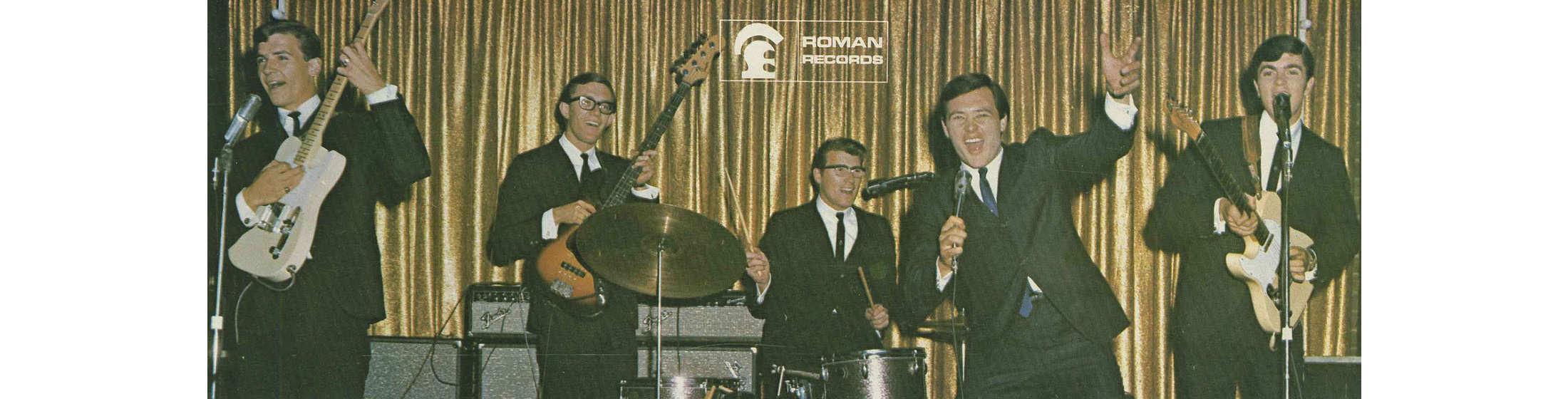
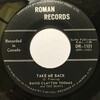
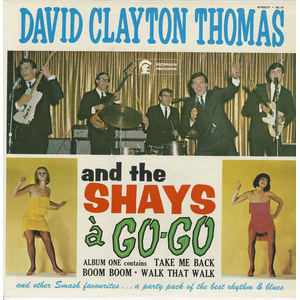
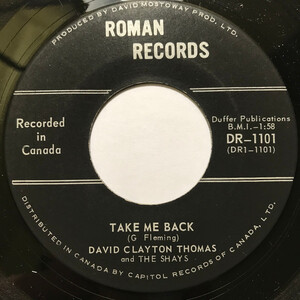
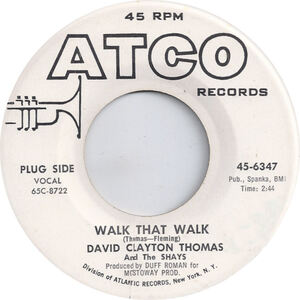
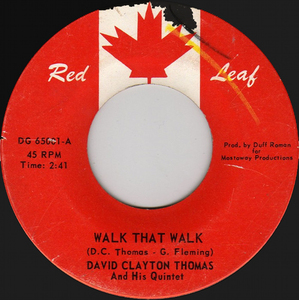
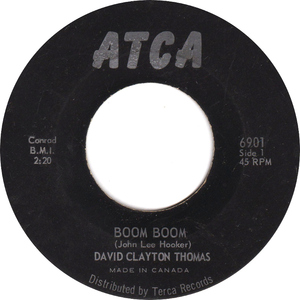
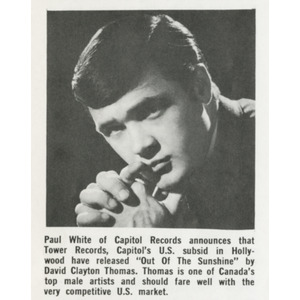
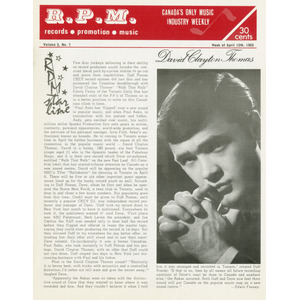
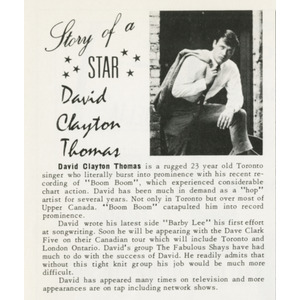
His first major Canadian vehicle was David Clayton-Thomas and The Fabulous Shays, later known simply as The Shays. In 1964, the group recorded a smoky version of John Lee Hooker’s “Boom Boom”, backed with “Hog For You.” It was a regional hit, but more importantly it announced him as a commanding Canadian R&B singer. The Shays followed with further recordings including “Walk That Walk,” “Take Me Back,” and the album David Clayton-Thomas And The Shays À Go-Go. The group appeared on the American television program Hullabaloo, reportedly at the invitation of fellow Canadian Paul Anka, and gave Clayton-Thomas his first real taste of New York. Toronto had given him a stage, but New York showed him the size of the world.
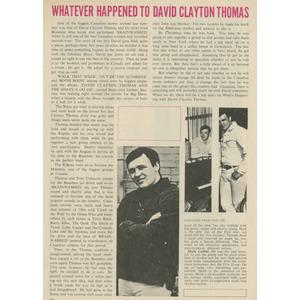
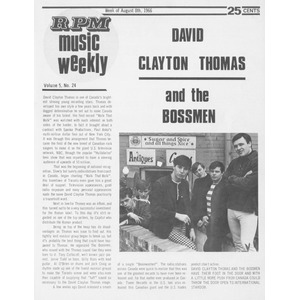
Back in Toronto, he moved increasingly between the Yonge Street bar scene and the Yorkville folk and blues world. Yorkville exposed him to a different kind of musicianship: acoustic blues, jazz players, songwriters, and experimental young performers working outside the straight commercial club circuit. That mix pushed him beyond simple bar-band R&B. His next major group, The Bossmen, became one of the most important but still under-recognized Canadian bands of the period. Featuring musicians such as jazz pianist Tony Collacott, The Bossmen fused rock, blues, R&B, and jazz at a time when few Canadian groups were attempting anything so ambitious.
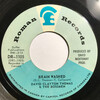
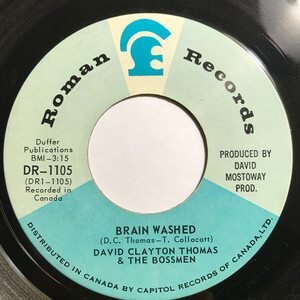
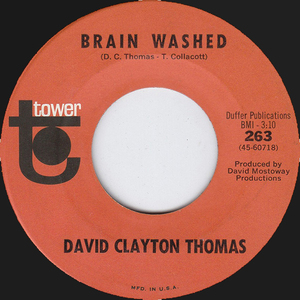
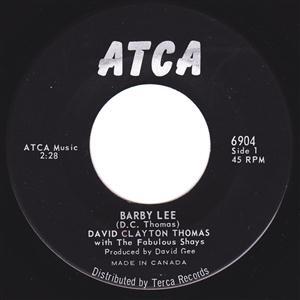
The Bossmen’s defining record was “Brainwashed”, released in 1966 and backed with “Barbie-Lee.” Written as a fierce protest against war, propaganda, and social conditioning, “Brainwashed” was one of the sharpest Canadian protest-rock singles of the decade. Its urgent vocal, jazz piano drive, and garage-rock attack made it far more than a topical novelty. It was an early sign of what Clayton-Thomas would later bring to Blood, Sweat & Tears: the ability to make sophisticated music sound bruising, direct, and emotionally dangerous.
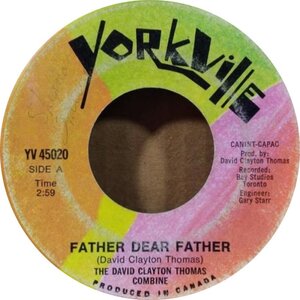
After The Bossmen, he formed The David Clayton-Thomas Combine with former Bossmen guitarist Jack Mowbray. This short-lived group is historically important because it carried the first recorded version of “Spinning Wheel,” issued before the song became an international smash with Blood, Sweat & Tears. Clayton-Thomas later recalled that the song had first been recorded in Canada after “Brainwashed,” only to be rejected because the label wanted another topical hit. He put “Spinning Wheel” back in his guitar case and carried it for years until Blood, Sweat & Tears finally gave it the arrangement it deserved. That Canadian origin matters. “Spinning Wheel” was not simply a Blood, Sweat & Tears hit that happened to have a Canadian singer; it was a David Clayton-Thomas composition rooted in his Toronto years, his Yorkville experience, and the jazz-rock direction he had already been exploring in Canada.
In 1966, while backing John Lee Hooker in Yorkville, Clayton-Thomas was invited to New York to play with him at the Café Au Go Go in Greenwich Village. When he arrived, Hooker had cancelled the engagement and left for Europe, leaving Clayton-Thomas stranded in New York with a guitar, a little money, and no gig. The club still needed someone to fill the date, so he rounded up musicians from the Village and went on anyway. The booking stretched out, and it was there that he came into the orbit of the musicians who would change his life.
Folk singer Judy Collins heard him and recommended him to drummer Bobby Colomby, who was rebuilding Blood, Sweat & Tears after the departure of founding singer, keyboardist, and principal songwriter Al Kooper. The band already had a bold concept — rock music expanded with horns, jazz harmony, and ambitious arrangements — but it needed a frontman with enough force to keep the music from becoming too cerebral. Clayton-Thomas was exactly that. His voice brought heat, danger, and soul to the band’s precision.
The result was the 1968 album Blood, Sweat & Tears, the group’s second album but the first with Clayton-Thomas as lead singer. It became one of the defining records of its era. The album included “You’ve Made Me So Very Happy,” “And When I Die,” “God Bless the Child,” and Clayton-Thomas’s own “Spinning Wheel.” The singles were massive, the album topped the charts, and Blood, Sweat & Tears became an international concert attraction. In 1970, the album won the Grammy Award for Album of the Year, beating one of the most famous fields in Grammy history. With his burly presence and raw, blues-soaked tenor, Clayton-Thomas gave the band its most identifiable voice.
Blood, Sweat & Tears appeared at Woodstock and headlined major venues around the world, including concert halls, festivals, theatres, and arenas. For a brief period, the group stood at the centre of a new kind of popular music: part rock band, part jazz ensemble, part soul revue, part big-band experiment. Clayton-Thomas was not the only reason for the band’s success, but he was the reason many listeners connected with it so immediately. He could make a horn arrangement feel like a street fight and a sophisticated lyric feel like a confession.
The Canadian roots remained present even inside the international hits. Clayton-Thomas later said that “Lucretia Mac Evil” was inspired by the bar girls he encountered on the Ronnie Hawkins circuit around Ontario — the hard-living, sharp-edged characters who populated the same world that had shaped him. There was, as he put it, a Lucretia Mac Evil in every bar. Even at the height of Blood, Sweat & Tears’ American fame, his songs still carried the residue of Ontario clubs, Toronto streets, and the Yonge Street education that had made him.
The band’s success also came with controversy. In 1970, Blood, Sweat & Tears undertook a U.S. State Department-sponsored tour of Eastern Europe, becoming the first major American rock band to perform behind the Iron Curtain. What later emerged was that Clayton-Thomas’s immigration status and criminal record had placed the band under extraordinary pressure. At the time, however, the politics of the arrangement were not understood by fans. To many in the counterculture, the tour looked like cooperation with the Nixon administration, and the backlash badly damaged the band’s image. In later years, members described the situation as coercive and deeply unfair. The episode became a major part of the band’s complicated legacy.
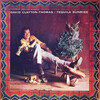
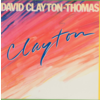
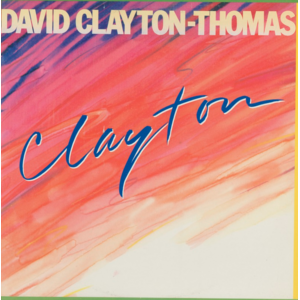
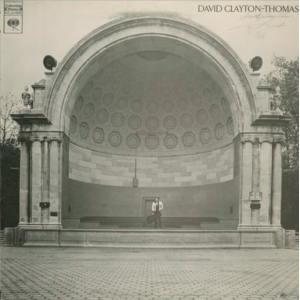
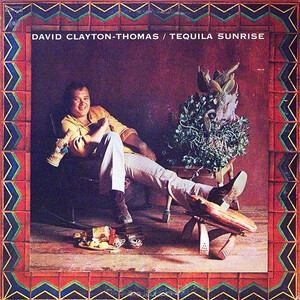
Clayton-Thomas left Blood, Sweat & Tears in 1972, exhausted by touring, internal disputes, and the pressures of fame. He later recalled that the band had become a money-making machine, playing hundreds of nights a year, and that the schedule was destroying him. He returned to solo recording with albums including David Clayton-Thomas, Tequila Sunrise, Harmony Junction, and Clayton, and continued working as a singer and bandleader through the 1970s. He later returned to Blood, Sweat & Tears and eventually became the central figure in keeping the name active on the road. Though the band changed personnel many times, audiences continued to associate its sound with his voice. For many fans, Blood, Sweat & Tears without David Clayton-Thomas was simply not the same band.
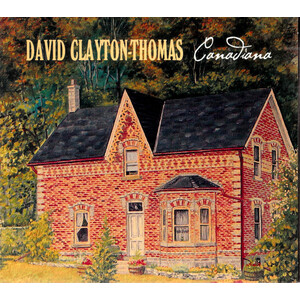
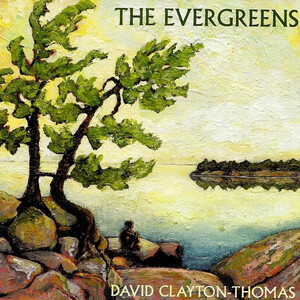
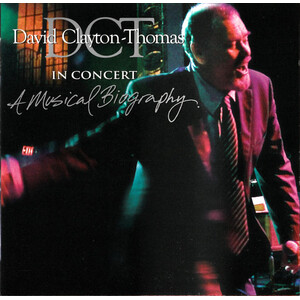
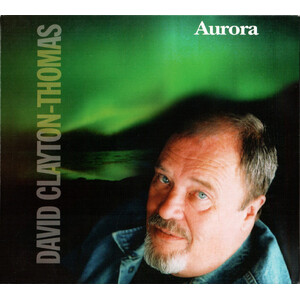
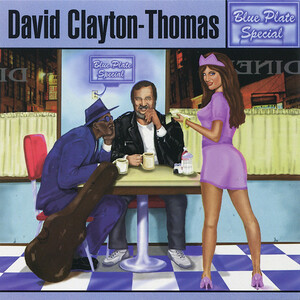
His later career brought him back to Toronto, where he continued recording, performing, and leading large ensembles under his own name. Albums such as Blue Plate Special, The Christmas Album, Aurora, In Concert: A Musical Biography, The Evergreens, Spectrum, Soul Ballads, A Blues for the New World, Combo, Canadiana, Mobius, and Say Somethin’ showed that he remained creatively active long after the classic Blood, Sweat & Tears era. His 2016 album Canadiana was especially meaningful, connecting him back to the country that had shaped him and to a wider Canadian song tradition.
In his later years, Clayton-Thomas also returned directly to the themes that had defined his life before fame. His album Say Somethin’ confronted social injustice, political anger, youth incarceration, gun violence, and the failures of systems that punish young people without understanding them. The song “Burwash” looked back to his own time in the Ontario correctional system, while “The System” addressed the cycle of young people being arrested, released, and pulled back in again. Having survived that machinery himself, he became involved with Peacebuilders Canada, a Toronto organization focused on restorative justice and helping young people avoid deeper involvement with the courts and prisons.
That advocacy gave his story a final kind of purpose. Clayton-Thomas did not romanticize his past, but he understood what it meant to be a young person that society had written off. His music had always carried that knowledge. From “Brainwashed” to “Spinning Wheel” to “Say Somethin’,” he kept returning to the idea that songs could still tell the truth when institutions failed to do so.
Clayton-Thomas received many honours during his lifetime. He was given a special Juno Award for outstanding contribution to Canadian music, was inducted into the Canadian Music Hall of Fame, received recognition from the Canadian Songwriters Hall of Fame for “Spinning Wheel,” entered the Canadian Association of Broadcasters Hall of Fame, and received a star on Canada’s Walk of Fame. Yet the awards only tell part of the story. His deeper importance lies in the path he cut from the margins of Canadian society to the centre of international popular music.
He was also candid about the cost of that climb. His 2010 memoir Blood, Sweat and Tears revisited the violence of his childhood, his years on the street, his incarceration, his hunger for fame, and the damage that ambition sometimes caused in his personal life. Fame, for him, was not simply vanity. It was the thing standing between him and the life he was determined never to return to.
David Clayton-Thomas died in Toronto on June 24, 2026, at the age of 84. He left behind one of the most remarkable arcs in Canadian music: from runaway to reform-school guitarist, from Yonge Street blues shouter to Yorkville experimenter, from The Shays and The Bossmen to Blood, Sweat & Tears, from Canadian garage and R&B singles to Grammy-winning international fame. His voice was huge, but the life behind it was even bigger. He sang like someone who had fought his way to the microphone and knew exactly what silence cost.
-Robert Williston
Tracks
100 tracks
-
Boom Boom
And The Shays À Go-Go (1965)
10 tracks
-
Walk That Walk
-
Take Me Back
-
Stormy Monday
-
Howlin' (For My Darling)
-
Barbie Lee
-
Boom Boom
-
Good Lovin'
-
Tobacco Road
-
Want You I Don't
-
Boss Man
-
Take Me Back
-
Brain Washed
-
Barbie-Lee
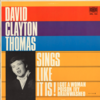
Sings Like It Is! (1966)
10 tracks
-
Brainwashed
-
Who's Been Talkin'
-
I Got a Woman
-
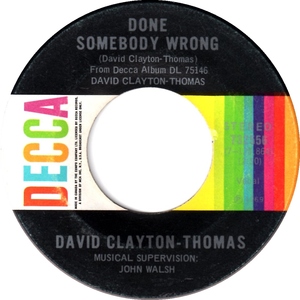
Done Somebody Wrong
-
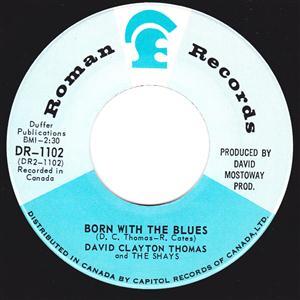
Born With the Blues
-
Hey Hey Hey
-
Out of the Sunshine
-
Send Her Home
-
Lucy
-
Poison Ivy
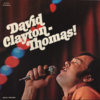
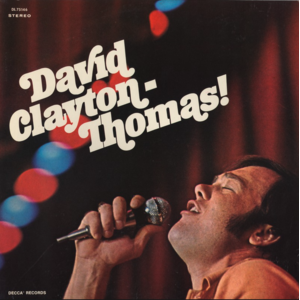
David Clayton-Thomas! (1969)
10 tracks
-
I Got a Woman
-
Say Boss Man
-
Who's Been Talkin'
-
Call it Stormy Monday
-
Done Somebody Wrong
-
Tobacco Road
-
Boom Boom
-
Good Lovin'
-
Poison Ivy
-
Howlin' For My Darling
-
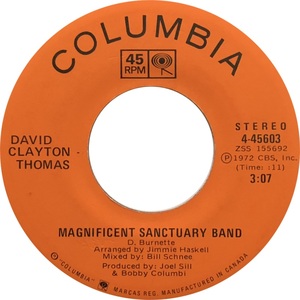
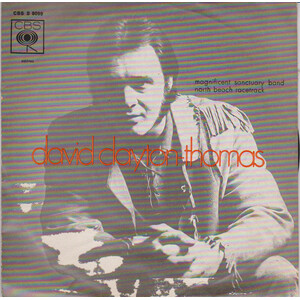
Magnificent Sanctuary Band
-
We're All Meat From the Same Bone
-
Stealin' in the Name of the Lord
-
Dying to Live
-
Sing a Song
-
She
-
Don't Let it Bring You Down
-
Once Burned
-
North Beach Racetrack
-
Caress Me Pretty Music
Tequila Sunrise (1972)
Showing 10 of 12 tracks
-
I Could Just Boogie All Night Long (Intro)
-
Yesterday's Music
-
Friday the 13th Child
-
The Face of Man
-
One More Time Around
-
Down Bound Train
-
Nobody Calls Me Prophet
-
Last Time She Cried
-
Failin' by Degrees
-
My Song (For Geanenne)
-
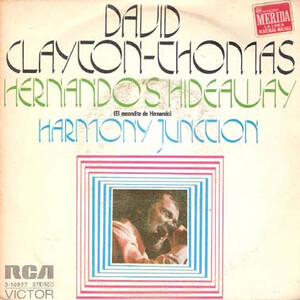
Harmony Junction
-
Workin' on the Railroad
-
Alimony
-
Harbor Lady
-
When Something Is Wrong With My Baby
-
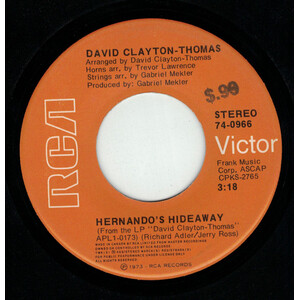
Hernando's Hideaway
-
Sweet Fantasy
-
Small Family
-
Can't Buy Me Love
-
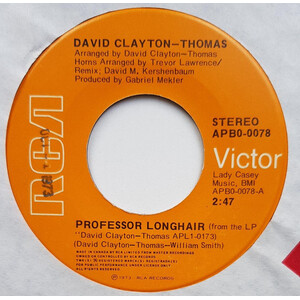
Professor Longhair
Clayton (1978)
10 tracks
-
Laying Down Rock and Roll
-
Fooled Ya
-
Homeward Bound
-
Sweet Sixteen
-
I'm a Free Man
-
Liberated Girls Don't Cry
-
Friday the 13th Child
-
Professor Longhair
-
Sugar Comes from Arkansas
-
Drown in My Own Tears
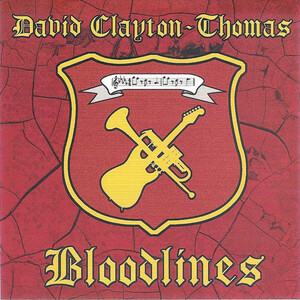
Bloodlines (1999)
Showing 10 of 12 tracks
-
Nawlins Gal
-
Mornin' Blues
-
Dancin' to LaBelle
-
We Tried
-
Biscuit
-
Ashleigh's Song
-
Secretive Child
-
I Can't Complain
-
Verbal Abuse
-
Bobby's Blues
Canadiana (2016)
Showing 10 of 12 tracks
-
Ophelia (Robbie Robertson)
-
Angel (Sarah McLachlan)
-
Sonny's Dream (Ron Hynes)
-
Early Mornin' Rain (Gordon Lightfoot)
-
Far Away Places
-
Heart of Gold (Neil Young)
-
Up Where We Belong (Buffy Sainte-Marie, Jack Nitzsche, Will Jennings)
-
Suzanne (Leonard Cohen)
-
I'll Never Smile Again (Ruth Lowe)
-
Spinning Wheel (David Clayton-Thomas)
Discography
Featured Titles


Albums
Singles

Compilation Tracks
Gallery
Images
21 images
View All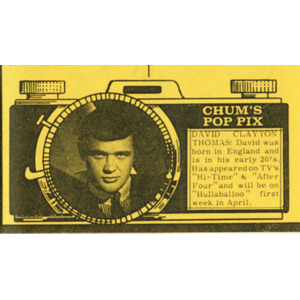
Clayton-Thomas__David_PROMO_005
Clayton-Thomas__David_PROMO_10
Clayton-Thomas__David_PROMO_009
Clayton-Thomas__David_PROMO_007
Clayton-Thomas__David_PROMO_006
Clayton-Thomas__David_PROMO_004
Clayton-Thomas__David_PROMO_003
Clayton-Thomas__David_PROMO_008
Media
Videos
0 videos
No videos available for this artist.