Artist / Band
One Horse Blue
Biography
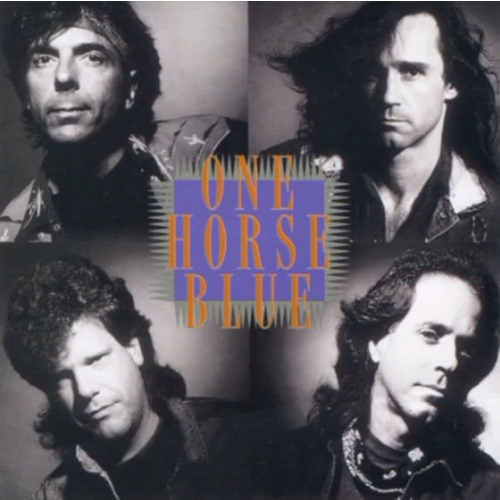
One Horse Blue grew out of Alberta’s late-1970s country-rock circuit, bringing together musicians from several earlier regional bands before developing into one of the province’s better-known country-rock recording acts. Although the group became most closely associated with its albums for Vera Cruz Records, its roots reach back through the Edmonton-area band Pickins and the Drayton Valley group Stonehenge.
Pickins included Michael Shellard, Winston Quelch, Bob Burghardt, Fred Larose, Karen Sunderland and Doug Johnston, while Stonehenge featured singer-guitarist Ian Oscar with David Brisebois, Dennis Brisebois, Derrick Henningsmoan and Drayton Carl. Stonehenge had leaned toward heavier rock influences, but by the late 1970s Oscar had moved into the Pickins circle following Sunderland’s departure. Pickins recorded at Sundown Recording Studio, and when Johnston and Larose later left, Ron Vaugeois joined on drums and Randy Lloyd on bass. That revised lineup became the foundation of One Horse Blue.
The first major version of the band brought together Ian Oscar on vocals and guitar, Michael Shellard on vocals and guitar, Winston Quelch on guitar, Bob Burghardt on pedal steel guitar, Randy Lloyd on bass and vocals, and Ron Vaugeois on vocals and drums. The name carried a double connection: it referred to a horse owned by Oscar’s sister while also nodding to ‘One Horse Blue’, the Paul Cotton song recorded by Poco, one of the country-rock groups whose sound helped shape the band’s early direction.
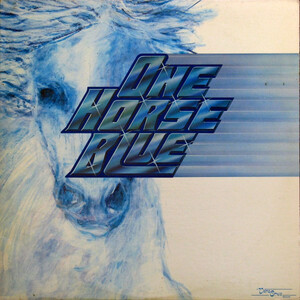
With Edmonton music veteran Wes Dakus involved as producer, One Horse Blue recorded its self-titled debut for Vera Cruz Records in 1978. The album mixed country-rock, harmony vocals, pedal steel and a polished studio sound and produced the Canadian charting single ‘Cry Out for the Sun’. It also included ‘Deliver Me’, written by Edmonton songwriter Gary Bowman. Around the same period, One Horse Blue appeared as the backing group for Shannon Two Feathers on the Dakus-produced album Dreams That Feed a Gypsy.
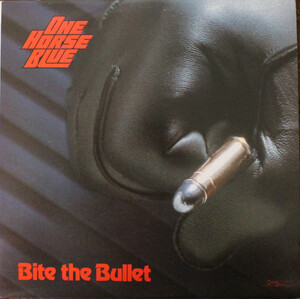
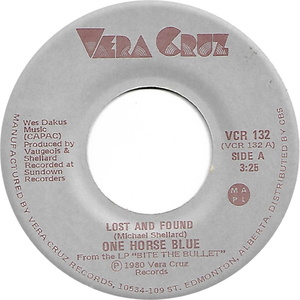
The lineup changed considerably after the debut. Oscar and Quelch departed and subsequently formed The Victory Group, while One Horse Blue continued through another configuration centred around Michael Shellard and Ron Vaugeois. The 1980 album Bite the Bullet reflected that transition, with Shellard and Vaugeois assuming a larger role in the vocals and production. Mavis McCauley joined on keyboards, with Steve Pugsley on bass and Brent Macnab on guitar.
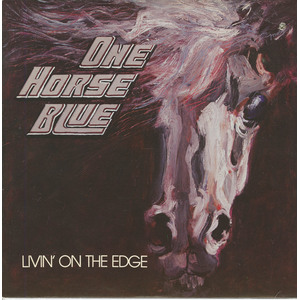
Another reshuffling followed for 1981’s Livin’ on the Edge. Vaugeois remained the principal link with the earlier band, joined by Greg Dunstan on vocals and bass, Denis Vaugeois and James Wright on vocals and guitar, and McCauley on vocals and keyboards. Recorded at Sundown Recorders, the album moved One Horse Blue toward a more streamlined early-1980s rock sound while retaining its country-rock foundation.
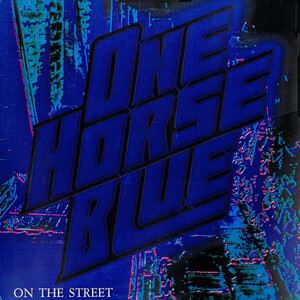
The Vera Cruz period continued with On the Street in 1982, an album that had been overlooked in some later accounts of the band’s history. Bob Burghardt returned on pedal steel, while McCauley assumed a more prominent vocal role and Burghardt handled the lead vocal on ‘Erika’. Vera Cruz ceased operations not long afterward, bringing the first sustained chapter of One Horse Blue’s recording career to an end.
The story did not end in Alberta. In 1987, a new incarnation of One Horse Blue began taking shape in Vancouver. Gord Maxwell later recalled moving there specifically to help form the reincarnated group. Michael Shellard again became a central figure, joined by Maxwell on bass and vocals, Ron Vaugeois — later credited as Rocko Vaugeois — on drums and vocals, and Larry Pink on keyboards. The band began recording independently while developing a distinctly West Coast second chapter.
Evidence of that period survives in a series of recordings made before the group’s eventual signing with Savannah Records. ‘The Man Walks Alone’ appeared independently in 1989, followed by ‘Colors of Love’ in 1990. Those recordings involved Vancouver musicians including guitarist Andreas Schuld and Brent Shindell, and sessions took place at Soundworks, Mushroom, Blue Wave, Ocean Studios and Venture Sound.
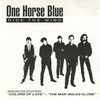
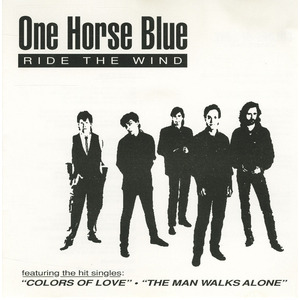
In 1991, One Horse Blue issued the independently released CD single Ride the Wind through Silver Spur Music. The otherwise little-documented release brought together ‘Ride the Wind’, ‘Colors of Love’, and album and edited versions of ‘The Man Walks Alone’, preserving recordings made between 1986 and 1990. ‘Ride the Wind’ featured Rocko Vaugeois on lead vocals, ‘Colors of Love’ featured Gord Maxwell, and ‘The Man Walks Alone’ featured Michael Shellard. The CD also documents Schuld on guitar and six-string bass and Shindell on guitar and mandolin.
By then, the Vancouver incarnation was achieving recognition of its own. The Ride the Wind package identified ‘Colors of Love’ as the British Columbia Country Music Awards Single of the Year and One Horse Blue as the 1991 Group of the Year. The discovery of this release fills an important gap in the band’s history, showing that the later One Horse Blue was already an established recording act several years before its better-known Savannah album.
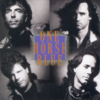
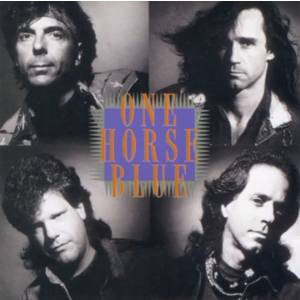
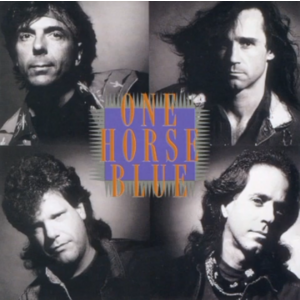
The group subsequently signed with Savannah Records and mounted a national relaunch in 1993. The core lineup consisted of Gord Maxwell, Rocko Vaugeois, Michael Shellard and Larry Pink, with Vancouver session musicians Andreas Schuld, Brent Shindell and steel guitarist Charlie Hase contributing to the recordings. Schuld and John Whitmer wrote the Savannah debut single ‘Starting All Over Again’, produced by Bill Buckingham and introduced nationally to country radio during the summer of 1993.
The resulting album, also titled One Horse Blue, combined new material with songs developed during the preceding independent period, including ‘The Man Walks Alone’ and ‘Colors of Love’. The band’s emphasis on multiple lead singers and close harmony remained central to its sound, with Shellard, Maxwell and Vaugeois each taking lead vocals on different songs.
The Savannah period brought One Horse Blue its widest national recognition. The group received a 1994 JUNO Award nomination for Country Group or Duo of the Year, while the album eventually reached the upper reaches of Canada’s country album chart. In 1995, ‘Hopeless Love’ reached No. 1 on the Canadian country chart, followed later that year by another chart-topping single, ‘Bringing Back Your Love’. Maxwell’s ‘Baby Don’t Cry’ also became a major Canadian country hit.
One Horse Blue toured nationally during this period and appeared on bills with leading Canadian and international country artists. The band toured with Michelle Wright and John Berry, and later photographs document Jim Foster performing with the group as its live guitarist. Foster was not the guitarist on the 1993 Savannah album, a distinction later confirmed by Gord Maxwell.
The band also crossed into film. One Horse Blue appeared in the Canadian feature Harmony Cats, starring Kim Coates, Lisa Brokop, Jim Byrnes and Hoyt Axton, and contributed to performances heard in the film. Their continuing presence on the Western Canadian country circuit included an appearance at the 1996 Big Valley Jamboree in Camrose, Alberta.
The original Alberta-era One Horse Blue reunited on November 10, 2005, during the Edmonton Chamber’s CFR Week Cowboy Cabaret at the Shaw Conference Centre. Fittingly, they appeared on a bill with Poco and Pure Prairie League, two of the American country-rock groups whose music had helped define the musical environment from which One Horse Blue emerged nearly three decades earlier.
The history of One Horse Blue ultimately spans two distinct but connected chapters. The first was an Alberta country-rock band built from the Edmonton and Drayton Valley music scenes of the late 1970s, recording four albums during the Vera Cruz era and changing personnel frequently as its sound evolved. The second grew out of the band’s 1987 Vancouver reincarnation, moving through independent recordings, British Columbia country-music recognition and eventually national success with Savannah Records.
Across both eras, Michael Shellard and Ron “Rocko” Vaugeois provided an important thread of continuity, while a long list of Alberta and British Columbia musicians contributed to the band’s changing sound. From its Drayton Valley and Edmonton beginnings through Vancouver, a JUNO nomination and Canadian country-chart success, One Horse Blue developed a history considerably broader than any one lineup or album — and one that remained rooted in the country-rock tradition that inspired the group in the first place.
-Robert Williston
Tracks
44 tracks
-
One Horse Blue
-
Deliver Me
-
For Reasons
-
You And I
-
Words to Me
-
Cry Out for the Sun
-
Love Like a Fire
-
Brought Up in Jeans
-
Black Time
-
One Horse Blue - Reprise
Bite The Bullet (1980)
10 tracks
-
Turn and Run
-
Blue Room
-
Crazy Fool
-
Bring My Love Around
-
Mr. Soul
-
Some Women
-
Sarah
-
What's a Boy to Do
-
Lost and Found
-
The Hero of the West
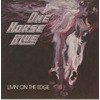
Livin' On The Edge (1981)
8 tracks
-
Some Night
-
Livin' on the Edge
-
Runaways
-
We All Have Our Heroes
-
Let Yourself Go
-
Piece of the Sky
-
Hey, Boy
-
Bluebirds
Ride the Wind (1991)
4 tracks
-
Ride the Wind
-
Colours of Love
-
The Man Walks Alone (album version)
-
The Man Walks Alone (single version)
-
Starting All Over Again
-
Love's Looking for Me
-
Skyrocket
-
Baby Don't Cry
-
Everything Money Can Buy
-
Bringing Back Your Love
-
Don't Lose Sight
-
Devil's Train
-
You're Always Right
-
The Man Walks Alone
Discography
Featured Titles
Albums
Singles
Compilation Tracks

Gallery
Images
1 image
One Horse Blue
Media
Videos
0 videos
No videos available for this artist.