Artist / Band
Ronnie Fray
Biography
Ronnie Fray was born on June 18, 1941, in London, Ontario, into a family with deep musical and recording connections. His grandfather, Reginald Fudge, had performed on vaudeville stages around Southern Ontario, playing saw, fiddle, banjo, and other stringed instruments, while both of Fray’s parents worked at Spartan Records Company Ltd. in London. Fray remembered his father, Arthur J. Fradgley, as a harmonica and spoons player who could also yodel well, giving him an early connection to the mixture of country, novelty, folk, and old-time entertainment that would remain part of his own performing style.
Fray began studying steel guitar as a youngster with Edith Hill Adams on Egerton Street in London. One of the friends who walked with him to lessons was Tommy Hunter, who, like Fray, attended Ealing Public School on Hamilton Road in East London. Fray’s first public appearance came at age 15 with The Middlesex Ramblers, playing steel guitar alongside Larry “Lee” Broderick, Vic Cole, Delmar Schloendorf, and Buddy Henderson. His first paid performance came at the Capitol Theatre in Woodstock, Ontario, where he was pushed forward to sing Elvis Presley songs between movies. The audience reaction changed his direction: he bought an old Harmony guitar from Novak’s Pawn Shop in London and began moving from steel guitar sideman toward singer, guitarist, and frontman.
His first group was The Belaires, featuring Tom Leyes, Bruce Wallis, and Bob Pickle. The band lasted several years before Fray became part of The Capers, the London-based group that gave him his first major touring and recording identity. After Garth Hudson, Paul London, and Gery Risser left The Capers, with Hudson moving on to Ronnie Hawkins’ Hawks, Fray and drummer Clay Highley became central to the reconstituted lineup. The group also brought in Jerry Penfound, who had played organ and saxophone with Ronnie Hawkins, giving the band another connection to the Southern Ontario and Detroit-area club circuit.
Fray’s first road engagement with The Capers came in January 1961 in Sudbury, Ontario. Under Detroit booking agent Jerry Verga of the Varjac agency, the band worked almost constantly through the 1960s, with engagements stretching from Ontario and Michigan to Ohio, Atlantic City, Nashville, Val-d’Or, and even Tokyo. Their first album, Introducing The Versatile Capers, was recorded in April 1963 at United Sound Systems in Detroit, near Motown. A second Capers album, Get Caperized, followed several years later with Michael “Dean” Wilson on organ.
By the mid-to-late 1960s, Fray’s American performing base expanded significantly into West Michigan. He first played Grand Rapids in 1966 at Bob Sullivan’s Shamrock Lounge on Bridge Street N.W., a venue that became central to his U.S. career and helped make Grand Rapids a second home base. During this period, The Capers were working as a compact trio with Fray on guitar and vocals, Alan Clark on bass, and Clay Highley on drums. Fray later played frequently at both the Shamrock Lounge and the nearby Bavarian Inn, appearing as both a solo act and in trio format.
As the group changed personnel, Fray’s name moved increasingly to the front. By the late 1960s, he was touring as Ronnie Fray Capers, again built around Fray and longtime drummer Clay Highley, with Alan “Clark” Eakin on bass. This version recorded the album Why Not? for Detroit’s Sound Records, mixing country, folk-pop, and Fray originals such as ‘Strange Faces’ and ‘Road To Nominewee’. The group’s evolution reflected both Fray’s Canadian club-band roots and his growing connection to the Michigan recording and nightclub circuit.
Fray’s Grand Rapids years became one of the most important chapters in his career. He lived in several area apartments, including above the Bavarian Inn, at Ramblewood Apartments, on 3rd Street N.W., and later in Sand Lake. He worked with local musicians including bassist Hal Beveridge and drummer Tommy Davis, and also brought guitarist and bassist Dale Thomas, known as “Dusty Chaps,” into his Grand Rapids circle after meeting him in Buffalo. His local connections extended beyond performing: through Grand Rapids disc jockey Ed Buchanan, also known as “Uncle Buck,” Fray worked for about two years as a weekend DJ at WJEF, where he played the country-rock and roots music he loved, including Poco, Commander Cody, the Grateful Dead, and New Riders of the Purple Sage. He also recalled interviewing Anne Murray by phone during that period.
Fray also left a small but lasting mark on the West Michigan music scene through his connection to The Common People. While spending time with musicians from the group then known as Lin and the Invaders, Fray suggested they rename themselves after ‘Love of the Common People’, a Willie Nelson song he performed and one that had become a favourite among the band’s circle. He also wrote ‘I Miss Mississippi’, later recorded by Natchez Trace as the flip side of ‘Ole 55’.
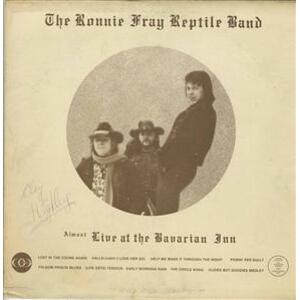
Through the 1970s and into the next decade, Fray continued moving through several recording and performing phases. He recorded for Cinema Sound in Grand Rapids, Michigan, with some material licensed in Canada through Quality Records, and became associated with Kalamazoo label Eastown Wreckerds. One later lineup, The Ronnie Fray Reptile, also referred to as The Reptile Band, featured Fray with Clay Highley on drums and vocals and Hal “Flash” Beveridge on bass and vocals. The group recorded at the Bavarian Inn in Grand Rapids, continuing Fray’s long-running connection to Michigan rooms, regional studios, and working trio formats.
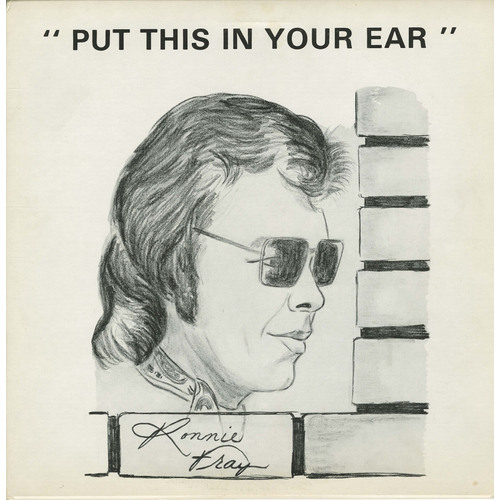
Fray’s album Put This In Your Ear was recorded in Detroit and Memphis and featured original material alongside songs by Delbert McClinton, J.J. Cale, and Michael Martin Murphey. Fray often cited McClinton and Cale as major influences, admiring them as writers and performers. During the 1970s, he also recorded a series of singles, including ‘She Taught Me How To Yodel’ and ‘Road To Nomineui’, the latter reportedly becoming a number one hit in Okinawa, Japan, for nine weeks.
As a working entertainer, Fray’s career reached far beyond the Capers name. He performed throughout Canada, the United States, and overseas, appearing at venues such as Gilley’s in Pasadena, Cain’s Ballroom in Tulsa, the Hollywood Bowl, Antone’s in Austin, the Lone Star Café in New York, Billy Bob’s in Fort Worth, the Royal York Hotel in Toronto, and the Frontier Hotel in Las Vegas. His West Michigan itinerary alone covered a remarkable number of clubs and rooms, including the Westwood Ranch House, Eastown Saloon, Lincoln Lake Pavilion, The Intersection, the Bavarian Inn, and many others.
Fray worked with, opened for, backed, or shared stages with a long list of major artists, including Gus Hardin, Bonnie Raitt, Gregg Allman, Buck Owens, Bobby Bare, Delbert McClinton, Jack Scott, Clarence “Gatemouth” Brown, Alabama, Ronnie Milsap, Leon Russell, Hank Williams Jr., David Allan Coe, Gordon Lightfoot, Ronnie Hawkins, Roy Clark, and Gary Stewart. He appeared on television programs including Austin City Limits with Roy Clark and Clarence “Gatemouth” Brown, and Country Hall of Fame, the Carl Smith-hosted program that preceded The Tommy Hunter Show. He also fronted the Gus Hardin Band on tour and appeared with her on Nashville’s After Hours television show.
In another phase, Fray worked with Dale Thomas and drummer Randy “Panda” Woolery in a short-lived trio called R’ale, with Fray playing bass pedals, guitar, and harmonica. Woolery toured with Fray for several years across the southern United States and into Canada. These later road configurations reflected Fray’s ability to adapt to different rooms, from country clubs and roadhouses to major stages and television appearances.
By the late 1980s, as bar and nightclub work became harder to find in West Michigan, Fray returned to Canada to care for his aging parents. He settled in Sarnia, Ontario, while continuing to perform through Southwestern Ontario and Michigan. Often appearing as a solo act, he was frequently joined onstage by friends and peers, including Bruce Dean, Tony “Lefty” Smith, and Gary McCracken of Max Webster.
Fray later recorded Progressively Basic, his first CD, featuring six of his own “home grown” compositions, including ‘So Goes Another Day’, ‘The Yodeling Song’, and ‘53 Buick Blooze’. The album was recorded in Sarnia and Toronto with contributors including Gary McCracken, Jim Lewis, Al Weiss, Michael “Woody” Woodhull, Dusty Dale Thomas, Tony Bandoni, Dale Rivard, Gregg Chad, George Webber, and Billy Heater. He also reissued Put This In Your Ear on CD, keeping his earlier recordings available to longtime followers.
Across more than four decades, Ronnie Fray built a career around versatility rather than a single genre. He moved between rock and roll, country, blues, western swing, rhythm and blues, yodelling numbers, harmonica features, nightclub showpieces, DJ work, and original songs, while maintaining the working entertainer’s instinct that first shaped him in London and on the road with The Capers. Fray preferred to describe himself as an “entertainer,” a word that fits a career built on live performance, cross-border club work, recordings, television appearances, and the ability to adapt to almost any room.
-Robert Williston
Tracks
12 tracks
Put This in Your Ear (1977)
Showing 10 of 12 tracks
-
Hit the Brix
-
Hawkins Creek
-
Truckers Welcome
-
This Here Song
-
Hard Ridin'
-
Texas Morning
-
I Miss Mississippi
-
Cold Gray Morning
-
How Are Things In Toronto
-
'53 Buick Blooze
Discography
Featured Titles
Albums

Singles
Gallery
Images
1 image
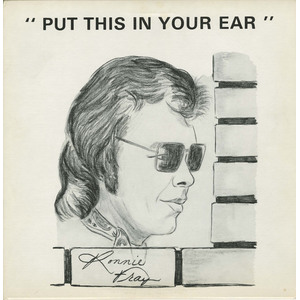
Fray, Ronnie
Media
Videos
0 videos
No videos available for this artist.