Artist / Band
Mac Beattie And The Ottawa Valley Melodiers
Biography
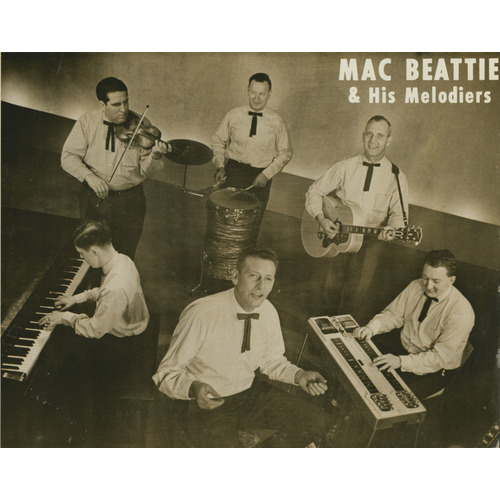
Mac Beattie was one of the defining voices of Ottawa Valley country music, a singer, songwriter, entertainer, and regional folk chronicler whose recordings preserved the places, people, humour, and hardships of eastern Ontario with uncommon warmth and authenticity. Born John McNab Beattie in Arnprior, Ontario, on December 21, 1916, he grew up in the Ottawa Valley and remained deeply rooted there throughout his life, ultimately becoming one of the region’s most beloved and enduring cultural figures. Few Canadian country artists have been so closely identified with a specific landscape. For generations of listeners, Mac Beattie did not simply sing about the Ottawa Valley—he helped give it a musical identity.
Music and hockey were his two early passions. As a young man he organized his first group while still in his teens, developing a style that drew equally from old-time fiddle tunes, community dance music, and the accessible country sound then gaining popularity across North America. Long before his recording career began, Beattie was already known as a natural entertainer, and his use of the washboard—often billed on record sleeves as his “educated washboard”—became one of the most recognizable signatures in his act. That blend of rhythmic novelty, homespun humour, and local storytelling would remain central to his appeal for the rest of his career.
Like many of his generation, Beattie’s early momentum was interrupted by war. The group he formed before the Second World War was disbanded when he entered military service, and he spent three years overseas with the Canadian Army. After returning home, he reassembled the Ottawa Valley Melodiers and by 1948 had resumed performing in earnest, launching the postwar phase of the career that would make him a household name across the Valley and far beyond it.
From the late 1940s onward, Mac Beattie and the Ottawa Valley Melodiers became one of the most visible and widely heard country acts in eastern Ontario and western Quebec. Radio was crucial to their rise. The group was heard regularly on CHOV in Pembroke and CFRA in Ottawa, with other appearances tied to stations such as CKOY and CJET, helping build a loyal audience throughout the Valley’s farming towns, lumber communities, and dance-hall circuit. The Melodiers also became a regular live attraction, appearing at local halls, fairs, resorts, and long-running engagements that made them a fixture of Ottawa Valley social life. For many listeners, they were not just a recording act but a dependable part of the weekly rhythm of regional entertainment.
Television broadened that reach. Beattie and his group were among the early Canadian country performers to make the transition from radio to TV, appearing on programs associated with CBC as well as local and network broadcasts. Their numerous appearances on Don Messer’s Jubilee brought them before a national audience, while exposure through CJOH Ottawa and CTV’s Cross-Canada Barn Dance and The Haylofters further cemented Beattie’s standing as one of the best-known country entertainers to emerge from the Ottawa Valley. These appearances were especially important in an era when Canadian television still played a major role in shaping regional music careers, and they helped position Beattie as a recognizably Canadian counterpart to more commercially oriented Nashville performers.
If Mac Beattie’s public image rested on his warmth, humour, and stage presence, his lasting significance rests just as strongly on his songwriting. He was a prolific and highly localized writer whose songs often functioned as oral history set to melody. Rather than chasing generic country themes, Beattie repeatedly turned to the Ottawa Valley itself—its roads, rivers, villages, taverns, fiddle players, tragedies, and local legends. Songs such as ‘This Ottawa Valley Of Mine,’ ‘Take Me Back To The Madawaska Valley,’ ‘My Renfrew County Home,’ ‘Train Wreck At Almonte,’ ‘Bank Robbery At Cobden,’ ‘The Lanark Fire,’ ‘Lake Dore Waltz,’ and ‘Little Shack Up The Pontiac’ reveal a writer who understood that regional identity could be powerful subject matter in its own right. In that sense, Beattie stands apart from many Canadian country artists of his era: he was not merely performing country music in Canada, he was writing country music that could only have come from a specific Canadian place.
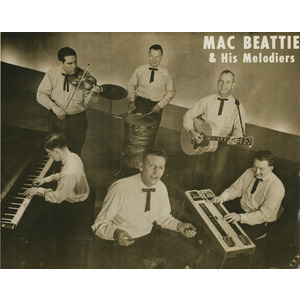
The Ottawa Valley Melodiers themselves were a flexible but highly distinctive ensemble, with several musicians becoming especially important to Beattie’s sound over the years. Among the most enduring was rhythm guitarist Gaetan Fairfield, who joined Beattie in the prewar years and remained one of his closest and longest-serving musical partners. Fiddler Reg Hill was another central figure, bringing the old-time dance tradition directly into the group’s identity. Other key players associated with the Melodiers at various times included Bob Whitney, Bob Price, Tony Miseferi, Gordie Summers, Al Utronki, Jim Mayhew, Ralph Carlson, Hal Mosley, Horace Blanchette, Garnet Scheel, Champ Johnson, and Bill Sheppard. The exact lineup shifted from record to record and from stage to stage, but the core aesthetic remained constant: a lively, community-minded blend of fiddle-led country, dance music, novelty instrumentation, and regional storytelling.
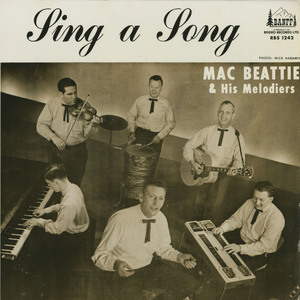
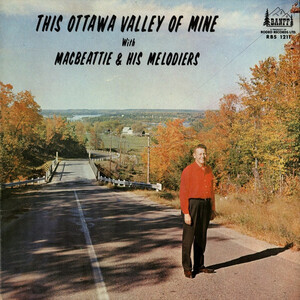
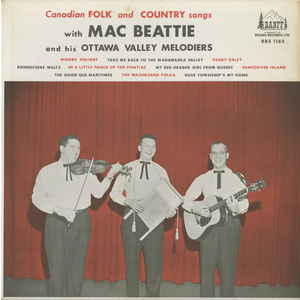
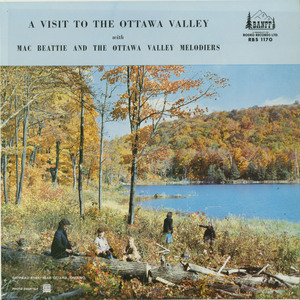
Beattie’s recording career was closely tied to the Canadian independent country industry of the 1950s and 1960s, particularly Rodeo and Banff. His first known commercial release, ‘The Log Driver’s Song,’ appeared in the early 1950s and established him on record as well as on radio. Over the following decades he built a substantial discography of singles and LPs, much of it centered on Ottawa Valley themes. Albums such as A Visit To The Ottawa Valley, Canadian Folk And Country Songs, This Ottawa Valley Of Mine, Sing A Song, and 25th Anniversary form a remarkably cohesive body of work—part regional songbook, part dance-band showcase, part memoir in music. Collectively they document an artist who understood his audience and wrote directly for them, not from a distance but from inside the community itself.
By the time he marked 25 years of public performance in 1968, Beattie was already an institution in Ottawa Valley entertainment. The anniversary album 25th Anniversary explicitly framed him as a veteran performer whose songs and broadcasts had become woven into the social life of the region. Yet even at that point he was not simply trading on nostalgia. His records continued to introduce new songs, often built around contemporary local references, proving that his connection to the Valley was not historical pageantry but a living, ongoing relationship. That continuity—remaining relevant to the same communities over decades—is one of the clearest signs of how deeply he was valued.
Late in life, Beattie extended that documentary impulse beyond records. In 1982, the same year as his death, he published This Ottawa Valley of Mine, an autobiographical volume that gathered memories, songs, and personal reflections, further confirming his importance not only as an entertainer but as a keeper of local history. It stands as an invaluable companion to the recordings and a key source for understanding how Beattie saw his own role within the region he spent a lifetime celebrating.
Mac Beattie died in Arnprior on June 14, 1982, at the age of 65, but by then his stature within Ottawa Valley culture was already secure. In April 1981, Mac Beattie and the Ottawa Valley Melodiers were inducted into the Ottawa Valley Country Music Hall of Fame, and he is widely remembered as one of its foundational honourees. His legacy continued in the naming of the Mac Beattie / Golden Porcupine Award, created to recognize performers who proudly embrace Canadian identity in their music. In Arnprior, his memory remains tangible in local historical recognition and even in the naming of Mac Beattie Drive.
Today, Mac Beattie’s records remain among the clearest musical portraits ever made of the Ottawa Valley. They are charming, humorous, deeply local, and unmistakably Canadian, but they are more than regional curiosities. Heard together, they form one of the most coherent bodies of place-based songwriting in Canadian country music. Whether singing of Renfrew County, the Madawaska, Almonte, Cobden, Lake Dore, or the broader life of the Valley, Mac Beattie preserved a living geography in song. That achievement—part entertainer, part songwriter, part cultural historian—is what makes him such an essential figure in the story of Canadian roots music.
-Robert Williston
Tracks
80 tracks
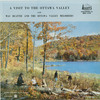
A Visit to the Ottawa Valley (1963)
10 tracks
-
The Log Drivers Song
-
Moonlight Memory
-
Moonshine Mac
-
Blue Laurentians
-
My Renfrew Country Home
-
The Arnprior Centennial Song
-
Lake Dore Waltz
-
Tribute to Frank Martin of Lake Dore, Ont.
-
Little Stubby Toes
-
Such is the Life of a Band
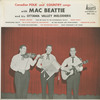
Canadian Folk & Country Songs (1964)
10 tracks
-
The Good Old Maritimes
-
Vancouver Island
-
Miner's Holiday
-
Red Headed Girl From Quebec
-
Paddy Daley
-
The Washboard Polka
-
Take Me Back to the Madawaska Valley
-
In a Little Shack Up the Pontiac
-
Ross Township's My Home
-
Bonnechere Waltz
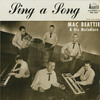
Sing A Song (1965)
10 tracks
-
Sing a Song
-
Just a Little While Ago
-
The Turkey's End
-
Could it Have Been Heaven
-
Rockabye Waltz
-
Maple Sugar Blues
-
The Old Tyme Fiddler's Dream
-
Tonight at My Table All Alone
-
Swingin' at the Hotel Renfrew
-
The Stone Outside Dan Murphy's Door
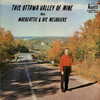
This Ottawa Valley Of Mine (1965)
10 tracks
-
This Ottawa Valley of Mine
-
Sing a Sweet Lullaby
-
Carleton County
-
Saturday Night Up the Gatineau
-
Delta, My Leeds County Home
-
Train Wreck at Almonte
-
Bank Robbery at Cobden
-
The Lanark Fire
-
My Renfrew County Home
-
St. Patrick's Day at Neville's
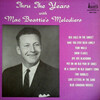
Thru the Years (1967)
10 tracks
-
Put On an Old Pair of Shoes
-
Have You Ever Been Lonely
-
A Shanty in Old Shanty Town
-
Four Walls
-
Tiny Bubbles
-
Snow Flakes
-
Blue Canadian Rockies
-
Love Letters in the Sand
-
Bye Bye Blackbird
-
Red Sails in the Sunset
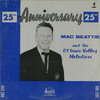
25th Anniversary (1968)
10 tracks
-
A Fiddle, Gee-Tar And Washboard
-
Misery Loves Company
-
Country Music Man "Chuck Davis"
-
The Beaches of Dieppe
-
A Canadian Song of Thanks
-
On the Banks of the Ottawa
-
Northern Ontario Blues
-
Mister Charlie Chamberlain
-
Dream Island
-
Moonlight Memories
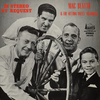
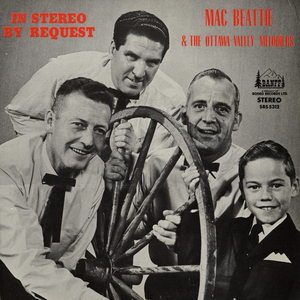
In Stereo By Request (1969)
10 tracks
-
Riding Down To Santa Fe
-
Madawaska Valley
-
Lake Dore Waltz
-
Squaws Along The Yukon
-
The Log Driver's Song
-
Little Shack Up The Pontiac
-
Tonight At My Table All Alone
-
My Red Headed Girl From Quebec
-
Northern Ontario Blues
-
Saturday Night Up The Gatineau
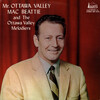
Mr. Ottawa Valley (1971)
10 tracks
-
Snowmobiling
-
A Tribute to Frank Ryan
-
Back in the Pakenham Hills
-
Peter, Peter Pumkin Eater
-
My Happiness
-
Gavon’s Hotel at Quyon, Quebec
-
Michael Patrick from the Mountain, Mary Ellen from the Bay
-
Lamplighting Time in the Valley
-
Autumn Memories
-
Pretty as a Queen
Discography
Featured Titles
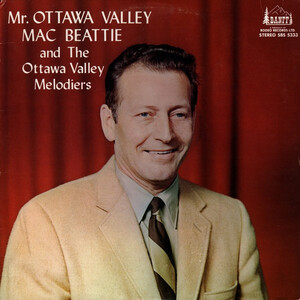
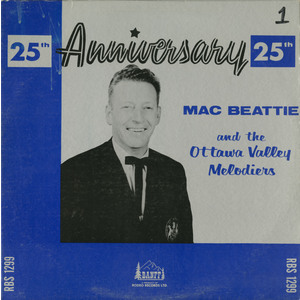
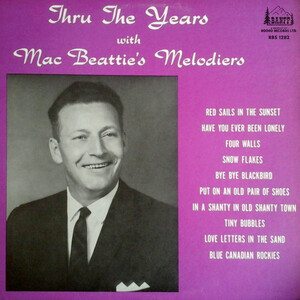
Albums

Gallery
Images
1 image
Mac Beattie
Media
Videos
0 videos
No videos available for this artist.