
Insight
Monkey See emerged from London, Ontario’s late-1980s pop-rock scene with a sound described in local press as danceable, melodic, and carrying “a little bit of an edge.” Fronted by long-haired lead singer David Rusland—whose stage presence drew comparisons to David Lee Roth—the band built momentum quickly after forming, spending nearly a year “stuck in a warehouse writing songs” before ever performing publicly. Their first quiet test run was an incognito night at a bar in Wardville, tightening arrangements before stepping into the spotlight.
That spotlight arrived in the summer of 1988, when Monkey See appeared on CKSL Radio’s nightly Battle of the Bands. They won five straight nights, earning the top local ranking in July, a streak that pushed their debut single, Life’s a Beach, into regular rotation on CKSL. Recorded at Reel Studios and released independently on Auto Records, the track showcased the band’s polished AOR approach, pairing tight rhythm work with what Rusland called an “INXS-type groove with Tubes-style vocals.”
Joining Rusland were Bill Lamont on keyboards and backing vocals, Dave O’Leary on bass, Ted Lamont on guitars, and drummer Bob Roy. Bill Lamont was simultaneously active in other London recording projects, notably the duo Gilded Cage, who themselves won CKSL’s May contest with their Auto Records single Last Time b/w A Feeling I Can’t Hide. His parallel work in Monkey See added another layer of visibility to the Lamont brothers’ presence in the local scene.
Following the success of Life’s a Beach, the band began approaching additional radio stations across Canada, while preparing their next release. Their follow-up single, Living in Twilight, was recorded with producer Peter Brennan and engineer Joe Vaughan at EMAC Studios and continued to build their local profile. Though the group remained primarily a regional act, the CKSL exposure marked their peak moment of city-wide visibility.
Monkey See resurfaced nearly a decade later with a self-titled CD in 1997 on Escape Music, reflecting a more mature melodic-rock sound while maintaining their connection to London’s studio talent. While details on their later years remain sparse, their 1988 singles endure as strong examples of London’s independent rock spirit—melodic, professional, and determined to carve out space on the airwaves.
-Robert Williston
David Rusland: lead vocals, backing vocals
Bill Lamont: keyboards, backing vocals
Dave O'Leary: bass, backing vocals
Ted Lamont: guitars, backing vocals
Bob Roy: drums, percussion
Produced by Dan Benn and Monkey See
Recorded at Reel Studios, London, Ontario
Engineered by Dan Benn
Mastered at The Laquer Channel, Toronto, Ontario
Rear photos by Don Haddy
Sleeve design and front photo by BIZART (Jym Campbell)
Gallery
Images
4 images
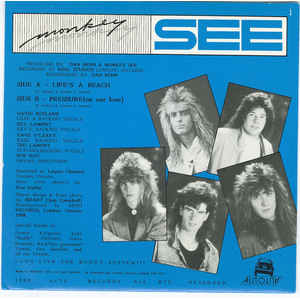
45-Monkey See - Life's a Beach BACK
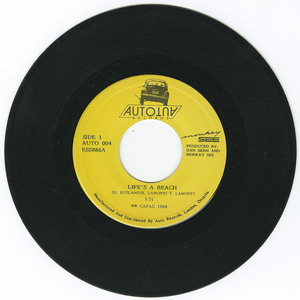
45-Monkey See - Life's a Beach VINYL 01
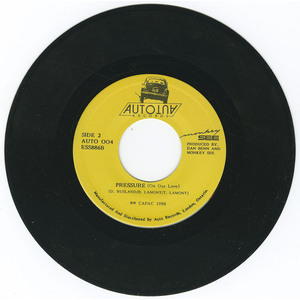
45-Monkey See - Life's a Beach VINYL 02
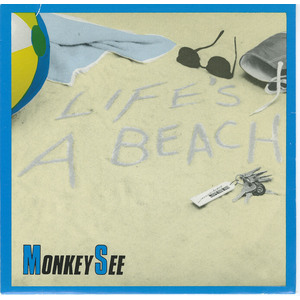
Life's a Beach
Media
Videos
0 videos
No videos available for this title.
Credits
In Transit
No Comments