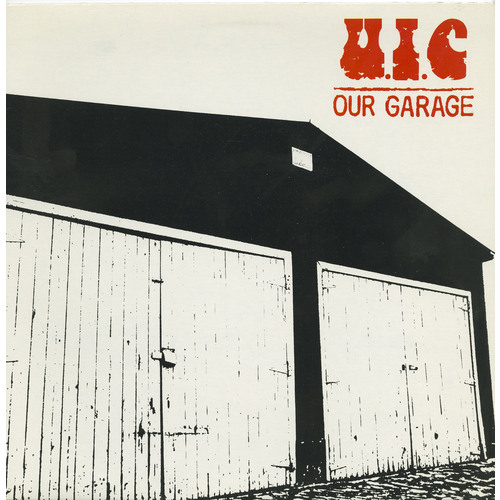
Insight
UIC were one of the most distinctive and difficult-to-categorize garage bands to emerge from southwestern Ontario in the early 1980s, blending raw punk energy, classic rock ’n’ roll instincts, and a distinctly Canadian sense of humour and place. Formed in 1982 in Exeter, Ontario—a small Huron County town just north of London—the band initially adopted the name as an acronym for Unemployment Insurance, a blunt reflection of early-’80s reality, before redefining it as Underground In Canada, a name that ultimately described both their position and their intent.
The group took shape around brothers Dave Robinson (vocals) and Fred Robinson (guitar), joined early on by Ted Triebner (guitar), Dan Preszcator (bass), and Murray Heywood (drums). Though personnel shifted during the formative years, this core lineup defined UIC’s identity: loud, fast guitar rock rooted as much in the Ramones, Iggy Pop, and the Flamin’ Groovies as in classic rock and British punk. Despite frequent association with hardcore scenes, UIC were never a hardcore band. Instead, they emphasized melody, hooks, and relentless forward motion, drawing comparisons to DMZ, Radio Birdman, and other garage revivalists who valued momentum over ideology.
UIC quickly became fixtures in the Exeter, Lucan, and London circuit, building a reputation for chaotic, high-energy live shows marked by physicality, humour, and a refusal to sanitize their sound. As opportunities at home began to plateau, the band relocated to Toronto in late 1984, hoping proximity to a larger scene would translate into broader opportunity. What they encountered instead was a more competitive, fragmented environment—better stages and larger rooms, but also gatekeeping, limited radio support, and a lack of infrastructure for loud, guitar-driven bands operating outside prevailing trends.
Interviews from the period reveal a band sharply aware of these contradictions. UIC were openly critical of Toronto college radio and alternative press for overlooking local bands in favour of imported obscurities or non-musical culture, and they expressed frustration with scenes that talked more than they played. At the same time, they consistently argued for scene solidarity over competition, emphasizing cooperation among garage bands as essential to building anything sustainable. Their philosophy was explicit and repeated: music should be about release and connection, not preaching. While they shared bills with politicized hardcore acts, UIC deliberately positioned themselves around what they called “a good time”—music meant for dancing, not instruction.
UIC’s first recordings emerged during this mid-1980s run, culminating in two albums released in the decade: one studio album and one live document. The studio recordings captured their sharp songwriting and abrasive charm, while the live album—Live / Like Ninety—preserved the unfiltered intensity of their performances, documenting the band at full throttle rather than sanding down their sound for radio or commercial expectations. Songs from this era would later resurface in new studio form, underscoring their durability within the band’s catalogue. Their inclusion on Og Music’s influential It Came From Canada compilation series further situated UIC within a national underground network connecting regional scenes across the country.
By the early 1990s, UIC reconvened to record Witches In Credible (1993), released on DROG Records and distributed by Dave’s Records of Guelph. Recorded at Presence Sound, the album marked a noticeable expansion of the band’s sonic palette. While still grounded in garage rock and punk, Witches In Credible incorporated keyboards, layered backing vocals, and more textured arrangements, reflecting both musical growth and a willingness to experiment without abandoning core identity. The album featured an extended lineup and internal production, with “Stations Fading” appearing as a hidden studio track revisiting material first introduced on Live / Like Ninety.
Following Witches In Credible, UIC entered a long period of dormancy, their legacy preserved largely through zines, flyers, live recordings, and the memories of those who had witnessed their shows firsthand. In 1999, core members regrouped under the name The Chickens, releasing their debut album Prepare To Plug In in 2001, extending the creative lineage rather than severing it. The passing of guitarist Ted Triebner in 2019 underscored how deeply the band’s history was tied to both the Exeter community and the people who built it.
Against expectations, UIC returned in 2020 with FM Hill, their first new album since the 1990s. Recorded between June and December 2019 at Canterbury Music, mixed by Ian Blurton, and featuring Dave Robinson, Fred Robinson, Dave Dysart, Murray Heywood, and Andy Hauber, the album balanced garage grit with expanded arrangements, including horn sections on select tracks. Rather than nostalgia, FM Hill sounded like continuity—older, sharper, and still uninterested in fitting neatly anywhere. Several songs drew directly on the band’s long history, including “Shadow On Your Wall,” originally recorded by The Chickens, and “Honest Can’t Survive,” which traced its lineage back to the band’s earliest writing partnerships.
Across four decades, UIC never chased trends or softened their sound for broader acceptance. Instead, they built a body of work defined by energy, camaraderie, and a stubborn commitment to doing things their own way—whether in small-town halls, Toronto bars, or on record. Their story stands as a clear reminder that some of Canada’s most vital rock music has always existed outside the spotlight, forged where volume, sweat, and conviction mattered more than fashion or industry approval.
-Robert Williston
Musicians
Slack Robinson: guitar, lead vocals
Hack Preszcator: bass, vocals
Houndog Heywood: drums
Ted T.: guitar, vocals
Jim Puddington: organ, piano
Chris Mittleholtz: saxophone
Dave “Smokin’” Robinson: vocals, percussion
Production
Produced by Michael Edward Jackson and U.I.C.
Engineered by Michael Edward Jackson
Recorded and mixed at Mars Studios
Manufactured by Fringe Product
Songwriting
All songs written by U.I.C. except:
“I’m Alive” written by Peter Lucia and Tommy James
Artwork
Sleeve design by Pain Studio
Notes
“I’m Alive” was originally performed by Tommy James & The Shondells.
Issued with a printed inner sleeve featuring lyrics, credits, and artwork.
Gallery
Images
6 images
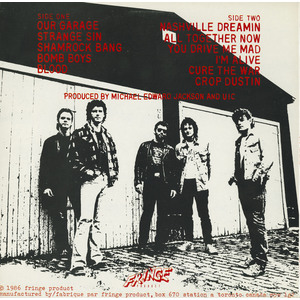
UIC - Our Garage BACK
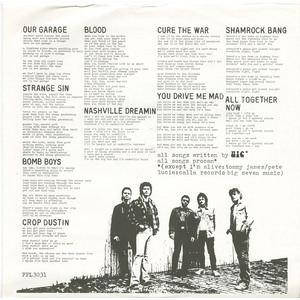
UIC - Our Garage INSERT SIDE 01
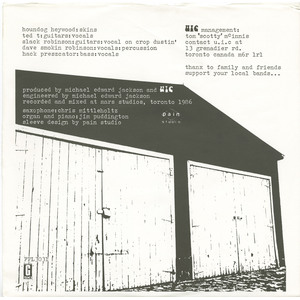
UIC - Our Garage INSERT SIDE 02

UIC - Our Garage LABEL 01
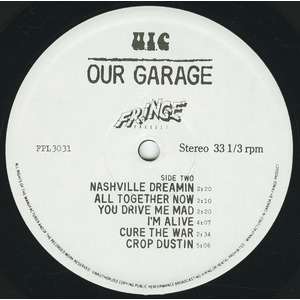
UIC - Our Garage LABEL 02
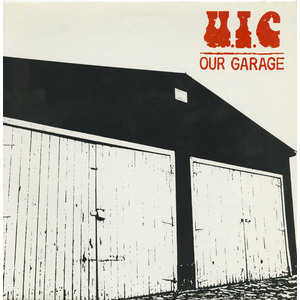
Our Garage
Media
Videos
0 videos
No videos available for this title.
Credits
In Transit
No Comments