
Insight
In the summer of 1969 a four-piece band that had played its first engagement only months earlier, in a London, Ontario club called the Image, held the No. 1 spot on RPM’s national chart and was climbing the Billboard Hot 100. Motherlode’s ‘When I Die’ reached No. 18 in the United States and finished the year as Billboard’s No. 71 song of 1969. Within months of that peak the four men who made it had broken up, and the name they had made famous went on without them.
Steve Kennedy was a native of Windsor, Ontario. He started on piano, switched to saxophone and studied with Bill Sparling. In Toronto in the late 1950s, while working at the brokerage Bache and Co., he struck up a friendship with drummer Peter Groschel over the phone lines between their offices. The two formed the Regents, who became the house band at the Club Bluenote on Yonge Street. Kennedy spent almost five years as leader of the house band there, moving into the Silhouettes, the group Doug Riley led with singer Dianne Brooks.
William ‘Smitty’ Smith was the band’s only American. Born in Virginia on August 30, 1944, he made his debut at the age of nine with a group called the Belltones and worked with bands in Virginia and Delaware before coming to Toronto in 1964. That year he met Kennedy at the Bluenote. In 1966 the two formed the instrumental core of the Soul Searchers, with Smith on Hammond organ behind Dianne Brooks and Eric Mercury. Smith also worked with David Clayton-Thomas and the guitarist Lenny Breau.
Kenny Marco was born in Brantford, Ontario, on February 14, 1947, the son of a music store owner. His family expected him to play accordion like his brothers; he bought a guitar with money from his newspaper route instead. He put together the Galaxies at Pauline Johnson Collegiate, played with the Marque-Royales, and left home at seventeen to tour northern Ontario with the Beau Keys. From there he went to Chicago, joined a band called the Upset and toured Florida, Georgia, California and the Midwest. Wayne ‘Stoney’ Stone, from London, Ontario, started drum lessons at eleven, was playing local gigs at eighteen and moved to Toronto after high school.
All four landed in Grant Smith and the Power, a nine-piece Toronto soul band. Kennedy joined in 1968 and Smith followed later that year, with Marco on guitar and Stone on drums. They played on the band’s album Keep On Running, but the Power’s stock in trade was other people’s hits. "There was no originality happening in that band," Marco said later. Kennedy put it that they wanted to find out whether they had something to say. In early 1969 the four quit and moved to London, Stone’s hometown, where they lived together for about a month and wrote the songs that became their first album.
They had no bass player. Smith’s organ carried the bass lines, and Kennedy’s tenor saxophone and Marco’s guitar together did the work of a horn section, trading lines, harmonies and solos. Smith sang most of the leads, with Kennedy and Marco joining in on vocals. The material drew on rock, blues and jazz. Kennedy described the sound as rooted in jazz and blues, with something in it he heard as Canadian.
‘When I Die’ started at a rehearsal. Smith played a run of chord changes the others liked, and the band built a melody and lyrics on top of them. The song is credited to Kennedy and Smith. For all its title, it is about hope: a man promising to become worthy of the person he loves. Kennedy and Smith are credited with most of the band’s songs, including the B-side ‘Hard Life’, with Marco sharing credit on others and writing ‘Help Me Find Peace of Mind’ on his own.
The songs reached Mort Ross and Doug Riley of Revolution Records, a new Toronto company working out of 31 Prince Arthur Avenue. Ross, 32, was an award-winning jingle producer; Riley, 23, had just arranged and played on Ray Charles’s album Doing His Thing; their partner Terry Brown, 22, was an engineer who had started at London’s Olympic Studios at seventeen. They put Motherlode in the studio almost immediately, and the band made its record before it had done much performing at all.
‘When I Die’, backed with ‘Hard Life’, came out in the spring of 1969 on Revolution’s Revolver label, distributed by Compo. Larry Green played it first, on his early evening show on CHUM-FM in Toronto, and the band credited that airplay with getting it started. It was the first record chosen by the new Maple Leaf System, which carried it to stations across the country. The record soon reached Neil Bogart at Buddah Records in New York, and in July Buddah signed a licensing deal for the United States and the rest of the world outside Canada. "The Motherlode deal represents the most money ever paid by Buddah to a recording group," a Buddah spokesman told RPM.
The record held No. 1 on RPM for two weeks in August, reached No. 5 on CHUM’s chart and peaked at No. 18 on the Hot 100 on October 11, with a No. 12 showing on Cash Box. By November RPM reported sales of about half a million copies. It all happened more than a year before Canadian content rules came to commercial radio.
Buddah rushed out the album When I Die in late August with a heavy advertising campaign, and Revolver issued it in Canada as RLPS 501. Ross and Riley produced and Brown engineered. Along with the hit, its twelve songs included ‘Oh! See the White Light’, ‘You Ain’t Lookin’ in the Right Place Baby’, ‘Help Me Find Peace of Mind’, ‘Hard Life’, ‘Child Without Mother’, ‘Dear Old Daddy Bill’, ‘Soft Shell’, ‘Living Life’, ‘Can’t You Find Love’, Dianne Brooks’s ‘Memories of a Broken Promise’ and a version of the Motown song ‘What Does It Take (To Win Your Love)’. On record the quartet had help: the sleeve credits Carol Kay on bass and acoustic guitar, Dave Young on bass and Paul ‘Mickey’ MacCallum on congas for ‘What Does It Take’, and Andy Cree on percussion for ‘Dear Old Daddy Bill’. Dianne Brooks added background vocals. The album reached No. 93 in Billboard and No. 57 on RPM’s album chart. Motherlode returned the favour by backing Brooks on her own Revolver album, Some Other Kind of Soul.
The band spent the rest of 1969 on the road. They played the Toronto Pop Festival at Varsity Stadium, the Canadian National Exhibition, and the O’Keefe Centre on a bill with the Association. In August they flew west for the Vancouver Pop Festival at Paradise Valley near Squamish, sharing three days with Little Richard, Chicago Transit Authority and Alice Cooper. They appeared at Buddah’s convention in New York, worked colleges and high schools across Canada, and toured the United States, where they opened for Chicago and Janis Joplin. Marco remembered American crowds, California’s above all, as warmer than audiences at home. There were television spots in New York, Cleveland and on the West Coast, and in January 1970 the CBC aired a special with Ian and Sylvia on which the band appeared. On stage they worked their lights and movement into what one writer called a "total environment," and RPM suggested that in an earlier era of Canadian pop they would have been hailed as the country’s first supergroup.
‘Memories of a Broken Promise’, backed with ‘What Does It Take’, followed in the fall. It reached No. 2 on RPM’s Canadian content chart and No. 25 on CHUM but missed the Hot 100. Their label was coming apart at the same time. In October Billboard reported a split among the Revolution partners; Riley and Brown went their own way, and by the end of November Ross had full control of the company.
In November and December 1969 the original quartet recorded a second album. Smith wrote ‘Quality of Leadership’, Kennedy and Smith wrote ‘Been So Long’ and ‘Black Cat’, Marco wrote ‘Righteous Land’, and all four shared credit on ‘Hiro Smothek (Chant)’. They added the 1912 standard ‘Robert E. Lee’ and stretched James Shelton’s ‘Lilac Wine’ to nearly nine minutes. The longer pieces leaned further into jazz than anything on the first record.
The sessions were finished under strain. Marco later said the band believed too much of its earnings were going to management, and that because the musicians and their managers were tied together in the Buddah contract, the four could not simply walk away from one and keep the other. The original Motherlode broke up at the turn of 1970. Revolver owned the name.
Buddah issued the second album in the United States as Tapped Out, BDS 5108, produced by Ross, with back-cover notes by Joel Vance lamenting a band that had not been fully appreciated while it lasted. Sources give its release as either 1970 or 1972. Two decades later DJ Premier and Guru lifted a piece of ‘Black Cat’ for the introduction to Gang Starr’s 1992 album Daily Operation. In Canada, Revolver could not wait for new recordings and went back to the first album for a third single, ‘Dear Old Daddy Bill’ backed with ‘Living Life’. It reached No. 69 on the RPM 100 and No. 20 on RPM’s Canadian content chart in the summer of 1970.
Ross kept the name working. The first new Motherlode kept Smith on keyboards and vocals and added saxophonist Doug Richardson, guitarist Anthony Shinault and drummer Phillip Wilson, late of the Paul Butterfield Blues Band. That lineup lasted a matter of months and made one single, ‘I’m So Glad You’re You (And Not Me)’ backed with the instrumental ‘Whipoorwill’, which peaked at No. 33 on RPM’s Canadian chart in October 1970.
Ross then brought in Gord Waszek of Leigh Ashford to write for the next record. ‘All That’s Necessary’ was cut by a studio group built around Leigh Ashford players, singer Breen LeBoeuf and bassist Mike Levine; its B-side, ‘The Chant’, was the original quartet’s ‘Hiro Smothek’ under a new title. In December 1970 Levine led a touring Motherlode with Wayne St. John on lead vocals, Kieran Overs on guitar, Wally Cameron on percussion and Newton Garwood on organ. They opened in Sudbury and Thunder Bay before working their way through western Ontario, and Garwood told RPM the band had too much music of its own to worry about comparisons with the past. That version did not last either. A final Motherlode came together in March 1971 around former Natural Gas members Dave Berman and Brian Wray, with Brian Dewhurst, Gerry Legault and Joey Miquelon. It recorded nothing, and its members became part of Truck, with Graham Lear joining on drums. Levine later co-founded Triumph, and LeBoeuf eventually joined April Wine.
The original members kept busy. Doug Riley had built a large band for CTV’s The Ray Stevens Show in 1969, and when the show ended it carried on as Dr. Music. Kennedy, Marco and Stone all passed through it. Marco played on Dr. Music’s 1972 debut album, which Kennedy co-arranged, and Stone drummed on Dr. Music II in 1973. Kennedy wrote the band’s ‘Sun Goes By’, a Vancouver hit in 1972. He played with Blood, Sweat & Tears in 1979 and later spent many years in the horn section of the re-formed Lighthouse.
Marco went on to work with David Clayton-Thomas, including the 1972 album Tequila Sunrise, and with Blood, Sweat & Tears. In Los Angeles he recorded with Etta James and Jackie DeShannon and sat in with Doc Severinsen’s Tonight Show band. He eventually settled in Saskatoon, where he played jazz, funk and Brazilian music and recorded with Theresa Sokyrka.
Smith moved to Los Angeles and became a first-call session keyboardist and singer, working with Bonnie Raitt, Linda Ronstadt, the Pointer Sisters, Billy Joel, Robert Palmer, Valdy and Rickie Lee Jones, and on Ry Cooder’s soundtrack for Crossroads. He made two albums of his own, A Good Feelin’ for Warner Bros. in 1976 and Smitty for A&M in 1978, and in the early 1980s sang and played keyboards with Mike Finnigan and the Right Band.
The four came back together more than once. In 1976 they recorded ‘Happy People’, written by Marco and Kennedy, but because the Motherlode name still belonged to someone else, Quality released it as a Kenny Marco single. Late in 1989 the original band played a week at Toronto’s Blue Note under its own name. According to Bill Munson’s notes for the Pacemaker reissue, the four recorded eight new songs in 1990, and none has been released. That February they were booked for the CBC’s thirteen-hour Superthon ’90. Smith suffered a stroke on New Year’s Day 1992, and died of a heart attack in Sherman Oaks, California, in November 1997, at the age of 53.
In 1994 Pacemaker Entertainment put When I Die and Tapped Out back in print together on a single CD. Unidisc followed with a best-of collection in 2008 and a reissue of Tapped Out in 2018. ‘When I Die’ earned the band a BMI Certificate of Honour in 1970 and later a SOCAN award for more than 100,000 radio plays. It has been recorded by the Friends of Distinction, Rob McConnell’s Boss Brass, the Brian Browne Trio, the Sojourners and Dean McTaggart, and in 2011 it was inducted into the Canadian Songwriters Hall of Fame.
Kenny Marco died of cancer in Saskatoon on May 24, 2025, at 78. Steve Kennedy, his bandmate and friend of nearly sixty years, remembered a down-to-earth musician with no need for attention, whose guitar style was instantly recognizable and essential to ‘When I Die’.
-Robert Williston
Gallery
Images
4 images

Motherlode - Tapped Out BACK

Motherlode - Tapped Out

Motherlode - Tapped Out
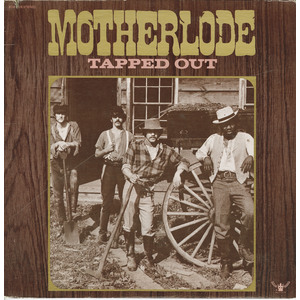
Tapped Out
Media
Videos
0 videos
No videos available for this title.
Credits
Musicians William ‘Smitty’ Smith: organ, piano, vocals Steve Kennedy: tenor saxophone, harmonica, vocals Ken Marco: guitar, vocals Wayne ‘Stoney’ Stone: drums Additional Musicians Carol Kay: bass Dave Young: bass Songwriting ‘Quality of Leadership’ written by William Smith ‘Righteous Land’ written by Ken Marco ‘Been So Long’ written by Steve Kennedy and William Smith ‘Robert E. Lee’ written by Louis Muir and Gilbert ‘Black Cat’ written by Steve Kennedy and William Smith ‘Hiro Smothek’ written by Steve Kennedy, Ken Marco, William Smith and Wayne Stone ‘Lilac Wine’ written by James Shelton Production Produced by Mort Ross Publishing All selections published by Modoo Music (BMI), except: ‘Robert E. Lee’ – LaSalle Music / Alfred Music (ASCAP) ‘Lilac Wine’ – Chappell Music (ASCAP) Liner Notes Motherlode has suffered the fate of many groups: their hit is immortal but they themselves are largely forgotten. Motherlode's fame rests on When I Die, a top ten single released in 1969 and still played on the "golden goodie" segments of pop stations. It is a gorgeous performance, a fine tune and an isolated work of art — isolated because most people who have heard it have not heard the superb body of Motherlode music that surrounds it. These are the basics: Motherlode's original personnel was William "Smitty" Smith (organ, piano, vocals), a black American; Steve Kennedy (amplified tenor sax); Wayne "Stoney" Stone (drums) and Ken Marco (guitar). For recordings, Carol Kay and Dave Young played bass; Kennedy doubled on harmonica. Smitty was generally the lead vocalist, but with the exception of Stone, everyone did vocal work and wrote material. They operated in Toronto, forming out of two disbanded groups, The Power and The Soul Searchers. An independent Canadian rock identity was being established around that time (1968-69) and Motherlode had been together a little over six months when they cut When I Die. The single went "top five" there, "top ten" here; an album was cut, a tour was booked, and everything went fine just before it all went blooey. The tour produced no results, the marvelous first album (BDS 5046) sold middling well but they were unable to come up. There were personnel changes. Motherlode self-destructed, and one of the most promising quartets ever to appear disbanded before their true brilliance was recognized. Motherlode's amazing blend of jazz and rock is probably the most artistically successful attempt ever made to combine the two styles. Most "jazz/rock" groups draw very clear lines as to where one begins and the other leaves off. But Motherlode's mix was delicate, subtle and ferociously swingy. No lines were drawn, and a Motherlode tune flashed jazz and rock back and forth, in and out, up and down, while moving straight ahead. Smitty's organ playing got the best out of the instrument as a rhythm and solo force; he tipped in favor of jazz while Kennedy's exciting, raw-edged sax (also capable of great masculine tenderness) was more rock. Ken Marco and Wayne Stone were tasteful musicians; Marco's trademark was a wild swooping chord pattern as a solo injection in the middle of the rhythm, while Stone's solid work was spiced, on slower numbers, with graceful cymbal patterns. With few exceptions, they wrote their own melodies and lyrics, most of them first-rate — witty, sensitive, inventive and funky. Fans of the perfect first album may have felt, as I did, a sadness in thinking that no more Motherlode was available. But their final efforts has yielded this second LP, recorded in November and December of 1969 at the peak of their power. Eureka, Motherlode! Hail and farewell, Motherlode. Come back, Motherlode. —Joel Vance
No Comments