Artist / Band
Deja Voodoo
Biography
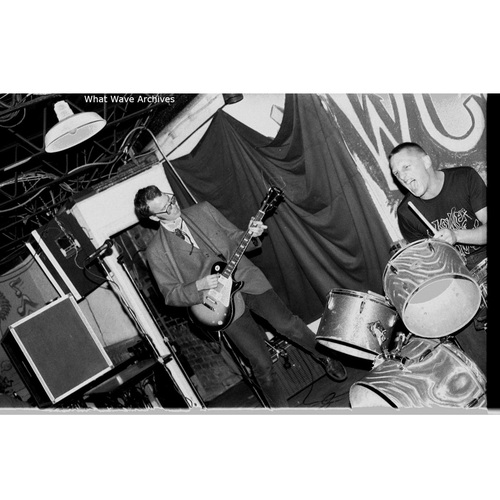
Deja Voodoo were one of the great oddball success stories of Canadian underground music: a two-man Montreal band that sounded like they had crawled out of a haunted garage, built their own label, toured across Canada and Europe, and helped give a generation of strange, noisy, funny, independent Canadian bands a place to be heard.
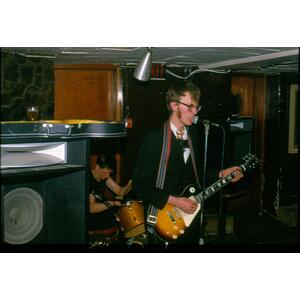
The group was formed by Gerard van Herk on vocals and guitar and Tony Dewald on drums. The two first met in the late 1970s through The Bugle, the student newspaper at Champlain College, where they were part of a circle of friends discovering punk, garage rock, rockabilly, new wave, and records by groups such as the Sex Pistols, Ramones, Undertones, Wire, and The Cramps. After an early version of the band called The Halftones fell apart, van Herk and Dewald stripped the whole thing down to a two-piece. Dewald focused on tom-toms instead of cymbals, while van Herk leaned into the lower strings of the guitar, creating a thick, primitive, low-end sound that was part rockabilly, part garage punk, part swamp blues, part horror movie joke, and entirely their own.
They called it sludgeabilly, a genre they invented for themselves.
It was a perfect word for Deja Voodoo. The songs were short, crude, funny, catchy, and wonderfully wrong-footed, built from bits of early rock and roll, country, blues, R&B, punk, monster movies, bad jokes, cheap beer, and basement-show imagination. Van Herk’s guitar had only four strings, Dewald’s kit had no cymbals, and the band made that limitation into an identity. They did not sound small. They sounded like two people making as much glorious trouble as possible with the least amount of equipment.
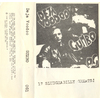
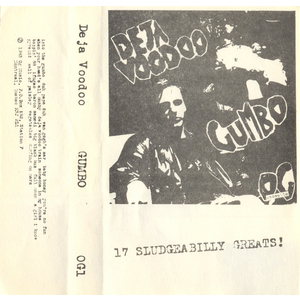
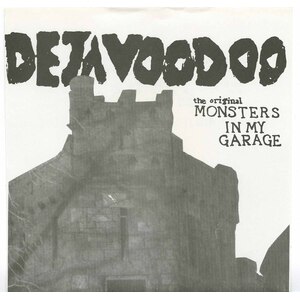
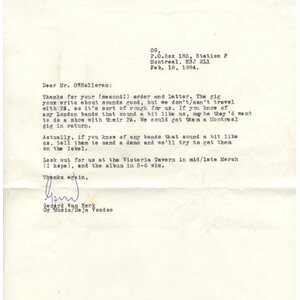
The first Deja Voodoo show took place on St-Laurent Boulevard in Montreal on November 14, 1981. From there, the band worked its way through tiny rooms, rehearsal spaces, strange venues, and eventually the Cat’s Paw on Ontario Street, a small Montreal club that became an important early home. Their first single, “Monsters In My Garage,” captured the spirit immediately: funny, spooky, rough-edged, and direct. By 1983, van Herk and Dewald had founded Og Music, initially as a way to release their own material. The first Og release was the cassette Gumbo, packaged in a 7-inch reel-tape box so it would sit in record-store bins like a proper single. That mix of thrift, humour, and stubborn do-it-yourself logic says a lot about the band.
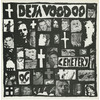
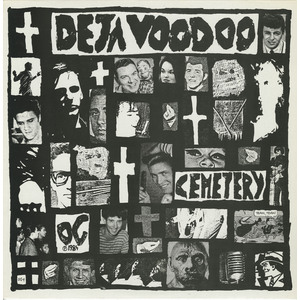
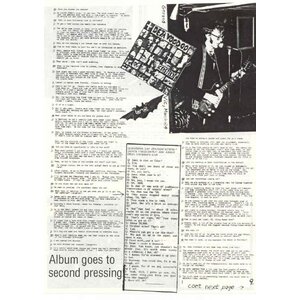
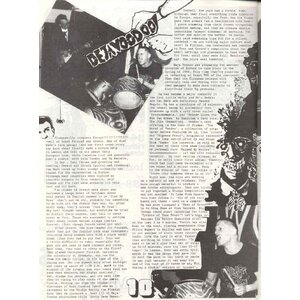
Deja Voodoo’s first full album, Cemetery, was recorded at Studio Secret in Montreal in November 1983 and released in 1984. It helped push the band beyond the local scene, with college radio, reviews, interviews, and touring gradually turning them into a national underground name. The album’s own notes presented the duo as a thumping, strange, blues-country-rhythm act already living inside its own mythology: armed burglars, broken strings, knocking knees, club shows, radio appearances, and a sound that pulled from old rock and roll, garage punk, country, blues, and whatever else they could drag into the graveyard. That year they opened for The Cramps at Club Soda, made two western Canadian trips, started the Deja Voodoo Train tabloid, and even played CBGB’s in New York. Their tours were rarely glamorous. One early western trip involved a used 1959 Edsel, a snowstorm, a snowbank, a missed Saskatoon gig, and a barely surviving drive through Regina, Calgary, and Winnipeg. It was exactly the kind of half-disaster that seemed to fit the band.
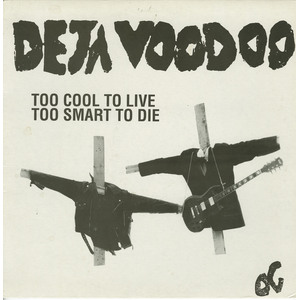
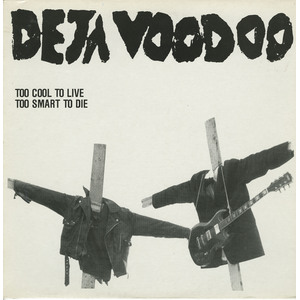
In 1985, Deja Voodoo signed with New York garage label Midnight Records for Too Cool To Live, Too Smart To Die, a mini-album recorded live to tape in Michel Pagliaro’s rehearsal space in Old Montreal. A Canadian Og Music version followed in 1988 as a re-mastered “dirt-floor mix,” with the bonus track “Lonely Motel.” Around the same time, Og Music began growing into something larger than a vanity label. It released records by The Asexuals, Jerry Jerry and the Sons of Rhythm Orchestra, The Gruesomes, The Dik Van Dykes, UIC, The Ripcordz, The Vindicators, and many others. What began as a way to put out Deja Voodoo records became one of the most important Canadian independent labels of the 1980s.
The label’s best-known project was the It Came From Canada compilation series, which ran through five volumes and helped connect garage, punk, roots, surf, psychobilly, and outsider rock bands from across the country. In the pre-internet era, these records mattered. They moved music from city to city, got bands onto college radio, introduced scenes to each other, and helped create a national underground conversation. Deja Voodoo were not just making records. They were building infrastructure.
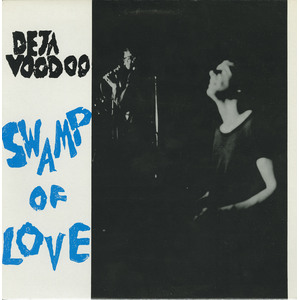
At the same time, the band kept touring and recording. Swamp Of Love, released in 1986, was recorded at Og Studio in Montreal and pushed the sludgeabilly idea deeper into blues, gospel, punk, country, rockabilly, garage rock, R&B, and basement weirdness. The record caught the duo at one of their strongest points: still raw, still funny, but broader and more confident in the kind of old-record theft, mutation, and reinvention that had become central to their style.
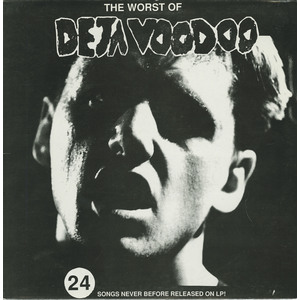
In 1987, The Worst Of Deja Voodoo gathered 24 “missing” songs from across the band’s early years, including material that had appeared on cassettes, odd compilations, bootlegs, and their first 45. It worked less like a normal compilation than a secret history of the band: early monster songs, surf and garage fragments, psych-punk jokes, swampy blues, and the kind of tracks that were too weird, too different, or too difficult to clear for earlier releases. In some ways, it may be the purest document of Deja Voodoo’s private universe.
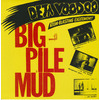
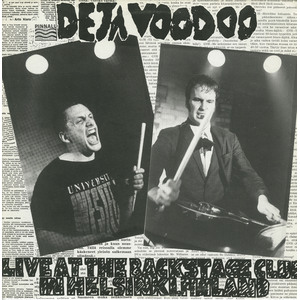
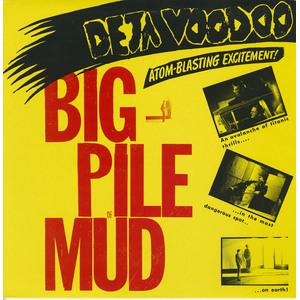
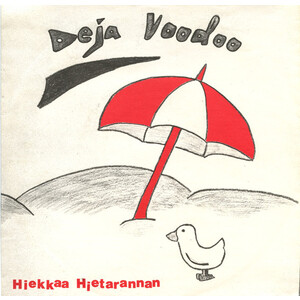
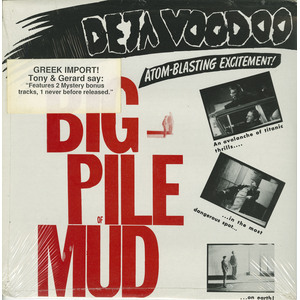
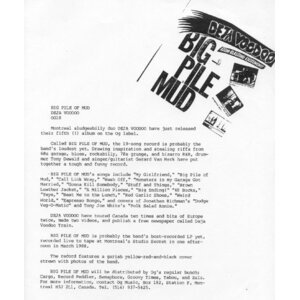
The band also found unexpected audiences overseas, especially in Finland and Greece. Their Finnish connection produced Hiekkaa Hietarannan, a Finnish-language adaptation of the Ramones’ “Rockaway Beach” associated with Ne Luumäet, and eventually Live At The Backstage Club In Helsinki Finland, a document of the band’s international cult reach. By then, records such as Big Pile Of Mud and the Helsinki live album showed a group that had remained proudly crude while becoming seasoned road veterans.
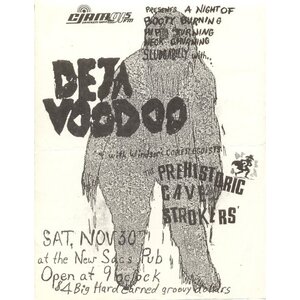
One of their most memorable creations was the Deja Voodoo Barbecue, a multi-band underground event built around cheap admission, cheap drinks, live music, and food. It started in a church basement and expanded into larger rooms in Montreal, Toronto, and Ottawa. Like Og Music itself, the barbecues were part party, part showcase, part community-building exercise, and part chaos. They gave bands a place to play, fans a place to gather, and the Canadian underground another reason to feel like a real network rather than a scattering of isolated scenes.
By 1989, Deja Voodoo and Og Music had both reached the end of their natural run. The band toured across Canada twice that year and across Europe twice, while Og released a flood of records. But a broken distribution deal, the rising cost of CDs, and the simple fact that van Herk and Dewald did not want to drag the same thing into their thirties brought the story to a close. Deja Voodoo played their final shows, Og Music shut down, and the records drifted out of print.
Afterward, Gerard van Herk became a linguistics professor, while Tony Dewald moved west and built a second career as a respected brewer. For years, Deja Voodoo existed mostly as a cult memory: a name passed around by collectors, garage-rock fans, Canadian punk historians, and people who still remembered how strange and fun the 1980s underground could be when nobody was expecting it to become marketable.
That changed when the Deja Voodoo catalogue began to re-emerge through reissues, bringing the band back into view for listeners who had only heard the legend. Tony Dewald’s death in 2024 gave the revival a bittersweet weight, but it also underlined how much he and Gerard van Herk had done together. Deja Voodoo were never a mainstream band, and they were never trying to be. Their importance lies somewhere better: in the records, the tours, the joke that became a genre, the label that helped document a country’s underground, and the stubborn belief that two people with almost no gear could still make a sound big enough to travel.
-Robert Williston
Tracks
79 tracks
-
Boppin' Sue
-
Monsters In My Garage
Cemetery (1983)
Showing 10 of 19 tracks
-
Things With You
-
Big Scary Daddy
-
Skeleton At My Party
-
If Mashed Potatoes
-
Long Tall Texan
-
How Can I Miss You
-
Kill Kill Kill
-
I Better Think
-
Voodoo Barbecue
-
Metro vers l'enfer
Gumbo (1983)
Showing 10 of 17 tracks
-
Into the Gumbo
-
Duh Papa Duh
-
Van Gogh's Ear
-
Baby Honey
-
You're No Fun When Your Head's All Mushy
-
Deja Voodoo Train
-
Someone in My House
-
Boppin '88
-
Ifugao
-
Baron Samedi

Hiekkaa Hietarannan (1987)
1 track
-
Hiekkaa Hietarannan

The Worst Of (1987)
Showing 10 of 12 tracks
-
Monsters in My Garage
-
More Songs About Monsters And Food
-
Feed That Thing
-
Surfing On Mars
-
Bullfrog
-
Duh Papa Duh
-
Driving On Drugs
-
Rock Therapy
-
Night Time
-
Surfer Joe
Big Pile Of Mud (1988)
Showing 10 of 18 tracks
-
My Girlfriend
-
Big Pile of Mud
-
Call Link Wray
-
(Some Things Just Don't) Wash Off
-
Monsters in My Garage Got Married
-
Gonna Kill Somebody
-
Stuff and Things
-
Brown Leather Jacket
-
A Million Pieces
-
Big Ending!

-
Too Cool To Live, Too Smart To Die
-
Take Out the Trash
-
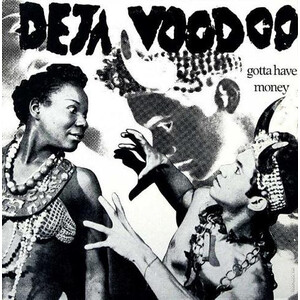
Gotta Have Money
-
Bo Diddley's Cat
-
Cheese & Crackers
-
Down in Mexico
-
Lonely Motel
-
The House of Dr. Stimuli

-
Side 1
-
Side 2
Discography
Featured Titles
Albums
Singles
12"
Compilation Tracks

Gallery
Images
70 images
View All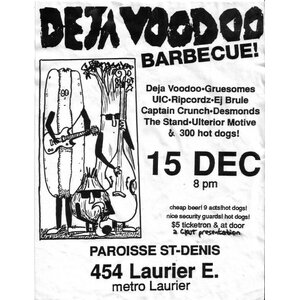
Deja Voodoo (42)
Deja Voodoo (41)
Deja Voodoo (40)
Deja Voodoo (62)
Deja Voodoo (68)
Deja Voodoo (48)
Deja Voodoo (46)
Deja Voodoo (6)
Media
Videos
0 videos
No videos available for this artist.