
Artist / Band
Robert Connolly
Biography
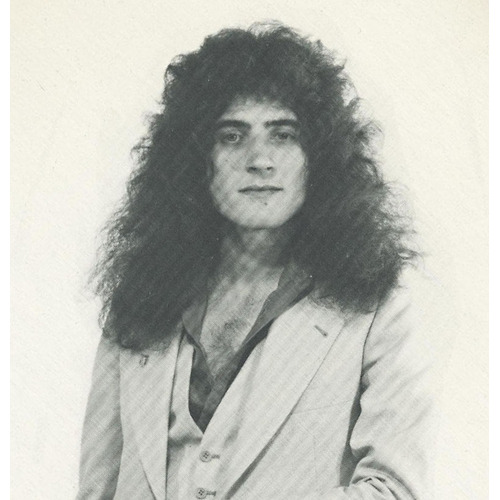
Robert William Connolly was born in Hamilton, Ontario, in 1954, the son of a police officer who had been saving toward his son's university education. Connolly showed an early tendency to teach himself whatever interested him, particularly music, and learned to play a variety of instruments without following a conventional musical education. After finishing high school, rather than immediately entering university, he spent several years travelling across Canada as a professional musician, playing nightclubs and seeing parts of the country far removed from his industrial Hamilton upbringing.
In 1974, at twenty, Connolly made a decision that would shape almost everything that followed. Instead of spending the money his father had saved on university, the two invested it in building a modern eight-track recording studio. Connolly settled in Toronto and began learning not only how to make music but how to record, engineer and produce it. That combination of musician and self-taught technician would remain characteristic of his career as recording technology gave way to computers, video and eventually digital multimedia.
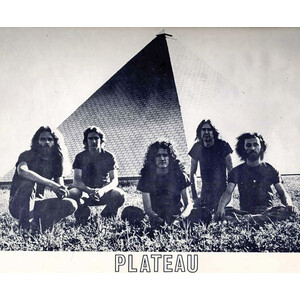
One of the first major outlets for his ideas was Plateau, originally a performing band rather than a solo project. Connolly later described Plateau as a theatrical showband that pretended its members were extraterrestrials who had arrived on Earth to study the inhabitants of local bars, with multi-image projections forming part of the performance. Erich von Däniken's Chariots of the Gods?, ancient-astronaut theories and the science-fiction atmosphere surrounding Close Encounters of the Third Kind fed directly into what they were creating.
Plateau recorded the independent single ‘My Life’ b/w ‘Under the Big House’ at Connolly's Cosmic Sound studio. ‘My Life’, written by singer Howard Strutt and orchestrated and produced by Connolly, was deliberately conceived as a more commercial piece in hopes of attracting management or record-company interest. ‘Under the Big House’, meanwhile, would later reappear in altered form as ‘The Oracle’ on Connolly's album.
Connolly subsequently moved his eight-track Scully recording operation and Plateau into a partnership with Cottingham Sound in Toronto. The group continued playing the bar circuit and recorded the fourteen-minute ‘Journey’, but after a prolonged struggle to secure a record deal, Plateau dissolved. Rather than allow the recordings to disappear, Connolly obtained the other musicians' agreement to use what they had made and recorded additional material to complete an album under his own name.
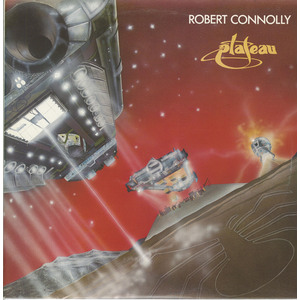
The result was Robert Connolly – Plateau in 1978, one of the more unusual privately produced Canadian progressive-rock albums of its period. Connolly played guitar, bass, Mellotron, Mini Moog, organ, piano, string ensemble and synthesizer bass, building a science-fiction concept around extraterrestrial intervention in ancient human history. The record travelled from the Plateau of Nasca through Giza and Gomorrah before expanding into the long ‘Journey’.
An eight-page original comic book accompanied the LP, but it was more than extravagant packaging. Connolly conceived the comic as a storyboard for an animated feature film, with the record serving as the musical demonstration he intended to take to Hollywood. He initially had only 1,000 copies pressed for that purpose.
Before he could leave Canada, Plateau received an extraordinary burst of exposure. Connolly gave a copy to CHUM-FM personality Larry Wilson, who interviewed him and broadcast the entire album on his Night At Eleven program on August 29, 1978. J.C. Enterprises subsequently became involved in distributing the record, and Connolly remembers the pressing being used for a display at Toronto's Sam the Record Man. What had begun largely as a calling card for Hollywood suddenly acquired a life as an independent Canadian release.
Connolly nevertheless took the project south. He sold most of his equipment, kept his guitar and travelled to Hollywood with the album and comic as his film proposal. He later recalled attracting serious industry interest but becoming disillusioned with the business and returning to Canada. In another account he remembered becoming involved with Herb Cohen, the longtime manager and business partner of Frank Zappa. Whatever possibilities existed in California, Connolly ultimately chose production and media work over pursuing Plateau as a performing career.
Back in Toronto, his position in the Canadian recording industry broadened quickly. By 1979, Connolly was heading Tube Records with CHUM-FM's Larry Wilson, Piccadilly Tube manager Gary Stevenson and guitarist Frank Soda. The label was conceived as a way of recording emerging Canadian groups before live audiences and giving them professionally produced recordings they could use to pursue larger deals. Its first live project, Frank Soda and the Imps' In the Tube, was produced by Connolly and Wilson.
Perhaps the most important artist to cross his path during this period was a young Karen Greening, soon to become known professionally as Lee Aaron. Connolly saw her perform in 1979 and became her manager during the formative stage of her career. He helped reposition Lee Aaron from the name of a band into Greening's professional identity and produced the independently released The Lee Aaron Project in 1982. Featuring an impressive collection of Canadian hard-rock musicians, the album became the launching point for the recording career that would soon lead to Metal Queen and establish Aaron as one of Canada's best-known rock singers of the 1980s.
Connolly's interests, however, were already moving beyond conventional record production. The arrival of affordable personal computers, particularly the Apple Macintosh, appealed directly to the same self-teaching instinct that had led him to build a studio a decade earlier. He embraced MIDI sequencing, digital samples and computer-based music creation and began using those systems for albums and film soundtracks. As the technology improved, audio production naturally expanded into video and post-production.
That transition moved him into the emerging world of music videos, concert productions and low-budget feature films. Connolly worked on Jon Mikl Thor's 1987 cult feature Rock 'n' Roll Nightmare as unit production manager and post-production supervisor, applying relatively inexpensive electronic and computer technology to filmmaking. His own recollections emphasize how strongly he believed that computers and video-based editing could change the economics of post-production — something the industry itself would increasingly demonstrate during the years that followed.
The next major phase of Connolly's career took him much farther from recording studios. With his wife and production partner, he spent years travelling internationally and producing television dealing with both travel and the kinds of mysteries that had fascinated him since Plateau. Passport to Adventure and Timeless Places explored ancient civilizations, pyramids, unexplained architecture, comparative religion, lost technologies and other historical mysteries while also showing viewers how to visit the locations themselves. Connolly has said the work took the pair around the world for more than twenty years, with their programs receiving extensive television exposure in both Canada and the United States.
In that sense, the subject matter of Plateau was far less incidental than it might have seemed in 1978. As a young musician Connolly imagined Giza, ancient civilizations, unknown technologies and visitors from beyond the familiar world; as a filmmaker he eventually travelled to many of the places that had fascinated him and built programs around many of the same questions.
Connolly also became an early adopter of interactive and digital-media formats. During the Photo CD era, he and his production company assembled their extensive travel photography into the WorldPhoto Essentials Image Library, which Connolly has said was distributed in millions of copies as bundled and retail computer software. Material associated with his television work was subsequently adapted to emerging interactive formats, extending his work from broadcast television into CD-ROM and multimedia production.
His career therefore followed an unusual but remarkably consistent path: musician, recording engineer, studio owner, songwriter, record producer, artist manager, label operator, computer-music adopter, post-production specialist and documentary producer. The technology changed repeatedly, but Connolly's instinct remained much the same — teach himself how the newest tools worked and then find something different to do with them.
For Canadian music collectors, however, the beginning of that journey remains Plateau. The album Connolly originally pressed as a thousand-copy demonstration survived as a sought-after Canadian progressive-rock recording, eventually attracting international attention from collectors and progressive-music historians decades after its creator had moved into entirely different fields.
-Robert Williston
Tracks
6 tracks
Plateau (1978)
6 tracks
-
Plateau of Naska
-
A Close Encounter
-
Power of Giza
-
The Battle of Gomorrah
-
Journey
-
The Oracle
Discography
Featured Titles
Albums
Gallery
Images
2 images
Robert Connolly
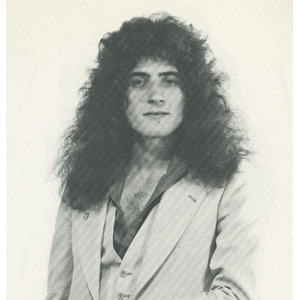
Connolly, Robert
Media
Videos
0 videos
No videos available for this artist.