Artist / Band
Calamity Brothers
Biography
The Calamity Brothers were a folk group formed in Montague, Prince Edward Island, in 1965 to perform at a St. Patrick’s Day celebration. Their music brought together the Island’s Irish, Scottish, English, Welsh and Acadian traditions with the warmth, humour and informality of a Maritime kitchen gathering.
The group’s name arose from the musicians’ varied cultural backgrounds. After hearing that they collectively represented Irish, Scottish, Welsh, English and Acadian French ancestry, an older Irishman reportedly declared that the combination would be “nothing but a calamity, brothers.” The remark supplied the name under which they would perform for the next several decades.
Gene Murphy and George ‘Duff’ Boudreault were members of the original group. In 1967, following the retirement of two earlier participants, they were joined by Gene’s brother Gerard Murphy and George’s son Danny Boudreault. The resulting quartet united two Island families and two generations: Gene sang and played 12-string guitar and banjo, Gerard played 6-string guitar, Danny played electric bass, and George contributed harmonica and fiddle.
George Boudreault, born in 1915, was a soldier, musician and storyteller from Montague who also became a Maritime fiddling champion. His son Danny, born in Montague in 1950, developed a lifelong attachment to Irish and Maritime music while performing alongside his father. The relationship between the Murphy brothers and the Boudreault father and son gave the Calamity Brothers much of their distinctive character.
Their repertoire was rooted in the traditional songs of Ireland, Scotland, Newfoundland and the Maritimes, but their performances were never formal exercises in folklore. John Allan Cameron remembered them as honest, unpretentious people who sang because they genuinely enjoyed singing. Their concerts combined harmony vocals, acoustic instruments, humour and storytelling in the relaxed, communal style that became central to the Maritime folk revival.
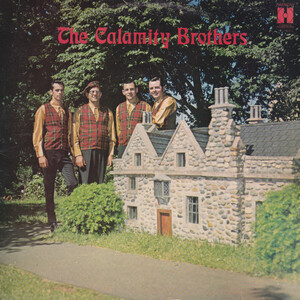
The Calamity Brothers made their recording debut in 1971 with the self-titled album The Calamity Brothers on Columbia’s Harmony imprint. Produced by David H. Isner, the album presented traditional material including ‘Paddy Murphy’s Wake,’ ‘Bridget Flynn,’ ‘Nancy Whiskey,’ ‘The Mermaid,’ ‘Banks of Sicily’ and ‘The Moonshiner.’ The musicians were introduced simply as Gene, Gerard, Danny and Duff, reinforcing the familiarity and lack of formality that defined their public image.
The album brought the group beyond Prince Edward Island’s local concert circuit. During 1971, they became associated with Gene MacLellan’s Gen-Mac Enterprises, appeared in festival and concert presentations, and shared programs with leading Canadian performers. Following the album’s release, the four-man Montague group appeared for a week at The Cabaret Club, the Charlottetown Festival’s nightspot, performing two shows each evening. The engagement reflected their growing place within Prince Edward Island’s professional entertainment community.
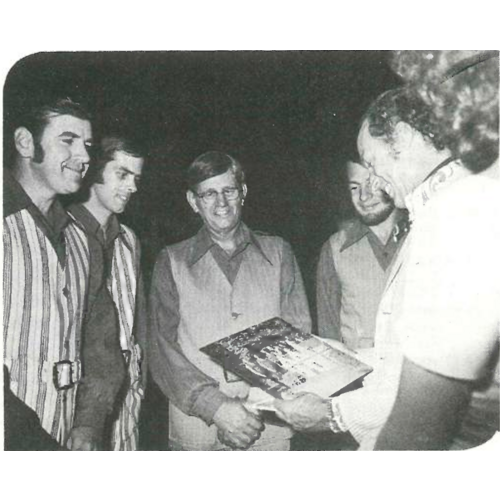
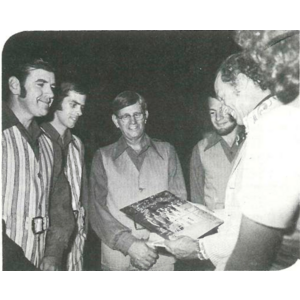
In Charlottetown that August, the Calamity Brothers appeared with Gene MacLellan at a folk concert attended by Prime Minister Pierre Elliott Trudeau and Margaret Trudeau. The group presented the couple with a copy of its new album, placing the musicians at the centre of one of the Island’s most prominent cultural events of the period.
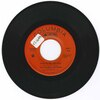
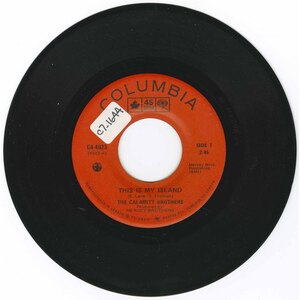
Their 1971 Columbia single ‘This Is My Island’ b/w ‘Something to Sing About’ strengthened their musical identification with Prince Edward Island. Produced by the Mercey Brothers, the record paired Elizabeth Lane and Sjef Frenken’s Island anthem with Oscar Brand’s widely performed Canadian song ‘Something to Sing About.’
‘This Is My Island’ had been composed by Frenken using Lane’s text, and the Calamity Brothers made its first recording. The song became a particularly fitting expression of the group’s identity, connecting their harmony singing and traditional Maritime sound with the landscape and culture of their home province.
Over the following years, the Calamity Brothers performed extensively throughout the four Atlantic provinces and appeared with artists including Anne Murray, Gene MacLellan, Harry Hibbs and John Allan Cameron. Their national exposure included an appearance on The Tommy Hunter Show, while other engagements placed them alongside groups such as the Irish Rovers and Ryan’s Fancy.
These activities were later confirmed in private correspondence from Yvonne Higgins, a family member of two of the musicians. In 2022, she remembered the Calamity Brothers as a popular Prince Edward Island group whose career included appearances before Queen Elizabeth II and a Canadian prime minister, performances with the Irish Rovers and Ryan’s Fancy, and an appearance on The Tommy Hunter Show. Her account also firmly confirmed the group’s Prince Edward Island origin, correcting occasional later identifications with Halifax or British Columbia.
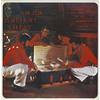
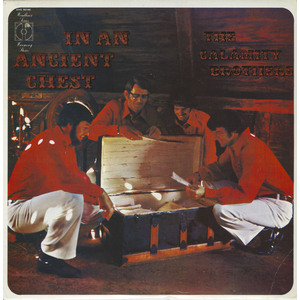
The group’s second album, In an Ancient Chest, followed in 1973. Produced by the Mercey Brothers and recorded at Audio Atlantic Studio in Halifax, it retained the group’s Scottish, Irish and Maritime foundations while introducing contemporary Canadian material. The title song and ‘What Did You Do Today, Son?’ were written by Ottawa songwriter Victor Gordon, while other selections drew upon Newfoundland, Scottish and Irish traditions.
By this time, the Calamity Brothers had become recognized representatives of Prince Edward Island culture. In 1973, they performed before Queen Elizabeth II and Prince Philip, bringing their informal Island music to one of the most prominent audiences of their career.
Their music was also featured in the National Film Board documentary Eastern Graphic, filmed during Prince Edward Island’s 1974 provincial election. Centred on Montague newspaper editor and publisher Jim MacNeill, who wrote the liner notes for In an Ancient Chest, the film connected the group’s music with the communities, politics and everyday life of the Island that had produced it.
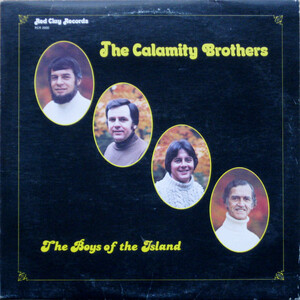
In 1979, the Calamity Brothers released their third album, Boys of the Island, on Red Clay Records. The record broadened their repertoire further, combining traditional medleys and Island-oriented songs with compositions by Stan Rogers, Stompin’ Tom Connors, Bob Carpenter, Dallas Harms, Paul Grady and Stu Cisco. Its title captured the group’s enduring public identity: regardless of a song’s origin, the Calamity Brothers remained unmistakably musicians of Prince Edward Island.
Their royal appearances continued in 1983 when they performed before Prince Charles and Diana, Princess of Wales. The group also survived changes in personnel. By the 1990s, Gene and Gerard Murphy were performing as the Calamity Brothers with bassist Donnie MacDonald and fiddler Joe Kearney, preserving the group’s songs, harmonies and performance tradition beyond the period represented by its original albums.
The Calamity Brothers occupied a distinctive place in Prince Edward Island music. They were neither revivalists removed from the culture they represented nor polished entertainers imitating an imported folk style. Their music grew directly from family, community gatherings, Island humour and the blended cultural inheritance of the Maritimes. Across three albums, a Columbia single, national television appearances, royal performances and decades of live work, they carried the sound and spirit of Prince Edward Island from Montague and Charlottetown to audiences across Atlantic Canada and beyond.
-Robert Williston
Tracks
12 tracks
In an Ancient Chest (1967)
10 tracks
-
What Did You Do Today, Son?
-
Coulter's Candy
-
Jennifer Gentle
-
The Irish Miner
-
Ise the B'y
-
In an Ancient Chest
-
Mingulay Boat Song
-
The Wooden Wedding
-
The Kitty
-
Come by the Hills
-
This Is My Island
-
Something to Sing About
Discography
Featured Titles
Albums
Singles
Gallery
Images
1 image
Calamity Brothers
Media
Videos
0 videos
No videos available for this artist.