Artist / Band
Orval Prophet (Rex)
Biography
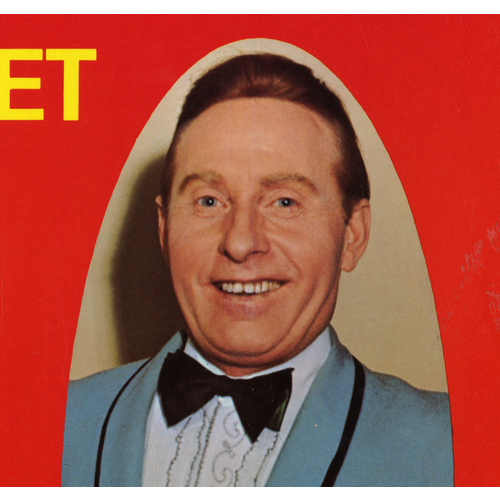
Orval Prophet was one of the first Canadian country singers to build a career with real international reach. Born Orval William Prophet in Edwards, Ontario, on August 31, 1922, he became known across Canada as The Canadian Ploughboy, a nickname rooted in both his farm upbringing and the image that followed him throughout his career. Long before he became a recording artist, Prophet was a farm boy with a strong, direct country voice, singing while working the land and performing locally around the Ottawa Valley.
His first public performances came early. As a teenager, he sang at community events, church functions, and local gatherings, and by the late 1940s he was appearing on Ottawa radio. His career took a decisive turn in 1949 when he joined Wilf Carter on a coast-to-coast Canadian tour. Carter was impressed enough by Prophet’s voice to bring a tape to Decca Records in New York, leading to Prophet’s first major recording contract.
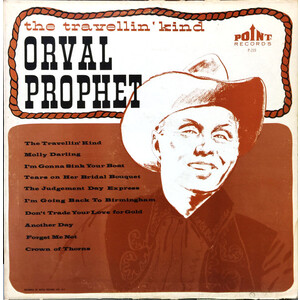
Prophet’s early Decca sides placed him among the first Canadian country artists to record in Nashville. His first Decca sessions in 1952 produced material such as ‘I’m Going Back to Birmingham’, ‘Don’t Trade Your Love for Gold’, ‘The Judgement Day Express’, ‘Crown of Thorns’, ‘Molly Darling’, and ‘Tears on Her Bridal Bouquet’. These recordings established the foundation of his early reputation: plainspoken country songs delivered with a warm, instantly recognizable voice, backed by Nashville session musicians at a time when very few Canadian artists had that opportunity.
During the 1950s, Prophet recorded under several variations of his name, including Orval Rex Prophet and Rex Prophet, and later adopted the alias Johnny Six. Under that name he recorded ‘Mademoiselle’, a major part of his catalogue and one of the songs most closely associated with him. The Johnny Six period showed Prophet’s ability to adapt to the changing late-1950s market while still retaining the vocal character that made him recognizable to country audiences.
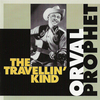
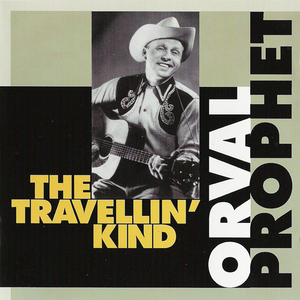
By the early 1960s, Prophet’s earlier Decca material was gathered on The Travellin’ Kind, issued in Canada on Point Records. The album preserved many of his key early recordings, including ‘The Travellin’ Kind’, ‘Molly Darling’, ‘I’m Gonna Sink Your Boat’, ‘Tears on Her Bridal Bouquet’, ‘The Judgement Day Express’, ‘I’m Going Back to Birmingham’, ‘Don’t Trade Your Love for Gold’, ‘Another Day’, ‘Forget Me Not’, and ‘Crown of Thorns’. These songs formed the backbone of his early catalogue and later reappeared on several reissues and compilations.
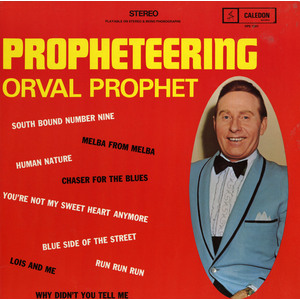
Prophet remained active through the 1960s, recording for Sparton, Starday, and Caledon. His Caledon period produced Propheteering, an album that gathered songs such as ‘South Bound Number Nine’, ‘Human Nature’, ‘You’re Not My Sweetheart Anymore’, ‘Blue Side of the Street’, ‘Lois and Me’, ‘Run Run Run’, and ‘Big River Joe’. The back-cover notes for that album framed him as a veteran performer whose career stretched from early local appearances in Edwards and Ottawa to Nashville, the Grand Ole Opry, WWVA in Wheeling, West Virginia, and tours with major country figures.
In the 1970s, Prophet entered another productive phase through his work with Gary Buck and the Harmony, Broadland, Birchmount, and Acclaim labels. Mile After Mile, issued in 1971, included the title song that became one of his signature recordings. The follow-up Judgement Day Express continued his return to earlier themes while adding newer material such as ‘Headin’ Down the Line’, ‘It’s Good to Be Home Again’, ‘Champlain and St. Lawrence Line’, and ‘Singing Wires’. These records connected his early country identity with the Canadian country industry of the 1970s.
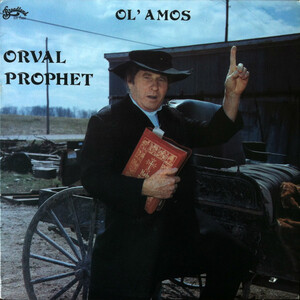
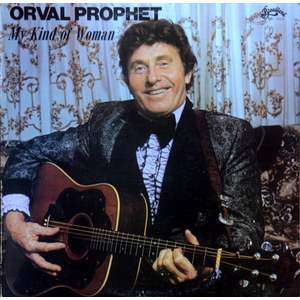
The Broadland years brought Prophet into a circle of Canadian country writers and producers that included Dallas Harms, Gary Buck, Artie MacLaren, Porter Wagoner, Leonard Kohls, and others. His 1975 album My Kind of Woman and the 1978 album Ol’ Amos placed him firmly in the contemporary Canadian country market. Ol’ Amos included several Dallas Harms compositions, among them ‘Ol’ Amos’, ‘I’ve Seen Some Things’, ‘Lisa Mae’, ‘Paper Rosie’, ‘Just a Simple Love Song’, and ‘Leroy Can’t Go Home’, alongside ‘Where Have All the Cowboy Songs Gone?’, ‘Tennessee Sunshine’, ‘Four Little Faces’, and a later version of ‘The Travelling Kind’.
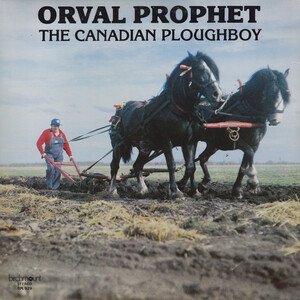
Prophet’s 1980 Birchmount album The Canadian Ploughboy served as both a reintroduction and a tribute. Its selections reached back across his catalogue, including ‘Why Didn’t You Tell Me’, ‘Melba from Melbourne’, ‘Lois and Me’, ‘Travelling Snowman’, ‘You’re Not My Sweetheart Anymore’, ‘Run Run Run’, ‘Mile After Mile’, ‘Jennifer Moved Away’, ‘Mademoiselle’, and ‘Snowbird’. The liner notes by Dallas Harms placed Prophet in the lineage of Canadian country pioneers, crediting him as an influence on later artists and recalling that Waylon Jennings admired his voice and knew his records from his own early years.
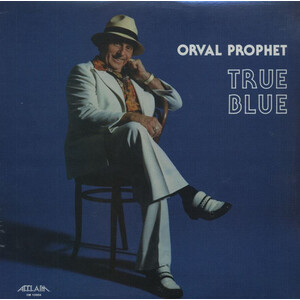
Prophet’s later recordings continued into the early 1980s with the Acclaim album True Blue and singles such as ‘A Little League in Heaven’, ‘I’m Going Back to Birmingham’, ‘I’ll Lay My Head in Carleton County’, ‘Secret Love’, ‘Please Accept My Apology’, ‘Time’, ‘Born to Booze’, and ‘So Round, So Firm, So Fully Packed’. Even after decades in the business, he remained closely tied to the older country tradition, drawing on train songs, farm songs, road songs, religious material, heartbreak ballads, and Canadian place-name songs.
Prophet’s career was interrupted repeatedly by serious heart trouble. He suffered heart attacks in 1970 and underwent open-heart surgery later that year, but he continued to perform and record. He died in Ottawa on January 4, 1984, at the age of 61. Contemporary obituaries remembered him as a Canadian country music star whose biggest hits included ‘Mile After Mile’ and ‘Mademoiselle’, and noted that he had been among the first Canadians to record in Nashville.
Orval Prophet’s legacy rests on more than one hit or one stage name. He was a bridge between the old Ottawa Valley country circuit, Nashville recording culture, Canadian radio and television, and the independent country labels that documented Canadian artists through the 1960s, 1970s, and early 1980s. As The Canadian Ploughboy, Orval Rex Prophet, Rex Prophet, and Johnny Six, he left behind one of the foundational catalogues in Canadian country music.
-Robert Williston
Liner notes
The town is Edwards, Ontario, and a fourteen-year-old boy is making his singing debut at the Strawberry Festival. Accompanied by his mother on the piano, the boy sings ‘Beautiful Dreamer’. The boy is Orval Prophet, and he has just launched himself into the world of showbusiness.
It is now 1949 and Canadian singing star, Wilf Carter, is off on a coast-to-coast tour. Also on the tour is Orval Prophet. After hearing Orval sing, Wilf is impressed enough so that he takes a tape to Decca Records in New York. Orval signs his first recording contract.
Two years later, Nashville, Tennessee, is the scene as Orval Prophet cuts his first record: ‘I’m Going Back to Birmingham’, backed with ‘Don’t Trade Your Love for Gold’. It’s his first hit.
In 1957 rock & roll is sweeping the country. Good songs and singers are now few and far between. One of the good songs out is by a singer named Johnny Six. The song is ‘Mademoiselle’ and Johnny Six is in reality Orval Prophet. The record is a hit, and Orval, or Johnny, is off on a cross-Canada and mid-west U.S.A. tour with another great artist, Johnny Cash.
1967 finds Orval signing an exclusive recording contract with Caledon Records. His first release, ‘Human Nature’ and ‘You’re Not My Sweetheart Anymore’, is a top-seller.
Next comes ‘South Bound Number Nine’, backed with ‘Blue Side of the Street’, which quickly hits the number one spot on many country and western music charts.
Those are some of the highlights of a highly successful and varied career that is still in high gear and shows no signs of slowing down. About twenty-five years ago Orval Prophet was a young farm boy who used to hitch-hike into Ottawa on Thursday nights to entertain the soldiers in the Civic Hospital’s veterans’ pavilion. Twenty-five or more records later, Orval still finds and takes time to entertain the sick.
Orval inherits his rich singing voice from his father’s side of the family. As a youngster, his only ambition was to become a singing star. Throughout the years Orval has always found himself very busy with radio and TV guest shots and personal appearances, including the dream of all recording artists, an appearance on WSM’s Grand Ole Opry, and also a six-month stint with WWVA in Wheeling, West Virginia.
Happily married, Orval’s birthday is August 31. He has blue eyes, blondish-brown hair, is 5’8” tall, and weighs 170.
Obituary clipping
Canadian country music star Orval Prophet, 61, in Ottawa.
Prophet, nicknamed the Canadian Plow Boy because of his love for singing while plowing his farm, had a long history of heart trouble. He suffered two heart attacks in 1970 and underwent open heart surgery later that year.
Prophet, whose biggest hits were ‘Mile After Mile’ and ‘Mademoiselle’, was among the first Canadians to record in Nashville.
Victoria Times-Colonist, January 9, 1984
Tracks
63 tracks
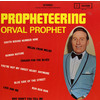
Propheteering (1968)
Showing 10 of 12 tracks
-
South Bound Number Nine
-
Melba From Melba
-
Human Nature
-
Chaser For the Blues
-
You're Not My Sweetheart Anymore
-
Acres of Heartaches (Oceans of Tears)
-
Mexico
-
Blue Side of the Street
-
Lois and Me
-
Run Run Run

My Kind of Woman (1975)
10 tracks
-
My Kind of Woman
-
I Remember Love
-
Eastbound Highway
-
Just Passin' Through
-
Algoma Central Country
-
Badger Bodine
-
Johnny Canuck
-
Agawa Canyon Song
-
I Walk a Lonely Street
-
When He Opens Up the Golden Gate
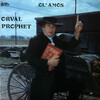
Ol' Amos (1978)
10 tracks
-
Ol' Amos
-
I've Seen Some Things
-
Lisa Mae
-
Paper Rosie
-
Just a Simple Love Song
-
Where Have All the Cowboy Songs Gone?
-
Tennessee Sunshine
-
Leroy Can't Go Home
-
Four Little Faces
-
The Travelling Kind
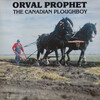
The Canadian Ploughboy (1980)
10 tracks
-
Why Didn't You Tell Me
-
Melba from Melbourne
-
My Lois and Me
-
Travellin' Snowman
-
You're Not My Sweetheart Anymore
-
Run, Run, Run
-
Mile After Mile (Mille après mille)
-
Jennifer Moved Away
-
Mademoiselle
-
Snowbird
The Travellin' Kind (1999)
Showing 10 of 21 tracks
-
The Travellin' Kind
-
Don't Trade Your Love For Gold
-
The Judgement Day Express
-
Another Day
-
I'm Going To Birmingham
-
Forget Me Not
-
Molly Darling
-
Tears On Her Bridal Bouquet
-
Crown Of Thorns
-
I'm Gonna Sink Your Boat
Discography
Featured Titles
Albums

Singles
Gallery
Images
1 image
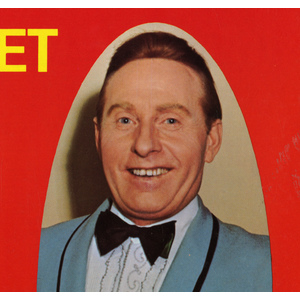
Orval Prophet (Rex)
Media
Videos
0 videos
No videos available for this artist.