
Insight
Cathy Young was sixteen and holding her guitar at the Queen's Park Love-In on May 22, 1967, ready to make her big debut in front of some 5,000 people, when the announcer promised a special guest artist. “Wow, did I feel good,” she remembered. Then came the words “Warner Brothers recording artist.” She didn't have a deal. The name he called was Buffy Sainte-Marie. The only song Young was ready to sing was Sainte-Marie's ‘Cod'ine’. She went to organizer Brian “Blues” Chapman, who told her, “You can always chicken out.” When Sainte-Marie finished, Young walked up, told the crowd, “This is a Buffy St. Marie song,” and sang it. People still come up to her about it. She called it her “graduation from the streets of Yorkville.”
Young was born in Toronto in 1951. She credits her love of singing to a Scottish great-grandmother who sang opera, and she got her first round of applause at three, for ‘Jesus Loves Me’. She loved Patti Page and Ruby Murray and sang The Beau-Marks' ‘Clap Your Hands’ as a kid. Then her family came apart. “I didn't run away from life, it ran away from me,” she said. She escaped into the Brothers Grimm and poetry, began writing in Grade 4, and won a junior high short story contest. At fifteen she took up guitar and started writing folk songs.
She learned on the Yorkville sidewalk, sitting with a guitar in front of the Grab Bag while friends showed her chords and someone handed her a harmonica and neck rack. She shot pool with a Dylan lookalike in a camel coat who answered every “how are you” with “terrible, terrible,” and who later resurfaced as Leon Redbone. An agent walked by, heard her and pointed at the Mynah Bird. “You've just auditioned,” he said. She did 10 days there and later six months as house musician, working alongside the house magician, Doug Henning, with her sister dancing go-go in the window. King Ricardo, the club's limbo dancer and glass eater, gave her the idea for ‘Circus’. Leonard Bernstein told her, “You got this kid, but you need to practice, practice, practice.” One night in a booze can on Spadina, Rick James sat her down and told her he would step on anybody to make it. “I'm going to make it, and you won't,” he said. “You're too nice.” She got up and left. Years later she allowed that he was right.
In the summer of 1967 she stayed up with friends painting flowers on the pavement of Scollard Street. She sat down in her little Sgt. Pepper jacket beside Diggers leader David DePoe during the August sit-in to close Yorkville Avenue to traffic, and bolted when police began dragging away Pops, the eighty-year-old who ran the popcorn cart. At Mariposa that August, at Innis Lake, she ran into Leonard Cohen backstage. He told her the crowd was too noisy and offered her his spot. She recalls following him into the tent, where Sainte-Marie was warming up, and backing out as Sainte-Marie talked him into playing. He got partway through ‘Suzanne’ and walked off. That night she was on a motel balcony sharing a joint with Richie Havens and jamming with Joni Mitchell.
Her boyfriend played in Nucleus, and both acts landed deals with Bob Shad's New York label Mainstream Records. Her connection was Shel Safran, manager of the Amboy Dukes, whom she met when a car full of broke musicians pulled up outside the Mynah Bird. She and her friend Rosie chipped in gas money to get them back to Windsor, and they kept in touch. CHUM-FM played her demo from its first broadcast at the Uppercrust restaurant.
She had just turned 18 when she went to New York to record, on only her second time in a studio, and didn't know enough to ask them to turn down her microphone. A Spoonful of Cathy Young appeared that spring, and Billboard made it a Pick of the Week in May 1969. Eric Weissberg arranged the album and played banjo and guitar, including the fuzz guitar on ‘Spoonful’, with Patrick Rebillot and Michael Abene on keyboards, Don Payne on bass, and Buddy Saltzman and Ronnie Zito on drums. Shad supervised. The cover posed her in a paisley coat beside a guitar painted top to bottom in psychedelic colour, shot by Warren Flagler and designed by Ely Besalel. It opens with more than six minutes of Willie Dixon's ‘Spoonful’, printed on the sleeve as the work of W. Dickson, and the other ten songs are all hers, among them ‘Misfit Matilda’, ‘Everyone's a Dealer’, ‘Mr. Moth’, ‘3 Billion Lovers’ and ‘Understanding Changes Misunderstood’. Jo Anne's sleeve notes introduced an eighteen-year-old Aquarius who was “no little bundle of pretty flowery verses” and who loved everyone and everything except sauerkraut. The album was pressed as far away as Japan and New Zealand. By 2009 copies were reaching $1,200 on eBay.
She tugged on John Brower's shirt at the Rock Pile, the old Masonic Temple at Yonge and Davenport, and asked if she could play. “Sure, kid, go ahead,” he said. She became a regular warm-up act, opening for Iron Butterfly and the Mothers of Invention, with Ritchie Yorke introducing her on about half a dozen nights, and she shared a joint with Frank Zappa in the green room.
Then she walked away from it. Nucleus had quit Mainstream for a farm and their own Family Records, and had lost their lead guitarist. She asked if she could guest and keep her deal. The answer was “you're with us or against us,” so she left the label. Shad wrote her a kind letter saying that someday she would be a star. They cut Greg Fitzpatrick's ‘Johnny Peace’, and within six months it was over. “I walked away from that with not even a microphone, and no deal.” Seeing the band floundering, she brought them her new boyfriend, guitarist Paul Naumann, and his singer, Alex Machin. The sound coming out of the farmhouse basement was astounding, and the two moved in the next day, while the band took to calling her Yoko. They became A Foot in Coldwater, and Naumann and drummer Danny Taylor wrote ‘(Make Me Do) Anything You Want’. Taylor later confirmed it was Cathy who suggested them. Young opened their first show. Then they broke up her and Naumann.
From 1971 she worked solo at the Global Village, an after-hours room. Safran, she recalls, decided to stage Jesus Christ Superstar and told her to put the cast and band together. She brought in Mainline bassist Mike Harrison as musical director, found Timothy Eaton of Ottawa for Judas, and Eaton brought Bobby Blythe, who looked just like Jesus. She played Mary Magdalene. They rented period costumes from Malabar's and did 80 shows across 1971 and 1972. In St. John's a woman phoned in during a radio interview to ask that Mary Magdalene how many shots she'd had that day. “One shot of love, lady, and you could use one,” Young told her. The run put the St. John's Arts and Culture Centre in the black for the first time, and the next day a court injunction landed. Robert Stigwood's people took over the show for a month and paid her cheques, and then he offered her Mary Magdalene on his own roadshow. She stayed with Safran.
In October 1972 they went into RCA in Toronto, with further work at Thunder Sound, and made Travel Stained in one weekend, mixing it the next, with George Semkiw engineering and Harrison as musical director. “We had a party,” she said, and she counted 35 musicians calling in on it. Dianne Brooks, Zeke Sheppard and Brenda Gordon, later known as Brenda Russell, sang behind her, with Gord Waszek and Danny McBride on electric guitar, Fitzpatrick on acoustic, Gord Neave on drums, and Mike Brews and Peter Csanky on keyboards, Csanky adding the mellotron. ‘I Really Needed Me’ brought in Ed Bickert, Don Thompson, Terry Clarke and Guido Basso. She set the traditional ‘Cocaine’ on the corner of Yorkville and Bay, with Henry Riik on tuba, and covered ‘Maggie May’ and ‘Midnight Hour’ alongside six originals. George Olliver didn't make it on because Safran said there were too many people, and she regretted it until she made up for it with 20 years of gospel music with him. A song called ‘Travel Stained’ didn't make the record either. It joined a stockpile that would grow to about 300 originals. The cover put her astride a painted chopper. RPM announced the GRT deal in September 1973, reporting that she had moved past folk to what she called “funky originals” while doing sessions with Pagliaro and Dan Hill and vocal direction for Abraham's Children. GRT released ‘Coming Home’ with ‘Maggie May’ on the flip, then ‘Set Me Free’ backed with ‘I Really Needed Me’.
On March 25, 1974, at the Inn on the Park in Toronto, Young won the Juno for Most Promising Female Vocalist of the Year in the category's first year, ahead of Linda Brown, Donna Moon, Marie Claire Seguin, Donna Warner and Nancy White, with Ian Thomas taking the male award. She has called it a “fabulous kiss of death.” The statue went to her parents for six months each. She came back from Istanbul to find her mother in tears, having dropped it and knocked a chunk out. “Now I feel comfortable with it,” Young told her, and it has sat on her china cabinet ever since. That June she headlined a free festival at High Park in front of 45,000 people, arriving by limousine and giving CHUM-FM a half-hour interview. The next spring she was nominated for Female Vocalist of the Year, losing to Anne Murray. “I still consider it a win.”
Safran moved into concert promotion, ran into trouble and left the country. Young arrived at a GRT party, feeling part of the family, and hadn't finished her glass of wine when Ross Reynolds called her into a room and told her she had missed her September deadline for product and was off the label. “My blood turned to ice,” she said. She set her glass on the counter on the way out and took the bus home. In Los Angeles, through Goldie McJohn of Steppenwolf, she landed in Irving Azoff's office and recorded 12 songs for him. They went away to Australia for a month, everything changed and she left, a story she is saving for her book.
Back in Toronto she took a meeting for a shy boyfriend who'd been offered a job by mortgage brokers, and came out a mortgage broker herself. She was good at it. Sam Sniderman saw she was in trouble and told a jingle producer to give her work, and soon she was singing beer commercials, including Old Vienna, and a Teresa Brewer-style solo for Laura Secord pudding. Her father heard it on TV and phoned to tell her she was crazy, she remembered, except that he got the wrong number and yelled at an Italian woman. She went on to produce background vocals, voice work and film and television themes, and was a regular on CBC's Rita MacNeil & Friends.
She toured constantly through the eighties and nineties, across the United States, Mexico, Europe, Cyprus, Australia, Hawaii, the Caribbean and Asia, headlining in Bangkok and Hong Kong and working hotels, resorts and cruise ships. In Hong Kong she had her own suite with fresh flowers and her own stationery, and she remembered being the last live performer at a dinner theatre in a five-star French restaurant before it turned into a karaoke bar. At home she headlined New Year's Eve balls at the Crowne Plaza and put increasing time into mentoring young performers. She lent her voice to The Black Mirror video games.
In 2009 the Korean label Big Pink reissued Travel Stained on CD with three bonus tracks, ‘Love Is a Feeling’, ‘Set Me Free (Single Mix)’ and ‘Maggie May (Alt. Version)’, and a new essay by Yorke. A tribute show at Hugh's Room marked forty years in music, and SongTown honoured her in October 2012, then did it again at Hugh's Room on June 1, 2013, because so many people were sorry to have missed the first one. She also assembled Young, Live & Rare, a collection of previously unreleased live performances. Her Facebook post of an old Yorkville street photo helped set off the Spirit of Yorkville Music Festival, which she co-founded with DePoe and others and launched at the Pilot Tavern in May 2015. He produced the folk daytime, she produced the nights, and David Marsden emceed. In 2017 Mark Garner phoned to say they had done a little painting on Yonge Street and to see if she could find herself. It was Adrian Hayles' 22-storey mural on the south wall of 423 Yonge Street, with Young beside Carole Pope and the psychedelic colours of her 1969 guitar running across the artwork. Dianne Brooks, who sang behind her on Travel Stained, is on the north wall of the same building.
In 1974 Young wrote a song called ‘I Don't Want to Lose You’ with nobody in mind. She met Ronnie King, bassist with the Stampeders, at around that time, and about ten years later sang on one of his records. Then they lost touch. Visiting a friend in long-term care, she saw a white Cinderella coach with white horses and glitter hooves outside a church, had a picture taken beside it, and posted it on Facebook with the caption, “Now all I need is a groom.” She nearly took it down. King answered at once, “I'm here! I'm here!” They had dinner when his tour ended and talked on FaceTime every night for six months. He asked her to come on the road. He had cancer, and she had cared for her family, so she became his roadie, the two of them driving his Chevy Impala with the Corvette engine. Before she agreed, she told him she had been on her own for 18 years and asked if he was ready to commit, then sang him the song a cappella. “How could I not love you,” he said. She sat at the side of the stage feeling the power of that band until he pulled her out to sing ‘Hit the Road Jack’, and they did it again on Manitoulin at the end of the tour. They had the same Martin D-18 and took the same amount of cream in their coffee, and they were going to get married. He died in March 2024, as the Stampeders prepared to go out again.
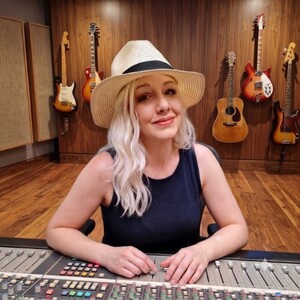
Peter Foldy, who had been recording ‘Bondi Junction’ at Thunder Sound the year Travel Stained came out, came up from Los Angeles to trade songs. She sang him this one and his eyes widened. “That's a hit,” he said. When she told him she had no money to record it, he asked her, “If not now, when?” She sent her guitar and voice to a producer in New York, who built the track, and she cut the vocal in Toronto with Ann Hunter, a CBC producer who hadn't been in a studio in 30 years, as her “pitch police.” “I just sung it from my broken heart,” she said. “One take and it was done!” Produced by John Zych, Hunter and Dennis Nieves, it came out on Foldy's Bronte Road Music in the summer of 2026. An EP is due early in 2027, along with a memoir, If You Don't Like My Gate… Don't Swing On It!, and a one-woman show, Catharsis In Heels.
-Robert Williston
Gallery
Images
1 image
I Don't Want to Lose You
Media
Videos
0 videos
No videos available for this title.
Credits
In Transit
No Comments