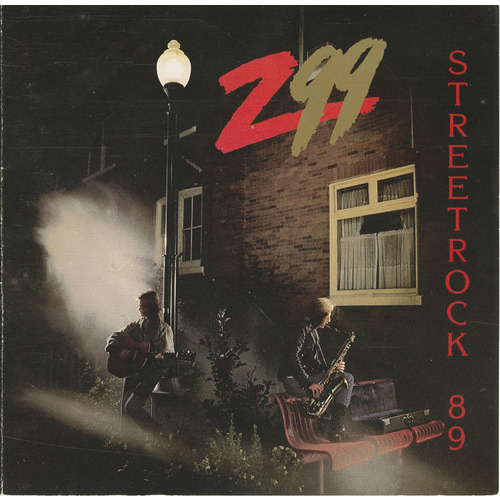
Album / Title
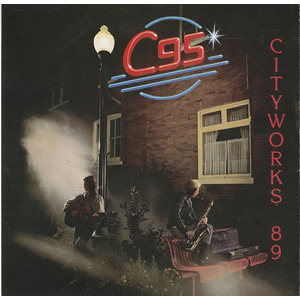
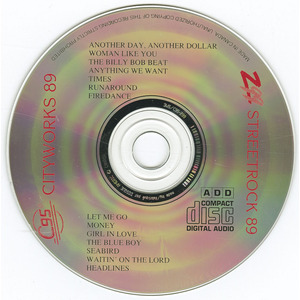
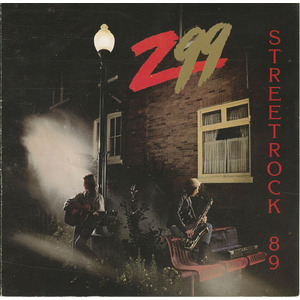
C95 Cityworks '89 / Z99 Streetrock '89
By: Compilation
Origin: Saskatoon & Regina, Saskatchewan, 🇨🇦
Insight
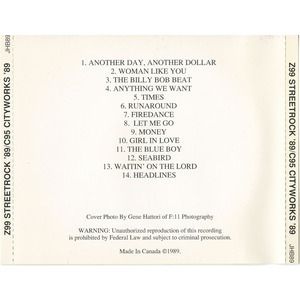
Z99 Streetrock ’89 / C95 Cityworks ’89 brought together fourteen original recordings by musicians from Saskatoon, Regina and the surrounding area. Eight tracks represented C95 Saskatoon’s Cityworks ’89, while six came from Z99 Regina’s Streetrock ’89, continuing an important radio-driven program that gave Saskatchewan artists access to professional recording, local airplay and wider exposure.
C95 described Cityworks ’89 as its third album of local musicians and performers. Sixty-eight groups and individuals entered the Saskatoon talent search that year. Z99 used Streetrock ’89 to promote original music from Regina and area, with proceeds from its portion of the project directed to the station’s Foundation 99 charity.
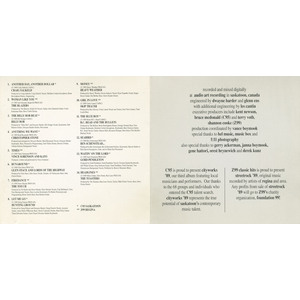
The entire album was recorded and mixed digitally at Audio Art Recording in Saskatoon, engineered by Dwayne Harder and Glenn Ens with additional engineering by Les Cantin. Kent Newson and Bruce McDonald served as executive producers for C95, while Terry Voth and Shannon Cooke represented Z99. Vance Boymook coordinated production.
The project also intersected with the national talent competitions being organized across Canada. More than 200 songs were submitted through C95 and Z99 in 1989. Glen Stace and Lords of the Highway advanced to the national competition with ‘Runaround’, while Hunting Ground and Brad Boymook, recording as Christopher Stone, were also among the Saskatchewan entries receiving national-level recognition.
The importance of the project became clearer with time. Glen Stace moved from Cityworks to a national recording career and a Juno nomination. B.C. Read developed into one of Saskatchewan’s enduring blues performers. Ben Schenstead became an established guitarist, composer and educator. Craig Salkeld built a career spanning recording, theatre, film and television. Corey and Todd Lueck moved from Skip Tracer into Red Hot Burritos, while Ron Loos and The Toasters continued through the Streetrock program into provincial competition.
In 1990, as C95 prepared its next edition, Cityworks ’89 was recognized as Album of the Year by the Saskatchewan recording industry.
Craig Salkeld
Craig Salkeld returned to Cityworks in 1989 with ‘Another Day, Another Dollar’, following his appearance on the previous year’s compilation with ‘Ask Me Again’. Salkeld sang and produced the recording, joined by Sheldon Corbett on saxophone and Brent Burlingham on drums and sequencing.
The track brought together three musicians who became familiar figures in Saskatchewan music. Corbett developed a long career as a saxophonist, keyboard player, composer and arranger, while Burlingham appeared on numerous Saskatchewan recordings. Salkeld himself continued well beyond the local compilation circuit.
Over the following decades he performed and worked with artists including Jack Semple, Rory Allen, Brad Johner and Petula Clark, while developing an extensive parallel career in musical theatre. His work included musical direction for productions at Regina’s Globe Theatre and Vancouver’s Theatre Under the Stars, and his composing and arranging extended into film and television.
Salkeld later released his own album Captain Vengeance, while continuing to work as a performer, arranger, composer and musical director.
The Blazers
The Blazers represented Regina on Streetrock ’89 with ‘Woman Like You’. The lineup featured Ralph Ell on vocals and guitar, Joel Diamond on guitar, Curtis Kautzman on bass and Ross Trofin on drums. Ell and Diamond wrote the song, and the group handled its own production.
The band remained active beyond the compilation. By 1992 The Blazers had produced a music video for ‘Two Hearts’.
Ralph Ell continued working in Regina music after The Blazers. By the later 1990s he was fronting Ralph Ell and the Hardcore Troubadours, a group that also included Dave Porter, formerly of The Toasters. Their work received Regina radio exposure, extending a connection between musicians who had first appeared alongside one another through the Streetrock projects.
Billy Bob
Billy Bob’s ‘The Billy Bob Beat’ was built around Bill Hodge on vocals and keyboards, Bob Hoknes on guitar and Dwayne Harder on drums and percussion. Hodge wrote the song, with Billy Bob and Harder sharing production.
The name appears to reflect the partnership of Bill Hodge and Bob Hoknes, who had already worked within Saskatchewan’s recording community. Both appeared on other regional projects, and their association continued beyond the 1989 compilation.
Hodge had performed and recorded with Saskatoon musicians before Cityworks, including work with d’Carot ’n’ d’Boize, while Hoknes developed a long career as a singer and guitarist. During the 1990s he performed with the Pardy Hardy Boys and continued working professionally in Saskatchewan.
Billy Bob itself remained active beyond the Cityworks ’89 session. Terry Hoknes later recalled appearing as a guest with his father Bob’s band Billy Bob in 1990, confirming that the project was more than a studio name created for the compilation.
Bob Hoknes later formed the duo Ladyhawke with Tracy Hoknes, performing throughout Saskatchewan, Alberta and Manitoba.
Christopher Stone
Christopher Stone was the recording name used for Brad Boymook’s ‘Anything We Want’. Boymook sang lead vocals, while Dwayne Harder supplied keyboards, bass and percussion programming. John Fisher played drums, with Beverly Fritzke and Allison Klassen providing background vocals. Boymook wrote the song, and Harder produced and arranged the recording.
Rather than a conventional four-piece band, Christopher Stone was essentially a vehicle for Boymook’s songwriting, developed through the Audio Art Recording circle. Harder’s extensive instrumental contribution gave the recording much of its finished arrangement.
The song was one of the stronger Saskatoon entries in the 1989 program. Boymook had already attracted music-industry support during the late 1980s, and ‘Anything We Want’ became one of the Saskatchewan recordings recognized through the national talent-search process connected with C95.
The Christopher Stone billing appears to have been short-lived, but the recording documents Boymook at a point when his original material was receiving both professional studio treatment and broader competition exposure.
Vince Sorenson and Kato
Vince Sorenson and Kato contributed ‘Times’ to the Regina half of the album.
The recording is unusual because every musical credit belongs to Sorenson himself. He wrote, performed and produced the track, while no separate members of Kato are identified. The name therefore appears to have functioned as a project identity for Sorenson rather than as a conventional band with a documented lineup.
‘Times’ remains the principal surviving recording associated with Vince Sorenson and Kato and preserves another side of the Regina scene represented by Streetrock ’89: individual writers and studio-based projects alongside established working bands.
Glen Stace and Lords of the Highway
‘Runaround’ became the most consequential song to emerge from Cityworks ’89.
Glen Stace was already writing and performing original material in Saskatoon when he entered the C95 competition. The version heard on Cityworks ’89 features Stace on vocals and guitars, Al Vickaryous on bass and John Fisher on drums. Stace wrote and produced the track.
The song rose out of a field of more than 200 submissions to C95 and Z99 and carried Stace to the national talent competition in Toronto in August 1989. By that point Lords of the Highway had become a working touring group, and the exposure brought Stace into contact with manager Larry Wanagas, already known nationally through his work with k.d. lang.
Stace subsequently signed with Bumstead Records. His 1991 album Buddha Hotel, distributed by Warner Music, included a new recording of ‘Runaround’. The album entered the Canadian charts, while ‘Runaround’ itself became a national single.
He followed with Road to Damascus in 1992 and received a Juno Award nomination for Most Promising Male Vocalist. Further independent work followed, including Redemption Game.
The Cityworks ’89 recording is therefore more than an early version of a later single. It is the Saskatchewan recording that helped launch Glen Stace from the local scene into a national career.
The Touch
The Touch were already part of the Z99 project before ‘Firedance’ appeared on Streetrock ’89.
Their 1988 contribution, ‘Penny’s Song’, featured vocalist Steve Hasiak with Howard Stroh, Dave Lawlor, Pat Butler and Kelly Hayes. By 1989 the lineup had evolved considerably. ‘Firedance’ features Hasiak on vocals, Chip McDaniel and Chris Pass on background vocals, Dave Lawlor on keyboards, Pat Butler on percussion and programming, Brent Taylor on bass and Ken Burton on guitar. Hasiak wrote the song and produced it with Butler.
Hasiak’s Regina history stretched back into the previous decade. He had been the singer with Choice, a Regina rock group formed in the late 1970s that also included Howard Stroh. Choice recorded during the 1980s before Hasiak and Stroh later appeared together in The Touch.
The Touch’s consecutive appearances in 1988 and 1989 place them among the recurring artists of the early Streetrock program. Hasiak later moved increasingly into professional studio, film and television sound work, extending his career beyond live rock performance.
Hunting Ground
Hunting Ground grew from an earlier chapter in Saskatoon’s new-wave and alternative scene.
Singer and guitarist Doug Fedyck had previously fronted Active Joy, a Saskatoon group active during the early 1980s. Active Joy combined guitar-based songwriting with synthesizers and released both cassette and album material before its members moved into other projects.
Hunting Ground first appeared on Cityworks ’88 with ‘Mended Hearts’. By the following year the lineup had changed substantially.
‘Let Me Go’ features Fedyck on vocals and acoustic guitar, Anne-Marie Wilkinson on bass, David Cummine on drums, Blair Finley and Thom Edwards on guitars, and Dwayne Harder on keyboards. Fedyck wrote the song and produced it with Harder.
Wilkinson’s presence reconnected Fedyck with his Active Joy years, while the recording also brought together musicians who remained active around Saskatoon’s studio and live scene.
‘Let Me Go’ was selected as one of the notable Saskatchewan entries in the national competition connected with the 1989 C95 project. Hunting Ground therefore represents an important bridge between Saskatoon’s early-1980s independent scene and the professional studio network developing around Audio Art later in the decade.
Heavy Weather
Heavy Weather were one of the most persistent bands in the early Streetrock series.
The Regina group first appeared on Streetrock ’88 with ‘I’m Ready’. Kevin Jackson handled lead vocals, Regan Bryce and Ryan Paquette played guitars, Darcy Molloy played bass and Darin Snyder played drums.
For ‘Money’ in 1989, Jackson, Paquette, Bryce and Snyder remained, with Pat Molloy now on bass. The song was credited collectively to Heavy Weather and produced by the band.
Heavy Weather returned to the series again in 1991 with ‘Dreamy Daze’. Jackson, Pat Molloy and Snyder were still present, joined by guitarist Chris Calwill and keyboard player Jim Folk.
Their appearances across 1988, 1989 and 1991 establish Heavy Weather as one of the recurring working groups in the Z99 program rather than a one-time contest entry. The three recordings provide a rare record of a Regina band developing through changing lineups over several years.
Skip Tracer
Skip Tracer’s ‘Girl In Love’ captures brothers Corey and Todd Lueck just before they moved into a very different musical direction.
The trio featured Corey Lueck on lead vocals and drums, Kurt Neis on guitar and Todd Lueck on bass. Corey wrote the song, and Ray Harvey produced the recording.
Corey had been singing and playing drums from an early age. After Skip Tracer, he and Todd became central figures in the Saskatchewan country group Red Hot Burritos. The band recorded two albums, received radio exposure and built a strong enough profile to reach American television.
Red Hot Burritos eventually appeared on Ralph Emery’s Nashville Now on The Nashville Network, giving the Lueck brothers exposure far beyond Saskatchewan.
Todd later joined the Tex Pistols and Western Senators, playing guitar and banjo and touring extensively in Europe. Corey continued through several musical projects before moving increasingly into Christian music and releasing solo recordings.
Kurt Neis also remained visible in the Regina scene. He later became guitarist with Preis, appearing on the 1991 and 1992 Z99 Streetrock compilations.
‘Girl In Love’ therefore catches three musicians shortly before their paths branched into country, touring and further Streetrock projects.
B.C. Read and the Bullets
B.C. Read’s ‘The Blue Boy’ captures an early stage in a Saskatchewan blues career that has continued for decades.
The recording features B.C. Read on vocals and guitar, Brent Burlingham on drums, George Tennent on bass, Tom Palmer on keyboards, Sheldon Corbett on saxophone and keyboards, and Ron Clemens on guitar. Sharon Hills, Roxanne Riediger and Ron Grace supplied background vocals.
Read had already been performing roots and blues music for years by the time of Cityworks ’89. His career subsequently expanded through touring, recording and festival appearances across Canada, both as a solo performer and with various ensembles.
He also became an important organizer within Saskatoon’s blues community. Around 2000, Read brought local musicians and supporters together to discuss creating a dedicated blues organization. Those meetings led to the incorporation of the Saskatoon Blues Society in 2001, with Read serving as its founding president.
His later recordings include Bowl of Sugar, while his performances have continued across festivals, clubs and blues events.
The association with Sheldon Corbett also proved lasting. Corbett, heard on saxophone and keyboards on ‘The Blue Boy’, later became musical director for the B.C. Read Big Band.
Ben Schenstead
Ben Schenstead contributed the instrumental ‘Seabird’, playing guitars and keyboards and producing the recording himself. Rick Harris added saxophone and flute, while Glenn Ens supplied percussion.
The piece offers an early glimpse of a musician who would become widely associated with classical and fingerstyle guitar.
Schenstead went on to earn the Royal Conservatory’s ARCT diploma in classical guitar and a Bachelor of Music with Great Distinction from the University of Saskatchewan. His advanced studies included masterclasses with internationally recognized guitarists including Christopher Parkening, Oscar Ghiglia, Pavel Steidl and Manuel Barrueco.
For roughly two decades he taught guitar through the University of Saskatchewan while maintaining an active performance and private teaching career. His recordings included Sunburst, which received a Prairie Music Award nomination, and Spirit of the Guitar.
Schenstead has also performed with ensembles including the Amati Quartet and Prairie Virtuosi Orchestra and has appeared on CBC Radio and national television.
‘Seabird’ shows that his interest in composition, arrangement and instrumental colour was already well developed in 1989.
Gord Pendleton
Gord Pendleton brought a recording history extending back to Saskatoon’s 1960s music scene.
Born Gordon Wallace Budd, he performed under the Pendleton surname for much of his professional career. His early Saskatchewan groups included Rik and the Ravens, The Warloks and Renaissance before he moved increasingly into songwriting and solo recording.
In 1972 he released ‘So Glad You Came Around’ backed with ‘Used Up All My Rainy Days’ on Boot Records. His publishing operation, Beaver Mountain Music, was already active during the 1970s and remained attached to his work many years later.
For Cityworks ’89, Pendleton contributed ‘Waitin’ On The Lord’. He sang lead and background vocals, joined by Dwayne Harder on keyboards, Jeff Wilkie on drums, Greg Derkson on guitar, and Faith Gaertner and Tom Zimmerman on background vocals. Pendleton wrote and produced the track, which was published through Beaver Mountain Music.
He continued recording and working in studios following the compilation years. Beaver Mountain Music Studios remained active during the 1990s, with Pendleton engineering local projects.
He later settled in Victoria, British Columbia, where he became known as Gordie Budd and operated Gordie’s Music. His career ultimately stretched from 1960s Saskatoon bands through songwriting, recording, production and music retail.
Pendleton died in Victoria in December 2023 at the age of 72.
The Toasters
The Regina Toasters close Streetrock ’89 with ‘Headlines’.
The 1989 trio consisted of Ron Loos on vocals and guitar, Mike Fisher on vocals and bass and Dave Porter on drums. All three shared the songwriting credit and produced the track themselves.
The band continued developing after this recording. By Streetrock ’92, Loos and Porter remained while Andrew Gordon had joined on guitar and vocals. Their 1992 contribution, ‘I’m The One’, led into the group’s strongest period.
The Toasters subsequently won the Saskatchewan StreetRock/Rock Wars competition and represented the province at the Canadian finals in Edmonton. They recorded additional material, received Saskatchewan radio exposure and came close to establishing a broader career before the band eventually dissolved.
Ron Loos later stepped away from that period of his life, becoming sober in the mid-1990s and gradually returning to songwriting and performance. Decades later he released the solo album Ordinary Shine, reconnecting musically with former Toasters guitarist Andrew Gordon.
Dave Porter also remained active in Regina music and later played with Ralph Ell and the Hardcore Troubadours, creating another connection between musicians represented on Streetrock ’89.
‘Headlines’ captures The Toasters several years before their provincial competition victory and before the lineup heard on Streetrock ’92.
The legacy of Cityworks ’89 / Streetrock ’89
The value of Cityworks ’89 / Streetrock ’89 extends far beyond the fourteen recordings on the disc. C95 and Z99 were documenting Saskatchewan musicians at a point when professional studio recording and compact-disc production remained beyond the reach of many independent artists.
The program connected musicians with Audio Art Recording, producers and engineers, radio exposure and national talent competitions. It also created permanent recordings by groups that otherwise left little commercially released material.
Several of the artists went much further. Glen Stace reached national charts and received a Juno nomination. B.C. Read became a central figure in Saskatchewan blues. Ben Schenstead built a long career as a guitarist and educator. Craig Salkeld moved across recording, theatre and screen work. Corey and Todd Lueck reached national television with Red Hot Burritos. Gord Pendleton’s career stretched across more than five decades.
Others remained regional, changed bands or disappeared from the commercial recording industry. Their presence on the album is equally important. Together, the fourteen tracks preserve a cross-section of Saskatchewan popular music in 1989, created by two radio stations and a local recording community willing to invest in artists from their own cities.
Cityworks ’89 / Streetrock ’89 was built as a showcase. More than three decades later, it also stands as a historical record of the musicians, studios and connections that made up Saskatchewan’s independent music scene at the end of the 1980s.
-Robert Williston
Gallery
Images
5 images
CD-VA Z99 C95 Cityworks Streetrock 89 INLAY BACK
CD-VA Z99 C95 Cityworks Streetrock 89 BACK
CD-VA Z99 C95 Cityworks Streetrock 89 INSIDE
CD-VA Z99 C95 Cityworks Streetrock 89 CD
C95 Cityworks '89 / Z99 Streetrock '89
Media
Videos
0 videos
No videos available for this title.
Credits
Track credits
Craig Salkeld
‘Another Day, Another Dollar’
Craig Salkeld: vocals
Sheldon Corbett: saxophone
Brent Burlingham: drums, sequencing
Written by Craig Salkeld
Produced by Craig Salkeld
The Blazers
‘Woman Like You’
Ralph Ell: vocals, guitar
Joel Diamond: guitar
Curtis Kautzman: bass
Ross Trofin: drums
Written by Joel Dimond and Ralph Ell
Produced by The Blazers
Billy Bob
‘The Billy Bob Beat’
Bill Hodge: vocals, keyboards
Bob Hoknes: guitar
Dwayne Harder: drums, percussion
Written by Bill Hodge
Produced by Billy Bob and Dwayne Harder
Christopher Stone
‘Anything We Want’
Brad Boymook: vocals
Dwayne Harder: keyboards, bass, percussion programming
John Fisher: drums
Beverly Fritzke: background vocals
Allison Klassen: background vocals
Written by Brad Boymook
Produced and arranged by Dwayne Harder
Vince Sorenson and Kato
‘Times’
Vince Sorenson: performer
Written by Vince Sorenson
Produced by Vince Sorenson
Glen Stace and Lords of the Highway
‘Runaround’
Glen Stace: vocals, guitars
Al Vickaryous: bass
John Fisher: drums
Written by Glen Stace
Produced by Glen Stace
The Touch
‘Firedance’
Steve Hasiak: vocals
Chip McDaniel: background vocals
Chris Pass: background vocals
Dave Lawlor: keyboards
Pat Butler: percussion, programming
Brent Taylor: bass
Ken Burton: guitar
Written by Steve Hasiak
Produced by Pat Butler and Steve Hasiak
Hunting Ground
‘Let Me Go’
Doug Fedyck: vocals, acoustic guitar
Anne-Marie Wilkinson: bass
David Cummine: drums
Blair Finly: guitar
Thom Edwards: guitar
Dwayne Harder: keyboards
Written by Doug Fedyck
Produced by Doug Fedyck and Dwayne Harder
Heavy Weather
‘Money’
Kevin Jackson: vocals
Ryan Paquette: guitar
Regan Bryce: guitar
Pat Molloy: bass
Darin Snyder: drums
Written by Heavy Weather
Produced by Heavy Weather
Skip Tracer
‘Girl In Love’
Corey Lueck: vocals, drums
Kurt Neis: guitars
Todd Lueck: bass
Written by Corey Lueck
Produced by Ray Harvey
B.C. Read and the Bullets
‘The Blue Boy’
B.C. Read: vocals, guitar
Brent Burlingham: drums
George Tennent: bass
Tom Palmer: keyboards
Sheldon Corbett: saxophone, keyboards
Ron Clemens: guitar
Sharon Hills: backing vocals
Roxanne Riediger: backing vocals
Ron Grace: backing vocals
Written by Brian (B.C.) Read
Produced by The Bullets
Ben Schenstead
‘Seabird’
Ben Schenstead: guitars, keyboards
Rick Harris: saxophone, flute
Glenn Ens: percussion
Written by Ben Schenstead
Produced by Ben Schenstead
Gord Pendleton
‘Waitin’ On The Lord’
Gord Pendleton: vocals, background vocals
Dwayne Harder: keyboards
Jeff Wilkie: drums
Greg Derkson: guitar
Faith Gaertner: background vocals
Tom Zimmerman: background vocals
Written by Gord Pendleton
Produced by Gord Pendleton
Published by Beaver Mountain Music
The Toasters
‘Headlines’
Ron Loos: vocals, guitar
Mike Fisher: vocals, bass
Dave Porter: drums
Written by Mike Fisher, Dave Porter and Ron Loos
Produced by The Toasters
Compilation production
Recorded and mixed digitally at Audio Art Recording, Saskatoon, Saskatchewan
Engineered by Dwayne Harder and Glenn Ens
Additional engineering by Les Cantin
Executive producers: Kent Newson and Bruce McDonald, C95
Executive producers: Terry Voth and Shannon Cooke, Z99
Production coordinated by Vance Boymook
Artwork / Design
Cover photography by Gene Hattori of F:11 Photography
Special thanks
Hel Music
Music Box
F:11 Photography
Gerry Ackerman
Janna Boymook
Gene Hattori
Orest Hrynewich
Derek Kunz
Notes
Joint C95 Saskatoon and Z99 Regina compilation combining Cityworks ’89 and Streetrock ’89
Tracks 1, 3, 4, 6, 8, 11, 12 and 13 are from C95’s Cityworks ’89
Tracks 2, 5, 7, 9, 10 and 14 are from Z99’s Streetrock ’89
Cityworks ’89 was C95’s third album featuring local musicians and performers
Sixty-eight groups and individuals entered the C95 talent search
C95 described Cityworks ’89 as representing the potential of Saskatoon’s contemporary music talent
Z99 presented Streetrock ’89 as original music recorded by artists from Regina and area
Profits from sales of Streetrock ’89 were directed to Z99’s charity organization, Foundation 99
Made in Canada
© 1989
No Comments