Insight
Dr. Music was never a conventional band. It was a moving Toronto collective built around Doug Riley, one of Canada’s most accomplished keyboardists, arrangers, producers, and musical directors. The name itself came from Riley’s nickname, “Dr. Music,” and the group reflected the full range of his musical world: jazz harmony, R&B drive, gospel vocal power, television-band discipline, studio precision, and the exploratory spirit of early 1970s Canadian jazz-rock.
Douglas Brian Riley was born in Toronto on April 12, 1945. A gifted pianist from childhood, he studied at the Royal Conservatory of Music and later at the University of Toronto, where his formal training gave him a foundation that he would carry into almost every corner of Canadian popular music. By the 1960s he was already part of Toronto’s professional music scene, working as a keyboardist, arranger, composer, and studio musician at a time when the city’s club, television, commercial-jingle, jazz, soul, and rock circuits were beginning to overlap in new ways.
Before Dr. Music became a recording act, Riley had already established himself behind the scenes. He worked with Motherlode during the Revolver Records period, co-producing “When I Die,” one of the landmark Canadian soul-pop singles of 1969. He also worked in television and commercial music, where his ability to read, arrange, conduct, improvise, and organize large groups of musicians made him unusually valuable. Riley was not only a keyboard player; he was a musical architect.
The roots of Dr. Music came through television. In 1969 Riley was hired as music director for CTV’s The Ray Stevens Show and was asked to assemble the musicians for the program’s 1969–1970 season. The result was a large vocal and instrumental ensemble that could handle the demands of television variety work while also stretching into jazz, R&B, gospel, and rock. When the show ended, the core of the group continued under the Dr. Music name, developing into a recording and touring unit.
The first Dr. Music period produced a broad, vocal-driven sound. The group’s 1972 self-titled GRT album brought together a large cast of Toronto players and singers, including Doug Riley, Steve Kennedy, Bruce Cassidy, Barrie Tallman, Gary Morgan, Don Thompson, Michael Kennedy, Dick Smith, Mouse Johnson, Terry Clarke, Doug Mallory, Kenny Marco, Terry Bush, Terry Black, Brenda Gordon, Brian Russell, Laurel Ward, and Rhonda Silver. The album mixed Riley’s own material with outside songs and contributions from other members, including Steve Kennedy’s “Sun Goes By,” Brenda Gordon’s “Dreams,” and Brian Russell’s “Glory Glory.”
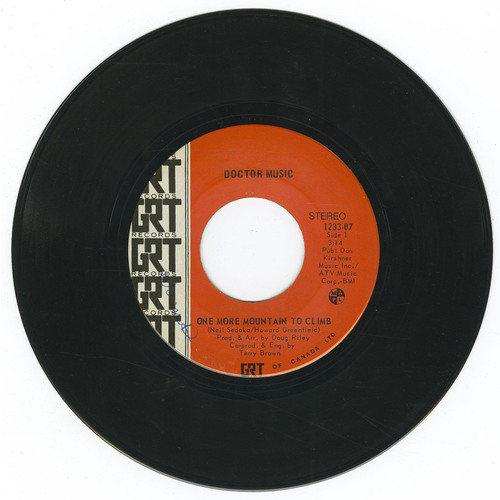
That first album remains the most accessible Dr. Music statement: gospel-rock vocals, bright horn writing, electric keyboards, jazz phrasing, and rock rhythm-section drive all folded into one large ensemble sound. “One More Mountain To Climb,” “Sun Goes By,” “Gospel Rock,” and “Try A Little Harder” helped bring the group to Canadian radio, while the LP itself showed how Riley could turn a sprawling lineup into a unified musical voice. It was not jazz-rock in the narrow sense, nor was it simply pop with horns. It was the sound of Toronto’s studio, television, jazz, soul, and rock communities meeting inside one band.
Dr. Music changed shape quickly. By 1973 Riley had assembled a leaner version of the group for the second self-titled GRT album, sometimes referred to as Dr. Music II. This lineup placed Doug Riley on organ and piano, Keith Jollimore on saxophones and flute, Steve Kennedy on saxophones, flute and vocals, Barrie Tallman on trombone, Doug Mallory on acoustic and electric guitar and lead vocals, Michael Kennedy on percussion and vocals, and Wayne Stone on drums. The material moved further into jazz-rock and funk, with extended arrangements and a tougher instrumental edge.
The 1973 album included “Long Time Comin' Home,” “On The Road,” “In My Life,” “6-5,” “Tryin' Times,” “Doctor Doctor,” “Rollin' Releases,” and a version of Robbie Robertson’s “Where Do We Go From Here.” The credits reveal the collective nature of this edition of the band: Riley, Jollimore, Steve Kennedy, and Dr. Music itself all received arrangement credits. Mallory handled most of the lead vocals, while Jollimore took the lead on “On The Road.” Recorded at Toronto Sound Studios in January and February 1973, the album captured a smaller Dr. Music, but one that was more concentrated, more instrumental, and more openly progressive than the first LP.
By 1974’s Bedtime Story, Dr. Music had moved even further into jazz fusion. The personnel again shifted, with Riley joined by Keith Jollimore, Steve Kennedy, Barrie Tallman, Bruce Cassidy, Doug Mallory, Don Thompson, Claude Ranger, Dave Brown, and Michael Craden. The album mixed original compositions by Riley, Claude Ranger, and Don Thompson with pieces by Jim Webb, Neil Moret and Richard Whiting, and Herbie Hancock. The title track, “Bedtime Story,” pointed directly to the group’s jazz vocabulary, while pieces such as Riley’s “Take That Rollo” and Ranger’s “Tickle” gave the musicians room to stretch beyond song form.
Bedtime Story was recorded at Toronto Sound Studios during February and March 1974 with Terry Brown engineering, assisted by Brian Bell and Paul Barker. It was a Dr. Music production, but by this point the “band” was clearly less a fixed lineup than a Riley-led vehicle for top-level Toronto musicians. That fluidity was part of the project’s identity. Dr. Music could be a gospel-rock ensemble, a seven-piece jazz-rock road band, or a fusion studio group, depending on the record and the moment.
A 1977 Radio Canada International transcription album showed another side of the project. Issued as RCI 456, it presented Doug Riley as leader with Barry Tillman, Tom Szczesniak, Bob McClaren, Keith Jollimore, Steve Kennedy, and Doug Mallory. The repertoire included Riley originals such as “Shoot,” “Pastorale,” and “Idono,” alongside material by Steve Kennedy, Stevie Wonder, James Brown, and Dunbar-Doukas. The liner notes framed Dr. Music through a Marshall McLuhan-inspired idea of electronic environment, right hemisphere perception, sound, resonance, intuition, and group identity. That language may seem very much of its time, but it suited the music: Dr. Music was built on collective performance, electronic texture, and the idea that disciplined players could create spontaneously inside a modern studio and broadcast world.
The Dr. Music name returned in 1984 through the Canadian Talent Library mini-LP Dr. Music, Circa ’84. By then the project had become a contemporary studio production rather than a continuation of the early 1970s road band. The record featured Wayne St. John, Terry Black, John Rutledge, Bob Mann, Dominic Troiano, Tom Szczesniak, Dave Piltch, John Anderson, Bob McLaren, Doug Riley, and Lou Pomanti. Its five Canadian songs included “Two Can Play,” “Say You Love Me Now,” “Completely Heartless,” “You,” and “Paper Lanterns.” The sleeve made the point directly: this was not a revival of the old band, but a new 1984 recording using the Dr. Music identity. Produced by Riley, executive produced by Jackie Rae, and recorded and mixed at Eastern Sound in Toronto, it connected the name to a later generation of Canadian studio players, writers, and singers.
Part of Dr. Music’s importance lies in the number of major Canadian musicians who passed through its ranks. The extended family includes Steve Kennedy, Bruce Cassidy, Don Thompson, Claude Ranger, Keith Jollimore, Barrie Tallman, Doug Mallory, Dominic Troiano, Lou Pomanti, Terry Black, Brenda Gordon, and many others whose careers reached across jazz, rock, soul, television, theatre, and studio recording. Brenda Gordon, later known internationally as Brenda Russell, went on to a major songwriting and recording career. Don Thompson became one of Canada’s leading jazz musicians. Bruce Cassidy and Keith Jollimore were connected with Lighthouse. Dominic Troiano had already become one of the country’s defining guitarists. Dr. Music was not just a group; it was a meeting point for Toronto’s professional music elite.
Doug Riley’s own career extended far beyond Dr. Music. He played, arranged, produced, and directed across hundreds of recordings and worked with artists in jazz, rock, pop, country, and classical settings. His credits and associations reached from Ray Charles, Moe Koffman, Anne Murray, Gordon Lightfoot, David Clayton-Thomas, and The Brecker Brothers to later Canadian performers and television projects. He served for many years as musical director for Famous People Players, received repeated Jazz Report recognition as Jazz Organist of the Year, and was appointed a Member of the Order of Canada in 2003.
Dr. Music’s recordings preserve a rare moment in Canadian music when television musicians, jazz players, R&B singers, commercial arrangers, rock guitarists, horn players, and studio engineers were building something that did not fit neatly into one category. The group’s catalogue moves from gospel-rock and horn-driven pop to progressive jazz-rock, fusion, broadcast transcription, and 1980s studio pop. Through every phase, Doug Riley remained the centre: organizer, producer, keyboardist, arranger, and musical force.
-Robert Williston
Gallery
Images
2 images
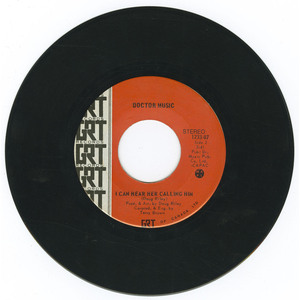
45-Dr. Music - One More Mountain to Climb bw I Can Hear Her Calling VINYL 02
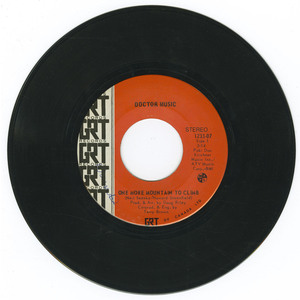
One More Mountain to Climb b/w I Can Hear Her Calling
Media
Videos
0 videos
No videos available for this title.
Credits
Musicians
Doug Riley: keyboards, bass organ
Steve Kennedy: tenor saxophone, flute, vocals
Bruce Cassidy: trumpet, flugelhorn
Barrie Tallman: trombone
Gary Morgan: baritone saxophone, alto flute, clarinet
Don Thompson: bass, vibraphone, percussion
Michael Kennedy: congas, vocals
Dick Smith: congas
Kenny Marco: guitar
Doug Mallory: guitar, vocals
Terry Bush: guitar
Terry Black: harmonica, vocals
Brenda Gordon: vocals
Brian Russell: vocals
Laurel Ward: vocals
Rhonda Silver: vocals
Songwriting
‘One More Mountain To Climb’ written by Neil Sedaka and Howard Greenfield
‘I Can Hear Her Calling Him’ written by Doug Riley
Production
Produced and arranged by Doug Riley
Co-produced and engineered by Terry Brown
Publishing
‘One More Mountain To Climb’ published by Don Kirshner Music Inc. / ATV Music Corp. (BMI)
‘I Can Hear Her Calling Him’ published by Dr. Music Publishing Co. Ltd. (CAPAC)
No Comments