Insight
Corb Lund is an Alberta country, roots, and western songwriter whose work draws from ranching history, rodeo culture, oilpatch life, card tables, military memory, prairie geography, rural humour, and the long tradition of plainspoken Canadian storytelling. A rural Albertan from the foothills of the Rocky Mountains, Lund has built one of the most distinctive bodies of work in modern Canadian country music, combining old-time cowboy song, honky-tonk, western swing, rock and roll, folk narrative, bluegrass, and the harder edge of Alberta bar-band music. His songs are deeply regional but rarely provincial: they name specific places, jobs, animals, tools, habits, ghosts, losses, and absurdities, turning southern Alberta experience into music that has travelled across Canada, the United States, Europe, and Australia.
Born Corby Clark Marinus Lund in Taber, Alberta, Lund grew up in a family with deep ranching and rodeo roots. His western background was not decorative imagery, but part of his daily inheritance. He was raised around horses, cattle, land, work, family stories, and the older cowboy songs that circulated before commercial country music turned western life into shorthand. That family history gave him a vocabulary few contemporary country writers possess: the language of bloodlines, saddle horses, veterinarian calls, fencing, feed, drought, grassland, trucks, old-timers, rodeo injuries, and rural survival. It also gave his music its unusual balance of affection and unsentimentality. Lund can write beautifully about western life, but he rarely prettifies it.
Before he became known as a country songwriter, Lund was part of a very different Alberta music story. After leaving southern Alberta, he studied jazz guitar and bass at Grant MacEwan College in Edmonton and became a founding member of the smalls, the Edmonton band whose music fused punk, metal, progressive rock, jazz-informed playing, and prairie strangeness into one of the most important underground Canadian rock catalogues of the 1990s. As bassist for the smalls, Lund spent years in a loud, hard-touring independent band, learning road work, ensemble discipline, audience connection, and the value of doing things outside the commercial mainstream. The smalls ended their original run in 2001 before later reuniting, but their influence remained embedded in Lund’s country work: the toughness, humour, rhythmic snap, and distrust of polish all carried over.
Lund formed the Corb Lund Band in the mid-1990s while the smalls were still active. What began as a side project gradually became his central artistic home. Early releases such as Modern Pain and Unforgiving Mistress already showed the mixture that would define him: acoustic country structures, literary oddities, western family memory, barroom wit, and a willingness to let songs be strange. The early material did not fit neatly into mainstream Canadian country or roots music. It was too country for the indie rock world and too idiosyncratic for commercial country radio, but it created a lane that Lund would eventually make entirely his own.
The breakthrough came with Five Dollar Bill, released by Stony Plain Records in 2002. The album sharpened Lund’s writing into compact, memorable country-rock songs and introduced several of the pieces that became central to his catalogue, including Five Dollar Bill, Expectation And The Blues, No Roads Here, Time To Switch To Whiskey, Roughest Neck Around, Buckin’ Horse Rider, and (Gonna) Shine Up My Boots. Recorded between Edmonton and Nashville, the album connected Lund’s Alberta voice with a broader roots-country sound while keeping the writing firmly grounded in western Canada. It also earned national attention and helped establish him as a major Canadian roots-country artist.
With Hair In My Eyes Like A Highland Steer in 2005, Lund moved from promising cult figure to one of the defining Canadian country songwriters of his generation. The album was full of songs that only Corb Lund could have written: The Truck Got Stuck, Always Keep An Edge On Your Knife, The Rodeo’s Over, Hurtin’ Albertan, Good Copenhagen, Counterfeiters’ Blues, Little Foothills Heaven, and the title track. The record featured appearances by figures including Ian Tyson and Ramblin’ Jack Elliott, placing Lund in direct conversation with older western and folk traditions. The album won the JUNO Award for Roots & Traditional Album of the Year: Solo in 2006 and became one of the key records in his catalogue.
By this period, Lund’s band had evolved into Corb Lund and the Hurtin’ Albertans, a name that suited both the music and the provincial mood. The group became one of the great working bands in Canadian roots music, anchored for many years by players including Kurt Ciesla, Brady Valgardson, and Grant Siemens. The Hurtin’ Albertans gave Lund’s songs a tough, flexible frame: upright bass slap, dry drums, Telecaster bite, baritone twang, lap steel, acoustic guitar, and the ability to move from comic country to murder ballad, truck song, lament, cowboy waltz, and rockabilly snap without losing identity. Later lineups continued that approach with musicians including Sean Burns and Lyle Molzan, keeping the band’s sound acoustic, agile, and road-tested.
Lund’s relationship with Canadian western history became even more explicit on Horse Soldier! Horse Soldier!, released in 2007. The album was an ambitious song cycle about cavalry, military history, horses, and conflict, drawing connections across centuries of mounted warfare and western memory. It showed another side of Lund’s writing: not just comic rural detail or working-life observation, but historical research turned into song. The record earned another JUNO nomination and further confirmed Lund as a songwriter capable of treating western subjects with both imagination and seriousness.
After signing with New West Records, Lund released Losin’ Lately Gambler in 2009, a record that brought his music more directly into the American roots marketplace without sacrificing its Canadian identity. The album leaned into card games, ranch family history, prairie politics, old cowboy influence, and the rough humour of rural life. Songs such as A Game In Town Like This, Alberta Says Hello, Long Gone To Saskatchewan, Talkin’ Veterinarian Blues, and This Is My Prairie showed how Lund could write about home in ways that were both local and widely understandable. The record also reinforced his ability to make a Canadian setting feel central rather than peripheral.
Cabin Fever, released in 2012, became one of Lund’s most commercially visible albums, debuting at No. 1 on the Canadian album chart and later receiving Polaris Music Prize longlist recognition. The album contained some of his most vivid apocalyptic, comic, and survivalist writing: Gettin’ Down On The Mountain, Dig Gravedigger Dig, Bible On The Dash, Cows Around, Priceless Antique Pistol Shoots Startled Owner, The Gothest Girl I Can, and One Left In The Chamber. It was funny, dark, sharp, and restless, turning rural anxiety, frontier humour, and end-times imagination into a modern country record that still sounded unmistakably like the Hurtin’ Albertans.
In 2014, Lund revisited earlier material with Counterfeit Blues, recorded at the legendary Sun Studios in Memphis and paired with the documentary Memphis Sun. The project re-cut key songs from his catalogue in a stripped, live-feeling setting, drawing attention to the durability of the writing itself. Pieces such as Counterfeiters’ Blues, Good Copenhagen, Big Butch Bass Bull Fiddle, Hair In My Eyes Like A Highland Steer, Five Dollar Bill, Buckin’ Horse Rider, Hurtin’ Albertan, and Roughest Neck Around worked as both career summary and renewal, placing Lund’s Alberta songs inside one of the symbolic birthplaces of American roots music.
Lund took another turn with Things That Can’t Be Undone in 2015, working with producer Dave Cobb. The album expanded the emotional and sonic range of his catalogue, moving into darker, more reflective territory with songs such as Weight Of The Gun, Run This Town, Alt Berliner Blues, Sadr City, S Lazy H, Goodbye Colorado, Talk Too Much, and Sunbeam. It did not abandon country music, but it widened the frame, allowing more rock texture, shadow, and moral ambiguity into Lund’s writing. The result was one of his most atmospheric records, less comic on the surface and more haunted by consequence.
Across the 2020s, Lund continued to record as an active, present-tense artist rather than a heritage act. Agricultural Tragic, released in 2020, returned him to rural themes with characteristic wit and bite, pairing horse songs, ranch songs, blues, and absurdist country writing with the long-running Hurtin’ Albertans sound. Songs My Friends Wrote, released in 2022, shifted the focus outward, with Lund interpreting songs by writers connected to his own orbit, including Hayes Carll, Geoff Berner, Ian Tyson, Tom Russell, John Evans, Fred Eaglesmith, Mike Plume, and Todd Snider. The album placed Lund inside a community of songwriters while also revealing how naturally their material fit within his own western-country vocabulary.
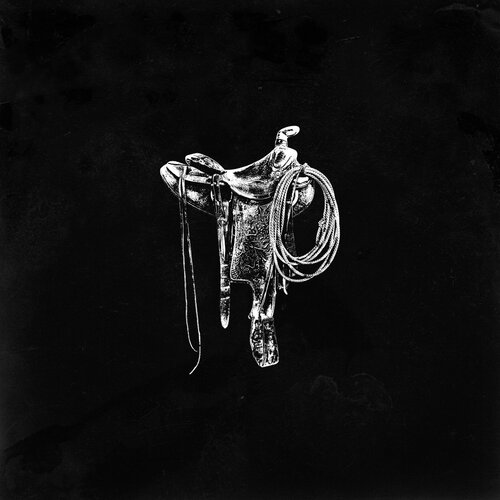
In 2024, Lund released El Viejo, an acoustic album recorded in his living room in Lethbridge, Alberta with the Hurtin’ Albertans. Dedicated to Ian Tyson, the record’s title came from the nickname “El Viejo,” meaning “the old one,” used by mutual friend Tom Russell for Tyson in later years. Lund described the album as something he had wanted to make for a long time: acoustic, without electric guitar, built from banjos, mandolins, string bass, stripped-down drums, gambling songs, minor keys, and the natural sound of the band playing close to home. The album stood as both a tribute and a reaffirmation of Lund’s own place in the western songwriting lineage Tyson helped define.
The same period brought renewed attention to Lund’s catalogue as an archive. In 2025 and 2026, New West Records launched the Dark Horses Vinyl Club, a limited subscription series reissuing eleven of Lund’s albums on vinyl, many with bonus tracks, previously unreleased material, and digital acoustic additions. The series was followed by Dark Horses, a collection of songs hand-picked by Lund from across his catalogue, presented in chronological order and re-recorded as solo acoustic performances. Stripped down to voice and guitar, the project emphasized the depth of the writing beneath the band arrangements and treated Lund’s catalogue as a body of work substantial enough to revisit, preserve, and reframe.
Lund’s music has always been inseparable from place. His Alberta is not a marketing backdrop; it is a lived map of foothills, ranches, bad roads, feedlots, oil towns, weather, old family lines, and contested land. That connection has also carried into public life. In the 2020s, Lund became one of the most visible musician voices in opposition to proposed coal development on Alberta’s eastern slopes, speaking as a ranching-family Albertan concerned about water, land, and the future of the foothills. His activism did not feel separate from his songwriting; it came from the same source as songs about grass, cattle, rivers, inheritance, and the fragile bargain between people and landscape.
Part of Lund’s importance lies in how completely he refuses the usual divide between traditional and modern. He writes cowboy songs, but they can be funny, weird, political, literary, or dark. He writes country songs, but they carry traces of punk, metal, jazz training, indie rock, western swing, bluegrass, folk balladry, and old-time campfire music. He can write about card games without romanticizing luck, horses without sentimentality, rural life without nostalgia, and Canada without turning it into postcard scenery. His songs are full of knowledge: how things are built, how animals behave, how families remember, how weather changes plans, how roads feel after too many miles, and how quickly a joke can turn into a confession.
He is also one of the few Canadian country artists whose work meaningfully extends the traditions of both Ian Tyson and Stompin’ Tom Connors without imitating either one. From Tyson, Lund inherits the seriousness of western geography, horse culture, and the long view of ranch life. From Connors, he inherits the instinct to name Canadian places, jobs, characters, and regional habits directly. But Lund’s own voice is sharper, stranger, and more contemporary: a post-smalls, post-punk, post-rodeo, post-oilpatch songwriter whose songs understand both the romance and absurdity of the West.
Corb Lund remains one of Alberta’s essential modern songwriters: a rural intellectual in a black hat, a former underground rock bassist turned country formalist, a ranch-family storyteller with a comic streak and a historian’s eye. His catalogue has become a living record of western Canadian life at the turn of the twenty-first century, from bucking horses and veterinarian calls to oil money, card rooms, prairie politics, military ghosts, environmental fights, and old songs handed down through families. At his best, Lund makes Alberta sound not like a region at the edge of country music, but like one of its richest centres of gravity.
-Robert Williston
“I’ve been wanting to make a record like this for a long time. The band, Franny and I produced it ourselves in my living room with no adults present. It’s all acoustic, not an electric lick on the album…banjos and mandos and string basses and stripped-down drums. I put a ton of work into the tunes and I’m pretty proud of this batch. Had a little help from my old co-writing pal Jaida Dreyer on a couple, also wrote a good one with my screenwriter buddy, Brian Koppelman. Lots of gambling songs and lots of minor keys. And my band guys absolutely killed it too, they’re all badasses.
I’m dedicating the record to my old compadre, Ian Tyson, who passed away a few months back. I’ve named the album for him as well. ‘El Viejo’, or ‘the old one’ is what our mutual friend Tom Russell took to calling him in later years. The title track is a pretty special one for us.
We had a blast making this thing, and we hope you enjoy it too.”
- Corb Lund
Gallery
Images
1 image
El Viejo
Media
Videos
0 videos
No videos available for this title.
Credits
Release Date
Released February 23, 2024
Musicians
Corb Lund: vocals, acoustic guitar
Grant Siemens: acoustic guitar, 12-string acoustic guitar, resonator and nylon string guitars, banjo, mandolin
Sean Burns: upright bass, background vocals, harmonica
Lyle Molzan: drums, percussion
The Southern Alberta Community Singers: gang vocals on ‘Old Familiar Drunken Feeling’
Songwriting
All songs written by Corb Lund
Except:
‘Redneck Rehab’ written by Corb Lund and Jaida Dreyer
‘Was Fort Worth Worth It?’ written by Corb Lund and Jaida Dreyer
‘When the Game Gets Hot’ written by Corb Lund and Brian Koppelman
Production
Produced by Corb Lund in Corb’s living room, Lethbridge, Alberta
Co-produced by Grant Siemens and Scott Franchuk in Corb’s living room
Recorded in Corb’s living room by Scott Franchuk for Riverdale Recorders
All songs arranged by Corb Lund and The Hurtin’ Albertans
Mixed by Steve Christensen at Terminal C, Houston, Texas
Mastered by Chris Longwood at Chris Longwood Mastering, Houston, Texas
Artwork
Art direction by Michael Weiss
Photography
Management
Managed by Watchdog Management
Booking
USA booking by Logan Bosemer at Odyssey Touring
Canada booking by Jeff Craib at The Feldman Agency
Europe booking by Jair Hoogland at Sedate Bookings
A&R
A&R by Darren Gilmore
Publishing
All songs published by Corb Lund Music Inc II
Rights societies: SOCAN / ASCAP
‘Redneck Rehab’ published by Corb Lund Music Inc II and Chasing The Muse, a division of Carnival Music Group
Rights societies: SOCAN / ASCAP / BMI
‘Was Fort Worth Worth It?’ published by Corb Lund Music Inc II and Tiltawhirl Music, a division of Carnival Music Group
Rights societies: SOCAN / ASCAP / BMI
‘When the Game Gets Hot’ published by Corb Lund Music Inc II and Bkopp Songs, administered by Universal Music Publishing
Rights societies: SOCAN / ASCAP / BMI
Thanks
Many thanks to our friends, families, and audiences for your many years of support. Thanks to our excellent team that keep things rolling behind the scenes and helped make this record possible. And a very honourable mention and thank you to our previously full-time Hurtin’ Albertans, Brady Valgardson and Kurt Ciesla.
Dedication
Dedicated to the memory of our friend, Ian Tyson.
Copyright
All rights reserved
No Comments