Information/Write-up
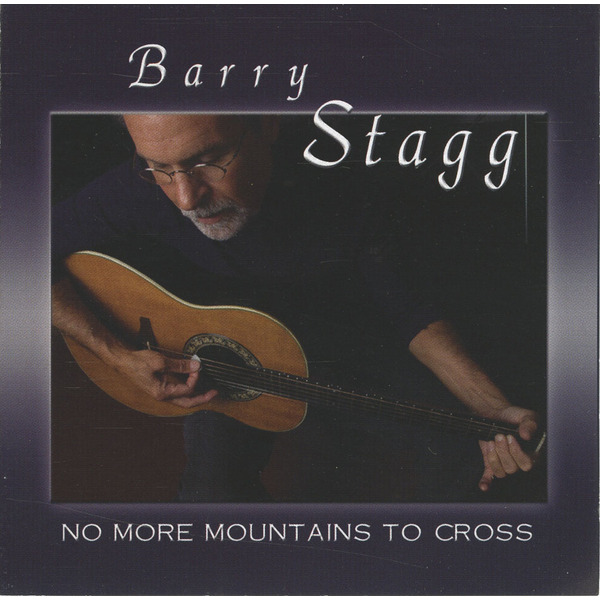
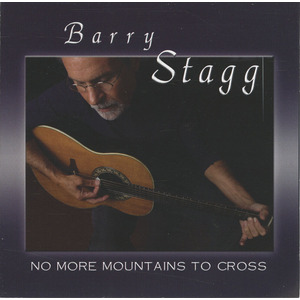
A few months before starting work on this album, I was browsing the American Civil War section in the local library. Casually flipping through the pages of a large pictorial book, I came across a photo of a young Confederate solider. His black and white formal portrait stared out from the pages, but it was the eyes that held my attention. They were the eyes of every young man who had gone to war from the beginning of time to the present day. In my mind, he became the universal soldier, transcending race, color, creed and gender. The liner notes said that his name was Edwin Jennison. He died in 1862 at the battle of Malvern Hill, aged somewhere between the ages of 14 and 16. I checked the book out and brought it home.
For days, the portrait of the young soldier haunted my thoughts, I wanted to know more about him, but all the information I had was contained in the liner notes below his picture. It was then I knew I had to give him a story so that his name would not be lost in time. Each piece of music that makes up this CD is a reflection of our life’s journey. Beginning with Private Edwin Jennison and ending with Drumtaps, you will find a common thread that questions out mortality, our triumphs and our failures, but with always an awareness that there is a bigger plan, always awareness that with faith we emerge from the darkness and into the Light.
This album is dedicated to all the men and women who go to war, not to conquer but to make this planet a safer place. This album is dedicated to Private Edwin Jennison—the Universal Solider.
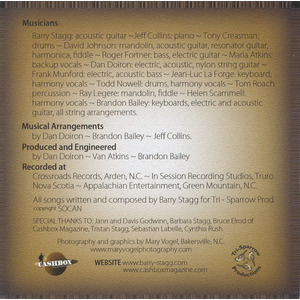
Musicians
Barry Stagg: acoustic guitar
Jeff Collins: piano
Tony Creasman: drums
David Johnson: mandolin, acoustic guitar, resonator guitar, harmonica, fiddle
Roger Fortner: bass, electric guitar
Maria Atkins: backup vocals
Dan Doiron: electric guitar, acoustic guitar, nylon-string guitar
Frank Mumford: electric bass, acoustic bass
Jean-Luc La Forge: keyboard, harmony vocals
Todd Nowell: drums, harmony vocals
Tom Roach: percussion
Ray Legere: mandolin, fiddle
Helen Scammell: harmony vocals
Brandon Bailey: keyboards, electric guitar, acoustic guitar, all string arrangements
Music and lyrics by Barry Stagg
Musical arrangements by Dan Doiron, Brandon Bailey, and Jeff Collins
Produced and engineered by Dan Doiron, Van Atkins, and Brandon Bailey for Tri-Sparrow Productions
Recorded at:
Crossroads Records, Arden, North Carolina, USA
In Session Recording Studios, Truro, Nova Scotia
Appalachian Entertainment, Green Mountain, North Carolina, USA
All songs written and composed by Barry Stagg for Tri-Sparrow Productions
© SOCAN
Special thanks: Jann and Davis Godwinn, Barbara Stagg, Bruce Elrod (Cashbox Magazine), Tristan Stagg, Sebastian Labelle, Cynthia Rush
Photography and graphics by Mary Vogel, Bakersville, North Carolina []
Bio by Robert Williston
Barry Stagg was born in Montreal on April 9, 1944, and spent the first twenty-nine years of his life in the city that shaped his artistic foundations. An only child in a home filled with books and classical records, he absorbed language and melody long before he ever picked up an instrument. He began playing guitar at thirteen and soon formed his first group, the Triumphs, performing YMCA dances and school shows around Montreal while developing the writing instincts that would define his career. By eleven he had already written his first song, “Linda,” setting in motion a lifelong habit of expressing emotion through melody and words.
During his university years Barry met Montreal songwriter Anthony “Tony” Green, who encouraged him to pursue recording. They created a simple two-track demo with producer Ben Kaye, who brought it to Danny Lazar at Gamma/London Records. This led to Barry’s first national exposure and to the 1969 release that introduced him to Canadian audiences. From this period came “To Love Means to Be Free,” the song that carried Barry onto Canadian radio and television. It rose to No. 2 in Canada, earned him the Canadian Business Music Industry writing award, and brought him onto major TV stages including appearances with Kenny Rogers and the First Edition and The Sylvia Show. The success of the single opened the doors to several years of steady performing and media work, anchoring Barry as a young writer with a strong melodic voice.
By the mid-1970s Barry had settled in Nova Scotia, beginning a deep and enduring relationship with the province and its musical community. He continued writing constantly, performing wherever work was available, and maintaining his long friendship with arranger Ben Kaye. That partnership helped secure his contract with RCA Records, and Barry chose to record his 1978 self-titled album in Halifax at Audio Atlantic with musicians he trusted. The sessions featured many of the region’s finest players, including a brass section and background vocalists whose voices were well known on CBC broadcasts. Looking back, Barry laughed about hearing his younger self on tape: “On that album… I sound like Donny Osmond. Now I sound more like Tom Waits and Rod Stewart.” Among the vocalists was Karen Oxley, whose appearance on the album reflected the strong East Coast network Barry had built. The record produced singles including “Blue,” “Children of the Dream,” and “My Town,” which was written specifically about his years living in Truro, Nova Scotia, where he made his home for more than three decades.
Barry’s creative life widened again in the 1980s when he began composing for the stage. Alongside theatre director Norman Hines he co-founded the NOSCO Academy of Theatre Arts, which eventually grew to four campuses across Canada and the United States. Over the next three decades Barry wrote an extraordinary body of theatrical work—approximately two hundred musicals including twelve full-length operas. His first opera, Sometimes We Die, starred Raylene Rankin as its sole female role, and another of his operatic works ran for seven consecutive weeks in Buffalo, New York. NOSCO became a defining chapter in Barry’s life, giving thousands of young performers a space to discover their voices while allowing him to merge his philosophical background, melodic sensibility, and love of narrative into a single form.
In 2002 Barry was commissioned to write Psalms From the Ark, a sixteen-piece musical composition for the High Country Youth Ballet in North Carolina. Six years later he moved permanently to the Blue Ridge Mountains after marrying Dr. Barbara Stagg, a physician who shared his love of music and community. Together they opened The Dispensary & Upper Club in Spruce Pine in 2013, creating an intimate venue that quickly became a gathering place for local musicians and touring artists. Barry holds a weekly residency there, performing with a close group of long-time collaborators and keeping his songwriting alive onstage every Tuesday night.
Recording remained a constant thread through these years. In 2004 he created Slaughterhouse of Love, recorded in Truro with Dan Doiron—a project he still considers one of his finest, built entirely from songs originally written for his stage works. Later albums such as No More Mountains to Cross and One Heart at a Time expanded his reach into Americana and roots audiences. “Private Edwin Jennison” earned him Southern Heritage Music Awards Songwriter of the Year, while “Appalachian Prayer” reached No. 1 on Cashbox’s Americana chart. The double album One Heart at a Time led to a 20-city U.S. television promotional tour and centered around a striking photograph of his parents as a young couple, a tribute to the people who shaped his earliest confidence and creativity.
Through the 2010s and 2020s Barry continued to evolve musically while remaining a tireless writer. He completed two new projects—a double album titled Let the Soul Speak and a fourteen-song collection called Reflections, paired with a book of nearly two hundred spiritual meditations drawn from his daily writing practice. His later singles, including “Shine a Little Light,” “Crazy Love,” and “Always Requested On the Road,” found success on both American and Canadian radio, with “Crazy Love” reaching No. 1 on the Cashbox Traditional Country Chart. He also performed internationally at events such as MIDEM in Cannes, Live at Heart in Sweden, Lilla By Festivalen, and Indie Week in Toronto, maintaining a global presence while remaining firmly rooted in the communities he helped build.
Today Barry Stagg divides his time between North Carolina and Canada, maintaining his citizenship and his long-standing ties to Nova Scotia. He continues to write, perform, and record with the same discipline and curiosity he carried into his earliest songs. More than six decades into his career, he remains an active composer, playwright, teacher, and performer, with a catalogue spanning hundreds of songs, operas, and theatrical works. As he put it during our Nov. 13, 2025 interview: “After all these years, I’m still holding on to the bugs. I’m still doing it… every day I’m writing and I’m recording all the time.” It’s a simple truth that defines his life in music — the work never stopped, and neither has he.
-Robert Williston



No Comments