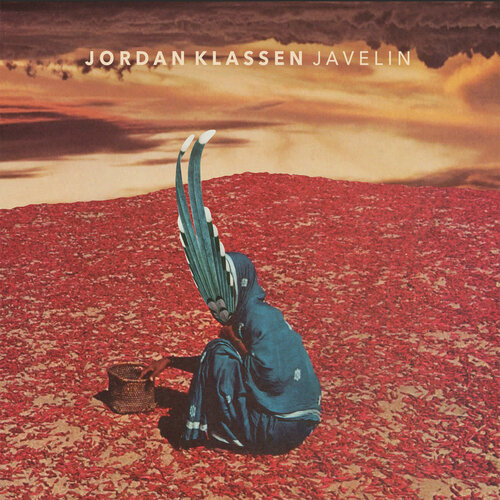
Album / Title
Javelin
By: Jordan Klassen
Origin: Abbotsford, British Columbia - Calgary, Alberta - Vancouver, British Columbia, 🇨🇦
Insight
released February 19, 2016
Javelin is an album that rewrites history. These ten songs, among the most confidently and imaginatively arranged Jordan Klassen has ever recorded, engage the past, reassess recollections and impressions, turn failures not into successes but lessons for the future. That much is evident from the opening track, “Glory B,” which percolates with barely contained energy: disembodied vocals shouting encouragement, jittery percussion providing a potent backbeat, swirl of clicks and thrums that build into a clear-eyed epiphany. At the center of this pop conflagration, Klassen’s vocals remain calm, perhaps even contented, as he delivers the chorus like a fanfare: “Hold your memory up to the light, memory up to the light.”
“That’s exactly what it felt like I was doing on this record,” he says. “I felt like I was looking back at past failures—personal failures, failed relationships—and pinning them down with more accuracy and a clearer mind than I had at the time. That’s why I called the album Javelin.” That act of personal reminiscence and revision plays out not only in Klassen’s bared-soul lyrics but also in the vivid Technicolor arrangements. It’s not a departure from the eloquently spare folk songs of 2013’s Repentance, but more a saturated-color amplification of ideas he has been exploring throughout his career. Javelin is his most vibrant and vital album to date, the one with the riskiest musical gambits and the highest emotional stakes.
These songs spring from hard experiences—namely, from Klassen’s struggle with depression and his mother’s diagnosis with breast cancer. He writes about these subjects from a variety of perspectives: One verse might be straightforward and even startlingly candid (“I have seen you take the poison,” he sings on “Delilah,” and you don’t have to be an oncologist to understand the implications) , another might be slyly elusive, as though sung in code (“I love you more, like kick drums on your bedroom door,” goes the chorus of the gorgeously moving “No Salesman”).
“I’m kind of an open person,” he admits. “I don’t really hide many things. Writing these songs, I just felt like I was doing what I do. But I hope and I think I’m better at being vulnerable. Or, I’m vulnerable with more clarity.”
That clarity did not come easy. Around the time he was winding down his last tour for his 2013 album, Repentance, Klassen’s mother was diagnosed with an aggressive form of breast cancer. During her first round of chemotherapy, doctors discovered it had spread to her lymph nodes. Her son wrote about the experience on “Delilah,” one of the most affecting songs on the album. With its gently strummed guitar theme, cascades of prismatic piano notes, and curious glockenspiel solo, it sounds like the aching heart of Javelin. “It was me wanting to give her a gift and in the process to say, Just keep going. It’s going to be okay. I’m here.”
Specifically, the song is about her hair. “She’s a fiery redhead, and when she started chemo and shaved her head, it was very… odd.” Klassen premiered the song for his mother personally, singing at her bedside with loved ones gathered round for an intimate performance. When she heard the first lines of the song—“there is red on the hardwood, scattered flames at your feet”—she laughed out loud. “We all listened to it together. We’re a crying family. So we all cried.”
Fortunately, her cancer is in remission, and for now Klassen is hopeful. And that’s the key to this complex album. Despite the fears and despairs that motivated these songs, there is always a kernel of hope illuminating the music from the inside. It’s the spark in the emphatic performances, the motor that drives these intricate arrangements, which gives the impression of songs that reach out to embrace the world rather than retreating or recoiling.
And yet, to craft these songs Klassen had to take a step back—or several steps way back. He got about as far from Vancouver and its semi-tropical rainforest and decamped to the deserts of the Lone Star State—in particular, the town of Tornillo, just outside El Paso. On the recommendation of James Vincent McMorrow—who recorded his 2014 album Post Tropical there—Klassen booked sessions at Sonic Ranch, a fairly isolated studio where he could lose himself in music, working long days and nights to capture the sounds he heard in his head and to devise all new ones in the studio.
He played the role of producer and played almost all the instruments on the record—a solitary recording experience, but one that kept things focused. “I wanted it to be scary. I have a lot of friends in Vancouver that I’ve worked with in the past, and I have my own little studio as well. But it felt too comfortable here. I needed to challenge myself, so I thought I would go down there and produce it myself in a place I’d never been before, with gear I didn’t know. Oh, this is one of the first synths ever made. I think I’ll throw it through this arpeggiator to replace that guitar I thought was going to be on this song.”
Sonically, Javelin is a mixing of ambient and rhythmic elements, from the ebullient African percussion of “St. Fraser” to the heavily reverbed vocals of closer “Smoking Too Long.” Klassen found inspiration—a patron saint, of sorts—in an unlikely figure. “The record is a nod to the ‘90s New Age music that I grew up with,” he says with a slight chuckle. “My mom was really into Enya, and I wanted to explore some of those sounds in a very modern way. I wanted to really embrace ethereality.” It’s not hard to hear echoes of “Orinoco Flow” or “Caribbean Blue” in the soft-focus thrum of “Miles,” even the delicate overlay of instruments on “We Got Married,” even the whispered valedictory of “Smoking Too Long.”
Crafting this unique album was, Klassen says, therapeutic, yet he is hesitant to use more concrete terms like “healing” or “recovery,” which suggest an end to things. His journey continues, and the terrain isn’t quite as rocky as it had been. The experience, he concludes, “helped me to just own things. It makes things solid, makes them tangible. But I think life always takes a long time. I didn’t just write these songs and walk away feeling great. It’s good enough right now just to have a historical document of what I’ve been through the last couple of years.”
Gallery
Images
1 image
Javelin
Media
Videos
0 videos
No videos available for this title.
Credits
In Transit
No Comments