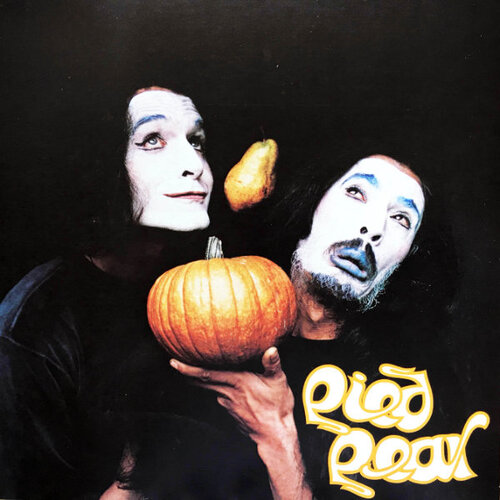
Insight
Pied Pumkin was one of the most original acoustic groups to emerge from British Columbia in the 1970s: a folk trio built on dulcimer, violin, guitar, mandolin, flute, saxophone, fearless harmony singing, oddball humour, and a fiercely independent sense of possibility. Formed in Vancouver in 1973 by Rick Scott, Shari Ulrich, and Joe Mock, the group became a West Coast favourite by refusing to fit neatly into any category. They were folk, but not traditionalist. They were funny, but not novelty. They were musically skilled, but never stiff. They were theatrical, earthy, literate, danceable, and unmistakably their own thing.
The group arrived at a moment when Vancouver’s folk, coffeehouse, theatre, and countercultural scenes were feeding one another. Ulrich, originally from California, had moved to British Columbia in the early 1970s and was beginning to make her way through Vancouver’s acoustic circuit. Mock had deep roots in folk and psychedelic music, including earlier work with Mock Duck. Scott brought the mountain dulcimer, a performer’s instinct, and a gift for turning audiences into participants rather than spectators. Together, they created a sound that felt handmade in the best sense: intimate, inventive, communal, and alive.
Their instrumentation alone set them apart. Rick Scott’s dulcimer gave the group a ringing, rhythmic centre that was rare in Canadian folk at the time. Joe Mock’s guitar playing and songwriting brought groove, wit, and narrative bite. Shari Ulrich supplied violin, mandolin, flute, dulcimer, guitar, piano, saxophone, and one of the most luminous voices on the West Coast scene. The three voices locked together naturally, but the group’s appeal was never only prettiness. Pied Pumkin could be delicate one moment and completely unruly the next, shifting from beautiful harmony to absurd stage business without losing the musical thread.
The group’s first great home was the Simon Fraser University Pub, where they built a devoted audience in 1973 and 1974. When fans began asking for a record, Pied Pumkin did not wait for a label. They collected money directly from supporters, gathered names and addresses, and used the proceeds to finance a live recording. Shari Ulrich later recalled that engineer Simon “Si” Garber set up a remote recording rig and captured the group live, complete with the atmosphere of a real Pumkin evening. That record, The Pied Pumkin String Ensemble, became the foundation of Squash Records, the group’s own label and one of the early examples of artist-controlled independent recording in Canada.
That independent model was not a marketing pose. It was how the band survived and connected with its audience. The official Pied Pumkin history notes that their first two albums sold more than 30,000 copies through Squash Records, an extraordinary number for a self-produced West Coast acoustic trio operating outside the major-label system. Long before “indie” became a standard industry category, Pied Pumkin were already doing the work: building a fan base directly, pressing their own records, selling them at shows, mailing them to supporters, and treating community as part of the music itself.
Their second album, Allah Mode, released in the mid-1970s, expanded the group’s repertoire and included Joe Mock’s ‘A Fear Of Flying.’ That song became one of the key bridges between Pied Pumkin and Shari Ulrich’s next chapter. When Ulrich left to join Valdy’s touring band, which soon became The Hometown Band, ‘A Fear Of Flying’ was reshaped as ‘Flying’ and became the title track and signature song of The Hometown Band’s 1976 A&M album. Through Ulrich’s lead vocal, a song rooted in the Pumkin world reached a much wider national audience.
Ulrich’s departure in 1976 changed the group, but it did not end the story. Rick Scott and Joe Mock continued as Pied Pear, carrying forward the Pumkin spirit as a duo. From the late 1970s into the early 1980s, Scott and Mock toured widely, playing concerts, dances, and festivals, releasing three albums, and representing Canada at the 1982 Knoxville World’s Fair. Pied Pear’s existence matters because it shows that the Pumkin idea was not just a fixed lineup; it was a way of performing: flexible, funny, rhythmic, literate, and deeply connected to live audiences.
Each member’s later path also fed the group’s legend. Shari Ulrich became a Juno-winning solo artist and a key figure in The Hometown Band, UHF, BTU, The High Bar Gang, and the broader Canadian singer-songwriter community. Rick Scott built a major career as a family performer, songwriter, dulcimer player, and theatrical entertainer. Joe Mock continued to travel widely, living and performing in Japan and Europe while remaining tied to the Pumkin and Pied Pear legacy. Their separate careers confirmed what the trio had already shown: each member was a distinct creative force, but something unusually powerful happened when they met in the same room.
The original trio reunited in 1998 with Plucking DeVine, a retrospective released on Squash Records in conjunction with their first reunion tour. Shari Ulrich’s own notes describe the collection as fourteen songs drawn from recordings made between 1974 and 1980 by Rick Scott, Shari Ulrich, and Joe Mock, calling the group “way before their time” and “rather orange.” The album brought the Pumkin catalogue back into circulation and helped confirm that the music had not aged into mere nostalgia. It still sounded odd, warm, bright, and independent.
The reunion did not remain a one-time event. In 1999, the group undertook a major Western Canadian tour, and the recordings from that period became Pied Alive, released in 2000. The official Pied Pumkin site describes the album as drawn from live performances across British Columbia and Western Canada. It captured the group not as a museum piece but as a living performance unit, still able to make audiences laugh, sing, listen, and move with the peculiar chemistry that had made them beloved in the first place.
The Pumkin story later extended into children’s music with Pied Pumkids, released in 2007. The move made perfect sense, especially given Rick Scott’s long career in family entertainment. Shari Ulrich noted that the album included her song ‘Annabelle’s Fiddle,’ which won the John Lennon Songwriting Contest for best children’s song. The album showed that the group’s humour, warmth, and acoustic imagination could translate naturally to a new generation.
Pied Pumkin’s importance is partly musical and partly cultural. Musically, they created a sound almost impossible to mistake for anyone else: dulcimer-driven, harmony-rich, rhythmically alive, and full of abrupt turns between tenderness and mischief. Culturally, they demonstrated that a Canadian folk group could operate outside the conventional industry and still build a serious audience. Their Squash Records model, fan-financed recordings, direct sales, and community-centred touring placed them among the early pioneers of independent roots music in Canada.
For Shari Ulrich’s story, Pied Pumkin was foundational. It was where she first became a beloved West Coast presence, where her instrumental range and voice found a setting wild enough to hold them, and where songs like ‘A Fear Of Flying’ began their journey toward a national stage. For Rick Scott and Joe Mock, it was equally defining: a place where their humour, musicianship, storytelling, and eccentric intelligence could flourish without being flattened by commercial expectations.
Pied Pumkin remains one of the great odd miracles of Canadian folk music. Their records sound handmade because they were, but they were never amateur. Their humour was playful, but their musicianship was serious. Their independence was practical, but it was also philosophical. They were a band of many colours, but orange most of all: strange, warm, communal, and impossible to confuse with anyone else.
-Robert Williston
Gallery
Images
5 images
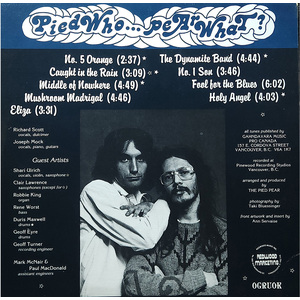
Pied Pumkin - Pied Who Pear What BACK
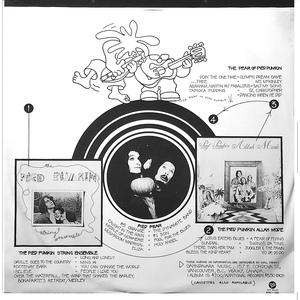
Pied Pumkin - Pied Who Pear What INSERT SIDE 01
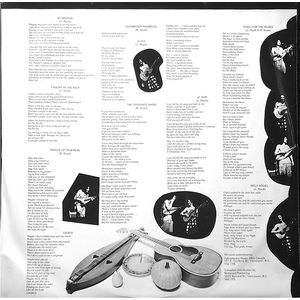
Pied Pumkin - Pied Who Pear What INSERT SIDE 02
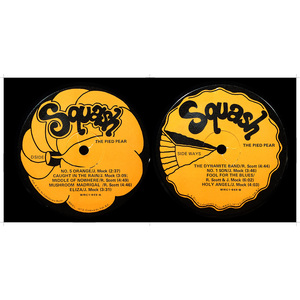
Pied Pumkin - Pied Who Pear What INSERT LABELS
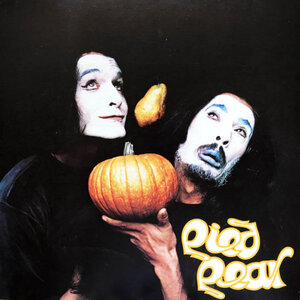
Pied Who Pear What
Media
Videos
0 videos
No videos available for this title.
Credits
Musicians
Richard Scott: vocals, dulcimer
Joseph Mock: vocals, piano, guitars
Guest Artists
Shari Ulrich: vocals, violin, saxophone
Claire Lawrence: saxophones
Robbie King: organ
Rene Worst: bass
Duris Maxwell: drums
Geoff Eyre: drums
Songwriting
‘No. 5 Orange’ written by J. Mock
‘Caught in the Rain’ written by J. Mock
‘Middle of Nowhere’ written by R. Scott
‘Mushroom Madrigal’ written by R. Scott
‘Eliza’ written by J. Mock
‘The Dynamite Band’ written by R. Scott
‘No. 1 Son’ written by J. Mock
‘Fool for the Blues’ written by J. Mock and R. Scott
‘Holy Angel’ written by J. Mock
Production
Arranged and produced by The Pied Pear
Recorded at Pinewood Recording Studios, Vancouver, British Columbia
Recording engineer: Geoff Turner
Assistant engineers: Mark McNair and Paul MacDonald
Artwork
Photography by Taki Blessinger
Front artwork and insert by Ann Servaise
Publishing
All tunes published by Gahndavara Music, PRO Canada
157 East Cordova Street
Vancouver, British Columbia
V6A 1K7
Notes
Shari Ulrich appears on tracks marked with a star symbol
Clair Lawrence appears on saxophones except on tracks marked with a star symbol
Duris Maxwell appears on tracks marked with an asterisk
Redwood Marketing
1015 Burrard Street
Vancouver, British Columbia
V6Z 1Y5
Audio and Artwork Restoration
Audio Transfer/Restoration by Scott Edward
spinningmywheelsinternational@gmail.com
226-235-6005
No Comments