Insight
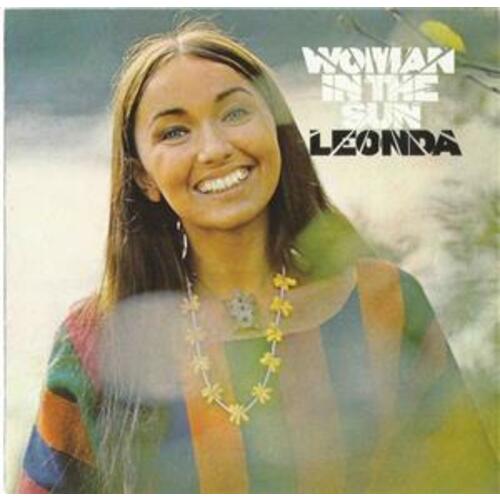
Leonda Hardison was a Cherokee singer-songwriter and guitarist whose only known album, Woman in the Sun, was released by Epic Records in 1968. Issued simply under the name Leonda, the record stands as a rare late-1960s meeting point between Indigenous singer-songwriter expression, blues-rooted folk-rock, and the more open-ended acid-folk atmosphere of the period. Although it appeared on a major label, Woman in the Sun received little lasting public attention and became a scarce collector’s item, later reappearing through a 2007 compact disc reissue by Fallout.
Produced by Elliot Mazer, the album placed Leonda’s guitar and deep, bluesy voice within a strong studio setting that included both American and Canadian musicians. Longtime Muddy Waters sideman Sammy Lawhorn played lead guitar, while Skip Prokop, Brad Campbell, John Ord, and Adam Mitchell of The Paupers brought a Canadian psych-rock connection to the sessions. Teddy Irwin added lead guitar to 'Peace and Pipes', and Kermit Moore contributed cello to 'When I Lived in My Grandmother’s House'. The record was engineered by Fred Catero and Roy Segal, with cover photography by Robert Cato and illustration by Billy Harrison.
The album’s sound moves between folk-blues, soft rock, and late-1960s psychedelic folk, with Leonda’s expressive voice giving the material much of its identity. Later commentary has often compared her to Buffy Sainte-Marie because of her Indigenous background and vocal vibrato, but Woman in the Sun follows its own path. Its strongest moments are less conventional folk revival pieces than intimate, blues-edged songs with a haunted, personal quality. 'When I Lived in My Grandmother’s House' is one of the album’s most affecting quieter tracks, while 'Peace and Pipes' draws more directly on Native American imagery, open-tuned guitar textures, vocal improvisation, and percussion that has been described as echoing powwow drumming.
Leonda’s public career remains difficult to trace beyond this single album, but archival material held by the Tomaquag Museum gives a fuller glimpse of her life after the record. The museum identifies her as Leonda Hardison, Cherokee, and preserves a signed copy of Woman in the Sun along with photographs and promotional material. Its archive also documents her presence at the 1972 dedication of the New Tomaquag Indian Memorial Museum in Exeter, Rhode Island, where she attended and sang, as well as other visits to the museum during the early-to-mid 1970s.
Woman in the Sun remains her only known commercial recording, but its survival has given Leonda Hardison a small and distinctive place in the history of Indigenous women in late-1960s folk-rock. The album’s rarity, its major-label origin, its Canadian backing connection through The Paupers, and its mixture of blues, folk, psychedelia, and Native American imagery have made it an unusual rediscovery item for collectors and historians of the period.
-Robert Williston
Gallery
Images
1 image
Woman In The Sun
Media
Videos
0 videos
No videos available for this title.
Credits
Musicians
Leonda: guitar, vocals
Sammy Lawhorn: lead guitar
John Ord: piano, organ
Brad Campbell: bass
Skip Prokop: drums
Teddy Irwin: lead guitar on 'Peace and Pipes'
Adam Mitchell: organ on 'Peace and Pipes'
Kermit Moore: cello on 'When I Lived in My Grandmother's House'
Production
Produced by Eliot Mazer
Engineered by Fred Catero and Roy Segal
Artwork
Illustration by Billy Harrison
Cover photo by Robert Cato
No Comments