Insight
Youth Youth Youth were a Toronto hardcore punk band active during the early 1980s. Built around guitarist and principal songwriter Rob Mallion, vocalist Brian Taylor, bassist Paul Bishop and drummer Brian McCullough, the group became one of the defining bands of Toronto’s first hardcore wave. Their compact recorded output combined speed and aggression with thoughtful lyrics, strong musicianship and a disciplined approach that distinguished them from many of their contemporaries.
An early version of the band formed in late 1980 with Mallion, Pil Product, Rob Demers and Gerry Sewell. This lineup recorded a short four-track demo containing covers and several Mallion compositions, then played a handful of rough afternoon shows at the Horseshoe Tavern during the spring of 1981. Hosted by Bangkok, these performances gave new Toronto punk groups an informal setting in which to develop onstage. Mallion later recalled that the earliest Youth Youth Youth shows contained more punk chaos than musical precision.
The original lineup’s final appearance was with a young band called Seventeen. Its drummer, Brian McCullough, and guitarist, Paul Bishop, soon joined Mallion, with Bishop moving to bass. Mallion met Brian Taylor at a neighbourhood bus stop after noticing punk graffiti on the shelter. Their shared interests led to a friendship, and Taylor soon began singing Mallion’s songs. The familiar Youth Youth Youth lineup was established with Taylor on vocals, Mallion on guitar, Bishop on bass and McCullough on drums.
The quartet played its first show at the Turning Point in November 1981. More Toronto appearances followed throughout 1982 at venues including the Horseshoe Tavern, Larry’s Hideaway, the Beverly Tavern, the Drake Hotel, the Upper Lip, the Edgewater Hotel, 100 Bond Street and the Club Without a Name. The band also played all-ages shows and travelled to Ottawa, Montréal, London and Windsor.
Youth Youth Youth rehearsed at the Young Lions’ garage, where early recordings were made live through a small mixer in February 1982. These tapes captured several formative songs, including ‘Turds’ and ‘Violence and Hate,’ neither of which was later re-recorded in a studio.
In June 1982, the band entered Accusonic Studio in Toronto with engineer Paul Gallien. Twelve songs were recorded, nine of which were issued on a self-released cassette. Commonly identified by its opening song, Why Pay More, the tape introduced the group’s tightly played and politically aware hardcore through ‘Why Pay More,’ ‘Pop Song,’ ‘Whose Rights,’ ‘Civil Disobedience,’ ‘Apathy,’ ‘Blue Stain,’ ‘Greed,’ ‘The One in the Middle’ and ‘Domination.’ ‘Why Me’ and ‘Union Jackass’ were recorded during the same sessions but remained unreleased at the time.
The cassette received a highly favourable review in Maximum Rocknroll. Tim Yohannan praised the band’s musicianship but singled out its intelligent, committed and carefully considered lyrics as the recording’s greatest strength. The review helped place Youth Youth Youth within the growing international hardcore network of fanzines, radio programs, tape trading and mail order.
By 1983, the band had developed into a fast and precise live act. Youth Youth Youth opened for many of the touring punk and hardcore groups passing through Toronto while also headlining local shows. Their music retained the speed and directness of hardcore, but Mallion’s writing often moved beyond slogans toward political observation, social criticism and personal responsibility.
Brian Taylor also became important to the documentation of the wider Toronto scene. He financed and assembled the T.O. Hardcore ’83 compilation cassette, which included Youth Youth Youth alongside other emerging local bands. Mallion later emphasized that the groups were presented alphabetically and given equal recording time, allowing the cassette to function as a broad snapshot of Toronto hardcore rather than as a promotional vehicle for his own band.
Youth Youth Youth recorded six songs at Accusonic Studio in March 1983. ‘Made in England,’ ‘Wanderlust’ and ‘White Reggae’ appeared on T.O. Hardcore ’83, while ‘Pop Song,’ ‘We Can’t Be Beaten’ and the combined recording of ‘The One in the Middle / Blue Stain’ remained unavailable in their original mixes for many years.
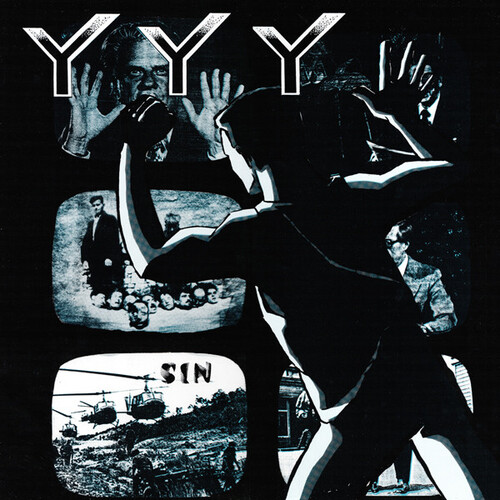
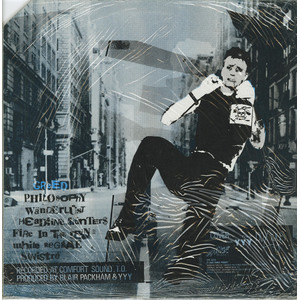
In June 1983, the band entered Comfort Sound in Toronto with engineer Blair Packham to record its only original vinyl release. The seven-song Sin EP contained ‘Philosophy,’ ‘Greed,’ ‘Fire in the Rain,’ ‘Wanderlust,’ ‘White Reggae,’ ‘Sinistre’ and ‘Headline Hunters.’
Although the recording was financed by the band with the expectation that it might be issued independently, it was accepted by Fringe Product, a Toronto label connected to Ready Records and the Record Peddler. Until then, Fringe had primarily handled Canadian editions of Alternative Tentacles releases by bands such as the Dead Kennedys and D.O.A. According to Mallion, Youth Youth Youth may have been the first group the label specifically signed for an original release. Fringe’s distribution network allowed Sin to reach stores that would otherwise have been inaccessible to the band.
The EP was received as a strong early Canadian hardcore release. Maximum Rocknroll described the music as fast, driving punk rather than undifferentiated thrash, noting the loud guitars, emotional vocals and thoughtful lyrics. Later assessments of the expanded material praised the record’s rapid-fire drumming, clarity, immediacy and unusually mature songwriting.
In November 1983, Youth Youth Youth returned to Comfort Sound to record a new version of ‘Domination.’ The track appeared the following year on the Better Youth Organization compilation Something to Believe In, connecting the Toronto group with the wider North American hardcore network surrounding Youth Brigade and BYO.
The band also appeared in Ruth Taylor and Edward Mowbray’s Toronto punk documentary Not Dead Yet. Filmed during the rise of the city’s second generation of punk groups, the production preserved footage and interviews from the period and included Youth Youth Youth among the bands active in the emerging hardcore scene.
Despite the momentum surrounding Sin, Youth Youth Youth did not continue much beyond the record’s release. The band gradually came apart rather than ending through a single decisive event, although its members remained connected to Toronto’s underground music community in different capacities.
Brian Taylor became particularly influential through his Aggressive Rock program on CKLN, where he continued documenting punk, hardcore and metal. He also moved into production, working with Toronto heavy bands including Sacrifice and Sudden Impact. Bishop, McCullough and Mallion likewise remained involved in music and the broader scene, although Youth Youth Youth did not make another contemporary studio release.
In 1989, Fringe Product reissued the Sin EP as Repackaged. The release expanded the original record with remixed material from the 1982 demo and 1983 sessions. Mallion chose the deliberately literal title because the album was exactly that: the earlier recordings repackaged into a more substantial collection.
The band’s music continued to circulate among collectors and later generations of hardcore listeners. In 2014, the digital Anthology assembled twenty-eight tracks from the best available archived cassettes and quarter-inch stereo master tapes. The collection included the original Sin mixes, the 1983 Comfort Sound version of ‘Domination,’ the T.O. Hardcore ’83 recordings, the complete 1982 demo, studio outtakes, early garage tapes and the previously omitted ‘Louie Louie / Part Time Punks.’
A further archival edition of Sin was issued by Blue Fog Recordings in 2023, expanding the EP with material from the 1982 and 1983 Accusonic sessions and the later Comfort Sound version of ‘Domination.’ The reissue returned the band’s work to print and renewed attention to its place in Canadian hardcore.
Youth Youth Youth left behind one original EP, a demo cassette, compilation appearances and a relatively small body of surviving recordings, but their importance exceeded the size of their discography. Their music combined the speed and compression of early hardcore with political intelligence, strong melodic instincts and precise ensemble playing. Through T.O. Hardcore ’83, Taylor’s radio work and the band’s extensive live activity, Youth Youth Youth also helped document and connect a Toronto scene whose history might otherwise have survived only through deteriorating cassettes, flyers and personal recollection.
Youth Youth Youth remain an essential part of Toronto’s early hardcore history, representing a moment when a small network of young musicians, independent labels, campus broadcasters, record shops and all-ages promoters created a durable scene largely through their own resources.
–Robert Williston
Gallery
Images
2 images
Youth Youth Youth-Sin BACK
Sin
Media
Videos
0 videos
No videos available for this title.
Credits
In Transit
No Comments