Insight
Two Hours Traffic emerged from Charlottetown, Prince Edward Island in the early 2000s, a geography that both shaped their identity and framed much of the early discussion around the band. Formed by Liam Corcoran (vocals, guitar), Alec O’Hanley (guitar, keyboards), Andrew MacDonald (bass), and Derek Ellis (drums), the group developed while studying at the University of Prince Edward Island, honing a tightly constructed, melody-driven sound that stood in contrast to the lo-fi or aggressively experimental strains then dominating Canadian indie rock.
From the outset, Two Hours Traffic were unapologetic about their love of classic pop craft. Drawing heavily from power-pop traditions — with Nick Lowe frequently cited as a key influence — their songs emphasized concise structures, harmonies, and hooks rather than abstraction. That approach would later place them in an interesting critical position: embraced for their songwriting strength, yet occasionally scrutinized for sounding “too polished” within indie circles.
Their national breakthrough came with Little Jabs (2007), a release that propelled the band beyond Atlantic Canada and earned a Polaris Music Prize nomination. The album’s success also led to placements on U.S. television series such as Gossip Girl and Smallville, signaling that the band’s sharply written pop songs translated easily beyond Canadian borders. At the same time, Little Jabs established a long-running creative relationship with Joel Plaskett, who became both producer and a guiding figure during the band’s most visible years.
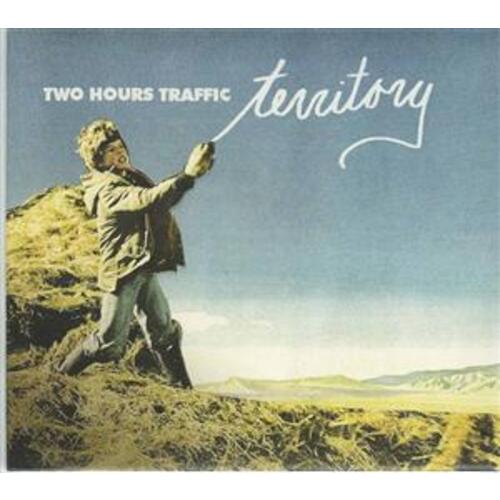
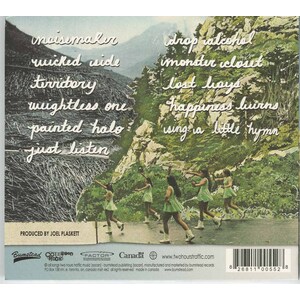
By the time Territory arrived in 2009, Two Hours Traffic were navigating a more complex cultural conversation. For American listeners encountering the album via its U.S. release, the presence of Canadian government and FACTOR logos on the packaging sparked assumptions about state-supported mediocrity — a recurring misconception about Canadian music funding. In reality, Territory revealed a band operating at a high professional level, delivering meticulously arranged power pop that balanced jangle, piano-led balladry, and occasional stylistic detours. Critics noted the album’s Big Star lineage, Laurel Canyon undertones, and its darker lyrical focus on fractured relationships, insecurity, and emotional mistrust. While some reviews pointed to an overly restrained mix or songs that faded rather than exploded, the consensus recognized the record’s craftsmanship and melodic consistency.
Following Territory, internal shifts marked a new phase. Alec O’Hanley departed, and the band eventually regrouped around a revised lineup for Foolish Blood (2013). Recorded with producer Darryl Neudorf at Operation Northwoods in rural Ontario, the album represented a deliberate move away from the Plaskett-produced era. The change in environment and personnel resulted in a warmer, more reflective record, subtly expanding the band’s sonic palette while retaining their core pop sensibility.
Later in 2013, Two Hours Traffic announced a farewell tour and stepped away, citing the financial and logistical realities faced by even critically successful Canadian bands. For years, their catalog stood as a snapshot of a moment when Canadian indie pop briefly aligned critical acclaim, grant-supported infrastructure, and international exposure.
That narrative shifted again in the mid-2020s, when the band quietly reconvened and returned with new recordings, including I Never See You Anymore (2025). Rather than a nostalgia exercise, the release reframed Two Hours Traffic as a band continuing on its own terms — older, more deliberate, and still committed to the fundamentals that defined them from the beginning: strong songs, melodic clarity, and pop craftsmanship.
Within the broader Canadian context, Two Hours Traffic occupy a telling space. They are an example of how Canada’s music-funding ecosystem can support artists from remote regions, not as a crutch, but as a means of enabling records that stand up under international scrutiny. Whatever debates surround those systems, the band’s work — particularly Little Jabs and Territory — remains a durable reminder that well-written pop songs, wherever they originate, ultimately justify their own existence.
-Robert Williston
Musicians
Andrew MacDonald: bass, vocals
Derek Ellis: drums, percussion
Alec O'Hanley: guitar, keyboards, vocals
Joel Plaskett: guitar, percussion, vocals
Liam Corcoran: vocals, guitar
Anna Plaskett: french horn
Molly Rankin: vocals
Songwriting
Written by Two Hours Traffic
“I Did What I Could” (interlude)
Music by Oscar Brand
Words by Liam Corcoran
Produced by Joel Plaskett
Engineered by Darren Van Niekerk
Engineered by JP
Assisted engineering by Kyle Andrus
Assisted engineering by Matt Fudge
Engineering finishing touches by Erich Preston
Engineering finishing touches by Ian McGettigan
Recorded at Sonic Temple Studio, Halifax
Recorded at Scotland Yard, Dartmouth
Finishing touches at Secret Warehouse Studio, Toronto
Finishing touches at Orange Studios, Toronto
Mixed by Howard Redekopp (all tracks except “Sing a Little Hymn”)
Mixed by JP (“Sing a Little Hymn”)
Mix assistance by Brock McFarlane
Mixed at Hipposonic Studios, Vancouver
“Sing a Little Hymn” mixed at Scotland Yard
Mastered by João Carvalho
Mastered at João Carvalho Mastering, Toronto
Artwork
Artwork by Alec O'Hanley
Artwork by Genevieve Long
Artwork assistance by Molly Rankin
Artwork assistance by Rebecca Ford
Layout by Jud Haynes
© Two Hours Traffic Music
© Bumstead Publishing
Manufactured and marketed by Bumstead Records
Gallery
Images
5 images
Two Hours Traffic - Territory
Two Hours Traffic - Territory (1)
Two Hours Traffic - Territory (2)
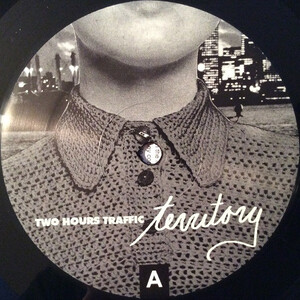
Two Hours Traffic - Territory (3)
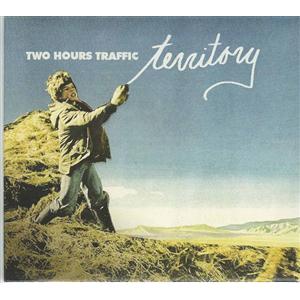
Territory
Media
Videos
0 videos
No videos available for this title.
Credits
In Transit
No Comments