Insight
Robbie Rox is the stage name of Robert Theodore, a singer and songwriter from Timmins, Ontario, who has led Toronto bands under that name since the early 1970s. Horn bands, four-piece rock groups, a rock opera and a long run of independent records all carried his songs and his bald-headed stage persona.
Theodore started out in the mid-1960s as frontman of the R&B band Soul Reason, playing high schools, pavilions and weddings and opening for George Olliver. The wedding crowds liked them, he said, because they kept a steady beat. He went on to York University, where he studied French and psychology and competed as an athlete, then spent time in Quebec, living in the Lower St. Lawrence region, then on a farm, and later in Quebec City.
By 1970 he was performing in Rimouski with an acoustic guitar, dressed in pajamas and alternating two very different half-hour sets. He later started rehearsing with some French-Canadian musicians, forming a band booked to open for Gentle Giant and Mitch Ryder, though the shows never came off.
When he moved back to Toronto in 1973, he took the act up again with his lifelong friend John Hobbs, both on acoustic guitars. A few rehearsals convinced them they needed a band. The first Robbie Rox band rented a house in the city's west end to rehearse, and Bryan Guy brought them to H.P. & Bell, the management company run by Lighthouse founders Paul Hoffert and Skip Prokop. The group cut its first professional demo at Thunder Sound Studios and played its first professional booking in 1974 at the Yonge Station, at Yonge and Bloor, where musicians went to check out new bands. That fall, H.P. & Bell sent them on the road from Thunder Bay to Edmonton, and an eastern tour from New Brunswick to Prince Edward Island followed in 1975. The band broke up when that tour ended.
One of the worst nights of that era came at Sunnybrook Hospital, where the janitor hired the five-piece band for the annual Riverboat dance in Warriors' Hall, in front of about 300 staff members and war veterans. As Rox told it, the material was so strange that by the second song people were climbing onto the stage to attack the band, and he had to phone the police to report a riot.
In the summer of 1975 Rox put together his first horn band, which spent the next three years playing at the El Mocambo, the Colonial, the Midwich Cuckoo and Larry's Hideaway. Downstairs at the Colonial, the band grew to nine pieces, with two trumpets, trombone, saxophone, piano, guitar, bass and drums backing what Wilder Penfield III called the "lead lunatic." There was no cover charge, and four glasses of draught left change from a $2 bill. Two of the players were his brothers, on piano and bass. Rox told Penfield he already had his sights on the United States, because the Canadian music business didn't know how to package a freak. A 1976 photograph bills the group as Robbie Rox and "The 70s Horn Band" and shows them posed on the Star Trek bridge set built for the Toronto Star Trek convention. That year Rox was one of the showcase acts at the Talent Buyers Conference, where RPM magazine reported that the band was the talk of the showcase. He also opened the New Yorker Theatre as a music and film venue for promoters Gary Topp and Jeff Silverman. His first record, 'Doomed to a Catchy Tune' backed with 'World Thank You Please', was cut at RCA Studios on Mutual Street in 1975 and released as a single in 1976.
After five years of indifference from Canadian record companies, the band took out a bank loan to make an album themselves. They remixed old demo tapes, added the brass section to some old recordings, and sent the package to World Records. Four weeks and $1,600 later they had 1,000 copies of Construction Site, released on Rox's own Bent Records label in 1978, then launched it upstairs at the El Mocambo. Production was credited to Rob Theodore and Robbie Rox. The horn band filled the record: brothers John Theodore on keyboards and Michael Theodore on bass, Gordie Hobbs on lead guitar, John Hobbs on rhythm guitar, Ken Bassman on guitar, Brian Carter on drums, Nick Olbrich and Misty Fedak on trumpets, and Kathy Kuhnke, Dave Worth and John Johnson on saxophones. Half of it was recorded live at the Midwich Cuckoo by David Morrison. Four songs, including 'Reeming Me' and 'Trauma', were cut at Thunder Sound by Paul Hoffert and Phil Sheridan, with Ron Sullivan on drums and Jeff Farley on bass. Alan Duffy and Mark Wright finished the album at Phase One Studios. Rox dedicated it to the memory of Gordie Hobbs. The critic Gerald Levitch allowed that Rox wasn't to everyone's taste but heard a banshee falsetto like an LP played at 78 rpm, a twitchy, manic stage presence and a bandleader who, like Zappa, ran a tight ship.
Also in 1978, Rox started the Catso, Porco, Rozzo Band, which played many nights at The Edge, the former Edgertons. For Raw, his second Bent Records LP in 1979, he cut the lineup down to four: Rox on lead vocals and rhythm guitar, John Theodore on keyboards and guitars, Mike Theodore on bass and John Hobbs, now on drums. Alan Duffy produced it, and manager Jim McConnell served as executive producer. Rox later said the record marked a turning point toward a smaller rock unit, and that making it gave him a lot of great times with his two brothers.
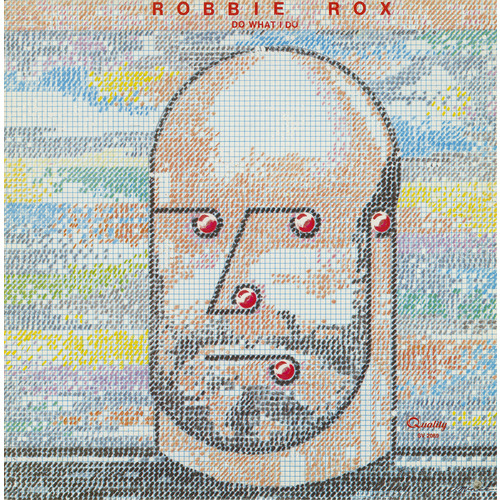
Quality Records signed him in 1980, and the same four recorded Do What I Do under stage names: Robbie Rox, Gianni Porco (John Theodore) on lead guitar, Mike Rozzo (Mike Theodore) on bass and Johnny Catso (John Hobbs) on drums. Alan Duffy produced again at Phase One, with Mick Walsh engineering and Lenny DeRose assisting. Toronto's Q107 put 'Gentle Rental' into regular rotation, and Rox counted Do What I Do as the most successful album of his career. The record also introduced 'Earl Owns the World', a song he would come back to more than twenty years later.
A new band made the four-song EP Man Need Woman for Rosehill Records in 1981, with Don Woods and Mike Theodore on bass, John Hobbs on drums, John Theodore on organ, Terry Blersh, Guy Parent and Guy Levesque on guitars and John Johnson on saxophone. Danny Kuntz engineered, and Wayne Scott came up with the cover concept. Rox later called it his least favourite piece of work, made during a serious transitional period when he was writing about a subject he knew very little about.
That band was reorganized a year later for Ghost Culture, also on Rosehill, owned by Alan Wayne Scott, and recorded at E.S.P. Sound Studios in June 1982. John Theodore played organ and grand piano, with Michael Theodore on bass, Leo Nebedek on drums, Howard Laurie on synthesizers, Johnny Johnson on saxophones, John Tilden and Lui Lotufo on guitars, and guest Mike Pickett on harmonicas. Howard Laurie and Wayne Scott produced, and Lotufo and William Faulkner put up the money. Rox later credited engineer Dee Long with making it the best-sounding Robbie Rox album to that point.
Around 1982 or 1983 came Let's All Twitch Together, a cassette recorded live at Rob Otman Studios at 402 Huron Street and manufactured and distributed by Rose Hill Records. Bob Read arranged, produced and engineered it and played bass guitar and synthesizer, with Lori Conroy and Siobhan Duffy on vocals, Gary Gies on drums, Johnnie Johnson on soprano, alto and tenor saxophones, Lui Lotufo on rhythm and lead guitar, John Theodore on organ and acoustic piano, and Rox on lead and background vocals and acoustic guitar. Side one held 'She Has No Phone', 'Hire An Idiot', 'Don't Want to Live Here Mommy', 'Let's All Twitch' and 'Fighting the Occult'. Side two was listed as 'Blank for Your Choice' and left empty for the buyer to fill. Sam Dixon drew the cover, a city street full of twitching dancers, and Bryan Guy handled live logistics.
In 1983 Rox staged his retirement at the El Mocambo. The club was packed, some of the audience were crying, and at the end of the night he was carried out of the building in a coffin. The retirement lasted about a month.
In 1984 he formed Robbie Rox and the Monster Horn Band, which spent three years at the El Mocambo, the Horseshoe, Larry's Hideaway and the Diamond. He also led the rock group Cazzotto, and with arranger Jeff Goodspeed he built a rock opera, Ever Been to Sea Billy?, from a set of songs and compositions that shared a theme. It was staged at the Diamond on Sherbourne Street. By then he was telling the press that he felt he was building "a kind of musical institution" in Toronto.
His head was working too. A casting agent approached him after seeing him perform, and his bald head turned up in television commercials for Miller beer and Audi and in print ads for Nissan trucks and Labatt. Principal roles in commercials and films followed, along with voice-over, ADR and session singing that drew on his three-octave range and his character voices. He played a biker in the 1993 Canadian film The Dark and later appeared on TekWar, where he met William Shatner. He also took up the congas seriously, working as a sideman and eventually teaching the instrument.
Rox was already billed as a former leader of The Rude Band by the mid-1980s, and in the early 1990s he assembled the version of the band that made its records. That lineup stayed together for about ten years. Its first CD, Once The Head's Blown Off, came out on John Carr's Slip Disc label in 1995, with Mike Siracusa on drums, Mike Theodore on bass and percussion, John Kruka on keyboards, Lui Lotufo on guitar and Rox on vocals and percussion. They recorded at Street Brothers Studio, also owned by Carr, but played straight to DAT with no multitrack, so whatever mix they started with was the one they kept. To give it a live feel, the band invited a crowd of friends, the notorious Glueheads among them, to party and drink beer through the sessions. Rox posed nude as The Thinker for the cover.
The Big Screw followed in 1997 with the same five players. Jono Grant recorded it at VDR Studios and sat in as a special guest on acoustic guitar, keyboards and percussion, plus lead guitar on 'Hate Those Days'. Don Garbutt mastered the album, which the band dedicated to the Theodore brothers' late father.
In 2000 Rox brought the Monster Horn Band back for a reunion at the Silver Dollar and stayed with that format. Earl Owns The World appeared on Robbie Rox Records in 2003, with Vito Rezza on drums and percussion, Lew Mele on bass, Michael Fonfara on keyboards, Jono Grant on guitars, Gord Myers on trombones, Perry White and John Johnson on saxophones, Dave Dunlop on trumpet and Rox singing and playing congas. Grant produced and engineered at Victory Drive Recording, with Rezza co-producing. The album revisited the title song from Do What I Do and the title piece from Ever Been to Sea Billy?, and Rox pitched it to radio in Australia and Europe, where stations had begun playing tracks from it.
In 2023 Rox marked fifty years of the Robbie Rox project with a Toronto show featuring Russ Boswell, Rob Gusevs, Sil Simone, Simon Wallis and Mike Siracusa. "I guess I am doing this for the rest of my life," he had said twenty years earlier.
-Robert Williston, approved by Robbie Oct 3, 2026
This album was the most successful album in the career of Robbie Rox and this was a result of a record deal from Quality Records, Canada. The song entitled "Gentle Rental" was put on regular rotation at Q107 radio in 1980, Toronto.
Gallery
Images
3 images
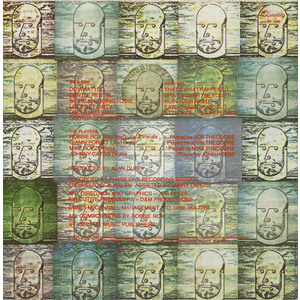
Robbie Rox - Do What I Do BACK
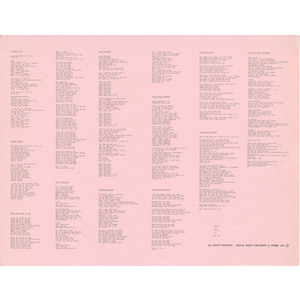
Robbie Rox - Do What I Do INSERT SINGLE-SIDED
Do What I Do
Media
Videos
0 videos
No videos available for this title.
Credits
Musicians
Robbie Rox (Rob Theodore): rhythm guitar, vocals
Gianni Porco (John Theodore): lead guitar
Mike Rozzo (Mike Theodore): bass
Johnny Catso (John Hobbs): drums
Songwriting
All compositions by Robbie Rox
Published by Special Music Publishers
Production
Produced by Alan Duffy
Executive produced by D&M Productions
Technical
Recorded at Phase One Recording Studios
Engineered by Mick Walsh
Assisted by Lenny DeRose
Artwork and photography
Art direction and graphics by Jon McKee
Layout and typing by Lindy Swan
Management
Managed by James McConnell Management Ltd.
Release
Released 1980 in Canada by Quality Records
Catalogue number SV 2069
Manufactured and distributed in Canada by Quality Records Limited
© 1980 Quality Records Limited
℗ Special Music Publishers
Matrix numbers
SV2069 A TLC A
SV2069 B TLC A
No Comments