Insight
Natural Gas were an eight-piece Canadian rock, soul and jazz group formed around singer and organist George Olliver in 1969. Olliver had already established himself as one of Toronto’s strongest R&B frontmen with Mandala before leaving the group in 1967 and forming the large soul outfit George Olliver and His Soul Children. By 1969 that chapter had given way to Natural Gas, a band built for a broader sound, with keyboards, guitar, bass and percussion backed by trumpet, saxophones and trombone.
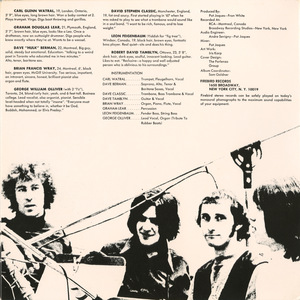
The lineup brought together musicians from several Canadian scenes. George William Olliver, from Toronto, handled lead vocals and occasional organ. Carl Glenn Watral, from London, Ontario, played trumpet and flugelhorn; Montreal’s Dave “Hulk” Berman covered soprano, alto, tenor and baritone saxophones; David Stephen Classic, born in Manchester, England, played trombone and bass trombone; Robert David Tamblyn, from Ottawa, played guitar; Montreal musician Brian Francis Wray played organ, piano and flute; Graham Douglas Lear, born in Plymouth, England and raised in London, Ontario, handled percussion; and Windsor bassist Leon Feigenbaum played Fender and string bass. Most of the group also sang.
Wray joined Natural Gas in May 1969 after playing with Five of a Kind, a Montreal group that had also included future Mashmakhan member Brian Edwards. Feigenbaum joined in October after playing with The Influence. The finished Natural Gas lineup therefore came together only shortly before the album was recorded.
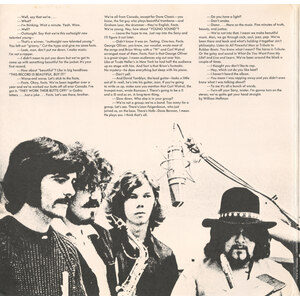
The band’s own liner notes described their music plainly: they moved through rock, soul, jazz and pop. That description fits the record better than attaching Natural Gas to any one genre. Olliver brought the R&B and soul background that had defined Mandala and the Soul Children, while the horn section, Wray’s keyboards and arrangements, and Lear’s percussion opened the music into jazz-rock and longer-form arrangements. The same Canadian period was producing Lighthouse and other large horn-driven groups, while American bands such as Blood, Sweat & Tears and Chicago were pushing similar combinations of rock rhythm sections and brass into the mainstream.
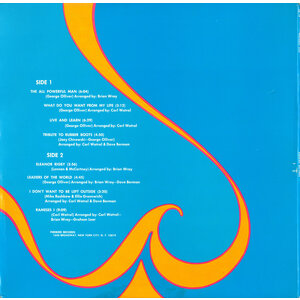
Olliver supplied most of the original material. He wrote ‘The All Powerful Man’, ‘What Do You Want From My Life’, ‘Live And Learn’ and ‘Leaders Of The World’, and co-wrote ‘Tribute To Rubber Boots’ with Joey Chirowski. ‘Tribute To Rubber Boots’ reached back into Olliver’s Mandala years, where the piece had already existed in the group’s repertoire. The album also included Lennon and McCartney’s ‘Eleanor Rigby’, Mike Rashkow and Ellie Greenwich’s ‘I Don’t Want To Be Left Outside’, and Carl Watral’s nine-minute ‘Rameses I’.
The arrangements were shared across the band. Brian Wray arranged ‘The All Powerful Man’ and ‘Eleanor Rigby’ and joined Watral and Graham Lear on the arrangement of ‘Rameses I’. Watral arranged ‘What Do You Want From My Life’ and ‘Live And Learn’, while Watral and Dave Berman handled ‘Tribute To Rubber Boots’ and ‘I Don’t Want To Be Left Outside’. Wray and Berman arranged ‘Leaders Of The World’. The original Firebird label confirms Wray, rather than Watral, as arranger of ‘The All Powerful Man’, correcting a credit that has circulated incorrectly in some later discographies.
Managers Pat Jaques and Fran White had met the band in New York during 1969 and produced the album. The sleeve credits recording at RCA in Montreal and Broadway Recording Studios in New York, with Andre Sevigny and Pat Jaques engineering and Jaques mixing. The album masters were cut at Sterling Sound, with both runouts carrying the date December 23, 1969. The record was therefore completed just before its release at the beginning of 1970.
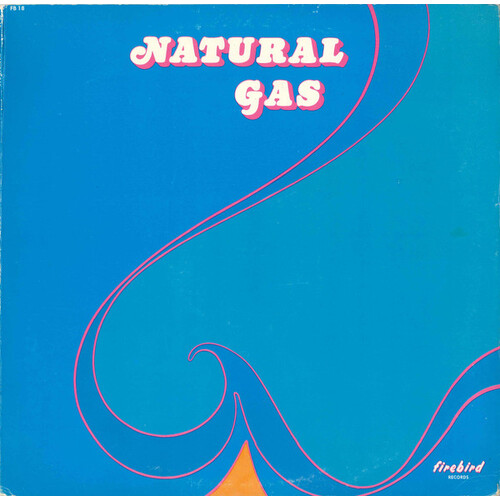
The American connection was substantial. Natural Gas became one of the first acts selected to launch the newly formed Firebird Records, run by veteran record men George and Sam Goldner. Billboard reported in December 1969 that Firebird had eight acts signed but had chosen Natural Gas among the small group that would introduce the label, with the album already finished and a New York appearance planned around its launch. The Goldners had previously been involved with labels including Red Bird, End and Gone and brought decades of independent record-business experience to the project.
Firebird released Natural Gas as FB-18 around the turn of 1970. A release reception was held at Broadway Recording Studios in New York, where Firebird hosted radio and music-industry guests including representatives from WCBS-FM and Record World. The album had already been released in the United States by the time Cash Box reported on the party in January. Firebird subsequently arranged Canadian distribution through Modern Tape Cartridge Corporation, with the Natural Gas LP among the company’s first Firebird releases in Canada.
Natural Gas were also working Montreal during the record’s release. In January 1970 they appeared at the Laugh-In on Victoria Street, where The Gazette heard a band moving easily between R&B, jazz and rock. Their live repertoire even included the theme from 2001: A Space Odyssey. Olliver could shift from the physical R&B showmanship associated with James Brown into quieter material, while Brian Wray’s piano and organ playing drew particular attention.
‘The All Powerful Man’ was selected as the single, backed with ‘What Do You Want From My Life’ on Firebird FR 1806. Wray arranged the A-side and Watral arranged the flip. The single spent seven weeks on the Canadian charts and reached No. 76 on the RPM 100 on May 9, 1970. On RPM’s Canadian-content chart it reached No. 12 that same week.
The album also gained national traction. It entered the RPM 100 Albums chart at No. 82 for the week ending March 14, was at No. 66 by April 18 and had climbed to No. 55 by May 16. Modern Tape supported the record nationally, with promotion director John Driscoll travelling through the western provinces to work both the album and ‘The All Powerful Man’.
Olliver later remembered Natural Gas touring Ontario and Quebec constantly, using the Commodore in Kingston as a regular home base. The album made enough of an impression in the area that he remembered local musicians learning and performing its songs. The band also travelled into the United States before breaking up late in 1970.
Natural Gas also crossed directly into the Montreal sessions that produced Freedom North’s 1970 album. Brian Wray played piano and handled horn arrangements, while fellow Natural Gas members Carl Watral and Dave Classic were among the horn players. Freedom North drummer Eddy Kaye independently remembered the Natural Gas horn section taking part, reinforcing the connection between the two bands.
The breakup scattered Natural Gas into several important Canadian groups. Brian Wray and Dave Berman were part of a 1971 version of Motherlode, and Wray later reunited with Graham Lear in Truck. Carl Watral and Leon Feigenbaum moved into Young. Dave Tamblyn joined Ocean, whose ‘Put Your Hand in the Hand’ became an international hit in 1971. Lear’s path carried him through Freedom North, Riverson and Truck before major work with Gino Vannelli, Santana and later REO Speedwagon.
Olliver continued performing and recording for decades. His 1973 Much Records single ‘I May Never Get to See You Again’ was produced by Bill Hill, another link back into the Montreal musicians surrounding Freedom North. Natural Gas remained a short-lived band, but the musicians, arrangements and connections around its single album spread through Canadian rock, soul and jazz for years afterward. Olliver died in 2025 at the age of 79.
-Robert Williston
Gallery
Images
6 images
Natural Gas - Natural Gas BACK
Natural Gas - Natural Gas FOLDOUT 01
Natural Gas - Natural Gas FOLDOUT 02
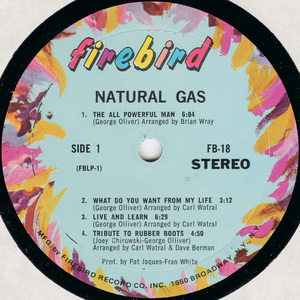
Natural Gas - Natural Gas LABEL 01
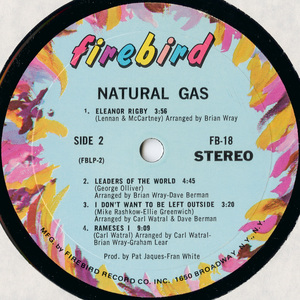
Natural Gas - Natural Gas LABEL 02
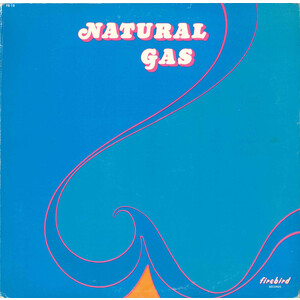
ST
Media
Videos
0 videos
No videos available for this title.
Credits
Musicians
George William Olliver: lead vocals, organ on ‘Tribute To Rubber Boots’
Carl Glenn Watral: trumpet, flugelhorn, vocals
Dave “Hulk” Berman: soprano saxophone, alto saxophone, tenor saxophone, baritone saxophone, vocals
David Stephen Classic: trombone, bass trombone, vocals
Robert David Tamblyn: guitar, vocals
Brian Francis Wray: organ, piano, flute, vocals
Graham Douglas Lear: percussion
Leon Feigenbaum: Fender bass, string bass
Songwriting
‘The All Powerful Man’ written by George Olliver
‘What Do You Want From My Life’ written by George Olliver
‘Live And Learn’ written by George Olliver
‘Tribute To Rubber Boots’ written by Joey Chirowski and George Olliver
‘Eleanor Rigby’ written by John Lennon and Paul McCartney
‘Leaders Of The World’ written by George Olliver
‘I Don’t Want To Be Left Outside’ written by Mike Rashkow and Ellie Greenwich
‘Rameses I’ written by Carl Watral
Arrangements
‘The All Powerful Man’ arranged by Brian Wray
‘What Do You Want From My Life’ arranged by Carl Watral
‘Live And Learn’ arranged by Carl Watral
‘Tribute To Rubber Boots’ arranged by Carl Watral and Dave Berman
‘Eleanor Rigby’ arranged by Brian Wray
‘Leaders Of The World’ arranged by Brian Wray and Dave Berman
‘I Don’t Want To Be Left Outside’ arranged by Carl Watral and Dave Berman
‘Rameses I’ arranged by Carl Watral, Brian Wray and Graham Lear
Production
Produced by Pat Jaques and Fran White
Engineered by Andre Sevigny and Pat Jaques
Mixed by Pat Jaques
Mastered at Sterling Sound
Recording
Recorded at RCA Victor Studios, Montreal, Quebec, Canada
Recorded at Broadway Recording Studios, New York, New York, USA
Artwork
Artwork by Iris Karp
Cover design by The Florenza Group
Album coordinator Sam Goldner
Release
Firebird Records FB-18
Stereo
Matrix numbers
Side 1 – FBLP 1 12-23-69 STERLING
Side 2 – FBLP 2 12-23-69 STERLING
No Comments