Album / Title
A Long Time Coming!
By: Dave McCluskey
Origin: Barking, England, UK → Scarborough → Pickering → Mississauga, Ontario → Sussex, New Brunswick, 🇨🇦
Insight
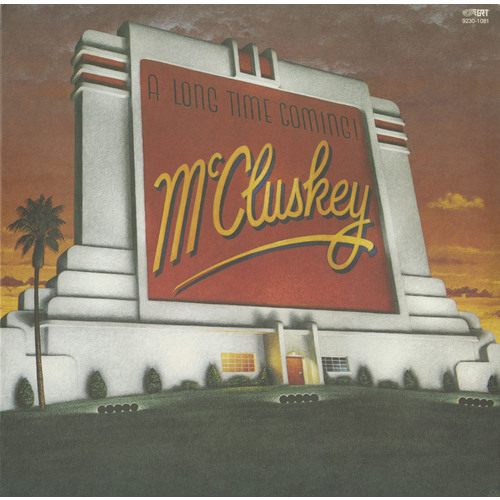
In November 1978 GRT Records released A Long Time Coming!, the debut album of a 23-year-old singer from Pickering, Ontario, credited simply to McCluskey. RPM remarked that the title hardly reflected how quickly he had gone from unpublished songwriter to recording artist. Dave McCluskey had barely sung in public before he found himself in Toronto and Los Angeles studios with some of the finest session players in North America. More than thirty years later, a partly inaccurate biography that came with the 2010 Japanese CD reissue of his album found its way onto CitizenFreak.com, and it was McCluskey’s own family who set the correction in motion.
McCluskey was born in Barking, England, and came to Canada with his family as a child. They lived first in Scarborough and later settled in Pickering. Like so many of his generation he grew up under the spell of the Beatles, and his first serious ambition was to play the drums. His parents had bought guitars for him and his brother, but he kept asking for a kit until they gave in. Before long the noise was too much for the house, so his brother, already a capable guitarist, started showing him chords, and McCluskey moved over to guitar.
He never served an apprenticeship in local bands. By his own description he was a basement musician, playing at home for himself, his brother and a close friend. The first time he remembered singing for an audience was at about eighteen, when his brother pushed him onstage with a country band in a bar. He sang Eagles songs, Hank Williams, the Beatles and other familiar material, and the reaction told him that performing might be possible. Even so, he joined no band and went back to writing at home.
His way in came through Glenn Johansson, a Scarborough musician and studio owner McCluskey first met while Johansson was playing a lounge. Johansson handed him a card and told him to call if he ever wanted to record. The chance came when McCluskey’s best friend asked for a cassette of his songs to play in his truck. McCluskey brought his material to Johansson, who told him frankly that the songs he had planned to record were not strong enough. Asked what else he had, McCluskey played the beginnings of ‘What You’re Doin’ to Me’. Johansson heard something in it and suggested they record that instead.
McCluskey arrived at the studio on a Friday and left on Monday morning with recordings that would change his life. Johansson handled much of the playing and production, while McCluskey finished ‘What You’re Doin’ to Me’ and wrote ‘So in Love With You’ over the same weekend. Johansson’s arrangement ideas shaped those demos, and McCluskey later credited him with helping to form the voice and presentation that made them stand out, as well as with getting the songs recorded at all.
Johansson urged him to send the cassette to record companies. McCluskey opened the Yellow Pages, looked up record labels and mailed copies to several, including A&M and GRT. Michael Godin at A&M answered first and invited him in. The same day Jeff Burns, GRT’s vice-president of A&R, called as well. When Burns phoned the house and asked for Dave McCluskey, McCluskey’s father answered, which reminded Burns of a similar call he had once made to Dan Hill’s home.
At their meeting Burns asked where his band was playing. McCluskey said he had no band. Asked where he was performing, he said nowhere. He had never played a professional date, had nothing booked and had no live act. He had written songs at home and recorded them with Johansson. GRT became more interested, not less.
Burns then arranged a meeting at a house in Scarborough, where McCluskey found himself in a room with Burns, GRT president Ross Reynolds, Matthew McCauley and Fred Mollin, the team behind Dan Hill’s ‘Sometimes When We Touch’. Asked to play, and with no experience performing for industry people, he was nervous and uncomfortable. His guitar playing did not impress them, but his voice and songs did. A call followed from Mollin: come to Manta Sound in Toronto, and don’t bring the guitar.
McCauley and Mollin produced the album, with Gene Martynec producing ‘All of the Time’. McCluskey sang, and the producers surrounded him with John Capek, Doug Riley, Tom Szczesniak, John Andersen, Bob Mann, Leland Sklar, Mike Porcaro, Jeff Porcaro, Steve Lukather, Dan Dugmore, Andy Newmark, Jim Horn, Bobby Kimball and others. McCluskey still thought of himself as a young songwriter from Pickering, and the scale of the sessions felt almost unreal. Only later did he understand the calibre of the players on his record. McCluskey wrote most of the songs, sharing credit with Mollin and McCauley on ‘Lady of the Night’ and ‘One More Try’. ‘I’d Like to Say I Love You’ is credited to Glen Johansen, and the album closes with the Beatles’ ‘I’ll Be Back’.
Manta also brought a personal surprise. McCluskey was a devoted fan of Fludd, and during the sessions he got talking with drummer John Andersen. When Andersen mentioned that he had once played in Fludd, McCluskey was stunned. That connection would come back into his life years later.
The Los Angeles work took in Sunset Sound, Sound Factory West, the Record Plant, Wally Heider Studios and Cherokee Studios. The album’s opening track, ‘Lady of the Night’, was written under pressure. GRT needed one more song, and Burns called with a blunt instruction: write it today, because you fly to Los Angeles tomorrow. McCluskey started it at home, kept working on the plane and landed with only part of it done. At the Chateau Marmont, Mollin took him to a ballroom with a grand piano, where the two finished the song. They recorded it the next day.
GRT released the album on November 11, 1978. ‘What You’re Doin’ to Me’ went out as the first single and was picking up airplay, Janus Records had committed to a U.S. release in January, and McCluskey was signed with Trans World Management. He was already writing for a second album, and he later felt those songs were stronger than the first. Then the business around him collapsed. GRT’s American parent filed for bankruptcy protection in July 1979, taking Janus with it, and GRT of Canada declared bankruptcy that October. His management fell apart, and the career that had appeared so quickly vanished just as fast. There were talks with other labels, including Mercury and Epic, but nothing came together. Because he had not come up through bands and clubs, McCluskey later reflected, he had neither the experience nor the support around him to simply keep going. The record deal had arrived before any road career.
Eventually he stepped back, took work in the trucking industry, though not as a driver, and built a more conventional life. Music never left entirely. After moving to the Newmarket area he formed the Dave McCluskey Band and played steadily from about 1992 to 1999, finally getting the working-band experience he had skipped before GRT.
In 1999 his connection to Fludd came full circle. He had first met Ed Pilling in 1979, while working on songs for the planned second album. Fludd had broken up by then, but the two became friends. Twenty years later Greg Godovitz and Ed Pilling saw the Dave McCluskey Band and talked about forming a British Invasion-style group. McCluskey brought his band into the project, which first performed as No Flies on Frank, a name Godovitz took from a John Lennon drawing. Audiences kept asking for Fludd songs, and the project gradually turned into Fludd again. After Godovitz left and Ed’s brother Steve Pilling joined, McCluskey suggested they simply call it Fludd, since that was plainly what people wanted to hear.
McCluskey stayed with Fludd for about a decade, playing acoustic guitar and piano and singing background vocals, including on the 2006 album Fludd Lights. By 2011 he felt he was losing himself as an artist. After a live radio broadcast in Toronto he told Ed Pilling that he loved him but was finished. He went home and told his wife he had retired from music.
For several years that seemed to be the end of the story. Then McCluskey learned he had a daughter he had never known about. She had found him through Facebook after learning who her biological father was, and DNA testing confirmed it. By then she was an adult with a family of her own, and McCluskey became a father and a grandfather at once.
The discovery changed the direction of his life. His daughter and four grandchildren lived in Sussex, New Brunswick, and McCluskey eventually moved there to be near them. He has called it the greatest blessing of his life. It also changed how he sees his past. Had he known about his daughter when he was nineteen, he believes his life would likely have taken a completely different course, and the music career that carried him from Pickering to Manta Sound, GRT and Los Angeles might never have happened.
The same discovery led to the correction of his public story. His album had been posted on CitizenFreak.com with a biography traced to the 2010 Japanese CD reissue on the Cool Sound label, and much of that account, he later explained, was inaccurate, embellished or distorted. His grandson found the page and began reading it aloud to McCluskey’s daughter while McCluskey sat nearby. He recognized at once that important parts were wrong, and he contacted Robert Williston so the record could be set straight in his own words: how the songs were written, how the sessions and the deal came about, how it collapsed, the Fludd years and the move to Sussex.
In Sussex McCluskey found a quieter life and a strong local music scene, with open jams and community performances. He has thought about returning to his unreleased songs in a modest way, perhaps through acoustic videos. Some of the second-album material that never reached the public has now been heard by his daughter.
-Robert Williston
Gallery
Images
2 images
Dave McClusky - A Long Time Coming BACK
A Long Time Coming!
Media
Videos
0 videos
No videos available for this title.
Credits
Musicians
David McCluskey: lead vocals
Steve Lukather: electric guitar
Bob Mann: electric guitar
Dan Dugmore: electric guitar
Fred Mollin: acoustic guitar, guitar, percussion, background vocals
John Capek: piano, keyboards, organ, Fender Rhodes
Doug Riley: piano
John Jarvis: piano, Fender Rhodes
Tom Szczesniak: bass
Leland Sklar: bass
Mike Porcaro: bass
Bob DiSalle: drums
John Andersen: drums
Jeff Porcaro: drums
Andy Newmark: drums
Jim Horn: saxophone
Bobby Kimball: background vocals, counter vocal
Bobby Hillary: background vocals
Fred Pedersen: background vocals
Jimmy Faragher: lead vocal on ‘A Long Time Coming’
Matthew McCauley: synthesizer, background vocals
Mark Lineitz: horns
Bob Schaper: horns
Bob Edwards: horns
Songwriting
All songs written by David McCluskey except ‘I’ll Be Back’ written by John Lennon and Paul McCartney
Production
Produced by Matthew McCauley and Fred Mollin
Recorded and mixed at Manta Sound, Toronto, Ontario; Sunset Sound, Los Angeles, California; Sunset Sound Factory West, Los Angeles, California; Cherokee Studios, Los Angeles, California; Record Plant, Los Angeles, California; and Wally Heider Studios, Los Angeles, California
Engineered by Gary Gray, John Naslen, Sy Potma, Bob Schaper, Bob Edwards, Mark Lineitz, and Mic Guzowski
Assistant engineering by David Biasi
Strings arranged and conducted by Matthew McCauley
Horns arranged by Bob Schaper, Mark Lineitz, and Bob Edwards
Artwork
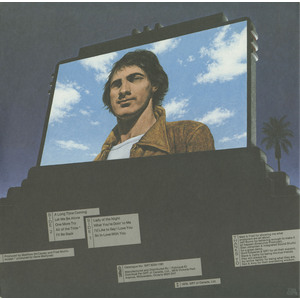
Jacket concept and design by John Hannan
Illustration by John Martin, Fifty Fingers
Publishing
Private Affair Songs
Thanks
Matthew McCauley and Fred Mollin wish to thank Gord, for all his guidance, especially Jeff and Leland; everyone at Janus Records, especially Eddie, Bobby, Len, and Sue; Danny at Sunset Sound, especially Gene and Mark; and everyone at Manta Sound, especially Gary, Sy, Jim, Dave Hill, Irene, and everyone on the staff of this album.
Notes
Jeff Porcaro and Steve Lukather appear through the courtesy of Toto Productions.
Leland Sklar and David Hungate appear through the courtesy of Qwest Records.
Davey Johnstone of the group C.A.D. appears through the courtesy of Capitol Records.
John Andersen appears through the courtesy of CBS Records.
Track-by-track Credits
‘Lady of the Night’
Musicians
David McCluskey: lead vocals
John Jarvis: piano, Fender Rhodes
Steve Lukather: electric guitar
Fred Mollin: acoustic guitar
Leland Sklar: bass
Andy Newmark: drums
Jim Horn: saxophone
Bobby Kimball: background vocals, counter vocal
Matthew McCauley: background vocals
Production
Produced by Matthew McCauley and Fred Mollin
Horns by Bobby “Bunny” Schaper
Overdubs by Mark Linett
Recorded and mixed at Sunset Sound, Los Angeles, California
‘What You’re Doin’ to Me’
Musicians
David McCluskey: lead vocals
Fred Mollin: acoustic guitar, background vocals
Doug Riley: piano
Tom Szczesniak: bass
John Andersen: drums
Bob Mann: electric guitar
Matthew McCauley: background vocals
Matthew McCauley: strings arranged and conducted
Production
Engineered by Gary Gray
Assistant engineering by John Naslen and Sy Potma
Recorded and mixed at Manta Sound, Toronto, Ontario
‘I’d Like to Say I Love You’
Musicians
David McCluskey: lead vocals
Fred Mollin: acoustic guitar, percussion, background vocals
Tom Szczesniak: bass
John Capek: keyboards
Matthew McCauley: background vocals
Production
Engineered by John Naslen for basic tracks
Overdubs and mix by Gary Gray
Assistant engineering by Sy Potma
Recorded and mixed at Manta Sound, Toronto, Ontario
‘So in Love With You’
Musicians
David McCluskey: lead vocals
Doug Riley: piano
Fred Mollin: acoustic guitar
Tom Szczesniak: bass
Bob Mann: electric guitar
John Andersen: drums
Matthew McCauley: synthesizer
Matthew McCauley: strings arranged and conducted
Bobby Hillary: background vocals
Production
Produced by Matthew McCauley and Fred Mollin
Engineered by Gary Gray
Assistant engineering by John Naslen and Sy Potma
Recorded and mixed at Manta Sound, Toronto, Ontario
‘A Long Time Coming’
Musicians
David McCluskey: lead vocals
Fred Mollin: acoustic guitar, background vocals
Dan Dugmore: electric guitar
John Capek: piano, organ
Leland Sklar: bass
Jeff Porcaro: drums
Jimmy Faragher: lead vocal
Matthew McCauley: background vocals
Production
Produced by Matthew McCauley and Fred Mollin
Tracks and mix engineered by Bob Schaper
Overdubs by Bob Edwards and Mark Lineitz
Assistant engineering by David Biasi
Recorded at Sunset Sound, Sunset Sound Factory West, Record Plant, and Wally Heider Studios, Los Angeles, California
‘Let Me Be Alone’
Musicians
David McCluskey: lead vocals
Fred Mollin: acoustic guitar
Mike Porcaro: bass
Dan Dugmore: electric guitar
Steve Lukather: electric guitar
John Capek: Fender Rhodes
Jeff Porcaro: drums
Fred Pedersen: background vocals
Matthew McCauley: background vocals
Matthew McCauley: strings arranged and conducted
Production
Tracks and mix engineered by Bob Schaper
Overdubs by Bob Edwards and Mark Lineitz
Assistant engineering by David Biasi
Recorded at Sunset Sound, Sunset Sound Factory West, Record Plant, and Wally Heider Studios, Los Angeles, California
‘One More Try’
Musicians
David McCluskey: lead vocals
John Capek: piano
Mike Porcaro: bass
Jeff Porcaro: drums
Dan Dugmore: electric guitar
Matthew McCauley: background vocals
Matthew McCauley: synthesizer
Production
Basic tracks engineered by Bob Schaper
Mixed by Mic Guzowski
Overdubs by Gary Gray and Mark Lineitz
Assistant engineering by David Biasi
Recorded at Sunset Sound, Los Angeles, California
Additional recording at Sound Factory West, Record Plant, and Wally Heider Studios, Los Angeles, California
Mixed at Sunset Sound, Los Angeles, California
‘All of the Time’
Musicians
David McCluskey: lead vocals
John Andersen: drums
Bob DiSalle: drums
Tom Szczesniak: bass
Jim Goldsworthy: guitar
Gene Martynec: strings arranged
Production
Engineered by Ken Friesen
Recorded and mixed at Eastern Sound, Toronto, Ontario
‘I’ll Be Back’
Musicians
David McCluskey: lead vocals
John Capek: piano
Matthew McCauley: orchestra arranged and conducted
Production
Basic tracks and overdubs engineered by Bob Edwards
String mix by Bob Schaper
Assistant engineering by David Biasi
Recorded at Record Plant, Wally Heider Studios, and Cherokee Studios, Los Angeles, California
Mixed at Sunset Sound, Los Angeles, California
No Comments