Insight
Living Proof were a Toronto-area rock band whose brief mid-1980s career moved through garage rock, psychedelia, punk and increasingly heavy guitar music. Formed from the remnants of The Hoo Doos, the group became part of Toronto’s independent underground at a time when punk, garage, hardcore and alternative rock still overlapped freely. Drummer Lonnie James later described their original sound as ‘garage pop punkedelia’ before the band gradually evolved into a substantially heavier rock group.
The original lineup consisted of Bill Patterson on vocals, Alistair James on guitar, Mike ‘Lopez’ Phillips on bass and Lonnie James on drums. Living Proof began playing Toronto clubs including The Upper Lip, The Turning Point, Frankenstein’s and Larry’s Hideaway, but James remembered the small Quoc Te club in Kensington Market as particularly important. For a period, Living Proof and Madhouse were among the groups helping create a scene around the room, where unconventional surroundings and a permissive atmosphere made it a natural home for underground rock.
Living Proof also developed close ties with The Raving Mojos. Blair Richard Martin of the Mojos later independently recalled playing with Living Proof’s precursor, The Hoo Doos, and remembered Living Proof as part of the same Toronto underground network. Other groups associated with their early live activity included Mick Slick and Direct Action.
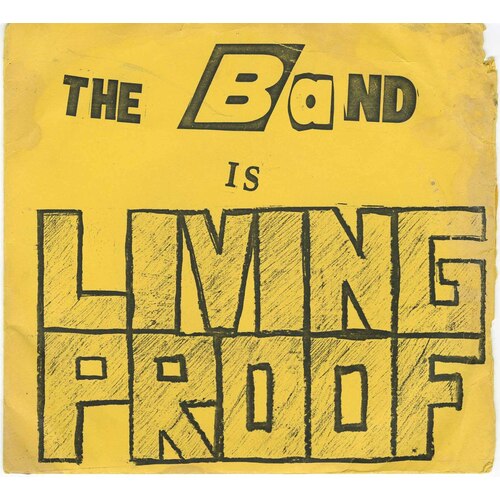
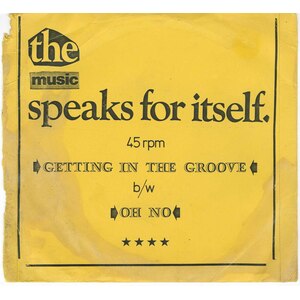
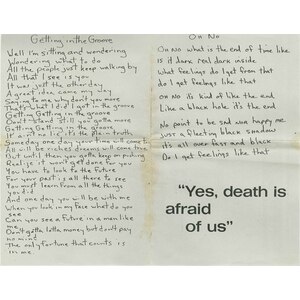
The band made its recording debut in 1983 with the independently issued 7-inch The Band Is Living Proof, The Music Speaks for Itself on 100% Records. ‘Getting in the Groove’, written by Lonnie James, was backed with Alistair James’s ‘Oh No’. The record was produced by Greg Lunny and Living Proof, arranged by the band and manufactured in Canada by JMR.
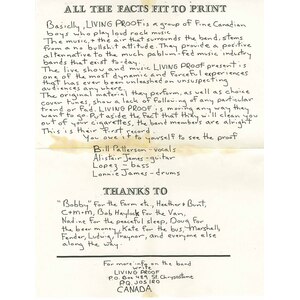
The handmade packaging captured Living Proof’s early attitude particularly well. An accompanying insert described them as ‘fine Canadian boys who play loud rock music’, emphasized their refusal to follow any particular trend or fad, and presented the live show as central to the group’s identity.
The single attracted attention outside Toronto. Jeff Bale, reviewing it in Maximum Rocknroll, heard ‘Getting in the Groove’ as raw, late-1960s-inspired garage psychedelia, while ‘Oh No’ revealed a slower and heavier side of the band. The contemporary assessment provides a useful snapshot of Living Proof before their sound began changing substantially.
Within their first year, Living Proof had developed a following in Toronto, Hamilton and London and attempted something considerably more ambitious: a Canadian tour. Lonnie James later stressed how difficult independent touring was in this period. There was no dependable national club circuit, and arranging a handful of dates could require months of telephone calls, with no guarantee that a show would still exist when the band arrived after several days on the road.
James credited D.O.A. in particular with helping establish the Canadian independent touring network that later generations of bands would use. Living Proof were travelling while that infrastructure was still developing, often measuring success simply by whether a show covered gasoline, food and vehicle repairs.
One early western trip brought Living Proof to Wellington’s in Winnipeg, where they were booked for several nights. The Scottish punk band The Exploited arrived in town during the same period, and after seeing Living Proof perform, guitarist Big John Duncan invited them to open the following night.
The Winnipeg stop also effectively ended the original lineup. According to Lonnie James’s later account, tensions with vocalist Bill Patterson had already been building, and events following the Exploited show finally brought matters to a head. Patterson separated from the group during the trip, and the remaining musicians returned to Toronto without him.
Living Proof continued rather than immediately dissolving, beginning a period of considerable personnel turnover. James later recalled enough musicians passing through the band to ‘fill a baseball team’, naming Mike McCurdy, Randy Ruso, Eric, Shawn, Hugh and John Grove, among others. Through the changes, Alistair and Lonnie James provided an important thread of continuity.
The music changed as well. The garage and psychedelic qualities documented on the first single gradually gave way to a stronger, heavier and more expansive rock sound. This development culminated in Living Proof’s sole full-length album, This Trip Is for Real.
Recorded and mixed at Jonestown in Toronto during November and December 1984, the album was released on 100% Records in 1985. The documented lineup was Lonnie James on drums, Alistair James on vocals and guitar, and Michael James on guitar and vocals. Living Proof produced the sessions themselves, and the record was pressed in Canada by Precision Records. Lonnie James later recalled that original bassist Mike ‘Lopez’ Phillips left shortly before the album was released.
This Trip Is for Real contained ten songs and demonstrated how far Living Proof had travelled musically since its debut. Lonnie and Alistair James collaborated extensively on the songwriting, with Michael James also contributing. The album concluded with a version of Randy Bachman’s ‘Clock on the Wall’, originally recorded by The Guess Who.
A contemporary Maximum Rocknroll review heard a band that was difficult to confine to one category, moving between fast punk, heavier rock, metal-influenced passages, melodic material and slower songs. That stylistic breadth closely supports Lonnie James’s later recollection that Living Proof began in garage and psychedelic territory before developing into a much heavier band.
The album was followed by another important document of Toronto’s underground, the 1985 compilation Questionable. The project brought together Living Proof, Madhouse, The Animal Stags and The Bunchofuckingoofs, all connected through Toronto’s independent scene.
Alistair James and Animal Stags member Glenn Jones were central to the project, recording the bands in their house and rehearsal environment. The resulting Jonestown name came from Jones’s surname. Contemporary accounts also identify Questionable with a benefit for the DMZ, the underground performance space operated by the Bunchofuckingoofs on Spadina Avenue.
Living Proof contributed three recordings: ‘To Be a Young Man’, ‘Strange, Sunday Strange’ and ‘Been Runnin’ Around’. The lineup was Alistair James on vocals and guitars, Lonnie James on drums and Michael James on guitars and vocals, with Blair Martin of the Raving Mojos adding harmonica to ‘To Be a Young Man’. Glenn Jones and Alistair James produced and engineered the recordings.
A 1985 Maximum Rocknroll review of Questionable heard yet another shift in Living Proof, noting a more direct rock-oriented approach. Taken together, the 1983 single, This Trip Is for Real and the Questionable recordings document a band that changed remarkably quickly during only a few years of activity.
The constant turnover eventually took its toll. Lonnie James later felt that the departure of Mike ‘Lopez’ Phillips around the album period might have been the natural point to end the group, but Living Proof continued for a time before finally dissolving after roughly three years of sustained effort.
Years later, James reassessed what the band had accomplished. He remembered initially feeling that the time spent trying to hold Living Proof together had been wasted. That changed when, while touring with another project in Moncton about a decade later, a listener approached him and described how badly he had once wanted a copy of the Living Proof single. For James, discovering that the record still mattered to someone years later helped put the band’s struggle into perspective.
Living Proof also left traces in later generations of Toronto rock. In 2015, the Ian Blurton-fronted group Public Animal recorded a version of Alistair James’s ‘Don’t Let Me’, originally released on This Trip Is for Real, reflecting continued interest in an album that had largely disappeared from wider circulation.
Lonnie James went on to a substantial career in Canadian independent music. His later credits included work with D.O.A., The Nils, The Lawn and The Super Friendz, among numerous other projects, followed by recordings under his own name. Living Proof consequently represents an early chapter in a musical path that continued through several generations of Canadian punk and alternative rock.
-Robert Williston
Gallery
Images
6 images
Living Proof - The Band is Living Proof
Living Proof - The Band is Living Proof insert 01
Living Proof - The Band is Living Proof insert 02
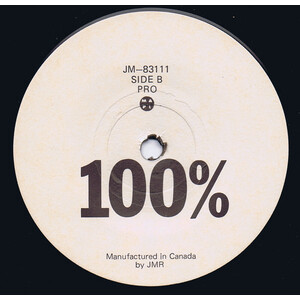
Living Proof - The Band is Living Proof (1)
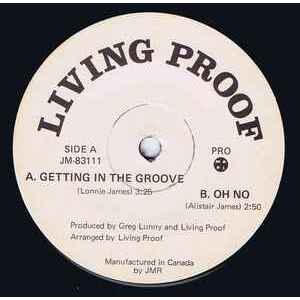
Living Proof - The Band is Living Proof (2)
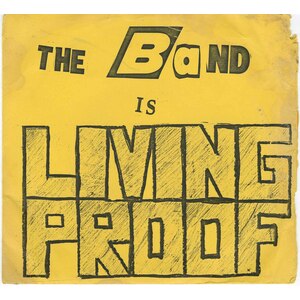
The Band is Living Proof
Media
Videos
0 videos
No videos available for this title.
Credits
Musicians
Bill Patterson: vocals
Alistair James: guitar
Lopez: bass
Lonnie James: drums
Songwriting
‘Getting in the Groove’ written by Lonnie James
‘Oh No’ written by Alistair James
Production
Produced by Greg Lunny and Living Proof
Arrangements
Arranged by Living Proof
Manufacturing
Manufactured in Canada by JMR
Lacquer cut at The Lacquer Channel Limited
Special Thanks
THANKS TO
“Bobby” for the farm etc., Heather & Burt, C + M + M, Bob Haylock for the van, Nadine for the peaceful sleep, Doug for the beer money, Kate for the bus, Marshall, Fender, Ludwig, Traynor, and everyone else along the way.
Contact
Living Proof
P.O. Box 489
St. Chrysostome, P.Q.
J0S 1R0
Canada
Additional Information
45 RPM
Issued in an oversized picture sleeve with two folded inserts
Some copies also included an insert advertising a compilation release show
The insert describes this as Living Proof’s first record
Side A matrix: JM8311-A / TLC-T
Side B matrix: JM8311-B / TLC-T
MAPL Canadian-content designation appears on the label
No Comments