Insight
The Liverpool Set were a mid-1960s Canadian beat group whose brief but highly visible career coincided with the peak of the British Invasion and the Canadian music industry’s first serious push onto the international stage. Active between 1964 and 1966, the band combined British-born members with Canadian players and consciously embraced a Merseybeat-influenced image, becoming one of several Canadian groups marketed in the wake of Beatlemania.
Formed in 1964, the group adopted the name The Liverpool Set at a time when British-styled bands dominated radio, television, and live stages across North America. Despite the implication of their name, the members hailed from a mix of Canada, England, Wales, and Latvia — a fact that would later attract both publicity and controversy. What mattered more was the group’s sound and presentation, which aligned closely with contemporary British beat music while incorporating a growing edge drawn from R&B and emerging garage rock.
The band’s fortunes changed decisively when they came under the management of Toronto impresario Moxie Whitney, whose connections opened doors to major stages and industry attention. At Columbia Records of Canada, National Promotion Director Bob Martin became an early and vocal advocate for the group, helping secure interest from Columbia’s U.S. offices. A demo ultimately reached Frank Jones, Columbia’s Nashville-based A&R executive, who responded enthusiastically and brought the band in for recording sessions.
The Liverpool Set released their debut Columbia single, ‘Must I Tell You (I Love You)’ b/w ‘Miss You So’, in 1965. The record entered the RPM charts and became the group’s national breakthrough, leading to heavy television exposure and high-profile live appearances across Canada. One such appearance, at the London Fair in Ontario, became legendary when a crowd of more than 5,000 teenagers broke through barricades and mobbed the band, forcing police intervention and resulting in injuries to performers and spectators alike.
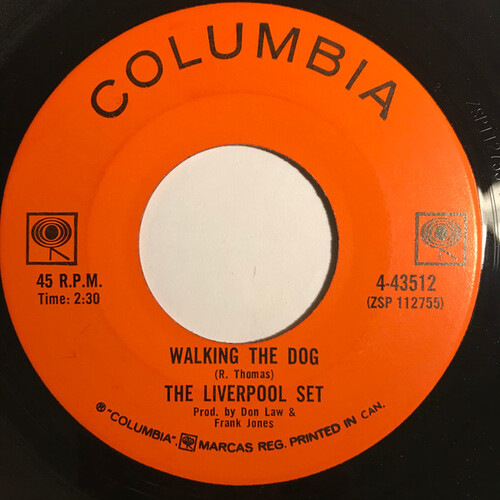
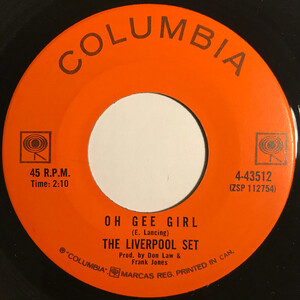
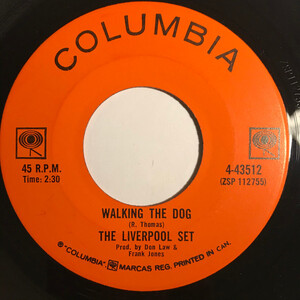
Columbia followed with a second single in 1966, ‘Walking the Dog’ b/w ‘Oh Gee Girl’, pairing a Rufus Thomas R&B cover with an original composition. The release reflected a subtle shift in the band’s sound, blending British Invasion influences with a tougher, garage-leaning approach. Later that year, The Liverpool Set issued their third and final Columbia single, ‘Seventeen Tears to the End’ b/w ‘Change Your Mind’, further emphasizing original material and a more aggressive guitar-driven style.
Despite strong industry backing and continued exposure, the later releases did not match the chart success of the debut. By the end of 1966, The Liverpool Set quietly disbanded, bringing to a close a short but intense chapter marked by national chart success, mass-audience exposure, and some of the most dramatic scenes of fan hysteria witnessed in Canadian pop music during the decade.
After The Liverpool Set
Following the group’s breakup, several members remained active within the broader Canadian and North American music scene. According to later scene documentation and musician histories, vocalist and guitarist Dave Donnell (also known as Lachlan MacFadyen) continued working in music and production-related projects in the years that followed, maintaining industry connections established during the band’s Columbia period.
Guitarist Evan Hunt went on to front Evan Hunt and the Capris, a short-lived late-1960s group that carried forward elements of the beat-to-garage transition heard on The Liverpool Set’s final recordings. The project reflects the broader pattern of mid-1960s beat musicians adapting to rapidly changing musical styles as psychedelia and harder rock forms began to emerge.
Drummer Kent Daubney, originally from England, remained active in music after the Liverpool Set era and later transitioned into production and business pursuits. His career trajectory mirrors that of many British-trained musicians who relocated to Canada during the 1960s and contributed to its developing rock infrastructure.
Other members pursued more private paths following the group’s dissolution, and while The Liverpool Set’s recording career was brief, their three Columbia singles remain a concise document of a pivotal moment in Canadian rock history.
-Robert Williston
Musicians
Dave Donnell: vocals, guitar
Evan Hunt: guitar
Eve Lancing: guitar
Garry Nelson: guitar
Shane Sennet: bass
Kent Daubney: drums
Songwriting
‘Walking the Dog’ written by Rufus Thomas
‘Oh Gee Girl’ written by Eve Lancing
Production
Produced by Don Law and Frank Jones
Notes
Second Columbia single by The Liverpool Set. The A-side is a cover of Rufus Thomas’s R&B standard ‘Walking the Dog,’ while the B-side, ‘Oh Gee Girl,’ is an original composition by guitarist Eve Lancing. The release followed the national chart success of the group’s debut single and reflects a shift toward a tougher, garage-leaning sound while retaining British Invasion influences.
Dave Donnell: vocals
Lachlan Macfadyen: guitar
Jack Douglas: bass
Kent Daubney: drums
Evan Hunt: guitar
Garry Nelson: guitar
Shane Sennet: bass
Gallery
Images
2 images
Liverpool Set - Oh Gee Girl bw Walking the Dog (1)
Walking the Dog b/w Oh Gee Girl
Media
Videos
0 videos
No videos available for this title.
Credits
In Transit
No Comments