Insight
Leyden Zar was a Montreal rock band whose two albums traced a path from keyboard-driven melodic rock and progressive pop into the polished arena-rock sound of the mid-1980s. Although the group never achieved the commercial breakthrough its major-label contracts suggested was possible, it worked with several prominent figures in Quebec’s recording industry and left behind a varied catalogue that included the unusual new wave experiment ‘Life Is Bizarre’.
The musicians who became Leyden Zar first came together during the second half of the 1970s. Around 1976, bassist and singer Paul Grondin, keyboardist and singer Pascal Mailloux, guitarists Jacques Noel and Brian Wilson, and drummer Serge Gratton reportedly worked as the backing group for Montreal club singer Robert Leroux.
Gratton had previously played with the hard-rock band Sex. Mailloux and Grondin shared lead-vocal responsibilities, while Noel and Wilson gave the group a substantial two-guitar sound supported by Mailloux’s keyboards.
The five musicians eventually left Leroux’s organization and began concentrating on their own material. Leyden Zar formally emerged in Montreal in August 1978, taking its name from the Leyden jar, an early device used to store electrical charge. The name was particularly appropriate for a band whose sound depended heavily on synthesizers and electric keyboards.
Leyden Zar worked the Quebec club circuit while preparing demonstration recordings and approaching managers and record companies. The group was eventually signed to Sens Unique Enterprises, the management organization operated by Michel Regimbauld and Michel Perrotte.
Producer and studio owner Andre Perry became an important early supporter. Through Perry’s involvement, the band secured an agreement with A&M Records of Canada and entered Le Studio in Morin-Heights, Quebec.
The first albumLeyden Zar’s self-titled debut album was recorded and mixed at Le Studio and released by A&M Records in 1981. Perry and engineer Nick Blagona produced the sessions for Good Noise Ltd., with Blagona also serving as recording engineer. George Marino mastered the album at Sterling Sound.
The original lineup remained intact:
Pascal Mailloux: keyboards, vocals
Paul Grondin: bass, vocals
Brian Wilson: lead guitar, vocals
Jacques Noel: rhythm guitar
Serge Gratton: drums, percussion
Mailloux, Grondin and Wilson divided the lead vocals. Grondin sang most of the album, including ‘Money Talks Loud’, ‘Backstreet Girl’, ‘Teenage Pioneer’, ‘Where’s the One’, ‘Deadline’, ‘Roll the Dice’ and ‘You Can Change’. Wilson sang ‘Danger Zone’, while Mailloux fronted ‘Life Is Bizarre’, ‘Mirrors’ and ‘Save Energy’.
The album consisted entirely of original compositions. Mailloux and Grondin were the principal writers, with important contributions from Noel, Wilson and Gratton. Lyricists Cliff Grisham and Rando Celli also contributed to several songs.
‘Money Talks Loud’ was written entirely by Grondin. Mailloux composed the music for ‘Backstreet Girl’, with lyrics by Mailloux, Grisham and Celli. Noel and Mailloux collaborated on ‘Teenage Pioneer’, ‘Where’s the One’, ‘Deadline’ and ‘Mirrors’, while Wilson wrote the music for ‘Danger Zone’ and shared its lyric credit with Grisham and Celli.
The debut established Leyden Zar as a melodic rock band with progressive and new wave elements. The arrangements combined dominant keyboards, layered guitars, vocal harmonies and concise commercial songwriting. Much of the material was suited to album-oriented FM radio, particularly ‘Money Talks Loud’, ‘Backstreet Girl’ and ‘Teenage Pioneer’.
The most unusual recording was ‘Life Is Bizarre’. Its music was credited collectively to Wilson, Noel, Mailloux, Grondin and Gratton, with lyrics by Mailloux.
The song developed when the musicians challenged themselves to reproduce the sound of contemporary new wave bands. Its syncopated rhythm, robotic vocals and conspicuous synthesizers stood apart from the smoother melodic rock heard throughout the rest of the album.
Although the experiment did not establish a permanent new direction for Leyden Zar, it eventually became one of the group’s most historically distinctive recordings. Decades later, ‘Life Is Bizarre’ was selected for the 2020 archival compilation Nome Noma – Québec Post-Punk et New Wave 1979–1987, placing the band within a broader history of Quebec artists who experimented with synthesizers, electronic pop and new wave outside the province’s established commercial mainstream.
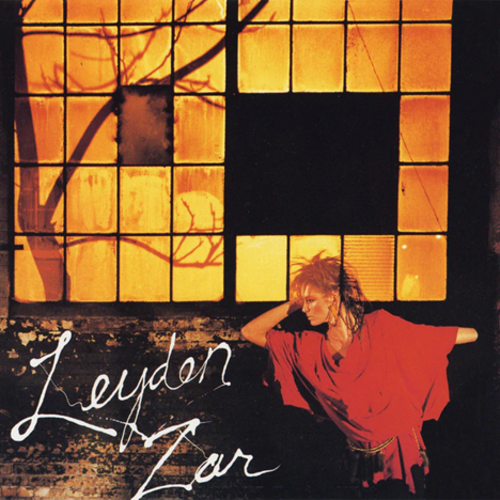
The album’s visual presentation was coordinated by A&M art director David Andoff. Noel created the cover concept, Philip Makanna supplied the front-cover photograph and Luc Sanche photographed the back cover.
Despite major-label support, national promotion and promising material, the album failed to generate a major commercial breakthrough. A&M subsequently released the band from its contract, and the original lineup began to change.
Rebuilding the bandPaul Grondin and Brian Wilson departed after the first album. By the time Leyden Zar returned to recording, the group had been substantially rebuilt around Pascal Mailloux.
The second major lineup consisted of:
Pascal Mailloux: keyboards, vocals
Eddie Stevens: lead guitar, vocals
Jimmy Lenz: rhythm guitar
Paul Strauss: bass guitar, vocals
Jo Jo Boaz: percussion
Although some later summaries suggest that several members of the original group remained, the second album’s credits identify Mailloux as the only clearly documented musician carried over from the debut. Original guitarist Jacques Noel remained involved behind the scenes as project coordinator.
The new lineup shifted the band away from the progressive and new wave touches of the first album and toward a harder, more polished form of commercial rock. Guitar became more prominent, although Mailloux’s keyboards remained central to the arrangements.
The second albumLeyden Zar signed with Epic Records and released a second self-titled album in 1985. To distinguish it from the debut, the record is often referred to informally as Leyden Zar II.
The album was produced by Montreal guitarist, singer and producer Walter Rossi, with George Cucuzzella and Joe Tortorici serving as executive producers.
Recording took place at UltraSound Studios and Studio St-Charles. Claude Allard, Pete Tessier and Robert Matichak handled the recording, while Rossi, Cucuzzella and Billy Szawlowski mixed the album at UltraSound. Tom Steele mastered it at Frankford/Wayne Mastering Labs.
The album contained eight songs:
‘It’s Alright’
‘Sucking on Her Fingers’
‘Still in the Race’
‘I Want You Back’
‘Don’t Talk About Love’
‘All to Myself’
‘Out of Touch’
‘Communicate’
The five band members shared the writing credits throughout the album. Rossi received an additional credit on ‘It’s Alright’.
The record had a more forceful and contemporary mid-1980s sound than its predecessor. Eddie Stevens’ lead guitar and vocals gave the group greater hard-rock weight, while Lenz’s rhythm guitar, Strauss’s bass and Boaz’s percussion supported Mailloux’s keyboards and vocals.
‘It’s Alright’ was selected as the principal single and accompanied by a promotional video. The recording introduced the second Leyden Zar lineup to Canadian radio and television audiences. A separate non-album song, ‘I Wanna Be Lovin’ You’, appeared on the reverse side of the single.
The album was issued through Epic but manufactured by Unidisc Records and distributed by CBS Records Canada. Its artwork was directed by Ron Berti, with sleeve design by Riff Raff and photography by Ralph Brodie.
Despite the renewed label support and a sound aligned with contemporary melodic and arena rock, the second album did not establish Leyden Zar as a major national act. The group dissolved after its promotional period.
Later careersPascal Mailloux remained active in Quebec music after Leyden Zar. He developed a substantial career as a keyboardist, composer and arranger and became closely associated with singer Marjo.
Several musicians connected with the original Leyden Zar period also entered Marjo’s musical circle. However, this occurred through individual later careers rather than through the second album’s lineup, which did not include Grondin or Gratton.
Mailloux’s work eventually extended into recordings, live performance, television, film and commercial music, giving him a career considerably broader than the two Leyden Zar albums.
The original recordings remained unavailable for several years. In 1996, Unidisc reissued both albums on compact disc, bringing the group’s catalogue back into circulation and introducing it to collectors of Canadian progressive rock, melodic rock, new wave and album-oriented rock.
LegacyLeyden Zar’s two albums represent two distinct stages in the development of Montreal commercial rock.
The 1981 debut documented a five-member club band balancing keyboards, twin guitars, progressive touches and concise pop-rock writing. Songs such as ‘Money Talks Loud’, ‘Backstreet Girl’ and ‘Teenage Pioneer’ demonstrated the group’s potential within the Canadian FM-rock market, while ‘Life Is Bizarre’ revealed a willingness to move briefly into stranger and more electronic territory.
The 1985 album presented an almost completely different band. Built around Mailloux and a new group of musicians, it embraced the highly polished melodic hard-rock production associated with the middle of the decade. Eddie Stevens’ guitar became a central feature, while Walter Rossi’s production gave the recordings a denser and more forceful sound.
The contrast between the two releases makes Leyden Zar difficult to reduce to a single style. The group moved through progressive pop, keyboard-led melodic rock, new wave experimentation and arena-oriented hard rock without remaining long enough in any one category to establish a fixed public identity.
Its most unusual song, ‘Life Is Bizarre’, gained significance only many years after the band’s original career. Created as a stylistic experiment, it ultimately became an archival link between Quebec’s commercial rock industry and the province’s emerging post-punk and synthesizer underground.
Leyden Zar’s catalogue may be limited to two principal albums, but it captures an important period when Montreal musicians were navigating the rapid changes between late-1970s progressive and FM rock, early new wave and the highly produced melodic rock of the mid-1980s.
-Robert Williston
After submitting demos to just about every management company in La Belle Province, Leyden Zar were signed by Michel Regimbauld and Michel Perrotte to Sens Unique Enterprises in 1980. They went to Le Studio at Morin Heights later that year with producers Nick Blagona and Andre Perry, and released their self-titled debut the next spring. This Canadian 80s rock essential features elements of Power Pop, New Wave and is one of two self-titled albums from the group. We have here a rarity in Canadian bands of this era: these guys rocked like so many bands that would catch on a few years later.
Gallery
Images
1 image
ST
Media
Videos
0 videos
No videos available for this title.
Credits
Musicians
Pascal Mailloux: keyboards, vocals
Eddie Stevens: lead guitar, vocals
Jimmy Lenz: rhythm guitar
Paul Strauss: bass guitar, vocals
Jo Jo Boaz: percussion
Songwriting
‘It’s Alright’ written by Eddie Stevens, Jimmy Lenz, Jo Jo Boaz, Pascal Mailloux, Paul Strauss and Walter Rossi
‘Sucking on Her Fingers’, ‘Still in the Race’, ‘I Want You Back’, ‘Don’t Talk About Love’, ‘All to Myself’, ‘Out of Touch’ and ‘Communicate’ written by Eddie Stevens, Jimmy Lenz, Jo Jo Boaz, Pascal Mailloux and Paul Strauss
Publishing
Published by New Image Music and Zeltor Music Publishing
Rights societies: CAPAC and PRO
Production
Produced by Walter Rossi
Executive producers: George Cucuzzella and Joe Tortorici
Recorded by Claude Allard, Pete Tessier and Robert Matichak
Recorded at UltraSound Studios and Studio St-Charles
Mixed by Billy Szawlowski, George Cucuzzella and Walter Rossi at UltraSound Studios
Mastered by Tom Steele at Frankford/Wayne Mastering Labs
Coordination
Project coordination by Jacques Noel
Artwork
Art direction by Ron Berti
Sleeve design by Riff Raff
Photography by Ralph Brodie
Hairstyles by Ray Civello
Make-up by Jennifer Lindgrin
Manufacturing and Distribution
Manufactured by Unidisc Records Ltd.
Distributed by CBS Records Canada Ltd.
Printed by Shorewood Packaging Corp. of Canada Ltd.
Matrix
Side One label: 2001-A
Side Two label: 2001-B
Side One runout: AGE-2001 A F/W Ѽ /TSS DM-3
Side Two runout: AGE-2001 B F/W Ѽ /TSS DM-2
No Comments