Insight
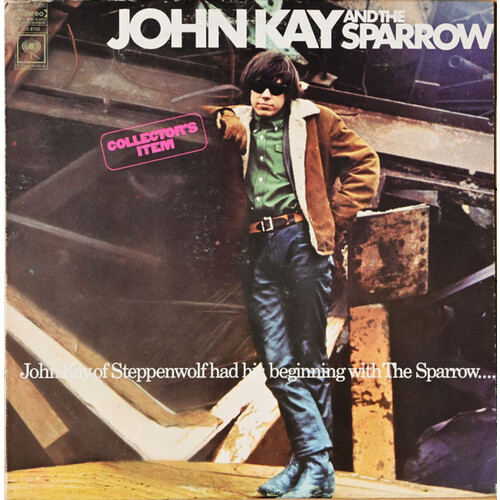
Before Steppenwolf defined the hard rock landscape with their iconic sound, there was John Kay and The Sparrow. Recorded in 1967 and released in 1969, their self-titled album captures the raw energy of a band on the cusp of transformation. Rooted in bluesy garage rock, the album serves as a precursor to the heavier, more polished sound that Steppenwolf would soon bring to international fame.
The Sparrow’s music is gritty and unpolished, blending blues rock with garage influences and the occasional experimental edge. John Kay’s gravelly, commanding vocals drive the songs, supported by the sharp guitar work of Dennis Edmonton, the swirling organ of Goldy McJohn, and the solid rhythm section of Nick St. Nicholas on bass and Jerry Edmonton on drums. Together, the band lays down grooves that hint at the anthemic power Steppenwolf would later harness.
While the album never achieved significant commercial success, its importance lies in its role as a stepping stone. The Sparrow’s sound and energy were ahead of their time, capturing the raw, rebellious spirit of late-’60s rock. For fans of Steppenwolf, this album provides a fascinating glimpse into the band’s formative years, offering early signs of the direction they would take with hits like “Born to Be Wild” and “Magic Carpet Ride.”
In 2001, the album was reissued in Germany by Repertoire Records (REP 4878) with 8 bonus tracks, bringing renewed attention to this pivotal work and allowing a new generation of listeners to discover The Sparrow’s raw, blues-drenched sound.
This bluesy, garage rock collection may not have had the polish or breakout hits of Steppenwolf, but it stands as an essential piece of rock history. It’s a document of a band experimenting with their sound and pushing the boundaries of what was possible in their era.
-Robert Williston
liner notes from the re-issue
The band’s only album Collector’s Item, with John on vocals and lead guitar, Mars Bonfire (guitar), Goldy McJohn (keyboards), and Jerry Edmonton (drums) was released by CBS in 1968, the year after the band had split up.
Frustrated by their lack of success, The Sparrow broke up early in 1967, and a couple of months later John formed Steppenwolf in Los Angeles, taking the name from the title of a novel by Herman Hesse. The new group included lead guitarist Michael Monarch and bass player Rushton Moreve. Says John: “Steppenwolf started from the ashes of The Sparrow and included Jerry, Goldy, and myself from the old band. The three of us managed to snare Michael Monarch, who was a 17-year-old guitarist from Los Angeles. He had been sitting in with us a few nights before The Sparrow broke up and left a favourable impression. We also ran across Rushton Moreve, as he called himself, who became our first bassist. He’d played with Frank Zappa and had just the right bass sound.”
The new band began to rehearse in a garage underneath an apartment John and his wife occupied in Hollywood. Next door lived Gabriel Mekler, an ABC Dunhill producer, who encouraged them after he’d heard The Sparrow records. Gabriel suggested a few tunes the band should try and listened to their work, giving advice until they were ready to record their first album.
John: “We recorded everything on tape and presented it to Dunhill. We didn’t have a name for the band and needed to put something on the tape box. Gabriel Mekler had just read the novel Steppenwolf. I had not, even though the author was German. I knew it was quite popular with the college crowd but didn’t know much about it.”
Kay has now read the book, although it took him a couple of attempts. “I was sort of embarrassed by using the name of a novel I’d not read. It wasn’t easy going during the crazy years of touring, to read it all the way through. When I did, I found I could identify with the central character.”
Steppenwolf were signed to Dunhill, and their first self-titled album was released in 1968. It was packed with good songs, including the now critically important Born To Be Wild. The composer Dennis ‘Mars Bonfire’ Edmonton, was in fact drummer Jerry Edmonton’s brother. They followed up their early success with Magic Carpet Ride, which got to Number 3 in the Billboard chart in October 1968. Rock Me got to Number 10 in March 1969, and subsequent chart hits included Move Over (1969), Monster (1970), Hey Lawdy Mama (1970), and Straight Shootin’ Woman (1974).
Nick St. Nicholas: bass
Jerry Edmonton: drums
Dennis Edmonton: guitar, vocals
Goldy McJohn: keyboards
John Kay: lead guitar, vocals
Engineered by Tim Geelan (editing engineer)
Sound supervised by Al Lawrence
Recorded in 1967, released in 1969
Mastered at Customatrix
Gallery
Images
4 images
John Kay & The Sparrow (3)
John Kay & The Sparrow (2)
John Kay & The Sparrow (1)
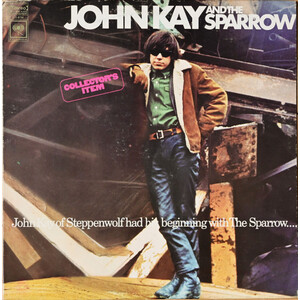
Collector's Item
Media
Videos
0 videos
No videos available for this title.
Credits
In Transit
No Comments