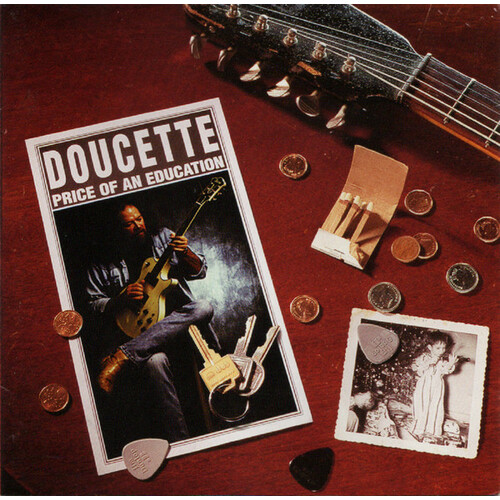
Album / Title
Price of an Education
By: Jerry Doucette
Origin: Montréal, Québec → Hamilton → Toronto, Ontario → Vancouver → Tsawwassen, British Columbia, 🇨🇦
Insight
For generations of Canadian rock listeners, Jerry Doucette will always be the man behind Mama Let Him Play — one of those rare songs that seems to have existed forever on Canadian radio. But Doucette’s story is much larger than one hit. By the time most Canadians first heard his name in the late 1970s, he had already spent well over a decade playing guitar, singing, writing, recording and working his way through the clubs and bands of Ontario and British Columbia.
Jerry Victor Doucette was born September 9, 1951, in Montreal, Quebec, into a musical family. His father and uncle were working musicians, and music was part of everyday life in the Doucette household. When the family moved to Hamilton, Ontario, Jerry was only four years old. He received his first guitar at six, began formal lessons around eight and, remarkably, was already playing in his first band by the age of eleven.
That group, The Reefers, became part of Hamilton’s mid-1960s R&B and garage-rock scene and recorded the scarce single ‘Treat Me Alright’ / ‘Sinner Man’. Doucette stayed with the band for several formative years, gaining the sort of experience that cannot be learned from lessons alone: rehearsing, playing for audiences, learning arrangements and discovering how a band works from the inside.
During his teens and early twenties, Doucette moved through the busy southern Ontario music circuit, playing with groups including Tribe, Abernathy Shagnaster, Homestead and Brutus. These were the years in which he developed into the confident guitarist and singer that audiences would later recognize, but they also reveal how deeply connected he already was to the Canadian music scene long before his solo success.
One especially interesting chapter came through Mingles and Buxton-Kastle. Around this period Doucette sometimes worked under the name Jerry Buxton, recording for RCA and earning early songwriting credits. Buxton-Kastle’s ‘Kagie’ became a Canadian chart success in 1971, giving Jerry professional recording and chart experience years before Mama Let Him Play.
His association with Brutus placed him within another important stream of Canadian rock. The band’s constantly changing personnel would eventually connect to musicians who surfaced in several major Canadian groups. Doucette was part of that broader story, although he was not part of the lineup that recorded Brutus’s later self-titled GRT album.
In 1972, Jerry made the move that would shape the rest of his career. He headed west to Vancouver, joining a music community that was rapidly developing into one of Canada’s strongest rock centres.
He worked briefly around Alexis Radlin before becoming involved with The Seeds of Time, whose circle included musicians who would later help form Prism. From there came the Rocket Norton Band, with Doucette joining drummer Rocket Norton, bassist Rick Enns and guitarist John Hall.
The group’s 1974 single ‘I’m Your Submarine’ / ‘Donkey Chain’ captures Jerry during this transitional period, playing guitar and taking lead vocals. The Rocket Norton Band built a strong reputation on the Vancouver club circuit, but the endless nights of bar work were beginning to wear him down.
Eventually Doucette stepped away.
It proved to be one of the most important decisions of his life.
Instead of abandoning music, he went home and began concentrating on his own songs. Over a period of months, he wrote and recorded sixteen demos, finally placing his own voice and ideas at the centre rather than serving another band.
He took three of those songs to Shelly Siegel at Mushroom Records. Siegel liked what he heard and asked for more. Jerry returned with another batch almost immediately.
The result was a record deal.
For a musician who had already spent years working clubs, crossing the country and playing in other people’s groups, the opportunity must have felt less like sudden discovery than long-delayed recognition.
Doucette assembled a band featuring Duris Maxwell on drums and percussion, Don Cummings on bass, Brent Shindell on rhythm and acoustic guitars, and Robbie King on keyboards. Together they recorded Mama Let Him Play, released by Mushroom Records in late 1977.
The title song changed everything.
Its inspiration reached back to Jerry’s childhood. According to family recollections, his father sometimes returned home tired from shift work while the young Jerry was practising guitar. When his mother tried to quiet him so his father could sleep, the response was essentially the phrase that would later become famous:
Mama, let him play.
Years later, Doucette transformed that family memory into one of the great Canadian rock songs of the 1970s.
What makes ‘Mama Let Him Play’ so enduring is its sincerity. This was not a songwriter inventing a rock ’n’ roll character. Jerry Doucette really had been that kid with the guitar, and by the time he recorded the song he had already spent most of his life following precisely the advice contained within it.
The album became a major success. Mama Let Him Play was certified platinum in Canada, while the title track became a national rock-radio standard and also reached the American charts.
After years of clubs and regional bands, Doucette suddenly found himself touring before much larger audiences throughout Canada and the United States. He appeared on bills with major acts and finally received the kind of national recognition his years of experience had prepared him for.
In 1979, Doucette followed with The Douce Is Loose, produced by John Ryan. Rather than simply repeating the first album, Jerry and the band pushed forward with a broader and more polished sound.
The album produced another major Canadian hit in ‘Nobody’, co-written by Doucette and drummer Duris Maxwell, and The Douce Is Loose was certified gold in Canada.
That same year, Doucette won the Juno Award for Most Promising Group of the Year.
For a moment, everything appeared to be moving in the right direction. Jerry had a platinum debut, a gold follow-up, two major radio songs, American exposure and a Juno.
Unfortunately, the business around him was beginning to unravel.
Mushroom Records, the label that had given Doucette his breakthrough, was collapsing. Financial instability and changes within the company disrupted the momentum of several artists just as their careers were developing.
It was particularly bad timing for Doucette. Instead of moving naturally into a third Mushroom album backed by an established promotional organization, he found himself having to rebuild in a rapidly changing record industry.
He resurfaced on Rio Records with Coming Up Roses in 1981.
The album arrived at a difficult moment. Rock radio was changing quickly, with new wave, synthesizers and increasingly stylized pop beginning to replace much of the guitar-driven mainstream rock that had dominated only a few years earlier.
Coming Up Roses did not restore the commercial momentum of Jerry’s Mushroom years.
But Jerry Doucette did not disappear.
That distinction is important.
The national hit-making chapter of his career had passed, but his life as a musician continued. Throughout the 1980s and beyond, Doucette remained a familiar presence on stages across British Columbia, Alberta, Saskatchewan and Manitoba, maintaining an audience that had never forgotten the records.
And while ‘Mama Let Him Play’ was always expected, the song never seemed to become a burden for him. He continued performing it because it belonged to him completely. Audiences were not asking him to impersonate his younger self; they were asking the same guitarist who had lived the story to play the song again.
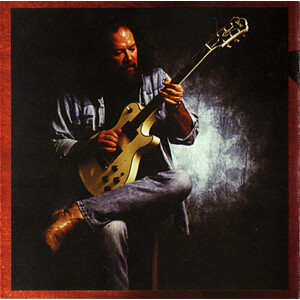
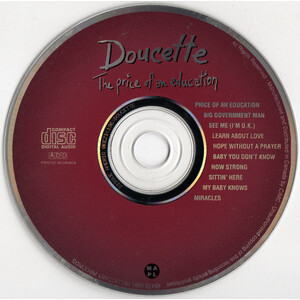
After a long gap between studio albums, Doucette returned in 1995 with Price of an Education.
This was not simply an attempt to revive the sound of 1978. It was a strong, mature blues-rock record built around a working band that included Bobby Stewart, Dennis Marcenko, Darrell Mayes and Rick Hopkins.
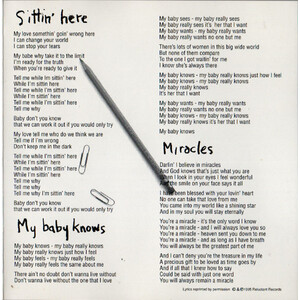
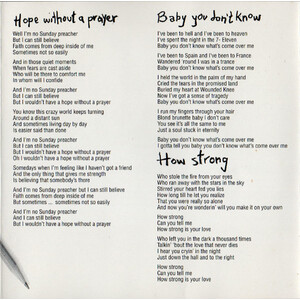
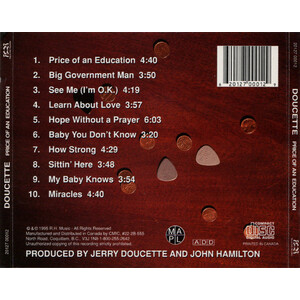
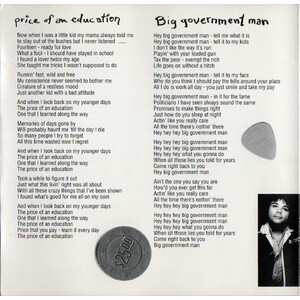
The album was notably collaborative. Songs such as ‘Price of an Education’, ‘Big Government Man’, ‘Hope Without a Prayer’, ‘How Strong’, ‘My Baby Knows’ and ‘Miracles’ showed Doucette working with musicians he respected rather than treating them as anonymous backing players.
The record also reminded listeners that Jerry had always been more than a lead guitarist. His strongest work balanced guitar playing with melody, harmony, arrangement and songcraft. He certainly knew how to turn up an amplifier, but his best solos usually served the song rather than stopping it in its tracks.
Doucette also became known for encouraging other musicians.
One of the nicest stories from his later life concerns a young Colin James, who reportedly stayed at Jerry’s home while establishing himself. Doucette also stepped behind the console, producing Switch’s First Impression EP in 1994, and continued supporting younger and regional musicians whenever he could.
That generosity says something important about him.
Jerry had every reason to guard the reputation he had earned, but musicians who encountered him frequently remembered someone willing to share what he knew.
Into the 2000s, Doucette remained a regular presence at festivals, clubs and special events across Western Canada. Different musicians came and went through his later bands, but Jerry remained what he had always been: a working guitarist who seemed happiest when there was an amplifier nearby and a stage in front of him.
Eventually, however, health problems made touring increasingly difficult.
In 2018, after more than half a century of playing professionally, Jerry Doucette announced his retirement from live performance. He wanted more time with his wife Maggie, his children and grandchildren, and his farewell reflected the same connection to Canadian music that had shaped his life. He encouraged people to keep supporting Canadian musicians and the venues that gave them somewhere to play.
Jerry Doucette died of cancer on April 18, 2022, at the Irene Thomas Hospice in Delta, British Columbia. He was 70 years old.
He left behind his wife Maggie, their family, generations of fellow musicians and an audience that had carried his music with them for more than forty years.
The size of Jerry Doucette’s recorded catalogue can be misleading.
His career cannot be measured only by the handful of albums bearing his name. Before Mama Let Him Play appeared, Jerry had already spent roughly fifteen years playing music — beginning as a child in Hamilton, recording with The Reefers, working through Ontario bands, making records as Jerry Buxton, travelling west, joining the Seeds of Time and Rocket Norton circles and finally retreating to his basement to write the songs that changed his life.
That history makes his breakthrough even more meaningful.
Mama Let Him Play was not a lucky record made by an unknown musician who happened upon a hit.
It was the sound of someone who had been preparing for that moment almost his entire life.
And although that one song became his permanent calling card, Jerry Doucette left Canadian music something larger than a famous guitar riff.
He represented the working musician: the kid who practised, the teenager who played clubs, the guitarist who travelled wherever the next band took him, the songwriter who kept going after record-company setbacks, and the veteran performer who continued playing long after the charts had moved elsewhere.
There was skill in his playing, but there was also warmth. There was power in his guitar tone, but rarely needless excess. And beneath the rock ’n’ roll swagger was a musician who clearly loved the simple act of making music with other people.
The line that became his signature therefore feels almost perfect as his epitaph:
Mama let that boy play some rock and roll.
She did.
And thankfully, Jerry Doucette never really stopped.
-Robert Williston
Gallery
Images
11 images
View All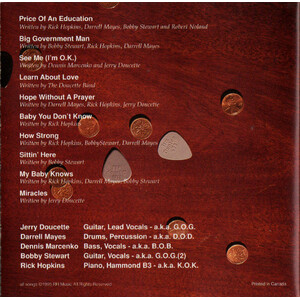
Doucette, Jerry - Price of an Education
Doucette, Jerry - Price of an Education
Doucette, Jerry - Price of an Education
Price of an Education
Doucette, Jerry - Price of an Education
Doucette, Jerry - Price of an Education
Doucette, Jerry - Price of an Education
Doucette, Jerry - Price of an Education
Media
Videos
0 videos
No videos available for this title.
Credits
Musicians
Jerry Doucette: guitar, lead vocals
Bobby Stewart: guitar, vocals
Dennis Marcenko: bass, vocals
Darrell Mayes: drums, percussion
Rick Hopkins: piano, Hammond B3
Songwriting
‘Price of an Education’ written by Rick Hopkins, Darrell Mayes, Bobby Stewart, and Robert Noland
‘Big Government Man’ written by Bobby Stewart, Rick Hopkins, and Darrell Mayes
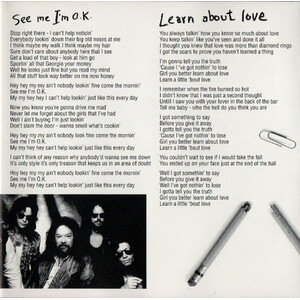
‘See Me (I’m O.K.)’ written by Dennis Marcenko and Jerry Doucette
‘Learn About Love’ written by The Doucette Band
‘Hope Without a Prayer’ written by Darrell Mayes, Rick Hopkins, and Jerry Doucette
‘Baby You Don’t Know’ written by Rick Hopkins
‘How Strong’ written by Rick Hopkins, Bobby Stewart, and Darrell Mayes
‘Sittin’ Here’ written by Bobby Stewart
‘My Baby Knows’ written by Rick Hopkins, Darrell Mayes, and Bobby Stewart
‘Miracles’ written by Jerry Doucette
Production
Produced by Jerry Doucette and John Hamilton
Co-produced by The Doucette Band
Engineered by Colin Nairne and Al Rodger
Assistant engineers Jeff Boyd, Hugh Soko 3of5, and Paul Casano
Recorded at Crosstown Studios, North Vancouver, British Columbia
Mixed by Colin Nairne at Crosstown Studios
Mastered by Doug Sax at The Mastering Lab, Hollywood, California
Executive producers: John Hamilton, Graham Kell, and Frank Salconi
Artwork
Graphics and design Colin Wiebe
Cover photo layout Mark Doucette
Photography Adam Myhill and Victor Dezso (group photo)
Notes
Manufactured and distributed by CMIC
℗ R.H. Music / Reluctant Records
© R.H. Music / Reluctant Records
Printed in Canada
Dedicated with thanks to:
Bobby Gale, Colin Wiebe, Karel-Lyn Carlson and all the staff at CMIC;
Ed Martens, Rocky Varras, Bill Morrison, Jean Hamilton, Ron Blouin,
Rosanne Hamilton, Scott MacDonald, Mimi Northcott at Crosstown Studios,
Jed Miller, Timm Williams Design, Terry David Mulligan, Rick Poltaruk,
and all who kept the faith.
Special thanks to Graham Kell and Frank Salconi for their ongoing support.
Very special thanks to John Hamilton for his belief, support, and friendship.
Personal dedication to Maggie
No Comments