Insight
Siobhan Crawley emerged during the mid-1970s Toronto club circuit as one of the most commanding and musically agile vocalists of her generation, a singer whose clarity, control, and interpretive instinct quickly set her apart from the usual circuit of hotel lounges and bar stages. Born in England and raised in Etobicoke from early childhood, Crawley grew up in a musical household where weekend cottage trips often turned into informal family sing-alongs. Her earliest training came through school productions and church choirs, including a formative audition for a newly built neighbourhood church led by a Juilliard-trained director who immediately recognized her range and potential. The moment stuck with her, and by her teens she had already fixed on singing as her future.
Before she entered the music scene, Crawley spent two years working as a model after graduating high school, a detour she later described as reluctant but formative. A self-directed “planning session” convinced her to take her voice seriously, leading her to vocal coach Rosemary Burns, an internationally recognized Toronto teacher whose classical discipline helped anchor Crawley’s technique. This foundation allowed her to move fluidly between styles when she began auditioning for working bands in the city.
By the early 1970s she was fronting groups on the Toronto circuit, developing a reputation for accuracy, emotional colour, and unusual stylistic range. Musicians and bandleaders admired her ability to move from soft rock to power ballads, mainstream AOR repertoire, and even reggae material without losing her tonal identity. Audience response was immediate, and Crawley soon became a featured singer touring regionally throughout Ontario. As her confidence grew, she formed the Siobhan Crawley Band in 1975, giving her control over repertoire and arrangements.
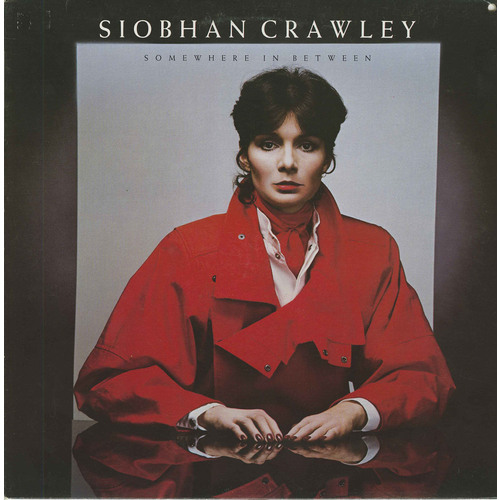
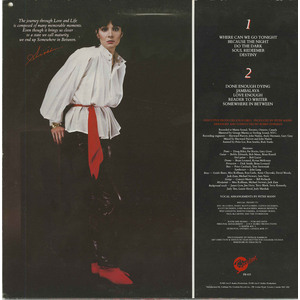
Her debut LP, Somewhere in Between, recorded with producer-arranger Peter Mann, consisted largely of contemporary covers but received strong regional attention and set the stage for more ambitious work. Crawley spent roughly a decade performing full-time across Ontario, often playing double-duty club schedules where her musicians would disguise themselves as a country band for afternoon shows before switching to pop-rock sets at night. These years solidified her reputation as a disciplined, versatile vocalist with a devoted audience following her across venues.
Her second album, Without Warning (1985), marked a shift into original material and produced her two most widely played singles: Closer and The Best Way. Both received heavy rotation on Canadian radio, placing her near the top tier of Canadian female vocalists by the mid-1980s. The album’s visibility led to a 1986 Juno nomination and further recognition when the video for Valentino entered regular rotation on MuchMusic and CBC’s video programming. Around the same time she contributed to the Mistletones’ A Cappella Christmas album alongside tenor John McDermott.
Crawley’s songwriting on Without Warning drew critical notice for its conceptual reach. Tracks such as The Secret’s Out, Ahead of Your Heart, and Silent Little Planet reflected her interest in emotional psychology, personal boundaries, ambition, and themes of human responsibility. One of the album’s most personal moments was Mystery, a last-minute addition that became one of her own favourite performances.
By the late 1980s, after more than a decade of constant touring and recording, Crawley shifted her focus from the club circuit to teaching. She continues to work with emerging singers, passing on the technical foundation and stage experience that shaped her own career. Her place in Canadian pop history rests on a concentrated but impactful run of mid-’80s success, marked by two major radio singles, national television exposure, and a body of work distinguished by precision, musical intelligence, and interpretive imagination.
-Robert Williston
Bobby Edwards: guitar, arrangements, conductor
James Gow: backing vocals
Jim Dury: backing vocals
Jody Marshak: backing vocals
Judy Tate: backing vocals
Laurie Hood: backing vocals
Steve Kennedy: backing vocals
Terry Black: backing vocals
Peter Cardinali: bass
Tom Szczesniak: bass
Arnie Chycoski: brass
David Woods: brass
Guido Basso: brass
Russ Little: brass
Sam Noto: brass
Jack Zaza: brass, woodwind
Michael Stewart: brass, woodwind
Moe Koffman: brass, woodwind
Kevan McKenzie: drums
Brian Leonard: drums, percussion
Bob Mann: guitar
Brian Russell: guitar
Dick Smith: percussion
Doug Riley: piano
Pat Riccio: piano
Bob Lucier: steel guitar
Bill Richards: strings, Concertmaster
John Lang: synthesizer
Produced and Arranged by Peter Mann
Recorded at Manta Sound, Toronto, Ontario
Mastered by George Marino at Sterling Sound, NYC
Recording Engineers: Hayward Parrott.
Gallery
Images
2 images
Siobhan Crawley - Somewhere In Between BACK
Somewhere In Between
Media
Videos
0 videos
No videos available for this title.
Credits
In Transit
No Comments