Insight
Chimo!’s roots reach back to Parry Sound, Ontario, where the band’s earliest incarnation emerged in 1964 as The Georgian IV. That group consisted of Ross Raby (vocals, organ, piano), John Johnson (vocals, guitar), Stewart McCann (bass), and Rick King (drums). Touring steadily throughout Ontario, Québec, and New York State, the Georgian IV developed a reputation as a road-hardened working band before regional lineups and musical directions began to shift.
The turning point came following the dissolution of The David Clayton-Thomas Combine, itself an offshoot of Clayton-Thomas’s earlier group The Bossmen. Guitarist Jack Mowbray, formerly of the Bossmen, joined the Georgian IV, prompting a name change to The Georgian People. Seeking to expand the group’s musical vocabulary, Mowbray soon brought in his former Bossmen bandmate Tony Collacott, a jazz-trained pianist whose playing had already made a mark on Canadian rock through his explosive solo on the Bossmen’s “Brainwashed.”
Now operating primarily on the southern Ontario bar and lounge circuit, the Georgian People began writing and refining original material alongside their live commitments. Their efforts coincided with the launch of Mort Ross’s Revolver Records, which soon signed the band. As momentum built, personnel changes followed. Stewart McCann stepped away from bass duties, with John Johnson shifting roles to cover the position while relinquishing guitar to Mowbray. Drummer Rick King departed and was replaced by Pat Little, formerly of the David Clayton-Thomas Combine and Luke and the Apostles.
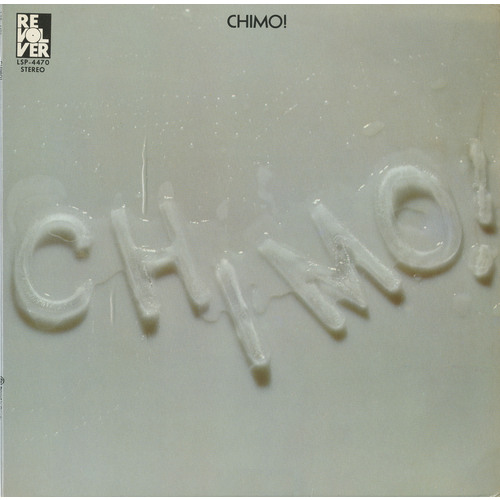
The group’s final transformation came with the addition of powerhouse vocalist Breen LeBoeuf, at which point the band adopted the name Chimo!—an Inuit word commonly translated as “hello,” “brotherhood,” or “peace.” One further lineup change occurred just prior to recording, when jazz-influenced drummer Andy Cree replaced Pat Little behind the kit.
In the spring of 1970, Revolver issued Chimo!’s debut single, a reworking of Clayton-Thomas’s “Quicksilver Woman.” Though the record attracted attention, sales were modest. A second single, “Silken Silver Melody,” followed later that summer and fared slightly better, hinting at the group’s emerging identity: a dense, progressive blend of jazz harmony, rock organ, and extended arrangements. Despite limited commercial traction in Canada, Mort Ross succeeded in placing the band’s self-titled album with Epic Records in the United States, where it received positive notices but only middling sales.
Shortly after the album’s completion, Andy Cree exited the band, and Pat Little returned to the drum chair. By the end of 1971, however, internal strains became increasingly evident. John Johnson and Ross Raby departed around the time Chimo!’s final single, “Cross Country Man,” was released. Tony Collacott soon followed, leaving Mowbray, Little, and LeBoeuf to continue briefly as a trio before the project finally dissolved.
In the years that followed, Chimo!’s members dispersed into notable and varied careers. Pat Little became a respected session drummer and later performed with acts including Modern Rock Quartet, Fludd, and Diamondback. Breen LeBoeuf went on to a brief reformation of Motherlode, followed by work with Southcote, and ultimately became a defining presence in Offenbach. Jack Mowbray formed a lounge-oriented duo with his wife before retiring from the music industry altogether. Tony Collacott returned largely to jazz and low-profile work, while Ross Raby stepped away from the spotlight. Stewart McCann ultimately left the music business entirely and later became a Professor of Psychology at an east coast university.
Though short-lived, Chimo! occupies a distinctive place in Canadian rock history—bridging the explosive R&B-rock of the Bossmen era with the more exploratory, jazz-inflected progressive sounds that emerged in Canada at the dawn of the 1970s.
-Robert Williston
Musicians
Jack Mowbray: guitar
Tony Collacott: keyboards
Ross Raby: keyboards, vocals
John Johnson: guitar
Andy Cree: drums
Breen La Boeuf: lead vocals
Production
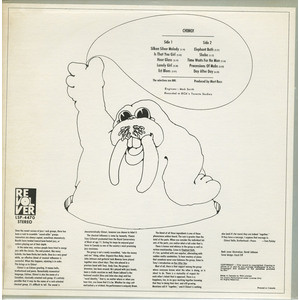
Produced by Mort Ross
Recorded at RCA Studio, Toronto, Ontario
Engineered by Mark Smith
Artwork
Back cover illustration by David Johnson
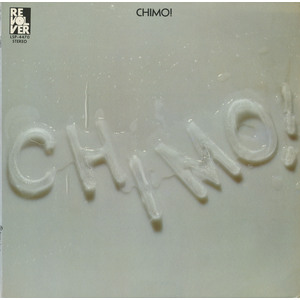
Cover design by Lloyd Ziff
Liner notes
Since the recent success of jazz / rock groups, there has been a rush to assemble “sound-alike” groups. Innovators are always copied, sometimes shamelessly. Results have tended toward lead-footed jazz, or rockers playing out of their depth.
In the same way, various people have tried to merge jazz with the classics. The end product, like many great hybrids, has been flashy but sterile. Once in a very great while, an effective blend of musical influences is successful. When this happens, rejoicing is in order.
This brings us to Chimo!
Chimo! is an Eskimo greeting. It means hello, brotherhood, and peace. Remarkably economical language, Eskimo. Chimo! is also the name of a Canadian, classically oriented rock group. It’s entirely possible that it may be the name of a rock-oriented classical group. It’s difficult to tell. The sound is characteristically Chimo!, however you choose to label it.
The classical influence is come by honestly. Pianist Tony Collacott graduated from the Royal Conservatory of Music at age 11. During his teens he enjoyed great favor in Canada as one of the country’s most promising jazz musicians.
The group is not a newly assembled, “take the money and run” thing, either. Organist Ross Raby, bassist John Johnson and guitarist Jack Mowbray have played together since school days. They also played in a previous band with Tony. Andy Cree, the group’s drummer, has been around. He’s played with jazz bands; been a studio musician as well. Breen LeBoeuf is the featured vocalist (Ross and John also sing) and has “vocal identity,” that is, no matter where or when you hear him, you know that it is he. Whether he sings soft and ballady – or strident, the performance is uniquely Breen.
The blend of all these ingredients is one of those phenomena seldom heard. The sum is greater than the total of the parts. When you consider the individual talents of the parts, you realize what a tall order that is.
There is humor and whimsy in the group as well as serious musicianship. Listen to Elephant Bath. It’s fun, sprinkled with non sequitur, alternating with sudden reality sandwiches. To hear mastery of piano that somehow never over-balances the group, listen to Tony’s introduction on Day After Day.
Most of all, there is that rapport among the group where everyone knows what the other is doing, or is about to do. There is a mutuality of respect for each other’s talent that is apparent. There is a happiness, too, in six guys working together knowing that they’re doing their best and still growing. Musicians call it “together,” and if Chimo! is nothing else (and it’s far more) they are indeed “together.”
If they have a message, I suppose that message is:
Chimo! Hello. Brotherhood—Peace.
—Tom Paisley
Gallery
Images
4 images
Chimo - ST BACK
Chimo - ST LABEL 01
Chimo - ST LABEL 02
ST
Media
Videos
0 videos
No videos available for this title.
Credits
In Transit
No Comments