Insight
Leigh Ashford were a Toronto rock band whose working life ran from the city's east-end rhythm and blues clubs of the mid 1960s through Yorkville, the Rock Pile and the festival stages of 1970, and on into the first years of Canadian hard rock. They recorded for Jack Richardson's Nimbus 9, reached the national Top 30 with 'Dickens' and released one album, Kinfolk, in 1971. Their last lineup became Moxy, which is how most people meet the name today, though by then Leigh Ashford had already spent seven years working the Toronto circuit.
The group came out of a cluster of connected east-end rhythm and blues bands. Guitarist Gord Waszek and bassist Joe Agnello had played together in G.W. and the Demons before going separate ways, Waszek to the Lee Ashford Blues Band alongside organist Newton Garwood, Agnello to the Ambassadors. Drummer and singer Dave Cairns came from Tom and Ian and the Soul Set. Players from all three groups were folded into the Spirit Revue, a large soul show band with matching suits and a fixed presentation that suited none of them for long.
In 1967 Waszek, Agnello, Garwood and Cairns walked out of the Revue and started their own band. Ritchie Yorke placed the formation in the fall of that year and the 1997 reissue notes place the break from the Revue in the late spring. The exact season remains uncertain.
The name came from the Lee Ashford Blues Band with the spelling altered and a story attached. The musicians changed Lee to Leigh and invented a sixteenth-century English prostitute of that name who was said to have handed her earnings to starving musicians. Yorke repeated the tale on the original album sleeve as though it were history. It was the band's own joke, and it has been circulating as fact ever since.
By 1968 Leigh Ashford were working the Toronto clubs and the Yorkville rooms and had started writing their own material. Yorke, who wrote about them in the Globe and Mail that year, remembered a well-rehearsed and forceful live band playing heavy arrangements in the manner of Vanilla Fudge, and doing it, in his view, better than Vanilla Fudge managed. A surviving Toronto Telegram listing advertises the Leigh Ashford R&B Group at Peggy's Pavilion on Lake Simcoe on May 4, 1968, and another puts the Leigh Ashford Group at the Rock Pile on November 17.
1969 brought the band its first record deal. Billboard reported in May that the Toronto quintet had signed with Nimbus Nine, the production company behind The Guess Who, and was playing a week as house band at the Electric Circus. Toronto listings put them there with the British group The Foundations from May 23 to 25. By August, Billboard had the group signed to Nimbus 9 and RCA, preparing to record and returning to the Electric Circus.
On May 19, 1969, Leigh Ashford were one of the opening acts when The Who played the Rock Pile. Neil Peart, then a teenager working his way through the Toronto drummers he admired, was in the crowd. He later named Leigh Ashford as one of his favourite bands of the period and Dave Cairns as one of the players who shaped his own drumming.
The Nimbus 9 deal put Leigh Ashford in the studio with Jack Richardson to make an album. It went wrong when Cairns fell ill. Wally Cameron of A Passing Fancy came in to play drums on the instrumental tracks and Cairns returned later to add his vocals, but the album was shelved.
One single came out of it, 'Country Place' backed with 'Ev'rything Is Easy', and it was no small thing. The record entered RPM's Canadian content chart at No. 48 in June 1970 and reached No. 42 on June 27. Another recording from the abandoned sessions, 'Hangman', had Dave Bingham of the Ugly Ducklings singing lead on his own song.
Cairns left for good, taking a drummer and a lead voice with him. Lance Wright of Terry and the Pyrates filled in until Craig Kaleal, from the Saskatchewan group The Witness, took the chair permanently. The new singer was Douglas 'Buzz' Shearman. He had replaced Eddie Schwartz in the Toronto band Mushroom Castle, which then renamed itself Sherman and Peabody as a joke on his name and bassist Greg Godovitz's owlish looks, and he had most recently been singing with the Hamilton group Flapping. Godovitz went on to Fludd and then Goddo, drummer Gil Moore built Triumph with Mike Levine, and Schwartz wrote 'Hit Me With Your Best Shot'. Newton Garwood left during 1970 and Bruno Weckerle took over the keyboards.
Shearman changed what the band could do. His voice was hard and high and cut cleanly through Waszek's guitar and the heavy organ sound, which freed the group from the thick multi-part harmonies that weighed down a lot of Toronto rock bands of the period. Shearman, Waszek, Agnello, Weckerle and Kaleal became the lineup everyone remembers.
August 1970 put them in front of the largest crowd of their career. Leigh Ashford played the Strawberry Fields Festival at Mosport Park near Bowmanville, Ontario, August 7 to 10, on a bill that ran to Procol Harum, Ten Years After, Jethro Tull, Mountain, Alice Cooper, Sly and the Family Stone, Grand Funk Railroad, Melanie, José Feliciano, Lighthouse, Crowbar and Luke and the Apostles. Yorke's Kinfolk notes say the band took a couple of standing ovations there and caught the attention of producer Mort Ross.
Six weeks later, on September 20, 1970, they played Festival '70 at Brock University in St. Catharines, a nine-hour concert for about 7,000 people that also carried The Guess Who, Mashmakhan and J.R. Flood. Peart was on the Brock stage that day as J.R. Flood's drummer. After his solo, the bass player from Leigh Ashford came over and told him he had played well. Peart was still repeating the compliment decades later.
By the end of the year Mort Ross had signed the band to Revolver, distributed by RCA. Manager Roland Paquin told RPM in December that the deal had brought better production, a promising single and heavy bookings, that an album was already being recorded at RCA Studios in Toronto, and that an American deal was in negotiation.
The single was 'Dickens', written by Waszek and Shearman and backed with 'Lee Oompa Kum Pah Pah'. RCA put an unusually heavy national promotion behind it. It entered the RPM 100 at No. 99 on December 26, 1970, placed third in the Maple Leaf System radio competition in results published on January 2, 1971, and climbed through the winter to No. 27 in March. A shortened 2:29 edit was serviced to radio along the way. Yorke called it a national smash. It remains the band's biggest hit.
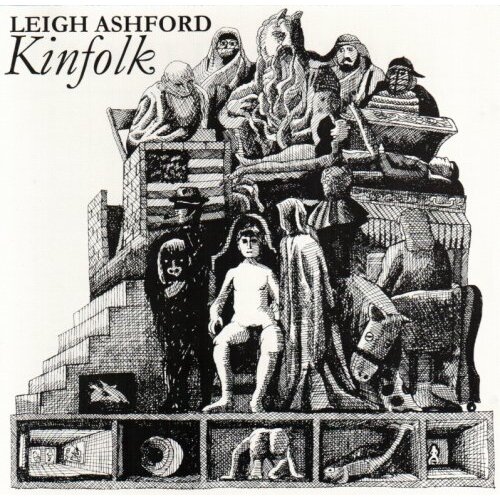
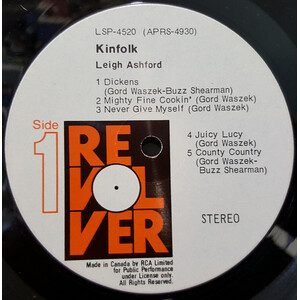
Kinfolk followed in 1971, produced by Mort Ross and issued in Canada on Revolver as LSP-4520, with RCA Victor releasing it in the United States and New Zealand under the same number. Everything on it was written within the band. Waszek wrote 'Never Give Myself' and 'Juicy Lucy' alone, and 'Dickens', 'County Country' and 'Lady' with Shearman. 'Lee Oompa Kum Pah Pah' was credited to Waszek, Shearman and Agnello, 'Good Day' to all five members, and the first part of 'Sicawine' to Waszek, Shearman, Agnello and Weckerle, with the second part left as an instrumental.
Waszek's guitar sits against Weckerle's organ and piano, Agnello and Kaleal lock in underneath, and Shearman rides over the top. The material moves between blues rock, soul, funk-edged grooves and longer instrumental stretches. Waszek in particular had travelled a long way from 'Country Place', where he was still working close to the sound Robbie Robertson had been making in the same clubs a few years earlier.
Yorke used the original gatefold to place Leigh Ashford among the Canadian artists then breaking through nationally and internationally, running through The Guess Who, Motherlode, Edward Bear, The Poppy Family, Gordon Lightfoot and Anne Murray. He presented Kinfolk as the record that should finally carry the band abroad. An RPM advertisement in August 1971 quoted him at length.
It did not happen. 'Never Give Myself' was issued twice, backed with 'County Country' in Canada and with 'Good Day' in the United States, and neither pressing repeated what 'Dickens' had done. The 1997 reissue notes single out 'Good Day' as a recording that deserved far better.
The Kinfolk lineup came apart in 1972. Agnello went to Grant Smith and the Power and then to Flag with Grant Fullerton and Pat Little. Waszek stayed with Mort Ross and wrote 'All That's Necessary' for a studio revival of the Motherlode name that drew most of its players from Leigh Ashford and added singer Breen LeBoeuf and bassist Mike Levine, later of Triumph. A touring Motherlode assembled behind the record used Wally Cameron on drums and Newton Garwood on organ.
Waszek and Shearman then rebuilt Leigh Ashford with bassist Don Elliot of the Mandala and the returning Cameron and Garwood. This lineup cut sides in Toronto and in upstate New York for Hopi, another Mort Ross label, and one single appeared: 'The Country's Got A Soul All Its Own' backed with 'Workin' All Day'. 'Workin' All Day' picked up scattered airplay in Ontario and Manitoba through December 1972 and into January 1973, and then the record died.
Waszek and Cameron left to form Burgundy with Doni Underhill, another Ashford alumnus. After one Hopi single, Waszek and Underhill both joined Fludd. Underhill went on to Trooper. Waszek went back to the bar circuit and to session work, and stayed there.
Leigh Ashford did not end at that point. Shearman kept the name and kept working. RPM booking columns place Leigh Ashford at Sauble Beach Pavilion on June 29, 1974 and at Lakefield the following night, at Toronto's Piccadilly Tube for four nights in early September followed by a date in Welland, and in Uxbridge and Toronto on September 13 and 14. The band was still on the road under its own name in the autumn of 1974.
By then Shearman had assembled the group that would close the Leigh Ashford story, with guitarist Earl Johnson, drummer Bill Wade and bassist Terry Juric. They dropped the Leigh Ashford name, added second guitarist Buddy Caine and became Moxy, playing their first show under the new name in Scarborough in October 1974. Moxy signed to Polydor and found the North American audience Leigh Ashford had never quite reached.
Leigh Ashford are routinely described as the band that became Moxy, a description that covers about one year out of eight. The rest is a Toronto career: the east-end R&B circuit, Yorkville, the Electric Circus and the Rock Pile, opening slots for The Who and Vanilla Fudge, two of the biggest Ontario festivals of 1970, a contract with Jack Richardson's Nimbus Nine, a national Top 30 single and an album of their own songs.
Their standing among other players says as much as the charts do. Peart remembered the band and he remembered Dave Cairns. Leigh Ashford were a musicians' band, made in the clubs over years of six-night weeks, and Kinfolk is the one document of what that sounded like.
Pacemaker Entertainment reissued Kinfolk on CD in 1997 as PACE-009, adding 'Workin' All Day' and 'The Country's Got A Soul' from the Hopi period. Bill Munson wrote the historical notes with help from Joe Agnello, Sebastian Agnello and Newton Garwood, preserving the band's story from the Spirit Revue through the lineups that followed.
Buzz Shearman died on June 16, 1983, at the age of 33, in a motorcycle accident north of Toronto. Bruno Weckerle died on July 10, 2004. Newton Avery Garwood, who spent years at Long & McQuade's Toronto head office, died on November 4, 2005. Craig Kaleal, who went on to Wascana and the Downchild Blues Band, died in Winnipeg on September 3, 2025, at the age of 75.
-Robert Williston
Gallery
Images
3 images
Ashford, Leigh / Kinfolk

Leigh Ashford / Kinfolk

Kinfolk
Media
Videos
0 videos
No videos available for this title.
Credits
Musicians
Bruno Weckerle: organ, piano
Buzz Shearman: lead vocals
Craig Kaleal: drums
Gord Waszek: guitar
Joe Agnello: bass
Production
Produced by Mort Ross
Recording engineer: Mark Smith
Recorded at RCA Studios, Toronto, Ontario, Canada
Songwriting
'Dickens' written by Buzz Shearman and Gord Waszek
'Mighty Fine Cookin'' written by Gord Waszek
'Never Give Myself' written by Gord Waszek
'Juicy Lucy' written by Gord Waszek
'County Country' written by Buzz Shearman and Gord Waszek
'Good Day' written by Bruno Weckerle, Buzz Shearman, Craig Kaleal, Gord Waszek and Joe Agnello
'Lee Oompa Kum Pah Pah' written by Buzz Shearman, Gord Waszek and Joe Agnello
'Lady' written by Buzz Shearman and Gord Waszek
'Sicawine Part 1' written by Bruno Weckerle, Buzz Shearman, Gord Waszek and Joe Agnello
'Sicawine Part 2 (Instrumental)' written by Bruno Weckerle, Buzz Shearman, Gord Waszek and Joe Agnello
Artwork
Art direction by Acy R. Lehman
Cover art by AKM Associates and Bernie Karlin
Photography by Nick Sangiamo
Liner Notes
Ritchie Yorke
Manufacturing
Made by RCA Limited
Notes
Unipak flip-top gatefold sleeve
Cover artwork is similar to the other Canadian release of Kinfolk, except this version does not carry the RCA Victor logo
Liner Notes
The Canadian music scene has, for some years, closely resembled a dormant volcano. There have been quite a few predictable tremors and minor eruptions, but it wasn't until 1969 that the lid started to lift off the rocks, revealing some remarkably fertile soil beneath.
In that year, The Guess Who busted through the well patrolled U.S. border barrier, and with These Eyes, established an unbroken list of hits right up to this moment.
The paths paved by The Guess Who were soon after pounded by many other long-dormant Canadian bands. Unable to find broadcasting acceptance in their native land the Canadians aimed their creative efforts at the vastly lucrative (and as it happened, perceptive) U.S. market.
Motherlode struck it rich with When I Die; Edward Bear forced their way through with You, Me and Mexico; The Poppy Family popped with Which Way You Goin' Billy? And then came 1970, and all sorts of other Canadians turned up on the U.S. charts, Gordon Lightfoot, Anne Murray, The King Biscuit Boy, The Original Caste, and Ocean just to mention a few.
By the end of 1970, Canada had become the world's third leading producer of international hit records. A Canadian invasion of sorts had begun and finally the Canadians who remained in Canada (unlike Neil Young, Joni Mitchell, Andy Kim, David Clayton Thomas, The Band, Steppenwolf and more who had emigrated) started to feel the warmth of the frequent tremors.
Leigh Ashford, who have provided us with this outstanding debut album, were playing gigs in Toronto's Yorkville Village many months before The Guess Who opened with These Eyes. I can recall having written a glowing feature on them for The Toronto Globe and Mail in 1968. They were already a fine band in those days—well rehearsed and often dynamic in person. They were doing Vanilla Fudge type material much better than the Fudge ever dreamed of doing it.
The band had been formed by Joe Agnello and Gordon Waszek in the fall of 1967. Joe claims they named themselves after a 16th century English prostitute who had some special credentials. Miss Ashford, so the tale goes, used to perform her favors with the gentry and gave most of her endowences to the starving musicians of the time. The group went through the soul scene, then immersed itself in learning current commercial favorites. In 1968, they started writing their own material.
It would be nice to say that things kept on getting better but they didn't! Leigh Ashford had some misunderstandings with one record company and that lack of success caused inner dissension. Agents didn't book them because they thought the band was about to break up. It had gotten about as bad as it could ever get when the group met their manager, Roland Taquin, in the summer of last year and were soon after booked to appear at the Strawberry Fields Rock Festival near Toronto.
They scored a couple of standing ovations and the interest of another producer, Mort Ross. During the winter, Leigh Ashford (which had by then settled into its present lineup of Agnello, Waszek, Bruno Weckerle, Craig Kaleal and Buzz Shearman) began work on this first album. A single, Dickens, was released early in 1971 and was a national smash in Canada. It set the stage nicely for this long-awaited album by Leigh Ashford.
Artistic comment is unnecessary. You can dig it for yourself. Here's one of the finest albums ever to come out of the North Country. It will stay in your mind for a long time, and it will probably bring Leigh Ashford the international acclaim it has long deserved.
It's amazing what incredible surprises a volcano can heave out when things start to warm up a little inside.
RITCHIE YORKE
No Comments