
Artist / Band
Joan Morrissey (Joan Learning)
Biography
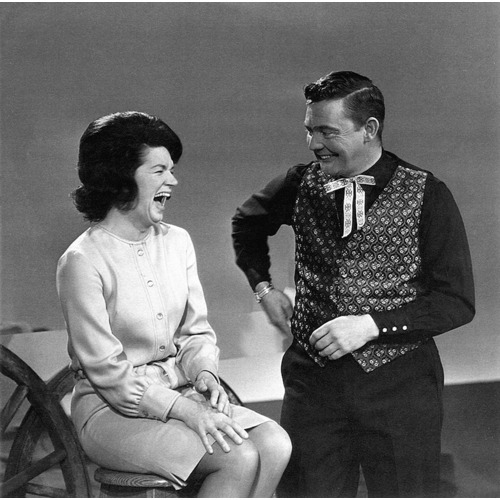
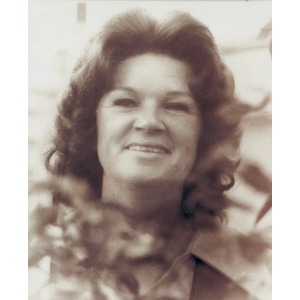
Joan Morrissey, widely remembered as “Newfoundland’s First Lady of Song,” was one of the province’s most beloved entertainers, a singer, actress, television host, nightclub performer, recording artist, and cultural personality whose voice became closely tied to Newfoundland popular music in the 1960s and 1970s. Her career grew out of local radio and television, but her appeal reached far beyond broadcasting. She carried Newfoundland humour, country music, sentimental ballads, theatrical timing, and the sound of everyday island speech into nightclubs, theatres, living rooms, and record collections across the province.
She was born Joan Learning on the Southside of St. John’s, Newfoundland, to Kathleen and Charles Learning, one of ten children. Family-sourced biographical material gives her birth date as January 27, 1933. She grew up in St. John’s and entered the workforce young, working at Ayre’s Department Store on Water Street, Ayre’s Supermarket on Parade Street, and Knightville Snack Bar on Allandale Road. Long before her professional career began, she was already a natural performer. As a child she made an early radio appearance on Bob McLeod’s children’s program from the old VOCM studios on McBride’s Hill, singing “It Might As Well Be Spring.” Later accounts remembered that she seemed to take to the microphone immediately.
In 1952, Joan married Thomas Morrissey. The couple settled in Mount Pearl and raised six children: Debbie, Beverly, Colleen, Linda, Sherry, and Tommy. Family remained central to Morrissey’s life, and her career developed not as a departure from Newfoundland, but as an extension of her place within it. Although she later received opportunities to perform outside the province, her deepest loyalty remained with her family, her audiences, and the Newfoundland community that had made her a household name.
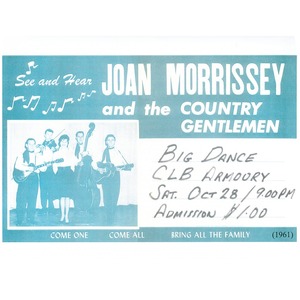
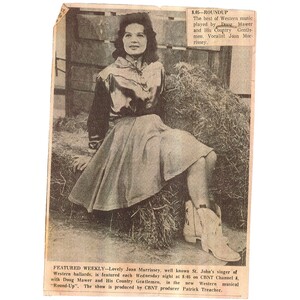
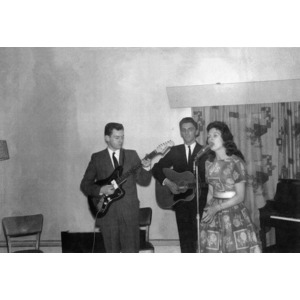
By the late 1950s and early 1960s, Morrissey had become a familiar voice on Newfoundland radio. Listeners heard her on CJON, VOCM, and CBC, where her strong, direct delivery helped establish her as one of the leading local interpreters of country and western material. Her repertoire drew from country standards, traditional songs, Irish-Newfoundland material, comic numbers, sentimental favourites, and topical songs that poked fun at the political and social life of Newfoundland. She was not simply a singer of songs from elsewhere; she became a performer who could take outside material and make it feel local, while also giving Newfoundland-written songs a durable public life.
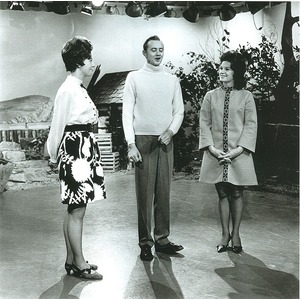
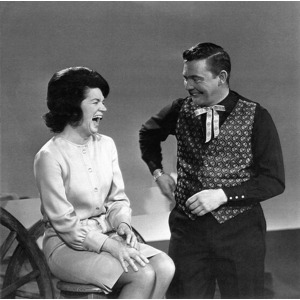
Television broadened that audience. Morrissey appeared frequently on CBC television’s All Around the Circle and became a host on CJON television’s Talent Showcase and Newfoundland This A.M. She also sang and hosted on programs including Variety Showcase, Country Sound, and seasonal Christmas specials. In the early era of Newfoundland television, she was one of the performers who helped define what local entertainment looked and sounded like on screen: informal, warm, funny, musical, and closely connected to the people watching at home.
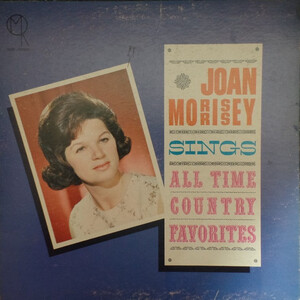
Her first album, Joan Morrissey Sings All Time Country Favorites, was released in 1967 on Maritime Records. Recorded with the Don Randell Band, the LP presented Morrissey as a country singer rooted in the Newfoundland broadcast circuit. The musicians were Ted Blanchard on bass, Don Randell on fiddle, Wally Pynn on lead guitar, and Benny Brake on rhythm guitar. The back cover framed Morrissey as Newfoundland’s country and western sweetheart and connected the band to CBC and CBNT television programs such as All Around The Circle and Country Sound. It was a straight country album, but it also captured the local network of musicians and broadcasters who helped build Newfoundland’s early recorded country scene.
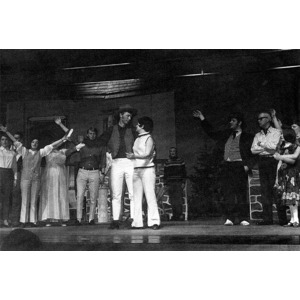
Morrissey’s theatrical side soon became just as important as her singing. In the late 1960s she played Annie Oakley in a local production of Annie Get Your Gun at the Arts and Culture Centre in St. John’s. Family accounts recall that she broke her ankle shortly before the show opened but continued rehearsing with a cast, then appeared on stage with the injury hidden inside one of her cowgirl boots. The role was a breakthrough because it showed the range behind her public image. Morrissey was not only a vocalist or television personality; she was a stage performer with comic instincts, physical presence, and dramatic timing.
More theatrical work followed. She played Rose, the mother of Gypsy Rose Lee, in Gypsy at the Arts and Culture Centre in 1975. She also appeared in Basement Theatre productions, including a Noel Coward series and the comedy Eat Your Heart Out, directed by Barbara Barrett, and took part in the annual revue Slob Ice. These productions placed her within Newfoundland’s theatre community and showed how naturally she moved between country singing, comedy, acting, revue work, and local satire.
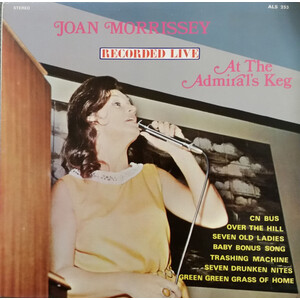
Her most important live base was the Admiral’s Keg at the Hotel Newfoundland in St. John’s. What began as a short booking became an extended engagement, remembered in family accounts as an 18-month, six-nights-a-week contract. There, Morrissey developed the mixture that made her famous: country songs, comic routines, Newfoundland satire, audience rapport, and a personality large enough to fill a room without ever seeming distant from it. The Admiral’s Keg became central to her legend because it captured Morrissey in the setting where she may have been most fully herself: immediate, funny, musical, and completely in command of a local audience.
Her album At The Admiral’s Keg was released on Paragon in 1970. Recorded at the Admiral’s Keg, it preserved the satirical and comic side of her act, including material associated with Tom Cahill, Tom Lehrer, and local Newfoundland humour. Eric Dicks played piano, Albert Walsh engineered, Bill Bessey handled re-recording, Frank Bolan provided the cover photograph, and Bill Fisher wrote the liner notes. The sleeve described Morrissey as a performer with “clever satire and bubbling personality,” and emphasized her ability to take political and social material from Newfoundland life and turn it into entertainment.
Tom Cahill was one of the key figures in Morrissey’s musical story. A playwright, broadcaster, and songwriter, Cahill wrote or helped shape several of the songs most closely associated with her, including “CN Bus,” “The Mobile Goat,” and “Thank God We’re Surrounded By Water.” His writing suited Morrissey’s strengths: sharp timing, warmth, local phrasing, and the ability to make satire sound affectionate rather than mean-spirited. Through Morrissey, Cahill’s songs reached audiences who recognized themselves, their towns, their transportation frustrations, their politics, and their humour in the music.
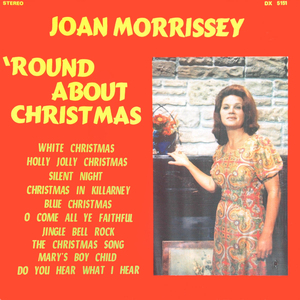
In 1972, Morrissey released the Christmas album ’Round About Christmas on Marathon. The LP reflected another side of her broad appeal, placing her voice within a seasonal repertoire of Christmas standards and popular holiday material. Morrissey could sing country, comedy, traditional material, and Christmas songs without losing the sense that the performance belonged to Newfoundland listeners.
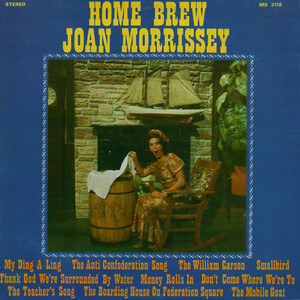
Her most famous album, Home Brew, followed in 1973 on Marathon. It became her defining release and one of the landmark Newfoundland popular albums of its period. Built around Newfoundland satire, local references, comic storytelling, and strong performance, the album included some of the material most closely associated with her public image. Cahill was central to the writing and arranging credits, with Joseph Shaw credited on “The William Carson” and Beverly Morrissey and Joan Morrissey credited with the arrangement of “My Ding-A-Ling.” Family accounts state that Home Brew sold more than 50,000 copies in less than a year and went gold.
Home Brew is central to understanding why Morrissey mattered. It was not simply a novelty record, though it had comic songs. It was a record of Newfoundland self-recognition at a time when local performers were beginning to assert a stronger cultural presence in Canadian popular music. The album gave listeners a version of Newfoundland life that was funny, direct, topical, and proudly local. Morrissey’s delivery made the songs feel lived-in rather than performed from a distance.
Also in 1973, Morrissey released Headin’ Eastbound on Marathon. The album returned more strongly to country material, pairing songs by Bill Johnson with country standards associated with the broader North American repertoire. Manufactured and distributed by Marathon Music Inc. and mastered at RCA Studios in Toronto, the LP showed that Morrissey’s recording career continued to move between local Newfoundland material and country songs already familiar to radio and stage audiences.
Her public work extended well beyond entertainment venues. Morrissey regularly performed for patients at the Waterford Hospital and was a longtime contributor to the Easter Seal Revue. In 1971, the Society for the Physically Disabled recognized her contribution to its fundraising work. She also served as a leader with the 4th Mount Pearl Brownie Pack. These details matter because they show how closely her celebrity was tied to service and community presence. Morrissey was not a distant recording star; she was visible in the everyday civic, charitable, and family life of Newfoundland.
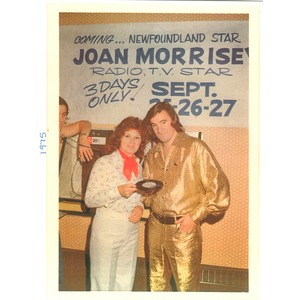
In 1972, the Provincial Government named her “Newfoundland’s Musical Ambassador of Goodwill.” She was later nominated for a Juno Award, an important recognition for a Newfoundland performer working largely from a regional base. She performed occasionally outside Newfoundland, including in Nova Scotia and at a Newfoundland club in Toronto, but she reportedly turned down wider opportunities in Canada and the United States, including offers connected with Nashville. Whether on record, television, stage, or in clubs, her career remained built around Newfoundland first.
Joan Morrissey died in Mount Pearl, Newfoundland, on January 10, 1978, shortly before her 45th birthday, after a period of serious health difficulties following open-heart surgery. Her death brought an early end to a career that had already crossed nearly every part of Newfoundland entertainment: radio, television, theatre, nightclubs, charity revues, country music, comedy, and records. Tom Cahill later summed up her singular place by saying there had never been a Joan Morrissey since Joan Morrissey, and that she had helped put Newfoundland on the map before the later wave of popular Newfoundland cultural revival.
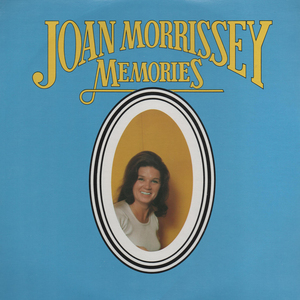
In 1980, The Great Canadian Music Co. released the posthumous compilation Memories. The LP gathered twenty of her best-known performances, drawing together material from her country recordings, Admiral’s Keg repertoire, comic songs, and Newfoundland favourites. The album’s back cover called her “the bubbling personality of a very talented performer” and described the collection as a mixture of old and new material given “the authentic Morrissey touch.”
Her legacy continued in theatre, family memory, and public tribute. In 1993, Rick Moriarity wrote and produced Joan Morrissey Remembered, which premiered at Holy Heart of Mary Theatre in St. John’s, with Vicky Hynes portraying Morrissey. In 1999, Morrissey was recognized with a Stompin’ Tom Connors Award at the East Coast Music Awards. In 2001, during the opening gala for Mile One Stadium in St. John’s, her daughter Debbie performed “Scarlet Ribbons” alongside archival television footage of Joan, creating a moving public moment that joined Morrissey’s recorded past with the family and audience she had left behind.
Her eldest daughter, Debbie Morrissey Stafford, later wrote Yes My Dear… The Life and Times of Joan Morrissey – Newfoundland’s First Lady of Song, a family biography that helped preserve the fuller story of Morrissey’s life and career. In 2019, Morrissey was also the subject of Surrounded by Water, a short film directed by Rhonda Buckley and inspired by “Thank God We’re Surrounded By Water.”
Joan Morrissey’s importance lies in the breadth of what she represented. She was a country singer with a powerful voice, but she was also a comic interpreter, a theatre performer, a television host, a community entertainer, and a carrier of Newfoundland’s own popular language. Her recordings document a moment when Newfoundland artists were turning local stories, jokes, arguments, place names, and everyday frustrations into records that people bought, played, remembered, and passed on. Through Sings All Time Country Favorites, At The Admiral’s Keg, ’Round About Christmas, Home Brew, Headin’ Eastbound, and Memories, Morrissey left one of the most vivid recorded portraits of Newfoundland popular entertainment in the pre-digital era.
-Robert Williston
Tracks
30 tracks
Round About Christmas (1972)
10 tracks
-
Christmas in Killarney
-
White Christmas
-
Holly Jolly Christmas
-
Do you Hear What I Hear?
-
Oh Come All Ye Faithful
-
Jingle Bell Rock
-
Blue Christmas
-
Mary's Boy Child
-
Christmas Song
-
Silent Night
Memories (1980)
Showing 10 of 20 tracks
-
Thank God We're Surrounded by Water
-
CN Bus
-
Silver Threads and Golden Needles
-
Headin' Eastbound
-
I Fall to Pieces
-
Don't Come Where We're To
-
The Mobile Goat
-
The Anti Federation Song
-
The Teacher's Song
-
My Ding-a-Ling
Discography
Featured Titles
Albums

Compilation Tracks
Gallery
Images
8 images
Joan Morrissey (8)
Joan Morrissey (5)
Joan Morrissey (2)
Joan Morrissey (3)
Joan Morrissey (4)
Joan Morrissey (6)
Joan Morrissey (7)
Morrissey, Joan
Media
Videos
0 videos
No videos available for this artist.