Artist / Band
Tom Middleton
Biography
Photos courtesy Royal City Music Project
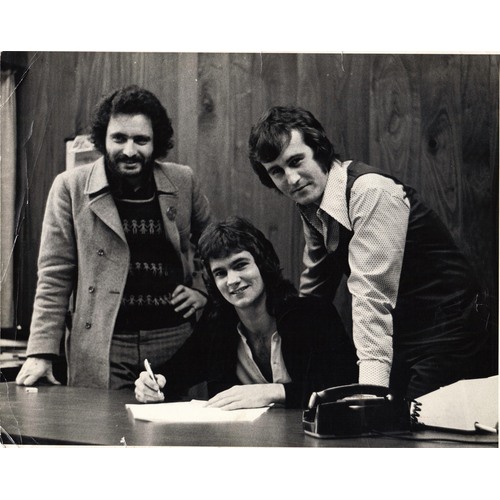
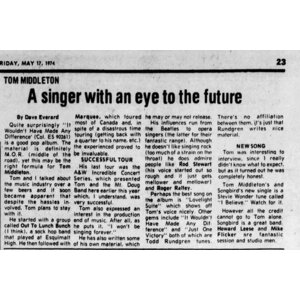
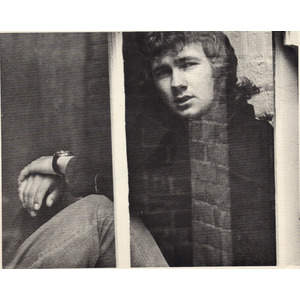
Tom Middleton is one of those artists whose recorded legacy is far smaller than his talent deserved. A smooth, expressive singer from Victoria, British Columbia, he emerged from the fertile West Coast club circuit at the end of the 1960s and, for a brief but memorable stretch in the 1970s, became one of Columbia Records’ most promising Canadian pop vocalists. Though he released only two albums, Middleton left behind a polished and often overlooked body of work that captured the softer, more melodic side of Canadian pop at a moment when singer-songwriters, studio craftsmanship, and West Coast harmonies were beginning to reshape the sound of mainstream radio.
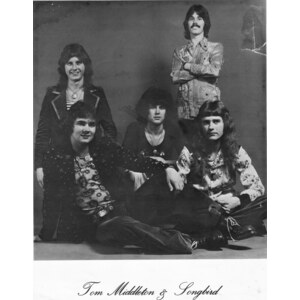
Before stepping out on his own, Middleton first made his mark as lead singer of The Marquis, a Victoria group formed in 1967. The band featured Gary Garraway on guitar, Len Knoke on lead guitar, Norm Piercy on bass, and Jerry Adolphe on drums, and quickly became a fixture on the British Columbia dancehall and club circuit. Like many regional bands of the period, The Marquis built their reputation on a hard-working schedule, covering contemporary hits while gradually developing their own identity on the “B” circuit across Western Canada. In 1969 they issued the Melbourne Records single 'Put the Torch to Me' b/w 'We’re Doin’ Fine', a final document of the group before they split later that same year. Though their time together was relatively short, The Marquis gave Middleton the road experience, stage confidence, and professional grounding that would serve him well once he moved into the major-label world.
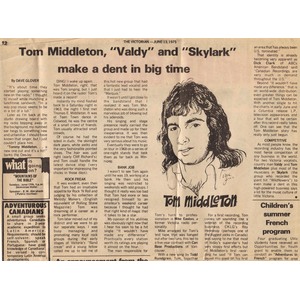
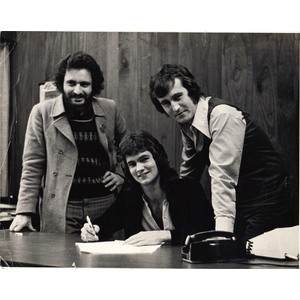
Following the breakup of The Marquis, Middleton remained active on the West Coast scene, performing in clubs and hotels while steadily broadening his musical ambitions. During the early 1970s he sang with a group called Jade at Victoria’s Empress Hotel, one of the city’s most prestigious rooms, while also working on his own material and looking for a path into recording. By 1971 he had begun pursuing a solo career in earnest, and a chance conversation with local broadcaster Michael Easton led to management support and, eventually, a Columbia Records deal. Around the same time, Middleton was beginning to think beyond being simply a frontman. He returned to Victoria, took a part-time job with the post office, enrolled at the Victoria Conservatory of Music to study theory, and began private guitar lessons — a telling indication that he wanted to become a stronger songwriter and musician, not just a singer with a good voice.
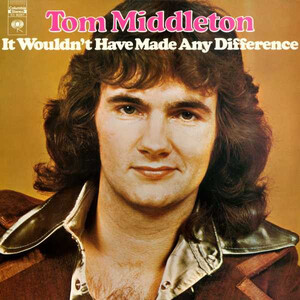
That discipline paid off. Through Vancouver’s Can-Base recording circle, Middleton connected with producer Mike Flicker and arranger Howard Leese, two rising West Coast figures who would soon become closely associated with Heart’s early success. Their collaboration produced Middleton’s debut Columbia single, 'It Wouldn’t Have Made Any Difference' b/w 'Lovelight Suite', released in 1973. Written by Todd Rundgren, the song was an inspired choice. Middleton’s version retained the emotional ache of the original while recasting it with a smoother, more radio-friendly Canadian pop sensibility. It became his signature recording and his biggest national success, spending an extended run on the RPM chart and establishing him as one of Columbia’s most viable homegrown crossover artists. Even among Todd Rundgren fans, Middleton’s interpretation has long had its defenders, with some listeners preferring its understated melancholy and polished vocal approach to the original.
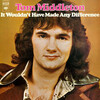
The success of the single set the stage for his debut LP, It Wouldn’t Have Made Any Difference (1973), a remarkably strong first album that still stands as one of the sleepers of Canadian soft rock. Recorded at Can-Base Studios in Vancouver, produced by Mike Flicker, and arranged by Howard Leese, the album blended thoughtful balladry, polished West Coast pop, and carefully layered studio craft. Alongside the title track, Middleton recorded another Todd Rundgren composition, 'Just One Victory', as well as a strong set of originals including 'Help Us', 'Come Back To Me', and 'One More Chance', written by Howard Leese and Mike Flicker. The LP also featured the multipart 'Lovelight Suite', a more ambitious, mood-driven piece that hinted at a deeper musical reach than the singles alone might suggest. With its clean production, warm arrangements, and confident performances, the album showed Middleton as more than a singer covering strong material — he was emerging as a fully realized recording artist.
Columbia moved quickly to capitalize on the momentum. The follow-up single 'One More Chance' b/w 'Name Of The Game' appeared in late 1973 and charted into early 1974. By this point Middleton had become a real priority for the label. In one of the more inventive promotional campaigns of the era, Columbia teamed with A&W for a cross-Canada push that saw tens of thousands of coupons distributed nationally, allowing customers to order the album by mail. The label also tied the campaign to Middleton’s touring, even offering music back-catalogue incentives to high school bands selected to back him at certain stops. It was a very Canadian kind of rollout — resourceful, grassroots, and national in scope — and it underlined how seriously Columbia believed Middleton could break beyond the regional market.
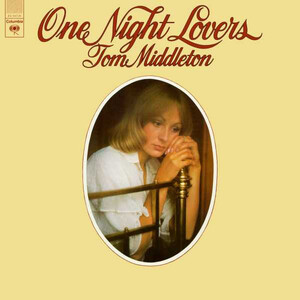
By the mid-1970s, Middleton was still developing rather than coasting. He had become more intentional about songwriting and musicianship, and that maturation is reflected in his second album, One Night Lovers, released as the next stage of his Columbia career. The title track, a Paul Davis composition issued ahead of the LP, became another significant hit, peaking at #35 nationally and confirming that Middleton was more than a one-single artist. The song’s success was boosted by strong support out of Windsor radio, where CKLW’s embrace of the record helped generate unusual cross-border retail response in Michigan. For a time, it appeared Columbia might have a genuine international opportunity on its hands.
When One Night Lovers finally arrived, it showed both continuity and evolution. Produced and arranged by Bob Gallo and recorded at Manta Sound in Toronto, the album traded some of the West Coast introspection of the debut for a slightly glossier, more adult-oriented studio sheen. The sound was still unmistakably Middleton — soft but subtly penetrating vocals, elegant phrasing, and a natural affinity for melodic pop — but the production was broader, richer, and more polished. The supporting cast included Don V. Lorusso, Rick Capreol, Dwayne Ford, Gary Gray, Jacek Sobbota, Gary Holt, Jørn Andersen, Carl Otway, Larrie Londin, Diane Pirie, Judi Richards, and Judy Tate, giving the album a fuller and more expansive sound than its predecessor. Songs like 'Marie', 'I’ll Comfort You', and 'I Need a Harbour For My Soul' reinforced Middleton’s strength as an interpreter of sophisticated adult pop, while the title cut remained the clear commercial centrepiece. A subsequent single from the album, 'I Need a Harbour For My Soul', also received chart action, though not on the same scale.
Despite two strong albums, multiple charting singles, and clear label support, Middleton’s Columbia run was over surprisingly quickly. Like many Canadian artists of the period, he found himself caught in the difficult space between promise and permanence: successful enough to matter, but not quite enough to guarantee long-term label patience. Columbia continued to repackage and reissue some of his material, but by the end of the 1970s his recording career had effectively come to a close. What remains striking in retrospect is not that he disappeared, but that he accomplished as much as he did in such a short span — two beautifully made albums, a handful of notable singles, and a voice that always sounded more seasoned than the machinery around it.
Middleton never completely lost touch with music. In 1990, he reunited with The Marquis for a fundraiser, a fitting return to the band that had started it all. He also continued to make occasional appearances at blues and jazz festivals and at club dates along the West Coast, though these were increasingly selective rather than career-driven. Outside of music, he built a long second career with Canada Post, eventually retiring after more than three decades of service. In many ways, that trajectory feels deeply Canadian as well: a gifted singer who briefly touched the national spotlight, then quietly returned to ordinary life without bitterness, leaving behind a catalogue that only grew more rewarding with time.
-Robert Williston
Tracks
20 tracks
-
Help Us
-
Just One Victory
-
Come Back to Me
-
O'Rosey (Barry Greenfield)
-
One More Chance
-
It Wouldn't Have Made Any Difference
-
Lovelight Suite
-
Holy Moly Man
-
Name of the Game
-
After the Rain
One Night Lovers (1976)
10 tracks
-
One Night Lovers
-
There Ain't a Whole Lot I Can Do
-
She Won't Let Me Fly Away
-
Comeback
-
Take Me Back
-
Marie
-
I'll Comfort You
-
Sweet Virginia
-
Safe in Your Arms
-
I Need a Harbour for My Soul
Discography
Featured Titles
Albums
Singles

Compilation Tracks
Gallery
Images
6 images
Middleton, Tom (2)
Middleton, Tom (3)
Middleton, Tom (4)
Middleton, Tom (6)
Middleton, Tom (1)
Middleton, Tom
Media
Videos
0 videos
No videos available for this artist.