Artist / Band
Bob McKenzie & Doug
Biography
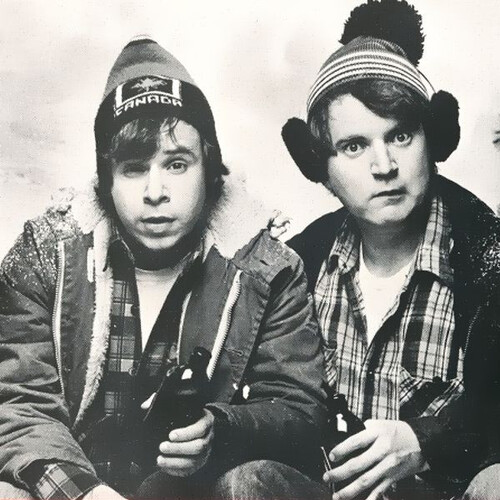
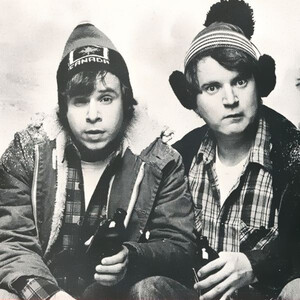
Bob & Doug McKenzie were fictional Canadian brothers created and portrayed by Rick Moranis and Dave Thomas for the CBC era of SCTV in 1980. The characters emerged as a direct response to the network’s requirement that the program include additional Canadian content. Moranis and Thomas developed the “Great White North” segment as a short recurring interlude built around exaggerated national stereotypes — beer, back bacon, parkas, toques, and the repeated use of “eh.” The satire was intentional, but the execution was affectionate rather than cynical.
The format was minimal. Two folding chairs, a card table, a backdrop, and improvised dialogue. What began as a regulatory workaround quickly became one of SCTV’s most recognizable segments. The rhythm between Moranis and Thomas — Bob as the slightly dim older brother, Doug as the quicker but equally deadpan counterpart — created a comedic dynamic that resonated across Canada and beyond.
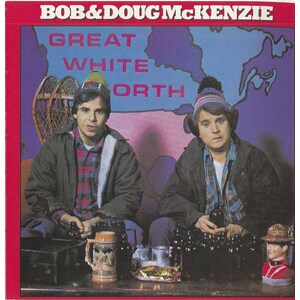
The popularity of the television segments led to the 1981 release of The Great White North on Anthem Records. Issued during a period when Canadian recording identity was being actively shaped through content certification policies, the album functioned as both parody and product. It mixed improvised dialogue sketches with structured comedy bits and musical elements, most notably the single “Take Off,” featuring Geddy Lee of Rush. The track became an international hit, reaching the U.S. charts and exposing the McKenzie brothers to a wider audience.
The album sold over a million copies in North America, won the 1982 Juno Award for Comedy Album of the Year, and received a Grammy nomination. It remains one of the most commercially successful Canadian comedy recordings of its era.
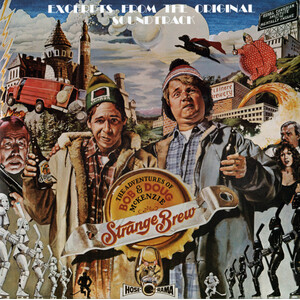
In 1983, the characters transitioned to feature film with Strange Brew, co-directed by Moranis and Thomas. While loosely inspired by Hamlet, the film retained the improvised tone of the television segments, situating the McKenzie brothers inside a brewery conspiracy narrative that expanded their world without altering their core personalities.
Bob & Doug McKenzie occupy a unique place in Canadian recording and broadcast history. Created as a satire of national identity policy, they became one of the most recognizable representations of that identity. Their success intersected directly with Canadian content certification frameworks, commercial radio programming, and the rise of Anthem Records during the early 1980s.
-Robert Williston
Tracks
20 tracks
Great White North (1981)
Showing 10 of 17 tracks
-
This Is Our Album, eh?
-
The Beerhunter
-
School Announcements
-
The Miracle Of Music
-
Peter's Donuts
-
Gimme A Smoke
-
Take Off
-
Coffee Sandwich
-
Welcome To Side Two
-
Doug's Mouth

-
Twelve Days of Christmas (stereo)
-
Canadian Montage: Guess Who, Joni Mitchell, Rush, April Wine, Triumph, Chiliwack, Loverboy, Bob and Doug
-
Bob and Doug-Elron Mackenzie
Discography
Featured Titles

Albums

Singles
Compilation Tracks
Gallery
Images
1 image
McKenzie, Bob & Doug
Media
Videos
0 videos
No videos available for this artist.