
Artist / Band
Doug McArthur
Biography
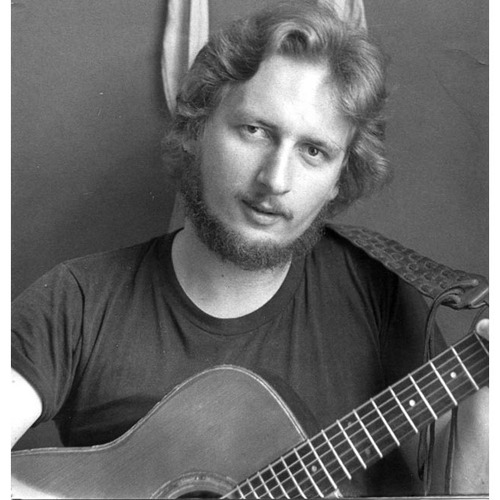
Doug McArthur is a Canadian folk singer, songwriter, guitarist, storyteller, recording artist, producer, engineer, festival organizer, and arts administrator whose career has moved from the Ontario coffeehouse circuit of the early 1970s into a long body of work rooted in Canadian, Irish, American, literary, and historical themes. Born in London, Ontario in 1946, McArthur grew up in southern Ontario and spent formative time around Goderich, Coldstream, and the Lake Huron region. Country music, old ballads, historical narratives, and the romance of travelling songwriters all fed into his early imagination, and by his teens he had begun writing lyrics and performing.
A high school assembly performance helped shift his attention from football to music, and he soon formed a folk group, The Dromen Trio, modelled in part on the Kingston Trio. The southern Ontario circuit of the late 1950s and early 1960s exposed him to touring performers including Ronnie Hawkins and the Hawks, David Clayton-Thomas, and other acts who moved through the region. McArthur later spent a summer performing in Grand Bend, another Lake Huron resort town, and began developing the songwriting voice that would define his career.
By the late 1960s and early 1970s, McArthur’s formative turf included Toronto, Kingston, Hamilton, Montreal, London, and St. Catharines. He performed in clubs and coffeehouses, including Smales Pace in London and Knight 11 in Hamilton, where he also developed organizational skills as a talent booker. With the support of manager Walter Grasser, he moved into higher-profile venues such as Toronto’s Riverboat and began appearing at early folk festivals across Canada. Randy Bachman was an early supporter, acquiring McArthur’s publishing rights and later returning them, while Valdy recorded two of McArthur’s songs for A&M Records, giving McArthur’s work important national exposure.
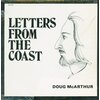
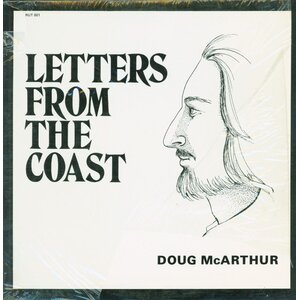
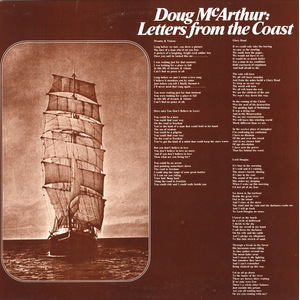
McArthur’s first released album, Letters From The Coast, appeared in 1974 on Rutabaga Records. It was an early example of a Canadian folk artist self-releasing original material outside the regular major-label system. Recorded at Captain Audio in Toronto and engineered by Jim Morgan, the album drew on musicians connected to the Cedar Lake and Perth County Conspiracy circle, including Thomas E.D. Handy on guitar, Steve Hayes on piano, Bill Usher on percussion, Mike Gardner on bass, Mother Fletcher on sitar, and Lia Hayes and Gord Lowe on harmonies. All songs were composed by McArthur, including ‘Dreams And Visions’, ‘Hero’, ‘Glory Road’, ‘Lord Douglas’, ‘The Painter’s Song’, ‘I Do’, ‘One-Eyed Walden’, ‘Don’t You Believe’, ‘The Devil’s Pony’, and ‘Skye Song’. The album’s blend of folk, poetic songwriting, and lightly psychedelic textures established McArthur as a distinctive independent voice.
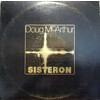
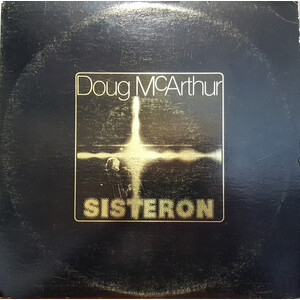
He followed with Sisteron, issued on Posterity Records in 1977. Recorded the previous summer at Danny and Bob Lanois’ MSR basement studio in Ancaster, Ontario, the album was engineered by Daniel and Bob Lanois and released by Harvey Glatt’s Posterity Records, which declared bankruptcy soon after its release. More arranged and ensemble-driven than his debut, the album featured Rick Taylor, Steve Taylor, Carl Keesee, Denis LePage, Willie P. Bennett, Frank Wheeler, Bill Hughes, Jim Neil, Christopher Kearney, Garnet Rogers, and Jude Johnson. Songs such as ‘Sisteron’, ‘Skyway’, ‘1911’, ‘The Way I Ride’, ‘The Lunenburg Shift’, ‘Ain’t Goin’ Home’, and ‘Almost Midnight’ deepened McArthur’s reputation as a writer who could move between history, humour, romance, travel, and personal reflection. The atypical ‘Whip Me’ was written as a parody of punk music McArthur had encountered in English clubs, though punk was still unfamiliar enough in Canada that the song was easily misunderstood. ‘Ain’t Goin’ Home’ was later covered by Garnet Rogers on Snow Goose Records, while ‘Gentle People’ was recorded by Colleen Peterson for CBC Records.
During this period McArthur also toured in the Maritimes and New England with Stan Rogers, and later continued across Canada with Garnet Rogers after Stan’s death. In the summer of 1976, McArthur appeared in the film of the first Festival of Friends in Hamilton, performing the introduction and first verse of ‘Whip Me’. Around the same period, he opened shows for Tom Paxton, James Cotton, Valdy, and Deep Purple, and played the expanding Canadian festival circuit from Winnipeg and Calgary to London, Hamilton, and Faro, Yukon.
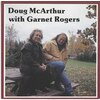
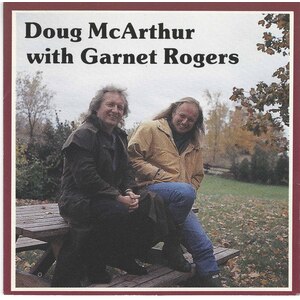
McArthur’s connection to the Rogers circle remained important through the 1980s and beyond, culminating in the 1989 Snow Goose Songs CD Doug McArthur with Garnet Rogers. Produced by Garnet Rogers and recorded by Dan Brodbeck at dB Studios in London, Ontario, the album placed McArthur’s vocals and rhythm guitar alongside Garnet Rogers’ violin, viola, guitars, guitar synthesizer, and bass, with Dave Essig adding mandolin and slide guitar. Its songs included ‘Merlin’, ‘Break The Law’, ‘Isle Madelaine’, ‘The Siege Of Toronto’, ‘Bullwhip Jack And The Silver Bell’, ‘There Is A River’, ‘Bank The Fire’, ‘Thief In The Night’, ‘Ships At Sea’, ‘Black Eyed Susan’, ‘Wino Breath’, ‘Chella’, and ‘The Un-Named City’.
McArthur’s career also took a surprising detour into spoken word and comedy with Change of Face, a live LP released around 1981 on Posterity Woodshed. The album was recorded over three nights at Change of Pace Coffee House in London, Ontario, with Dave Essig producing. It followed McArthur’s success at a comedy festival in Orillia, where he appeared alongside acts such as Charlie Farquharson, The Frantics, and Al Simmons, and received strong press attention. A planned CBC radio project with Bill Garrett and Bruce Steele might have raised his national profile, but a CBC technicians’ strike derailed the opportunity. The resulting album captured McArthur’s live act with the music largely removed and a deliberately tacky lounge-band backing. One piece, ‘Rubber Suits’, was a wry commentary on Stan Rogers’ rising Maritime and Celtic-associated image; according to McArthur’s own later account, Stan Rogers was sitting directly in front of him during the recording and his laughter can be heard throughout the piece.
That same period marked McArthur’s gradual shift into arts administration. Having booked Knight 11 in Hamilton and Change of Pace in London, he moved into a series of festival, venue, and production roles. He worked with Orchestra London as Audience Development Co-ordinator and Tour Manager, became one of three directors of the Winnipeg Folk Festival, served as Associate Production Manager at Roy Thomson Hall, worked with the du Maurier Jazz Festival, co-founded Gathering at Island Lake in Fernie, British Columbia, served as Artistic Director of Eaglewood Folk Festival, and became CEO and Artistic Director of Hamilton’s Festival of Friends. He also served with the Ontario Council of Folk Festivals, including time as President of the Board.
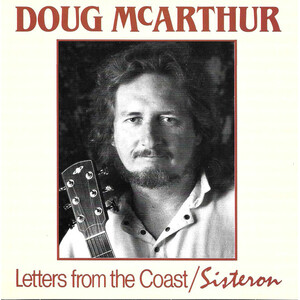
In 1991 Snow Goose Songs reissued McArthur’s first two albums together as Letters From The Coast / Sisteron, remastered by Greg Roberts at McClear Place. The cassette and CD editions helped preserve two early independent Canadian folk albums that had become difficult to find. In McArthur’s own liner note, written from Ilderton, Ontario in spring 1991, he reflected that in the 1970s he had borrowed money and slept on floors to write, produce, and record those albums, and hoped the work still stood up nearly twenty years later.
McArthur’s private recordings from the 1990s reveal another side of his career. Smoke Road, issued privately on cassette in 1993, was described by McArthur as “the CD that never was.” It grew out of his increasing touring and musical partnership with Jeffra, a California singer and pianist. The project was initially intended as a more formal recording, with Garnet Rogers slated as producer, but the sessions became troubled and Rogers left after about a week. McArthur continued, bringing in Tom Leighton to strengthen many of the tracks. Jeffra contributed piano, keyboards, and vocals, including a lead vocal on ‘Heaven Only Knows’; other musicians included Corey Thompson, Paul Loeffelholtz, Margaret Voorhaar, Mark Haines, Walter Maynard, and Garnet Rogers on acoustic guitar on one cut. Dave Brodbeck engineered at dB Studios in London and Brian Burnes mastered the project. Snow Goose declined to release it, so McArthur issued cassette copies himself. Several songs later remained important in his catalogue, especially ‘Boots & Saddles’, which was covered by Mark Haines and Tom Leighton and also performed by Nancy White.
McArthur’s California connection with Jeffra came into fuller focus on Angels of the Mission Trail, released in 1996 by Doug McArthur & Jeffra. The album explored California history, literature, landscape, and myth through songs such as ‘Jack & Charmian’, ‘Angels of the Mission Trail’, ‘Hills of Oregon’, ‘The Gold I Threw Away’, ‘Stumble from Vesuvio’, ‘Montaña de Oro’, and ‘Big Alma’. The project marked a mature phase in McArthur’s writing, where his lyric poetry, dramatic pacing, and interest in place-based storytelling came together with particular force.
In 2001, while running the Festival of Friends in Hamilton, McArthur released The Dust of Davy Crockett (Imagining America), a spare solo voice-and-guitar project. The album drew on songs brought back from Texas and California and included a solo performance version of ‘Boots & Saddles’. Its songs dealt with Texas, computers, aging, and a visit to New York City after the September 11 attacks. The track list included ‘Witness’, ‘Boots & Saddles’, ‘Cottontop’, ‘The Dust of Davy Crockett’, ‘Silverado’, ‘Louisiana Angel’, ‘Lone Star’, ‘Comanche Moon’, ‘Who the Woz Was’, and ‘Justice’. Rob Lamothe engineered at his house in Hamilton, David Bradstreet mastered the CD, and ‘Lone Star’ included chorus vocals by Rob Lamothe and Lisa Winn. ‘Justice’ later appeared on the compilation Tears of a Thousand Years, while Steve Wozniak, the subject of ‘Who the Woz Was’, reportedly heard the song and told McArthur it sounded accurate.
In 2004 McArthur moved to Wakefield, Quebec, where he found a productive artistic community. He founded Wakefield Sound & Light, a recording, filming, production, and engineering business that became an umbrella for his later musical and visual work. His resume during this period included recording and special effects engineering for Pathword’s six-language Audio Guide project for the Bytown Museum, producing Stonehands, a video series on the rebuilding of the Canadian Parliament buildings, and co-sequencing with Ian Tamblyn the True North album Dancing By Myself, a collection of Bill Hawkins songs recorded by Bruce Cockburn, Murray McLauchlan, Lynn Miles, and others.
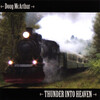
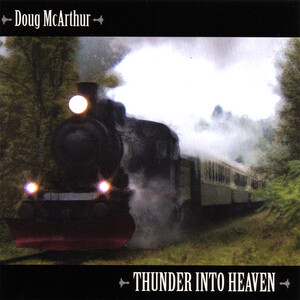
McArthur returned to recording with Thunder Into Heaven in 2007, released by Patio Records after the label initially approached him about a retrospective CD. Instead, McArthur assembled a new release from four unreleased Smoke Road cuts, five newly recorded songs, and a live version of ‘Black Eyed Susan’ recorded at Hugh’s Room in Toronto. Ian Tamblyn produced the new material at James Stephen’s studio in Chelsea, Quebec, close to McArthur’s Wakefield home. Musicians included Anouk Grégoire, Alan Marsden, Alvaro de Manaya, and Phil Bova. The album included ‘(Long Way From) Thunder Road’, ‘Bluebird’, ‘The Trembling Bird’, ‘Cottontop’, ‘Letter To Marie’, ‘The Silver Tongue of Acadie’, ‘Arthur’s Chair’, ‘Boots & Saddles’, ‘Black Eyed Susan’, ‘Trembling Bird (short reprise)’, and ‘Heaven Only Knows’.
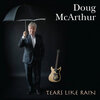
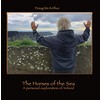
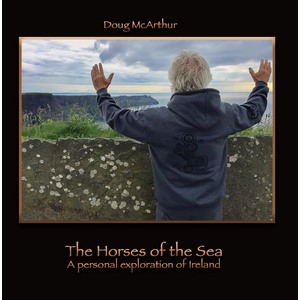
Later releases continued to frame McArthur as a writer of historical and place-based songs. Tears Like Rain, released in 2017, was identified by McArthur as his tenth album. Horses of the Sea turned toward Ireland, with songs such as ‘The Horses of the Sea’, ‘The Morning I Left Galway’, ‘The Black Fort’, ‘Sleeping in Dublin’, ‘Maud Gonne’, ‘Letter to Marie’, ‘Faretheewell to Galway’, and ‘Hills of Connemara’. The album extended McArthur’s long-standing interest in landscape, exile, memory, literary figures, and the history carried by songs.
Over the decades McArthur’s songs have been recorded or performed by artists including Valdy, Stan Rogers, Garnet Rogers, Nancy White, Bill Hughes, Bobby Watt, Colleen Peterson, Mark Haines, and Tom Leighton. Critics have compared his poetic gifts to Leonard Cohen and described him as a Canadian equivalent to Guy Clark, while others have praised the emotional, historical, and theatrical character of his work. Across his recordings, McArthur has remained a restless figure: folk singer, humourist, travelling songwriter, festival builder, producer, engineer, visual artist, and chronicler of people and places whose stories might otherwise slip away.
-Robert Williston
Doug's previous bio:
Doug was born in southern Ontario and grew up there in a harbour town.
After a high school assembly performance he realized that girls were more interested in his music than in his athletic ability so no more football.
He performed for a summer in Grand Bend, another Lake Huron resort town, and began to write songs.
Toronto, Kingston, Hamilton, Montreal and London became his formative turf, performing at Smales Pace and Knight 11 coffeehouses and, with the help of manager Walter Grasser, stepping up to Toronto's Riverboat and the early festivals across Canada.
Randy Bachman was an early supporter, buying up his publishing (and graciously returning those rights in later years) and Valdy recorded two of Doug's songs on A&M records, giving his career a certain early legitimacy.
Doug started to release albums of original material in 1974 and was among the first Canadian folk artists to self-release their albums outside of the regular music labels.
He toured in the Maritimes and New England with Stan Rogers in the early days and continued across the country with Garnet Rogers after Stan's passing.
Doug toured along the California coast with San Francisco singer Jeffra and they recorded a well respected CD "Angels of the Mission Trail".
Turning to arts administration, Doug was one of three directors of Winnipeg Folk Festival, worked at Roy Thomson Hall and the du Maurier Jazz Festival, Gathering at Island Lake in BC, before continuing on as Artistic Director and CEO with Festival of Friends and Eaglewood.
In 2004 Doug moved to Wakefield, Quebec where he found a relaxed and productive artistic milieu.
He founded and continues to run Wakefield Sound & Light, a successful business recording, filming and producing various CDs and videos.
Over the last couple of years, Doug has developed his interest in the visual arts, taking up photography, wood carving and painting.
WS&L has become the umbrella organization for his various artistic pursuits.
Resume
Currently owner and engineer at Wakefield Sound and Light, recording videos and CDs.
Producer of "Stonehands", a video series on the rebuilding of the Canadian Parliament buildings.
Previously:
Recording and Special Effects engineer for Pathword's six language Audio Guide project for the Bytown Museum.
Co-sequencer (with Ian Tamblyn) for True North CD "Dancing By Myself" (the songs of Bill Hawkins recorded by Bruce Cockburn, Murray McLaughlin, Lynn Miles, etc.)
Artistic Director - Eaglewood Folk Festival
CEO & Artistic Director - Hamilton Festival of Friends
President of Board – Ontario Council of Folk Festivals
Associate Production Manager - Roy Thomson Hall
Co-Founder Gathering at Island Lake - Fernie B.C.
Web Designer & Graphics Director - JW Long & Associates - Houston Texas
Associate Production Manager - duMaurier Jazz Festival
Stage Hand - San Francisco Bay area
Board Member At Large - Ontario Council of Folk Festivals
Audience Development Co-ordinator/Tour Manager - Orchestra London
Entertainment Manager - Change of Pace - London Ont.
Talent Booker - Knight 11 - Hamilton
(One of three) Festival Directors - Winnipeg Folk Festival
Tracks
65 tracks
Letters from the Coast (1974)
10 tracks
-
Dreams and Visions
-
Hero
-
Glory Road
-
Lord Douglas
-
The Painter's Song
-
I Do
-
One-Eyed Walden
-
Don't You Believe
-
The Devil's Pony
-
Skye Song
Sisteron (1977)
Showing 10 of 12 tracks
-
Sisteron
-
Whip Me
-
The Lights of Town
-
Skyway
-
1911
-
Cowboy Bob
-
Restless
-
The Way I Ride
-
The Lunenburg Shift
-
Ain't Goin' Home
With Garnet Rogers (1989)
Showing 10 of 13 tracks
-
Merlin
-
Break The Law
-
Isle Madelaine
-
The Siege of Toronto
-
Bullwhip Jack and the Silver Bell
-
There is a River
-
Bank the Fire
-
Thief in the Night
-
Ships at Sea
-
Black Eyed Susan
Thunder Into Heaven (2007)
10 tracks
-
(Long Way From) Thunder Road
-
Bluebird
-
The Trembling Bird
-
Cottontop
-
Letter to Marie
-
The Silver Tongue of Acadie
-
Arthur's Chair
-
Black Eyed Susan
-
Trembling Bird (short reprise)
-
Heaven Only Knows
Tears Like Rain (2017)
10 tracks
-
Stumble from Vesuvio
-
The Next Big Thing
-
The Morning I Left Galway
-
Tears Like Rain
-
Boots & Saddles
-
Cottontop
-
The Big Machine
-
A Pictograph of Crazy Horse
-
The Road to California
-
The Flying Canoe
Horses of the Sea (2021)
10 tracks
-
The Horses of the Sea
-
The Morning I Left Galway
-
Heavy Horses on the Highway
-
The Black Fort
-
Sleeping in Dublin
-
Merlin
-
Maud Gonne
-
Letter to Marie
-
Faretheewell to Galway
-
Hills of Connemara
Discography
Featured Titles

Albums

Gallery
Images
2 images
Doug McArthur
McArthur, Doug
Media
Videos
0 videos
No videos available for this artist.