Artist / Band
MRQ
Biography
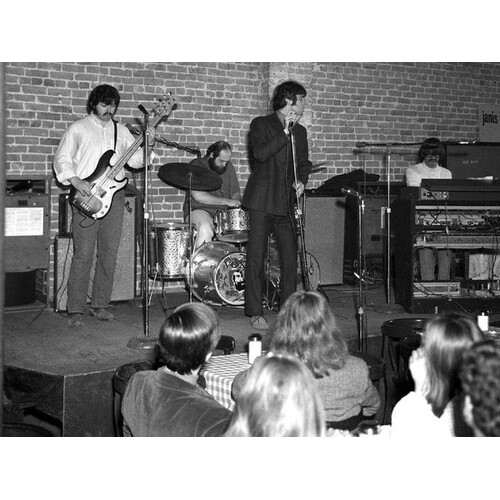
The Modern Rock Quartet (MRQ) were a Canadian jazz-rock ensemble whose brief but ambitious career bridged the late-1960s Toronto–Ottawa underground and the emerging progressive rock era. Conceived by former Luke & The Apostles keyboardist Peter Jermyn, MRQ stood apart immediately for its guitar-less format, placing keyboards at the centre of a sound that blended rock, jazz, and extended compositional forms.
Following the breakup of Luke & The Apostles in August 1967, Jermyn relocated to Ottawa and briefly joined the local group Heart, fronted by vocalist John Martin. There he reconnected with Esquires rhythm section members Doug Orr (bass) and Robert Coulthart (drums), whom he had encountered previously through the Ottawa scene. By August 1968, Jermyn had reorganized the lineup into a new project, naming it The Modern Rock Quartet.
MRQ quickly attracted industry attention. Their unconventional lineup — organ, bass, drums, and vocals — was highly unusual for the period, and the band was approached by multiple American labels before signing with RCA. In late 1968, RCA brought the group to New York to record material, much of which remains unreleased.
The band’s debut and best-known release came in 1968 with the RCA single ‘Plastic Street’, written by Jermyn, backed with ‘Games’, composed by Bruce Cockburn with lyricist Michael Ferry (Lee Jackson of Jon and Lee & The Checkmates). Though the single failed to chart, it was issued in both English and French, and today stands as a highly sought-after Canadian collectible. Additional studio recordings from this period — including ‘Revolution’ and ‘Lady of Pleasure’ — were never officially released.
Despite limited commercial success, MRQ developed a formidable live reputation. Between 1969 and 1970, they performed extensively in Toronto and nationally, appearing at major events including Varsity Stadium concerts, the Toronto Rock Festival, and Festival Express at CNE Stadium alongside artists such as The Band, Janis Joplin, The Grateful Dead, Procol Harum, Canned Heat, and Chuck Berry. They also supported international acts including The Who, Procol Harum, and the Paul Butterfield Blues Band. Contemporary accounts noted the ambition of MRQ’s stage presentations, with Jermyn’s keyboard work cited as an influence on later progressive rock stylists.
Lineup changes followed the RCA single. Vocalist John Martin departed and was replaced first by Bob Blyth, then by former Esquires singer Brian Lewicki. The group briefly experimented with adding a guitarist — Pat Karwan (formerly of the 1910 Fruitgum Company) — but soon reverted to their original guitar-less approach.
After a high-profile appearance at Expo ’70 in Japan, Peter Jermyn exited the band, unwilling to transition into routine bar work. He was replaced by Drew King (from the group White), but the original momentum proved difficult to sustain. The remaining core of Lewicki, Orr, and Coulthart continued performing on the Québec side of the Ottawa River before disbanding.
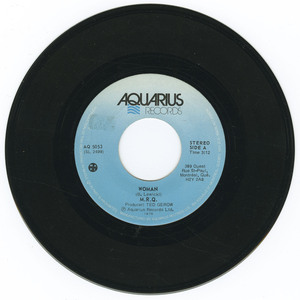
A later incarnation of MRQ, featuring Brian Lewicki, Doug Orr, Robert Coulthart, and keyboardist Rod Phillips, recorded a final single for the Aquarius label, released in 1976.
Following MRQ, Peter Jermyn became deeply involved in electronic music, collaborating with Dr. Hugh LeCaine at Canada’s National Research Council on the development of the Electronic Sackbut, one of the world’s earliest synthesizers. He later worked in television and film soundtracks before eventually rejoining Luke & The Apostles for reunion performances in Toronto.
-Robert Williston
Modern Rock Quartet (MRQ) — Lineups
Original lineup (1968 – 1969)
(RCA Victor era; guitar-less configuration)
John Martin (a.k.a. Jean Martin): vocals
Peter Jermyn: organ, keyboards
Doug Orr: bass
Robert Coulthart: drums
This lineup recorded the band’s debut single ‘Plastic Street’ b/w ‘Games’ for RCA Victor and established MRQ’s core identity as a keyboard-driven jazz-rock group without guitar.
Second lineup (1969)
(Post-single vocal change)
Bob Blyth: vocals
Peter Jermyn: organ, keyboards
Doug Orr: bass
Robert Coulthart: drums
Bob Blyth replaced John Martin shortly after the RCA single. This lineup continued live work but did not issue recordings.
Third lineup (1969 – 1970)
(Final Jermyn-led lineup)
Brian Lewicki: vocals
Peter Jermyn: organ, keyboards
Doug Orr: bass
Robert Coulthart: drums
Lewicki (formerly of The Esquires) became the band’s final vocalist during its most visible live period, including major festival appearances and Expo ’70 in Japan.
Expanded lineup (brief, 1969)
(Short-lived guitar experiment)
Brian Lewicki: vocals
Peter Jermyn: organ, keyboards
Doug Orr: bass
Robert Coulthart: drums
Pat Karwan (a.k.a. Karwin): guitar
Karwan (formerly of the 1910 Fruitgum Company) was added briefly as MRQ experimented with a more conventional rock format. The group soon abandoned this approach and returned to a guitar-less lineup.
Post-Jermyn lineup (1970 – early 1970s)
Brian Lewicki: vocals
Doug Orr: bass
Robert Coulthart: drums
Drew King: keyboards
Following Peter Jermyn’s departure after Expo ’70, Drew King (from the band White) replaced him on keyboards. This lineup marked a clear stylistic and conceptual shift and did not include Jermyn.
Final lineup (1974)
(Aquarius Records single)
Brian Lewicki: vocals
Doug Orr: bass
Robert Coulthart: drums
Rod Phillips: keyboards
This lineup recorded MRQ’s second and final single, released on the Aquarius label in 1974. It documents the band’s continuation beyond the RCA era and is frequently omitted or misrepresented in secondary sources.
Discography
Featured Titles
Singles

Gallery
Images
2 images
MRQ 001001
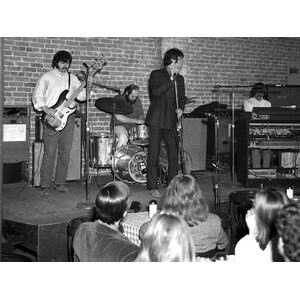
MRQ
Media
Videos
0 videos
No videos available for this artist.