Artist / Band
Floyd Lawson and the Heart of Stone
Biography
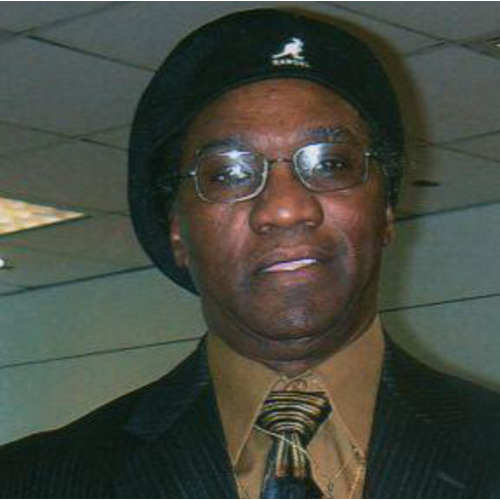
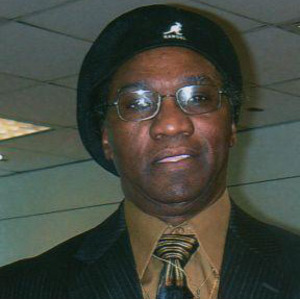
Floyd Lawson and the Heart of Stone occupy a singular and unlikely place in Canadian music history: a seasoned American soul group with genuine Detroit-era credentials who, in the mid-1970s, resurfaced in Ottawa to independently record one of the rarest and most sought-after Canadian funk albums ever issued.
Lawson’s musical roots trace back to gospel. He began singing in church in the late 1950s alongside his brothers and cousins, developing the emotive delivery and spiritual intensity that would define his later work. By the early 1960s he had moved into the Florida club circuit, first with a vocal group known as the Larks, and soon after with an evolving ensemble that became the 4 Pennies. The group sharpened their craft through constant live performance and eventually made their way to Detroit, where they recorded at Brunswick Studios and released the singles “You Have No Time to Lose” (1966) and “’Tis the Season” (1967), earning a solid reputation as a disciplined and professional soul act.
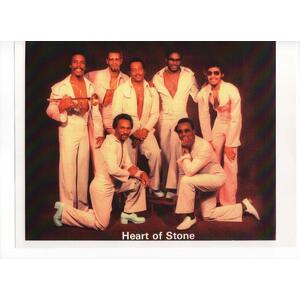
In 1970, the group re-emerged under the name Hearts of Stone and recorded for Motown’s V.I.P. subsidiary, releasing singles and the album Stop the World – We Wanna Get On. Though the record showed real promise, the relationship with the label was short-lived. When the group declined to sign a managerial contract, promotional support stalled, and the band once again found themselves operating outside the machinery of the major-label system.
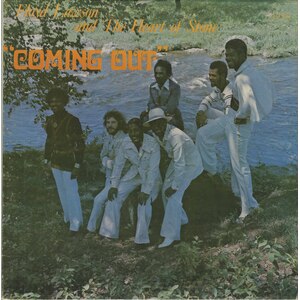
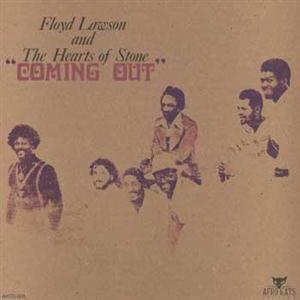
Rather than fading away, Lawson and the group took control of their own direction. By the mid-1970s they had relocated to the Ottawa–Gatineau region, where they continued to perform and ultimately self-produced a new full-length album. Issued in 1976 on their own imprint (FLO-89), Coming Out was recorded locally under the banner of Marc Production, Ottawa, Ontario, tying the project to the city’s emerging independent recording infrastructure rather than the established Toronto or Montreal industry pipeline.
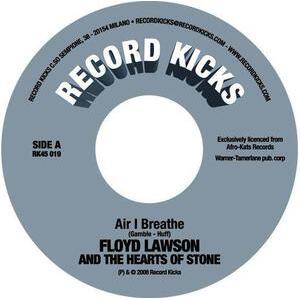
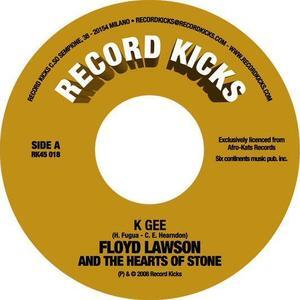
Musically, Coming Out represents a decisive shift. While earlier recordings emphasized harmony-driven soul, the Ottawa sessions lean hard into mid-1970s funk and crossover soul, built around tight rhythm section work, faster tempos, and an unmistakable dancefloor sensibility. The album balances confident cover choices with original material, highlighted by deep-funk standouts such as “Rated ‘X’” and “Air I Breathe,” alongside a blistering, uptempo reading of the Nite-Liters’ “Hay Gee.” The performances suggest a working band playing as an ensemble—direct, muscular, and unpolished in the best sense.
The album’s credits reinforce its regional character. Engineered by John Aybanski, and carrying a special thanks to George and Brenda of the Manoir Papineau in Gatineau, Coming Out bears all the hallmarks of a record made quickly, independently, and with a clear purpose. Distribution appears to have been almost entirely local, and the LP never received national promotion, radio servicing, or press coverage at the time of release.
That limited footprint would later become part of the album’s legend. Original copies of Coming Out are extraordinarily scarce, surfacing most often in and around Ottawa decades after the fact. Among collectors and DJs, it is now widely regarded as one of the rarest Canadian funk LPs ever issued, frequently cited alongside — and often surpassing — better-known private-press soul records in both scarcity and demand.
In later years, selected tracks from Coming Out were rediscovered and reissued, introducing Floyd Lawson and the Heart of Stone to a new generation of listeners and confirming what early adopters already knew: this was not a curiosity or an anomaly, but the work of seasoned musicians who carried deep American soul traditions into a Canadian independent context and left behind a singular, enduring artifact.
Within the Museum of Canadian Music, Floyd Lawson and the Heart of Stone stand as a powerful reminder that Canada’s musical history is not only shaped by domestic scenes, but also by artists who arrived with experience, autonomy, and vision — and chose, even briefly, to make their music here.
-Robert Williston
Lloyd Harris: trumpets, percussion, backing vocals
Robert Cherry: tenor saxophone, flute, percussion, backing vocals
Dennis Joyner: organ, piano, backing vocals
Richard Carter: bass
John Bird: rhythm guitar, lead guitar, flute, backing vocals
David Donais: congas, backing vocals
Billy Moore: drums
Tracks
10 tracks
"Coming Out" (1976)
10 tracks
-
Theme from Swat
-
What's Come Over Me?
-
Hay Gee
-
Sunshine
-
That's the Way I Like It
-
Oil in the Ground
-
Love Won't let Me Wait
-
Rated "X"
-
Air I Breathe
-
Only Takes a Minute
Discography
Featured Titles
Albums
Singles
Compilation Tracks

Gallery
Images
2 images
Hearts of Stone
Lawson, Floyd and the Heart of Stone
Media
Videos
0 videos
No videos available for this artist.