Artist / Band
Lavender Hill Mob
Biography
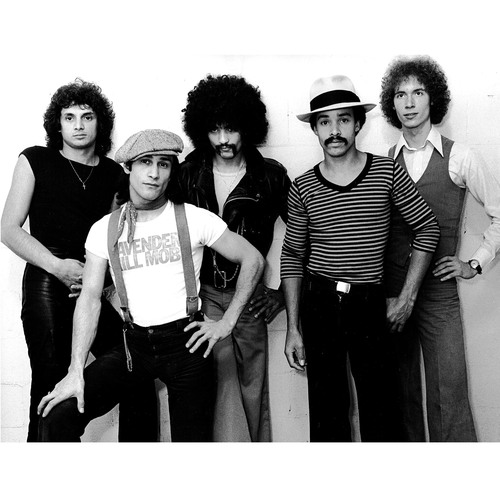
Lavender Hill Mob came together in Montréal in September 1975 and shared its name with the 1951 Ealing comedy in which Alec Guinness plays a mild bank clerk who steals a fortune in gold bullion. The group grew out of a local band called Morning Haze, which guitarist Ronny Jones had joined at fifteen. The lineup that signed to United Artists was Nicky Prigeno on lead vocals and bass, Chuck Chandler on keyboards and synthesizers, Jones on lead guitar, Hector “Joe” Jacob on rhythm guitar, Gerry Hardy on flute and saxophone, and Vito Fiore on drums. Jones came from Ontario, Hardy from Alabama and Fiore from Italy, and the band liked to call itself a small United Nations. Their average age was just under 22.
Their first demo held two originals, ‘Head Over Heels’ and ‘No One Compares’. They took it to Robert Nickford, a Montréal promotion man who in 1972 had gathered about $300 and a few friends to launch Kot’ai Records and, with it, Frank Marino’s Mahogany Rush. Nickford found them raw but “not punky,” and took over their management. He brought the tape to Doug Pringle at CHOM-FM, and the band found out the station had added it when they switched on the radio and heard themselves. Nickford then showcased the group at The Nelson in Montréal. Keith Patten and Jeff Samuels of United Artists’ A&R department were in the audience, and although several labels were interested, the band went with UA because its people showed the most enthusiasm.
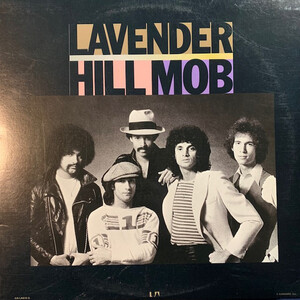
United Artists treated the signing as an event. At MIDEM in France, UA’s international president Artie Mogull announced that the debut album would get the company’s first coordinated worldwide release campaign, and RPM reported that Lavender Hill Mob would be the first UA Canada act ever released around the world. Dave Deeley of UA Canada called it the most extensive promotion the company had mounted for any act. The album came out in Canada in February 1977, and UA scheduled an April 15 release in 18 more countries on five continents, among them the United States, Britain, Australia, Germany, Japan and South Africa. Pressings of the album turned up as far afield as Yugoslavia.
Rob Stevens of Cashwest Productions produced the album at Le Studio in Morin-Heights, with resident engineer Nick Blagona, formerly of Trident Studios in London, recording and mixing. Bob Ludwig mastered it at Masterdisk in New York, and the cover photographs were by Moshe Brakha, who had shot Boz Scaggs’ Silk Degrees. The band worked out its own parts by gathering around the keyboards. Prigeno and Chandler had a hand in six of the eight songs, Jones wrote ‘Warning’, and the one outside song was ‘Loneliest Man on the Moon’ by David Castle and Graham Dee. Prigeno was candid about where the band’s strength lay. The vocals came first, he told RPM, and nobody in the group claimed to be a virtuoso. They were rock and rollers, and onstage the goal was to get the room partying.
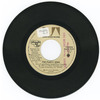
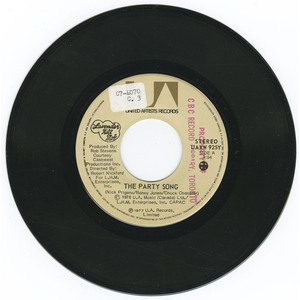
The song that did that best went out first. ‘The Party Song’, backed with a version of the Yardbirds’ ‘Nazz Are Blue’, was playing on 90 stations by February, including WTBS in Cambridge, Massachusetts, and UA pressed a 12-inch disco version for the clubs. UA’s British company issued the single in March. In Canada it climbed to No. 48 on the RPM singles chart that spring, and the album reached No. 76.
Booking agent Tom Wilson of Concept Productions kept the band moving through Ontario and Québec that winter, with dates in Ottawa from February 17 to 19, five nights at Montréal’s Edgewater Hotel from March 9 to 13 and a stand in Windsor. A Toronto debut at the Colonial Tavern was set around the album’s release. Then came two much larger stages. On March 16 the group moved a York University date so it could appear on the Juno Awards broadcast on CBC Television, and in April it opened for Electric Light Orchestra at the Ottawa Civic Centre, Maple Leaf Gardens in Toronto and the Montréal Forum. All of this came with a setback. Jacob took an extended leave to recover from throat surgery, and the band carried on as a five-piece.
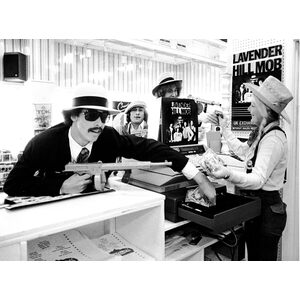
In the United States, UA’s Billboard advertisement played on the name: if the label could have gotten Al Capone, it said, it would have sent him on an FM promotional tour. The ad went on to claim heavy national FM airplay from the album’s first day, boasted of a special merit review in Walrus and a rave in The Village Voice, and told readers that Montréal adored the band the way San Francisco had once doted on its local groups. The Los Angeles Times heard Prigeno’s romantic lead vocal as a cross between Paul McCartney and Rupert Holmes.
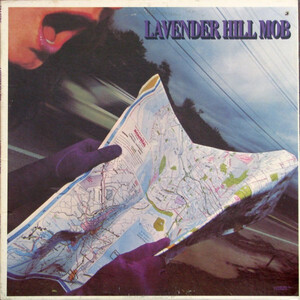
Later in 1977 Lavender Hill Mob was back at Le Studio, recording its second album with Stevens and Blagona. Released in 1978 as Street of Dreams, it was made by the five-piece of Prigeno, Chandler, Jones, Hardy, now also on soprano saxophone, and Fiore, with Jacob no longer in the group. Prigeno and Chandler arranged the material, George Marino mastered it at Sterling Sound in New York, and the package carried art direction by Bill Burks, design by Stan Evenson and photography by Pierre Chanteau. Prigeno and Chandler wrote ‘Dream Away’, ‘She’s So Good, She’s So Fine’, ‘Make Up Your Mind’ and ‘Good Lovin’’, Jones contributed ‘Roll ’n Ride’, and the three of them shared ‘The Ballad of Molly McGuire’, ‘Please Tell Me Why’ and the closing ‘Rock ’n Roll Holiday’. The only song from outside the band was ‘It’s Not the Spotlight’ by Barry Goldberg and Gerry Goffin.
‘Dream Away’ was chosen as the single. Billboard named it one of its Top Single Picks on February 18, 1978, and in April it reached No. 65 on the RPM chart.
In June 1978 Stereo Review named Street of Dreams a Recording of Special Merit. The reviewer praised the group’s harmonies and arrangements, singled out ‘Make Up Your Mind’ and heard echoes of the early Beatles, though it had little time for the lyrics.
After Street of Dreams the trail goes quiet. No third album followed, and when and why Lavender Hill Mob broke up has not been documented. What the band left is two albums made at Le Studio, a handful of singles and the spring of 1977, when a band of Montréal musicians averaging 22 years old saw United Artists release its debut album in 18 countries and tell Billboard readers that the Lavender Hill Mob had arrived.
-Robert Williston
Tracks
2 tracks
-
The Party Song
-
Nazz are Blue
Discography
Featured Titles
Albums
Singles
Gallery
Images
12 images
View All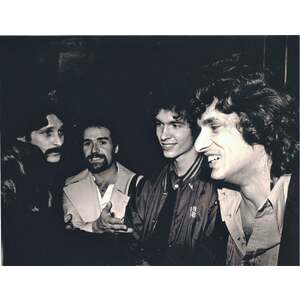
Michel Pellus (artist) - Robert Nickford (LHM's manager) - band members: - Chuck Chandler - Nick Prigioniero
Lavender Hill Mob
Lavender Hill Mob
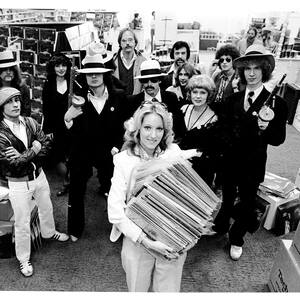
Lavender Hill Mob
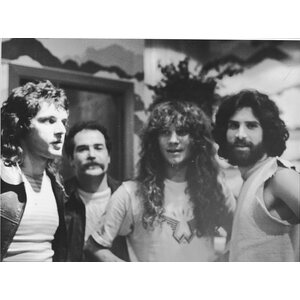
Lavender Hill Mob
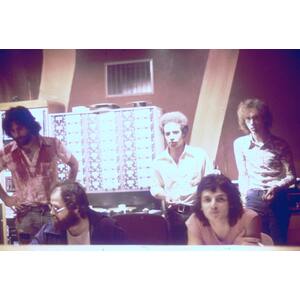
Lavender Hill Mob
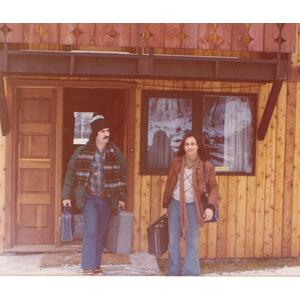
Lavender Hill Mob
Lavender Hill Mob
Media
Videos
1 video