Artist / Band
Kristine Sparkle (Christine Holmes)*
Biography
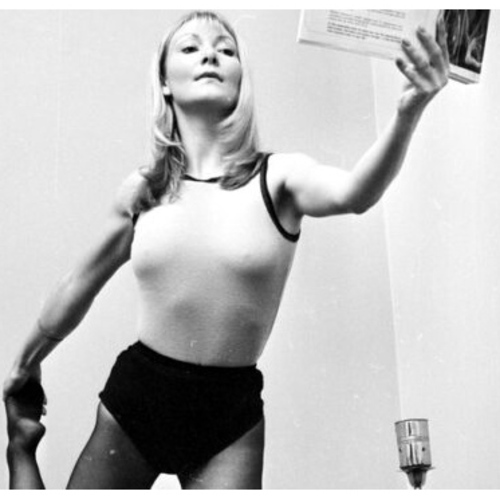
Kristine Sparkle, born Christine Hodgson and later professionally known as Christine Holmes, was a British-born singer, songwriter, and television performer whose career spanned early 1960s Midlands beat culture, late-1960s British pop and television, and mid-1970s Canada-based recording and songwriting.
Holmes’ musical career began while she was still at school in Solihull, Warwickshire. In 1962 she joined the local Birmingham-area group The Downbeats, one of the very few Midlands bands of the period to feature a female lead singer. The group, originally formed as an instrumental outfit influenced by The Shadows and The Tornados, expanded its repertoire significantly after Holmes joined as vocalist in early 1963. With her presence, the band incorporated material by Dionne Warwick, Dusty Springfield, The Supremes, and other American soul-pop artists, giving them a stylistic range unusual on the regional club circuit at the time.
The Downbeats quickly became a popular live attraction across the Midlands, performing regularly at youth clubs, civic halls, and ballrooms. In February 1963, they placed second to The Fortunes in a major “Battle of the Bands” contest at Edgbaston’s Tower Ballroom, and later held an extended residency at the Royal Oak in Hockley Heath, performing multiple nights per week. The group were also regulars at Solihull Civic Hall and appeared at large-scale events including the Variety Club of Great Britain Star Gala at Battersea Park Festival Gardens in May 1965, performing before an audience estimated at 10,000 people.
Holmes left The Downbeats later in 1963 to pursue a solo career, briefly singing with The Applejacks before relocating fully into London’s professional music and theatre world. Her time with The Downbeats provided extensive stage experience and established her as a confident, professional front-line vocalist well before her national exposure.
By the mid-1960s Holmes had begun releasing solo recordings and had become a familiar face on British television. Her career expanded beyond pop recording into stage and television work, including a significant role in the West End production Charlie Girl at the Adelphi Theatre, starring Anna Neagle and Joe Brown. The production ran for several years and gave Holmes sustained exposure as a performer capable of handling musical theatre as well as pop material.
Between 1966 and 1969, Holmes became a regular on the BBC’s long-running children’s variety programme Crackerjack!. Around the same time, she joined the vocal harmony group The Family Dogg, appearing with the group during the period following their UK Top Ten hit “Way of Life.”
Image is the debut studio album by Kristine Sparkle, released in 1974 on Decca Records in the United Kingdom (catalogue no. SKL 5192). Issued in stereo, the album reflects the glam rock style prevalent in British pop music during the early 1970s. The album consists primarily of cover versions of pop and rock material, including “Eight Days A Week,” “Baby, I Love You,” and “It’s in His Kiss,” alongside original and traditional compositions. One track, “Street Corner Lady,” is credited to Sparkle. Image was produced and arranged by Barrie Guard, David Mackay, and Daniel Danzack.
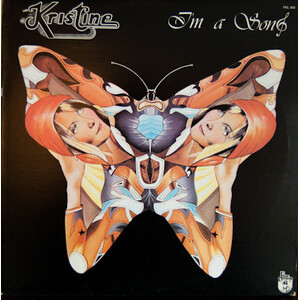
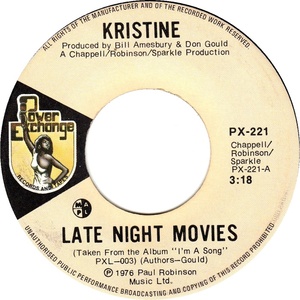
Following the Decca period, Holmes relocated her professional base to Canada, establishing herself within Toronto’s recording community and performing simply as Kristine. In 1976 she released the album I’m a Song on the Toronto-based Power Exchange label, associated with J. J. Barrie, drawing on local Canadian talent including Torontonians Bill Amesbury and Milan Kymlicka, and recording in part at RCA Studios, Toronto, Ontario. The single “Pussycat Tiger” was released during this period.
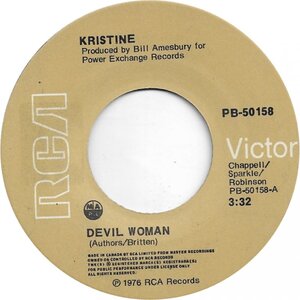
The B-side of “Pussycat Tiger” was “Devil Woman,” a song Holmes co-wrote with Terry Britten. Later that same year, Cliff Richard recorded the song, turning it into a major international hit. “Devil Woman” reached the UK Top Ten and became Richard’s first major breakthrough on the U.S. Billboard Hot 100, peaking at No. 6.
After the mid-1970s, Holmes shifted her professional focus away from solo recording projects. She continued to work in television, including regular appearances on the impressionist and comedy series Who Do You Do, maintaining a public profile through performance rather than recording.
-Robert Williston
Tracks
11 tracks
I'm a Song (1976)
Showing 10 of 11 tracks
-
I'm a Song
-
Just a Few Words
-
Bohemian
-
I'm Gonna Love You Baby
-
You're My Honey
-
Devil Woman
-
Late Night Movies
-
Till You're Loving Me Again
-
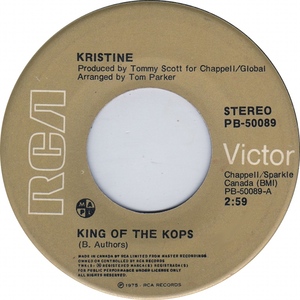
King of the Cops
-
Grandpa Tell Me One More Story
Discography
Featured Titles
Albums
Singles
Gallery
Images
1 image
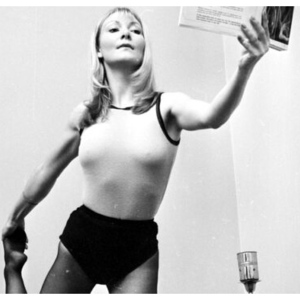
Sparkle, Kristine (Christine Holmes)*
Media
Videos
0 videos
No videos available for this artist.