Artist / Band
Hype
Biography
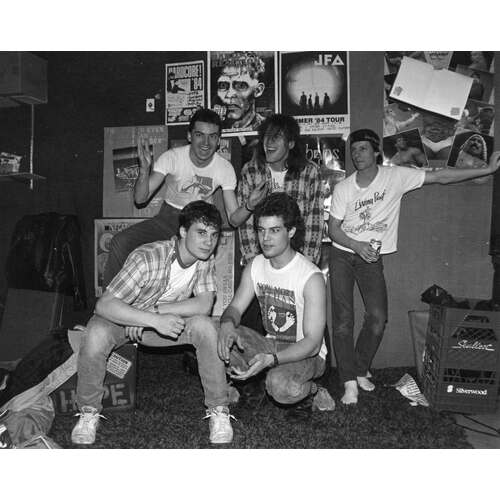
Hype were a hardcore punk band from Oakville, Ontario, who became one of the most active groups in the Toronto-area hardcore scene of the 1980s. Contemporary sources differ slightly on their exact beginning — one Fringe Product biography dates the formation to 1982, while the band themselves recalled the original group coming together around 1983 — but Hype were clearly active by 1983 and remained together through the latter part of the decade.
The original core consisted of Brian Bishop on vocals, Sheen on guitar and vocals, Gerry Lebeuf on bass and vocals, and Chris Leverton on drums. Bishop, Sheen and Lebeuf later identified themselves as three of the original members. The group developed in Oakville but quickly became intertwined with Toronto’s expanding hardcore network, playing the city regularly and becoming part of a community of bands, promoters, record stores, radio programs and independent fanzines that allowed Canadian hardcore to operate largely outside the conventional music industry.
One of Hype’s earliest surviving recordings is ‘Oakville Uber Alles’, captured live at Toronto’s Turning Point in 1983. The song later surfaced on the Oakville Uber Alles compilation and preserves the rawer first stage of a group whose sound would become progressively tighter and heavier over the following years.
A major part of Hype’s activity revolved around Reuben Kincade Productions, operated by manager Don Lebeuf. Reuben Kincade was more than the name attached to a record sleeve: it handled management, promotion, bookings and correspondence. Contemporary Toronto scene reports directed touring bands to Don Lebeuf and Reuben Kincade Productions when seeking local shows, placing Hype on both sides of the scene — as performers and as people helping other bands find places to play.
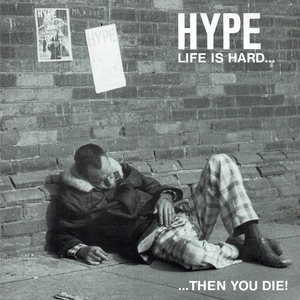
The group’s first album, Life Is Hard... Then You Die!, was recorded at Hedgehog Sound in April 1985. The lineup was Brian Bishop, Sheen, Gerry Lebeuf and Chris Leverton, with Neill McDonald engineering. Production was credited to Neil, Gill and Hype, and the record was pressed at ARC Sound in Toronto.
The seventeen-song album was essentially a do-it-yourself production. In a contemporary interview, the band emphasized that they had made the record on their own terms and retained control of the recording. It was issued through Reuben Kincade Productions, with Hype approaching Fringe Product after the album had been completed.
Life Is Hard... Then You Die! documented a fast, increasingly metallic form of hardcore, but Hype resisted being reduced to a single stylistic formula. Sheen supplied much of the songwriting, while Gerry Lebeuf, Brian Bishop, Chris Leverton, Gill and Don Lebeuf also contributed material. Songs such as ‘It’s All Hype’, ‘Pseudo Punk’, ‘Free Trade’, ‘Tradition’, ‘Superpowers’, ‘Coke Is It’, ‘Violent Nature’ and ‘Real Eyes’ mixed social commentary, scene criticism, humour and observations about everyday life.
The lyrics could be political, but Hype did not present themselves as a doctrinaire political band. In period interviews they described their songs as coming from things they observed around them and expressed more interest in encouraging listeners to think for themselves than in delivering a fixed ideological message. ‘Free Trade’, for example, reflected their skepticism toward the Canada–United States free-trade debate, while other songs dealt with conformity, consumer culture, television, religion, violence, drugs and attitudes within punk itself.
The album received significant underground attention. In Maximum Rocknroll, Pushead heard a fast Canadian hardcore attack driven by hard rhythms, metallic guitar work and strong vocals, placing Hype within the growing national wave represented by bands such as S.N.F.U. and Direct Action.
The album was subsequently licensed to We Bite Records in Tübingen, West Germany, where it appeared on clear vinyl. Later We Bite promotional material stated that the favourable response to the debut helped Hype secure a deal with Fringe Product, one of Canada’s principal underground punk distributors. We Bite characterized Hype’s sound as melodic but fast hardcore with a metal edge.
Hype were also developing into an experienced touring band. Their contemporary interviews describe repeated trips across Canada, with appearances in centres including Sault Ste. Marie, Regina, Calgary, Edmonton, Kamloops and Vancouver. During one Vancouver interview they described themselves as being on their second western tour, the previous trip having reached Calgary and Edmonton.
The touring remained thoroughly DIY. In some communities the band arranged its own shows, rented a P.A. system and depended on local punk networks to make performances possible. The members spoke enthusiastically about travelling across Canada, meeting people and experiencing regional scenes that differed considerably from Toronto.
Bands Hype recalled sharing bills with included Rhythm Pigs, 7 Seconds, Youth Brigade, Stretch Marks, The Unwanted, Down Syndrome, Entirely Distorted, S.N.F.U. and Asexuals, among others. Their records, interviews and correspondence also document connections with MDC, The Freeze, Adrenalin O.D., D.O.A., Death Sentence, Sons of Ishmael, Direct Action and numerous other North American hardcore groups.
The lineup evolved during this period. John Barbisan joined as a second guitarist around 1986, giving Hype a heavier two-guitar attack. Barbisan was also active in Toronto hardcore culture outside the band through his Pirates of Doom fanzine, which documented many of the Canadian and American groups moving through the same scene.
A serious setback followed when the house where members of Hype were living caught fire, destroying much of their personal property and equipment. Around the same period Chris Leverton left the band on good terms. John Barbisan’s brother Dave Barbisan subsequently joined on drums, helping stabilize the group as Hype moved toward its second album.
By then the lineup consisted of Brian Bishop on vocals, Sheen and John Barbisan on guitars and vocals, Gerry Lebeuf on bass and vocals, and Dave Barbisan on drums. A contemporary Toronto scene report noted that the additional guitar had given Hype greater power and that the group had already recorded its second LP.
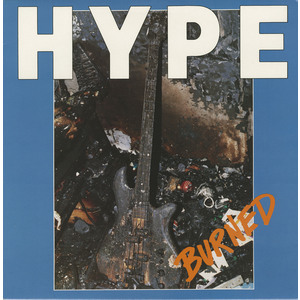
That album, Burned, was recorded at Soundpath Studios in Toronto in June 1987 and mastered there the following month. Rick Lightheart engineered the sessions and produced the record with Hype. Fringe Product scheduled the album for release in November 1987.
Burned retained Hype’s hardcore speed while presenting a fuller and more developed sound. Its seventeen tracks included material such as ‘Free Trade’, ‘Ditch Pig’, ‘Scumtongue’, ‘Insecurity’, ‘Building Borders’, ‘Need a Handgun’, ‘White Disease’ and ‘They Do as They Please’, continuing the group’s mixture of social observation, political unease, humour and personal frustration.
The band acknowledged the growing influence of heavier music but remained wary of being treated simply as a crossover group. In contemporary interviews they recognized some heavy-metal influence in their sound while stressing that they were not a metal band. Hype were developing naturally toward a heavier form of hardcore rather than consciously adopting the emerging crossover formula.
European reviews nevertheless heard the combination clearly. Contemporary coverage of Burned described Hype’s sound in terms of Canadian hardcore with a metal edge, while We Bite’s 1988 promotional material characterized the band as playing melodic, fast hardcore with a touch of metal. The increasingly heavy sound brought Hype into contact with both punk and metal audiences without fundamentally changing the band’s identity.
Touring continued through 1987 and 1988. Surviving interviews capture a group accustomed to long drives, improvised accommodations, border crossings and the practical realities of independent touring. The members were particularly interested in the differences between regional scenes, discussing Vancouver, Toronto, Montreal and the American West Coast while recognizing the difficulty faced by bands attempting to cross a country as large as Canada.
For Hype, the value of hardcore extended beyond the music itself. Their interviews repeatedly return to communication, independent organization and contact between scenes. Reuben Kincade Productions, the band’s own merchandise and correspondence, John Barbisan’s Pirates of Doom, and their willingness to help touring groups all reflected the same approach: punk worked best when the people participating in it created their own networks rather than waiting for the established music business to do it for them.
Hype remained active through the late 1980s, leaving behind two studio albums and a substantial archive of live recordings, photographs, flyers, interviews, fanzines and scene documentation. Although their original released catalogue was relatively small, the band’s activity extended considerably beyond those two records.
Beginning in the late 2010s, archival releases started making more of that history available. LIVE 87–88 TOUR appeared in 2018, gathering twenty-four live recordings from Hype’s later period. The collection drew from both studio albums while also preserving material that had not appeared on either LP.
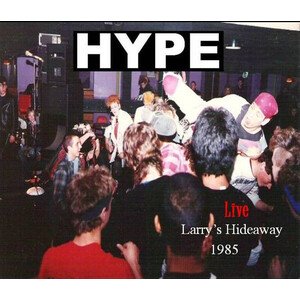
In 2019, Live Larry’s Hideaway 1985 recovered a twenty-three-song performance from Toronto’s Larry’s Hideaway. The recording is particularly valuable because it captures Hype around the time of their first album while also documenting songs such as ‘Free Trade’, ‘Ditch Pig’, ‘Scumtongue’ and ‘Insecurity’ before their eventual appearance on Burned.
The archival activity also reached back to the 1983 Turning Point performance of ‘Oakville Uber Alles’, preserving a surviving document from Hype’s earliest period and extending the recorded story from the original four-piece through the heavier five-member lineup of the late 1980s.
Hype emerged from Oakville but became deeply embedded in the Toronto hardcore scene, building an audience through independent records, concert promotion, fanzines, correspondence and repeated touring. Their music evolved from raw early hardcore into a faster, heavier and increasingly metallic attack without abandoning the humour, social observation and DIY principles that had defined the group from the beginning.
With Life Is Hard... Then You Die!, Burned and the later recovery of their live archive, Hype left a distinctive record of Ontario’s 1980s hardcore underground — not only as a performing and recording band, but as active participants in the network that helped the scene sustain itself.
-Robert Williston
Tracks
33 tracks

Life Is Hard...Then You Die (1984)
Showing 10 of 17 tracks
-
It's All Hype
-
Coke Is It
-
Pseudo Punk
-
Only a Fool
-
Cigarette Head
-
I Wanna be Neil
-
Violent Nature
-
Tradition
-
Generic Placebo
-
Time & Cash
Burned (1987)
Showing 10 of 16 tracks
-
Life Is Hard...Then You Die
-
Free Trade
-
Ditch Pig
-
Sick Side Show
-
Asshole at Large
-
Wipeout
-
Scumtongue
-
Intermission
-
Have You Seen Nicole?
-
Burned
Discography
Featured Titles
Albums
Gallery
Images
32 images
View All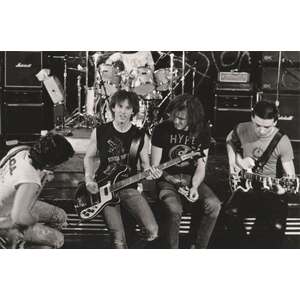
hYPE (2)
hYPE (3)
hYPE (4)
hYPE (5)
hYPE (6)
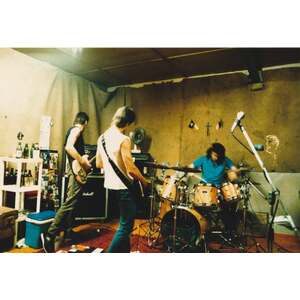
hYPE (7)
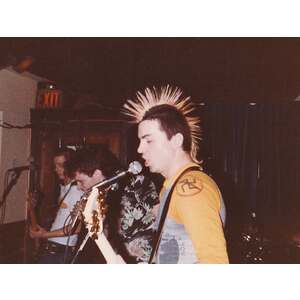
hYPE (8)
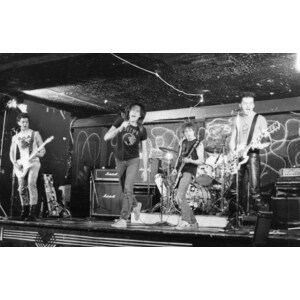
hYPE (18)
Media
Videos
0 videos
No videos available for this artist.