Artist / Band
Don Freed
Biography
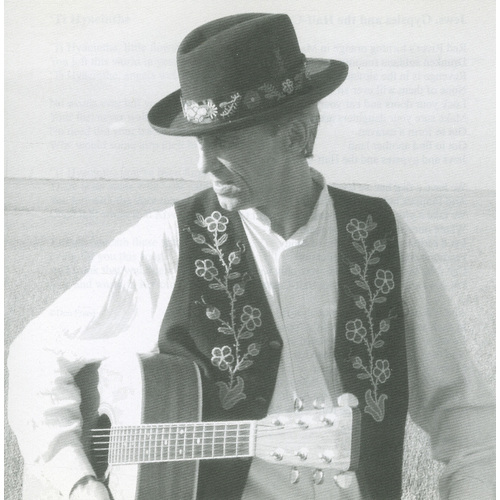
Don Freed is one of the most distinctive storytellers to emerge from the Canadian Prairies — a singer, songwriter, guitarist and harmonica player whose career has followed an extraordinary course without ever losing its connection to Saskatchewan.
He sang for Johnny Cash as a teenager, recorded an unreleased album for Capitol Records, toured with blues legend Lightnin’ Hopkins, built an independent catalogue of funny, observant and deeply human songs about Prairie life, worked with artists including Joni Mitchell, Jane Siberry and Colin James, and then, in middle age, discovered a Métis history within his own family that profoundly changed both his music and his understanding of what songwriting could accomplish.
Born in 1949 in New Westminster, British Columbia, Freed moved to Saskatoon, Saskatchewan, when he was six years old. He was raised principally by his mother, Adeline Nicolas. His Swedish father was absent from his life, and Freed grew up understanding his family background largely as French and Swedish. The Métis ancestry that would eventually become central to his work remained unknown to him for decades.
What he did know very early was that he wanted to write.
Freed has recalled secretly creating stories as a boy and then turning increasingly toward songs. By the mid-1960s he was performing in Saskatoon coffeehouses, part of the same Prairie folk environment that was producing a remarkable generation of Canadian songwriters. His professional career is generally dated from 1966, although his involvement in the local coffeehouse scene had begun even earlier.
Then came one of the most remarkable episodes in his life.
In 1968, when Freed was still only nineteen, he found himself backstage with Johnny Cash, carrying an acoustic guitar and harmonica. A film crew working on the documentary Johnny Cash! The Man, His World, His Music captured the encounter.
Cash asked if the young Canadian wrote songs.
Freed played ‘Come Away From the Roadside’ and ‘Bank of Mariposa’.
Cash listened.
He was sufficiently impressed to promise Freed help arranging a record-company meeting, and the documentary catches the young songwriter leaving the encounter almost unable to contain his excitement.
Off camera, Cash reportedly told him something even more memorable:
He believed Freed was going to do something, although he could not quite say what that something would be.
Freed carried those words with him for years.
For a time, it appeared that “something” might mean a conventional recording career.
Freed eventually moved into the American music-business orbit and in 1972 signed with Capitol Records, recording an entire album for the label. Capitol never released it. What might have become his commercial breakthrough instead became an early lesson in the difference between making music and succeeding inside the machinery surrounding it.
Freed returned to the Prairies.
That decision — and others like it — tells us much about him. Throughout his life he repeatedly came close to celebrity and the commercial music establishment, yet his instincts kept pulling him back toward Saskatchewan, toward smaller communities, unusual characters and stories that interested him more than the star-making system.
Another important encounter came in 1975, when Freed toured Western Canada as an opening act for the legendary Texas bluesman Lightnin’ Hopkins.
For a young songwriter steeped in folk and blues, travelling with Hopkins offered an education that no record collection could provide. Freed was able to watch one of the great improvisational blues musicians at close range — a performer whose timing, phrasing and arrangements followed instinct rather than strict repetition.
By the beginning of the 1980s, Freed had settled increasingly into the role of an independent Canadian songwriter.
Rather than wait for another major label to decide his future, he began releasing his own recordings and building an audience from the ground up.
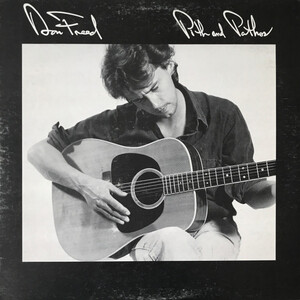
Off in All Directions appeared in 1981, followed by Pith and Pathos in 1982 and later On the Plains: Songs of Prairie Ethos. These recordings established the qualities that would remain central to Freed’s writing: an ear for conversation, affection for eccentric characters, sharp political and social observation, and a wonderfully dry sense of humour.
His Prairie was rarely the romantic postcard version.
It was populated by workers, thieves, farmers, dreamers, bureaucrats, animals, failing machinery, economic frustrations, peculiar schemes and people simply trying to get through another Saskatchewan winter.
A song such as ‘Mr. Ford and the Petty Thieves’ demonstrates Freed’s instinct for turning an ordinary situation into a complete little world. Elsewhere, songs such as ‘All Night Long’ and the wonderfully absurd ‘Pirate Song’ reveal the comic side of a writer who could move easily between pathos and mischief.
It is one reason comparisons with John Prine have occasionally surfaced. Freed possesses a similar affection for ordinary people and a similar understanding that humour and sadness are often separated by very little.
His recordings attracted an impressive circle of collaborators. Jane Siberry, Colin James and actress Linda Griffiths were among the musicians and performers who worked with him over the years.
Yet the most important transformation in Don Freed’s life came not through another musician but through his own family.
Around 1990, his great-aunt Alexandrine Nicolas died in Duck Lake, Saskatchewan, at the age of 103. Freed returned for the funeral.
During the gathering afterward he noticed something he had never properly understood. Some relatives had darker complexions and curly hair; others were fairer. He began asking questions.
A cousin showed him the family tree.
Don Freed discovered that he was Métis.
For a songwriter who had spent much of his life writing about Saskatchewan, it was an extraordinary revelation.
The history he had regarded as something outside himself was suddenly family history.
Freed applied for a Canada Council for the Arts grant and began researching at the Archives of Manitoba and the St. Boniface Historical Society. Names on his family tree began appearing in historical records. He discovered stories involving relatives who had lived through the events surrounding 1885 and the Métis struggle in Western Canada.
The effect was profound.
Freed later said that had he known these stories as a boy, they would have changed the way he understood himself. The courage and experiences of his relatives gave him a sense of history and belonging that had been missing throughout his childhood.
At approximately the same time, events elsewhere in Canada pushed that personal discovery toward a new purpose.
News reports from Davis Inlet showing young Innu children struggling with suicide, solvent abuse and despair deeply affected him. Freed’s instinctive response was not to write songs about Indigenous youth.
He wanted to help young people write their own songs.
He contacted the Northern Lights School Division in Saskatchewan and proposed travelling north with his guitar.
In the spring of 1993, he set out in an old station wagon with little more than his instrument, a sleeping bag and an idea.
He entered schools, sat with children and began talking.
Instead of arriving with songs already written, Freed asked the students what mattered to them.
Sometimes the answers were simple: bannock, moose, fishing, rivers, family and local characters.
Sometimes they were anything but simple.
Children spoke about community tragedies, suicide, addiction, cultural loss and experiences that rarely appeared in ordinary classroom materials.
Freed helped them turn those words into songs.
That first journey produced Young Northern Voices, containing 22 songs written by students.
Something also happened to Freed himself.
Driving south after the project, he pulled over and realized that he finally understood what Johnny Cash had sensed in him all those years earlier.
Freed later described that moment simply:
For the first time in his life, he felt like a useful human being.
The work expanded.
Between 1994 and 1996, Freed served as writer-in-residence in Prince Albert. He later developed the Inner City Harmony Project in Saskatoon schools and continued creating songwriting programs involving Métis and First Nations children.
Singing About the Métis collected songs written by primary students in Prince Albert. Other projects took him into northern and remote communities, while Mystery Boyz grew from work with young offenders at the North Battleford Youth Centre.
Freed had discovered something much larger than a new audience.
He had found a practical use for everything he had learned as a songwriter.
Instead of speaking on behalf of young people, he could give them the tools to speak for themselves.
That distinction mattered.
Métis and First Nations children were frequently attending schools in which very little of their history, language or everyday life appeared positively in the curriculum. Freed’s workshops allowed their own experiences to become material worthy of songs.
As Karon Shmon of the Gabriel Dumont Institute later observed, the importance of having a Métis artist enter those classrooms and help children take ownership of their history and creativity was difficult to overstate.
In 1999, Freed extended this educational work through Sasquatch Exterminator, a book and accompanying CD produced with the Gabriel Dumont Institute and designed as an Indigenous-language and literacy resource for children.
During these same years, another extraordinary chapter was unfolding.
In 1993, Freed became romantically involved with Joni Mitchell, whom he had known through Saskatchewan connections. Their relationship lasted approximately seven years.
For periods, Freed found himself moving through a very different world — travelling with Mitchell and spending time around musicians including Bob Dylan and Ry Cooder.
But once again, he kept returning home.
As Freed later explained, he felt he had important work to do.
He and Mitchell also collaborated musically. Freed co-wrote ‘The Crazy Cries of Love’, released on Mitchell’s 1998 album Taming the Tiger.
It remains one of the fascinating contradictions in his career: while he could move comfortably inside the world of one of the most celebrated songwriters in modern popular music, his own sense of purpose increasingly lay in Saskatchewan classrooms and Métis communities.
Eventually the two great strands of his later life — songwriting and the recovery of his Métis history — came together in one extraordinary project.
The research Freed began in the early 1990s continued for more than a decade.
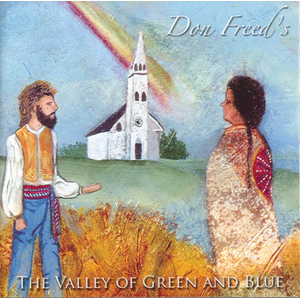
The culmination was The Valley of Green and Blue, released through the Gabriel Dumont Institute in 2005.
Across fifteen songs, Freed created a musical history of the Métis, moving through the fur trade, Red River, buffalo hunting, settlement, discrimination, resistance, 1885 and the survival of Métis culture.
But the album works because Freed never reduces history to dates and famous names.
Louis Riel and Gabriel Dumont are present, but so are parents, children, hunters, families and people whose lives rarely occupy the centre of Canadian history books.
Songs such as ‘Ride, Gabriel, Ride!’, ‘Jews, Gypsies and the Half-Caste Man’, ‘1885’, ‘Duck Lake’, ‘The Ballad of Johnny Sansregret’ and ‘When This Valley’ turn history back into human experience.
The project was deeply personal.
Freed dedicated the recording to generations of Métis people who had lived during a period when publicly identifying themselves could bring discrimination or shame. Years later, when he visited schools and asked how many children were Métis, he was moved to see hands rise — something he knew earlier generations of his own family might never have felt free to do.
That circle — from hidden identity to openly raised hands — may be the most important story contained within the album.
The Valley of Green and Blue also brought a response from another of folk music’s great figures.
Pete Seeger corresponded with Freed after hearing the project. Years later, Freed still kept Seeger’s postcards among his treasured possessions.
By 2019, Freed was living quietly in Victoria, British Columbia. His apartment contained family artwork, books, his old Martin guitar and photographs of Louis Riel and Gabriel Dumont — tangible pieces of a history he had spent much of his life not knowing belonged to him.
And that may be the key to understanding Don Freed.
His life contains several tantalizing versions of the career that might have happened.
Johnny Cash might have opened the door to American stardom.
Capitol might have released the album.
Freed might have remained in New York.
He might have pursued celebrity more aggressively.
Later, he could easily have allowed himself to become defined by his connection with Joni Mitchell.
Instead, he kept coming back to Saskatchewan.
Back to small communities.
Back to strange characters.
Back to forgotten stories.
And eventually, back to a part of his own identity that history and circumstance had almost concealed from him completely.
There is great humour in Don Freed’s songwriting, sometimes wicked and absurd. There is also anger, compassion and an unmistakably Prairie instinct for observing people without polishing away their flaws.
That is why a comic song about ordinary life can sit naturally beside a song about Gabriel Dumont or Louis Riel.
Underneath both is the same belief:
people matter when someone takes the time to listen to their story.
That principle ultimately explains the extraordinary second half of Don Freed’s career.
He began as a young songwriter hoping the music industry would listen to him.
He became an artist who used everything he had learned to help other people be heard.
In retrospect, Johnny Cash’s prediction was remarkably perceptive.
Freed did indeed go on to do something.
It simply was not the conventional version of success anyone might have imagined backstage in 1968.
Instead, he created a lifetime of songs about the Canadian Prairies, built an independent catalogue on his own terms, recovered a Métis family history that had nearly disappeared through generations of silence, and helped hundreds of Indigenous and Métis children hear their own lives, communities and words transformed into music.
For Don Freed, songwriting ultimately became much more than a way of telling his own story.
It became a way of giving stories back to the people who owned them.
-Robert Williston
Tracks
29 tracks
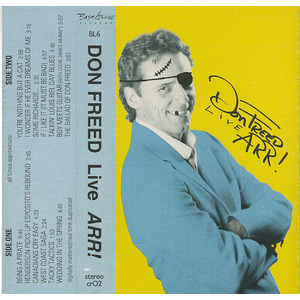
Live ARR! (1992)
Showing 10 of 14 tracks
-
Being a Pirate
-
Henderson Picks Up Esposito's Rebound
-
Canadians Cry Easy
-
West Coast Saga
-
Tacky Tactics
-
Wedding in the Spring
-
Don Freed Attempts at Luring North Dakota to Vacation in Saskatchewan
-
You're Nothing But a Cat
-
I Wonder if He Ever Dreams of Me
-
Some Richards
The Valley of Green and Blue (2005)
Showing 10 of 15 tracks
-
Allons, Pontbriard!
-
Mothers and Fathers
-
Mijakamijikok
-
Daughters of the Country
-
Bittersweet Oaks
-
The Raisin o’ the Kilt
-
Losing Freedom
-
Jews, Gypsies and the Half-Caste Man
-
‘Ti’ Hyacinthe
-
Ride, Gabriel, Ride!
Discography
Featured Titles
Albums

Gallery
Images
1 image
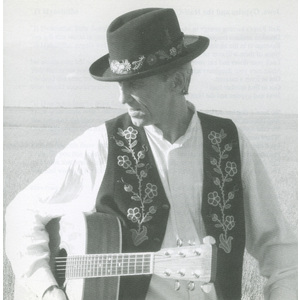
Don Freed
Media
Videos
0 videos
No videos available for this artist.