Artist / Band
Stan Farlow
Biography
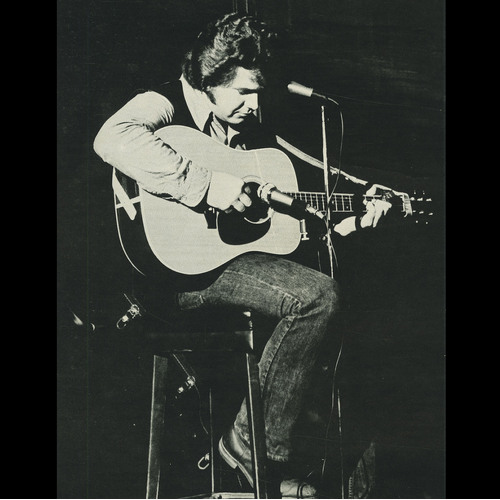
Stan Farlow was born in Cisco, Illinois, on July 21, 1941, and had a guitar in his hands from childhood. He went west young and came up in the working country circuit around Bakersfield in the years when that town was remaking the music. He saw Johnny Cash perform with Luther Perkins and Marshall Grant and took the storytelling and the plain delivery to heart. Farlow’s own baritone sat in the same register, and that resemblance shaped the next fifteen years of his career, sometimes to his benefit and sometimes at his cost.
He knew Merle Haggard in those years, worked some of the same rooms, sang bass harmony with him on occasion and picked up gigs at Tex’s Barrel House after Haggard had moved on from the place. Canadian promotion later described him as having been nurtured in Bakersfield by Haggard. Before he made records under his own name he was part of The Ramblers 3 with his wife Betty Farlow and bassist Bud Hopkins, and their album Tiger By The Tail And Other Country Favorites came out on the Canadian ARC label in 1965, giving Farlow a Canadian recording credit years before he thought about moving north.
Around 1969 the voice found its most literal use. Alshire Records put Farlow to work under the name Johnny Doe on a run of budget Cash soundalike albums, working through ‘San Quentin’, ‘A Boy Named Sue’, ‘Ring Of Fire’, ‘I Walk The Line’, ‘Folsom Prison Blues’, ‘Hey Porter’ and dozens more. The records were repackaged and reissued for years afterward under different titles and labels, a good many of them in Britain. The work was steady, and it threatened to leave him known for somebody else’s catalogue.
In 1970 he was back under his own name in Bakersfield, recording with producer Gary S. Paxton for the Checker label. ‘Hot Wheels’ backed with ‘1040 Blues’ appeared as Checker 1228 in March. Cash Box picked it as a likely hit and mentioned the Cash resemblance in the same breath, and Billboard soon reported the record selling and Farlow booking through the Hubert Long Talent Agency. The Hot Wheels album that followed carried his own songs, among them ‘Blue Water’, ‘Georgia (You Did All You Could)’, ‘Treat Me Like A Man’, ‘January Day’ and ‘Lettin’ It All Hang Out (From Now On)’, alongside material by Paxton, Dennis Payne and Jim Wattenbarger. His Bakersfield work has kept surfacing since. Bear Family’s The Bakersfield Sound 1940-1974 box includes his ‘Devil River’.
Canada came into it quickly. GRT of Canada introduced Farlow to Canadian dealers and press at a barbecue outside Toronto hosted by marketing manager Ed LaBuick, and he spent much of 1970 touring the country, including a two-week stand at Toronto’s Edison Hotel. The touring was harder than the trade papers usually let on. RPM Weekly reported that he was poisoned while playing Churchill, Manitoba, and that in Sept-Îles, Quebec (then commonly referred to in English as Seven Islands), vandals smashed the windows of his station wagon, filled the inside with mud and left a “Yankee go home” sign. ‘Hot Wheels’ reached No. 18 on the Canadian country chart that year.
By the early 1970s Farlow had moved to Oakville, Ontario. He had tired of being hired for the resemblance, and Canada offered him a place to be heard as himself.
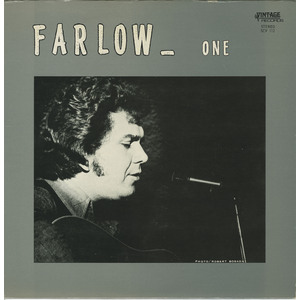
He recorded Farlow One at Sound Canada Recording Centre in Don Mills with Art Snider producing, arranging and conducting, Glenn Clarke engineering, Ken Brown as executive producer and Jeff Snider coordinating. Farlow sang and played guitar, with Sebastian Agnello, Paul Zaza and Fraser McCarter also on guitar, and Robert Bosada shot the front and back cover photographs. All twelve songs were his own: ‘Only A Matter Of Time (I’m Drivin’ Me Out Of My Mind)’, ‘East Of Eden’, ‘I Miss You’, ‘High Enough For Heaven’, ‘Shine Your Light’, ‘Destroy One Another’, ‘On The Road’, ‘Street Walker’, ‘I Won’t Turn You Away’, ‘Go Away’, ‘Comin’ Home’ and ‘It’s Over’. Zaza was early in his career then and went on to become one of Canada’s most prolific film and television composers, which makes Farlow One an unusually early entry in his credits.
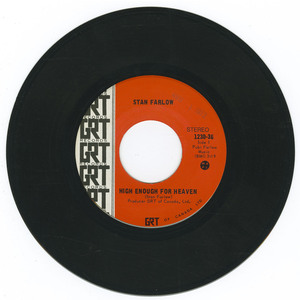
GRT pulled ‘High Enough For Heaven’ backed with ‘I’m Drivin’ Me Out Of My Mind’ as a single, 1230-36, in August 1972, both sides published through Farlow Music. GRT promotion had announced an album called High Enough For Heaven. What appeared was Farlow One on Vintage Records, SCV-112, out of the same Sound Canada sessions.
Art Snider used the back cover to take aim at the comparison that had followed Farlow since Bakersfield. If he set his mind to it, Snider wrote, Farlow could probably out-Cash Johnny Cash and out-Kristofferson Kris Kristofferson, though the hope was that all his effort would go into out-Farlowing Stan Farlow. Snider reckoned the well of songs in Farlow’s head had barely been tapped. Coming after years of Johnny Doe albums, the joke had a point to it.
Farlow’s Canadian profile went beyond his own record. GRT put him on the double LP Country Gold with Jack Bailey, Simone and Nora Hart, Ron Dykoff, Jimmy Nolan and James Lewis. By August 1972 that compilation had sold more than 100,000 copies and GRT was preparing a half-hour television special around the artists. His recordings travelled further still, turning up on British and European labels and compilations under his own name and through the Johnny Doe catalogue that kept being repackaged.
By the middle of the 1970s he had had enough of the bars. He went back to church, he said later, because he did not want to spend his life in rooms full of drunks, and he turned toward gospel, bluegrass and older country material. He died in Evansville, Indiana, on June 13, 2013.
-Robert Williston
Tracks
14 tracks
Farlow One (1972)
Showing 10 of 12 tracks
-
Only a Matter of Time (I'm Drivin' Me Out of My Mind)
-
East of Eden
-
I Miss You
-
High Enough for Heaven
-
Shine Your Light
-
Destroy One Another
-
On the Road
-
Street Walker
-
I Won't Turn You Away
-
Go Away
-
High Enough for Heaven
-
I'm Driving Me Out of My Mind
Discography
Featured Titles
Albums
Singles
Compilation Tracks

Gallery
Images
1 image

Farlow, Stan
Media
Videos
0 videos
No videos available for this artist.