Artist / Band
Lucille Dumont
Biography
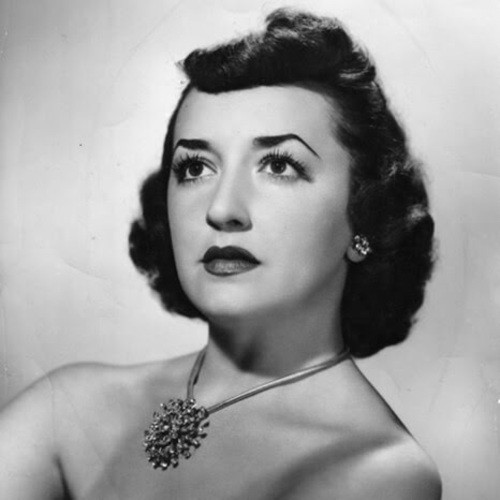
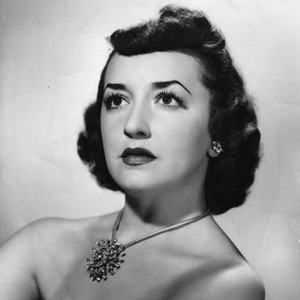
Lucille Dumont was one of the foundational figures of Quebec popular music, a pioneering singer, radio and television host, and vocal educator whose career spanned more than six decades. Widely known as the “Grande Dame de la chanson,” she played a central role in shaping and popularizing Quebec chanson, while serving as an early and influential interpreter for emerging Quebec songwriters, placing interpretation and emotional truth at the centre of her artistry rather than vocal display alone.
Born Lucelle Dumont in Montréal’s Centre-Sud district, she made her professional debut at just sixteen years old. On October 16, 1935, she first appeared on the Sweet Caporal radio program under the guidance of pianist, organist, and composer Léo Le Sieur, who became her mentor and helped guide her early career. That same year, she hosted Linger Awhile and Two Messengers of Melody, performing alongside Le Sieur on the grand organ at James S. Ogilvy’s Tudor Hall.
Through the late 1930s and 1940s, Dumont became a dominant presence on Montreal radio, appearing on CKAC and Radio-Canada programs including Variétés françaises, Rêverie, Sur les boulevards, Le moulin qui jazze, Le p’tit bal des copains, Connaissez-vous la musique, Tambour battant, and Hier, aujourd’hui. In her early years, she often performed French repertoire associated with artists such as Lucienne Boyer and Lys Gauty, developing a warm, caressing vocal style marked by expressive diction and emotional nuance, a style that would later be preserved on her earliest commercial recordings for RCA Victor Canada, and which she later described as rooted in storytelling and lyrical clarity rather than technical virtuosity alone.
Her early broadcast-era work is also preserved on historical compilations documenting the origins of Canadian recording, including material featured on the 1938-era retrospective From Berliner to RCA Victor: The Birth and Rise of the Recording Industry in Canada (Gala Records Gal-112, 2009), underscoring her presence in the formative period of the country’s modern music industry.
In April 1945, Dumont gave the Quebec premiere of Insensiblement, written by French songwriter Paul Misraki and conducted by Ray Ventura, during a War Loan Drive concert. The performance was a major success and helped elevate her national profile. Although Ventura invited her to tour France, Dumont declined, as the offer coincided with her planned marriage to Radio-Canada sports commentator Jean-Maurice Bailly, a decision that reflected her commitment to building her career primarily within Quebec and Canada rather than pursuing European opportunities.
Between 1947 and 1951, Dumont was a prolific recording artist in the 78-rpm era, releasing a large body of shellac singles that firmly established her as one of Quebec’s leading popular vocalists. Issued primarily on RCA Victor Canada, these recordings document her transition from European repertoire toward material increasingly rooted in Quebec songwriting and identity, and form an important recorded counterpart to her dominant radio presence of the period.
In 1947, she became the first singer to be elected “Miss Radio” by readers of Radiomonde. In 1950, on the fifteenth anniversary of her career, CKVL broadcaster Jean Baulu dubbed her the “Grande Dame de la chanson,” a title that remained permanently associated with her, even though Dumont herself was uncomfortable with its formality, later emphasizing that she saw herself foremost as a working interpreter in service of the songs and their writers.
Dumont was also present at the birth of Quebec television. In 1952, she appeared on Radio-Canada’s first variety broadcast, Café des artistes, followed by Feux de joie and Frères d’Armes. From 1956 through 1960, she hosted the popular weekly television series À la romance, which aired immediately following Saturday night hockey, making her one of the most recognizable faces on Quebec television, and helping introduce chanson and popular vocal performance to a mass television audience at a formative moment for the medium.
From the mid-1950s onward, Dumont became one of the most important interpreters of Quebec chanson, giving national exposure to young Quebec songwriters. She is widely regarded as the greatest interpreter of Jacques Blanchet’s work. In 1957, she won first prize at the Concours de la chanson canadienne with Blanchet’s ‘Le ciel se marie avec la mer,’ which became her signature song. In 1962, she won second prize at Belgium’s Chansons sur mesure competition with Blanchet’s ‘Tête heureuse.’ Her performance at the Festival Radio-Canada, documented on the 1957 Pathé LP 12 chansons canadiennes, further preserved her central role in this pivotal moment of Quebec songwriting history, a period in which she helped legitimize locally written chanson as a national art form.
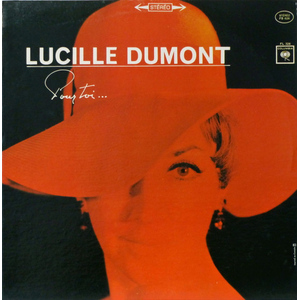
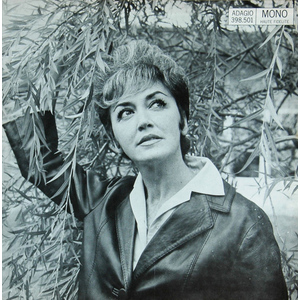
Throughout the 1960s and early 1970s, Dumont continued to host and appear on major television programs, including Entre vous et moi, Histoire d’une étoile, Le temps d’aimer, and a self-titled series, while welcoming major French artists such as Charles Aznavour, Jacques Brel, Gilbert Bécaud, and Charles Trenet to Quebec audiences. During this period, her recorded work expanded to long-playing albums, including her 1963 Adagio LP devoted to songs by Jacques Blanchet, Pierre Calvé, and Michel Conte, and her 1965 Columbia album Pour toi, reflecting the evolving studio production and orchestration of Québec chanson in the mid-1960s, and her continued role as a bridge between traditional chanson and modern studio presentation.
In parallel with her popular work, Dumont also appeared in jazz-oriented CBC productions, including a 1962 CBC Radio Canada LP with Neil Chotem and a 1964 Relay Relais release with Yvan Landry and His Trio, documenting her versatility in small-group jazz and broadcast performance settings, and underscoring her adaptability across genres and broadcast formats.
In 1968, Dumont founded Atelier de la Chanson in Montréal, turning her focus increasingly toward teaching voice, interpretation, and performance. She became a respected mentor to a new generation of Quebec performers, with students including Marie-Denise Pelletier. Teaching remained a central part of her life for decades, with Dumont frequently stressing interpretation, emotional communication, and respect for the lyric as core principles passed on to her students.
Dumont retired from active performing in 1999. She was made an Officer of the Order of Canada and an Officer of the National Order of Quebec in recognition of her cultural contributions. In 2006, she received a legacy award from the Canadian Songwriters Hall of Fame for her role in promoting and preserving Quebec songwriting.
Lucille Dumont died in Montréal on July 29, 2016, at the age of 97, leaving behind one of the most significant legacies in the history of Quebec popular music and chanson.
-Robert Williston
Related recordings:
1938: https://citizenfreak.com/titles/328996-compilation-from-berliner-to-rca-victor-the-birth-and-rise-of-the-recording-industry-in-canada
1957: https://citizenfreak.com/titles/314478-compilation-12-chansons-canadiennes-festival-radio-canada-1957
1962: https://citizenfreak.com/titles/325311-chotem-neil-lucille-dumont-and-robert-demontigny-vocalists
Tracks
12 tracks
Pour toi... (1965)
Showing 10 of 12 tracks
-
Les pluies de mai
-
Chanson inutile
-
La peau noire
-
Sous le manteau d'arlequin
-
Pour ma mélancolie
-
Pour toi
-
Je resterai tout seul
-
La nuit se couche
-
La terre
-
En do majeur
Discography
Discography
Featured Titles
Featured
View All
Discography
Albums
Gallery
Images
1 image
Dumont, Lucille
Media
Videos
2 videos