Artist / Band
Discords
Biography
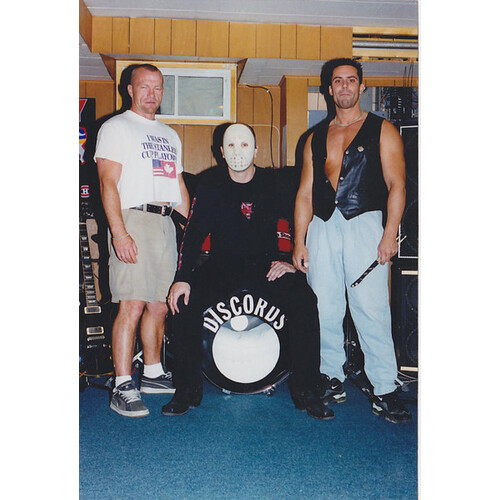
Formed in 1980 in Notre-Dame-de-Grâce (N.D.G.), Montreal, the Discords emerged from one of the city’s most working-class, multi-ethnic neighbourhoods—a district locals half-jokingly dubbed “No Damn Good.” Centered around Sherbrooke Street West, Côte-Saint-Antoine, and Royal Avenue, N.D.G. was a place where immigrant families, corner stores, bars, and public parks shaped daily life, and where toughness was learned early. For kids growing up there in the early 1980s, the Discords were impossible to ignore. Their name appeared spray-painted throughout the lanes and alleys of the neighbourhood, and their presence—often clustered in local parks—was as much a warning as it was an identity.
The band was founded by guitarist Dave Valente and drummer Frank Heidt, who soon recruited brothers Tim and Terry Hindley, friends since childhood. Three members worked at Crown Carpets just across from Hampton Park, where long days hauling and cutting industrial rolls of carpet doubled as strength training. As Valente later recalled, physical toughness wasn’t a pose—it was daily routine. That reputation followed the band onto the stage and into Montreal’s volatile punk circuit.
Early rehearsals took place in Heidt’s basement until parental patience ran out. The Discords then relocated to a rented practice space and crash pad near Sherbrooke and Wilson—a cramped, overheated room barely large enough to contain their gear, themselves, and the steady flow of friends. Musically, the band began with covers of the Ramones and British street-punk and Oi bands including the Clash, the Sex Pistols, Sham 69, and the Business. Among Canadian acts, Tim Hindley singled out Vancouver’s Subhumans as the only local band that truly resonated.
As informal party jams grew increasingly chaotic, the Discords began playing local dives such as the Nelson Hotel, Station 10, and the Lasalle Hotel. Borrowed gear was routinely destroyed. Violence was common. Microphone stands were broken. Audience members spat; occasionally they were kicked back. For the Discords, shows were less about musicianship than confrontation. As Hindley put it, talent didn’t mean anything—what mattered was toughness.
One infamous Nelson Hotel show encapsulated the band’s reputation. After enduring a barrage of cigarette butts thrown at him, Valente nearly attacked the offender with his guitar before Hindley intervened, launching a flying kick that ended the confrontation. The same aggressor later approached the band to declare it the best show he’d ever seen. For the Discords, this was validation.
The band deliberately avoided the established music industry, refusing managers, promoters, and larger venues. Shows were played for friends, not careers. Any money earned—sometimes as much as a few hundred dollars a night—was spent immediately on beer for the neighbourhood. During the week they partied; on weekends they played. Still, they managed out-of-town gigs, including an Ottawa show in December 1982 and dates in Toronto at the Edgewater Hotel.
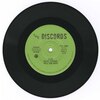
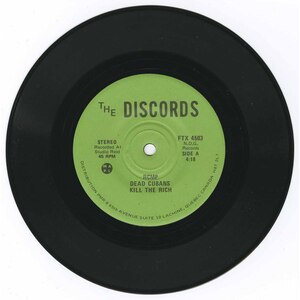
In the summer of 1982, the Discords recorded their first and only release of the original era: a four-song EP cut at Studio Reid. The deal was simple—$1,000 for 1,000 records, including recording costs—with the funds raised through drug dealing. The tracks were recorded live off the floor in a single take. During the recording of the anti-police anthem “R.C.M.P.,” the engineer casually mentioned his brother-in-law was an RCMP officer, hastening the band’s exit from the studio and ensuring the raw, unpolished sound remained intact.
The EP’s centerpiece, “N.D.G.,” became one of the most enduring Montreal punk songs of the era. Written during a lunch break at Crown Carpets, the song came together in under half an hour, capturing the paranoia, hostility, and class tension of anglophone youth in Montreal. Its lyrics reflected real experiences with police harassment and institutional hostility—conditions Hindley insisted had not changed. The song’s opening riff originated on an acoustic guitar, but its spirit was forged in the streets. Decades later, it continued to be covered by Montreal punk bands and was even excerpted on the British compilation Strength Through Oi Volume 3.
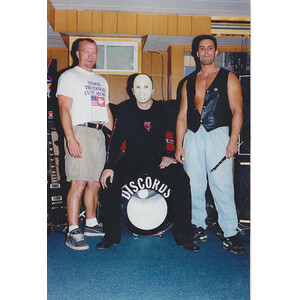
The EP was issued without a picture sleeve. With juvenile records, ongoing police attention, and no desire for visibility, the band avoided photographs entirely. Lyric sheets were hand-assembled and folded inside plain white sleeves. Copies were dropped off at a handful of local record shops and mailed to England, though follow-up was minimal and profits negligible. Most records were effectively given away.
As Montreal’s punk scene expanded and suburban kids flooded downtown clubs, the Discords reacted by embracing the emerging Oi and skinhead aesthetic—not as a political statement, but as provocation. The band loved ska, reggae, and films such as The Harder They Come, and counted Caribbean friends among their peers. For Hindley, the shaved-head look was about escalation: a challenge to those whose rebellion carried no real risk.
By early 1983, internal pressures and escalating chaos took their toll. When the Discords opened for the Exploited in February 1983, Hindley—who owned the instruments, booked the shows, and financed much of the band—announced it would be their last performance. A dispute with the promoter over admission fees ended with Hindley throwing the doors open and declaring a free punk show. The band played beneath an upside-down Canadian flag emblazoned with “Kill the Rich Pigs” and “In No One We Trust,” then kicked over their gear and walked away.
The Discords briefly considered continuing under the name D.U.D.S. (Discords Under Disguise, Stupid!) to evade venue blacklists, and a promised follow-up single—“FTW (Fuck the World)” b/w “Pogo on a Mod”—was announced but never released.
In 1999, long after the original band had ceased activity, guitarist Dave Valente revived the Discords name for a studio album titled Spank It!, released on the band-controlled N.D.G. Records. Recorded at Nitevision Productions and manufactured by Cinram, the CD featured re-recorded versions of key Discords songs including “N.D.G.” and “R.C.M.P.,” alongside additional material and a rock version of “O Canada.”
The Discords’ legacy rests primarily on their brief but explosive original run, rooted in working-class survival, neighbourhood loyalty, and open confrontation with authority—an uncompromising snapshot of Montreal punk at its most raw and unfiltered.
Much of the historical detail surrounding the band’s formation, ethos, and live reputation has been drawn from Frank Manley’s original research and writing, most notably his Smash the State documentation of early Canadian punk, which remains an essential source on the Discords and their place within Montreal’s underground scene.
-Robert Williston
Tim Hindley: vocals, bass
Dave Valente: lead guitar
Terry Hindley: rhythm guitar, bass
Frank Heidt: drums
Tracks
14 tracks
The Discords (1982)
4 tracks
-
RCMP
-
Dead Cubans
-
Kill the Rich
-
N.D.G
Spank It! (1999)
10 tracks
-
Oh Canada
-
1-2-3-4
-
Squeegee Kids
-
Kill the Rich
-
Spankin' the Monkey
-
N.D.G.
-
Licence to Steal
-
All I Wanna Do
-
R.C.M.P.
-
Shut Up
Discography
Featured Titles
Albums
Singles
Compilation Tracks

Gallery
Images
1 image
Discords
Media
Videos
0 videos
No videos available for this artist.