Artist / Band
Dionne - Brégent
Biography
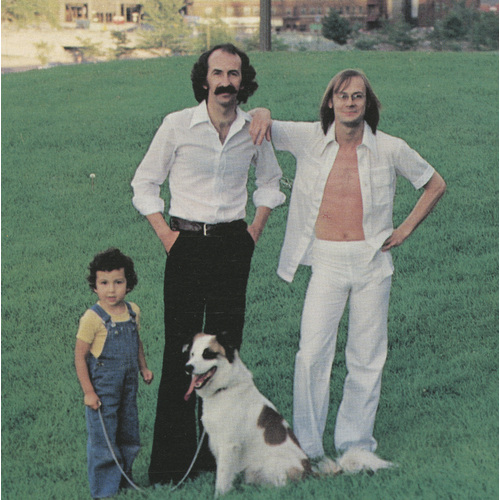
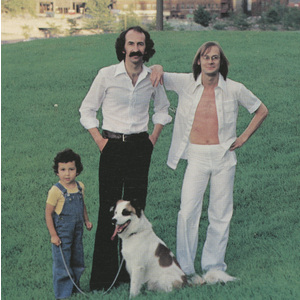
Dionne-Brégent was a short-lived but remarkable progressive duo formed in Montréal in early 1975 by percussionist Vincent Dionne and keyboardist-composer Michel-Georges Brégent. Across just two albums—...Et Le Troisième Jour (1976) and Deux (1977)—the pair created one of the most original and ambitious bodies of work in Canadian progressive music, blending electronic experimentation, symphonic structure, contemporary classical ideas, and an unmistakably Québécois sense of atmosphere and drama.
The partnership united two musicians with strikingly complementary backgrounds. Michel-Georges Brégent (Montréal, January 29, 1948 – September 4, 1993) had already established himself as one of Quebec’s most adventurous young composers before the duo was formed. A keyboardist, organist, and musical visionary, he studied at the Conservatoire de musique du Québec à Montréal from 1967 to 1970 with Gilles Tremblay, Jean Laurendeau, Raoul Sosa, and Irving Heller, developing a highly personal language that moved freely between progressive rock, electroacoustic music, and modern composition. Before joining forces with Dionne, Brégent had already made his mark with the ambitious 1973 album Poussière des regrets, recorded under the name Brégent with his brother Jacques Brégent, a dark and theatrical work that fused rock, free-jazz textures, and literary settings of French-language poets and chansonniers.
Vincent Dionne brought an equally distinctive voice to the collaboration. More than a conventional drummer, he was a percussionist with a wide-ranging, colouristic approach that extended far beyond rock rhythms. The Canadian Encyclopedia notes that in February 1975 he joined Brégent to form Dionne-Brégent, described as a “rock-classico-cosmique” ensemble—a fitting phrase for a project that drew as much from chamber music and ritual percussion as from progressive rock and synthesizer-based electronics. Dionne’s playing on the duo’s recordings—built from vibraphone, xylophone, glockenspiel, tubular bells, gongs, timpani, congas, castanets, and a host of unusual struck instruments—gave the music much of its ceremonial energy and sonic identity.
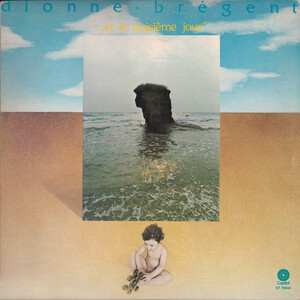
Signed to Capitol Records Canada, Dionne-Brégent issued two albums that now stand among the most unusual and sought-after releases in Quebec’s progressive underground. Their debut, ...Et Le Troisième Jour (1976), was recorded at Son Québec in May 1976 and consisted of two side-long suites: the title work, composed in June 1975, and L’Éveil du lieu, composed in February 1975. Built around synthesizers, Farfisa organ, Moog Taurus bass pedals, Orchestron textures, elaborate percussion, choir, and the striking guest voice of Pauline Vaillancourt, it was less a conventional rock LP than a large-scale electro-acoustic suite—mystical, immersive, and boldly unlike anything else being made in Canada at the time.
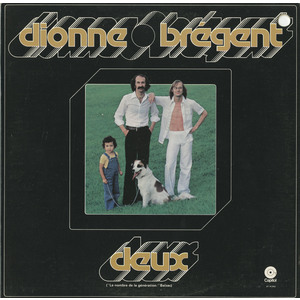
Its follow-up, Deux (1977), retained the duo’s experimental core while broadening the palette with brass, harp, and string quartet. Recorded at Studio Marko in Montréal in May 1977, it featured long-form works such as ‘Le prophète (Suite Fraternelle)’ and the episodic urban suite ‘Campus’, moving fluidly between cosmic electronics, chamber textures, ritual percussion, and symphonic development. If the debut felt ceremonial and otherworldly, Deux was often more expansive and cinematic—yet no less adventurous.
Though their recorded output was brief, Dionne-Brégent carved out a singular place in Canadian music. Their work did not fit neatly alongside the more familiar strands of 1970s Quebec prog; instead, the duo occupied a rarer territory where electronic music, musique contemporaine, chamber-prog, and kosmische atmospheres converged. Their albums have often drawn comparisons to European progressive and electronic artists, but their sound remained uniquely their own—deeply rooted in Quebec’s artistic avant-garde while standing apart from nearly every other Canadian release of the era.
After the duo dissolved, both musicians continued to explore adventurous musical paths. Brégent returned to broader compositional work, building a significant reputation in contemporary and electroacoustic music through the late 1970s and 1980s. Dionne remained active in exploratory and cross-cultural settings, later recording under his own name and collaborating with artists including Paul McCandless of Oregon. Interest in Dionne-Brégent revived in the 2000s, when both original albums were reissued together as a 2006 two-CD anthology on XXI-21 Productions, helping restore visibility to a duo whose original Capitol LPs had long been prized by collectors.
Today, Dionne-Brégent remains one of the great hidden treasures of Canadian progressive music: a duo whose catalogue is small, but whose ambition was immense. In just two albums, Vincent Dionne and Michel-Georges Brégent created a body of work that remains startlingly original—cosmic, cerebral, atmospheric, and unmistakably Canadian.
-Robert Williston
Tracks
13 tracks
"...et le troisième jour" (1976)
9 tracks
-
L'incarnation
-
Chant d'espoir
-
Chant despoir
-
Résurrection
-
Possession - Destination
-
Choc
-
Temple du silence
-
...Des Cycles et des passions (Incluant: Jeux Des Tensions - Convergence Des Jeux - Retour Du Mythe)
-
Transcendance du lieu - deliverance
deux (1977)
4 tracks
-
Ouverture
-
Le Prophète (Suite Fraternelle); Dans La Mémoire; Évocation De Rê; Léthargie; Chant Fraternel; Danse Françoyse (Médiéval Électrique); Gratte-Ciel Polyphonique - Postlude
-
Campus; Population; Plage; Confrontation; Pourquoi Pas; Fix; Surpopulation; Corrida; Code-Data; Implosion
-
Transit-Express
Discography
Featured Titles
Albums
Singles
Gallery
Images
1 image
Dionne - Brégent
Media
Videos
0 videos
No videos available for this artist.