Artist / Band
The Collectors
Biography
The Collectors were one of Vancouver’s most adventurous and musically sophisticated bands of the 1960s, a group whose brief recording career bridged the city’s early rock and R&B club scene, the psychedelic West Coast explosion, Canadian film and theatre, and the birth of Chilliwack. Though often remembered as the direct predecessor to Chilliwack, The Collectors deserve to be understood as a major band in their own right: ambitious, technically gifted, harmonically rich, and unusually willing to push Canadian rock beyond the limits of the three-minute single.
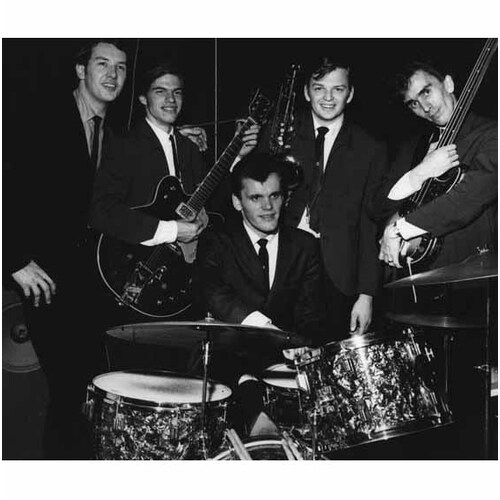
The band’s roots reach back to the early 1960s, when several future members were part of Vancouver’s C-FUN Classics, a group associated with CFUN radio and later seen nationally through CBC television’s Let’s Go. Under the Classics and Canadian Classics names, the group built its reputation as a sharp live and studio unit, recording local singles and developing the professional discipline that later gave The Collectors their polish. Early members included Howie Vickers, Claire Lawrence, Glenn Miller, Tom Baird, Brian Russell, and Gary Taylor, with later personnel shifts bringing in Terry Frewer, Brian Newcombe, Ross Turney, and finally Bill Henderson.
By 1966, the key Collectors lineup had taken shape: Howie Vickers on lead vocals, Bill Henderson on guitar, keyboards, recorder, and vocals, Claire Lawrence on saxophone, flute, keyboards, harmonica, recorder, and vocals, Glenn Miller on bass and vocals, and Ross Turney on drums and percussion. Bill Henderson’s own biography describes The Collectors as one of Canada’s most innovative groups, noting that after two albums the band evolved into Chilliwack.
Their early breakthrough came with ‘Looking At A Baby’ backed with ‘Old Man’, released in 1967 on New Syndrome in Canada and Valiant in the United States. The single became a major Vancouver and Canadian West Coast success and reached number four on Toronto’s CHUM chart in April 1967. Its blend of harmony vocals, woodwinds, folk-rock melody, and psychedelic colour immediately separated The Collectors from more straightforward garage and pop acts of the period.
The follow-up single, ‘Fisherwoman’ backed with ‘Listen To The Words’, expanded the group’s reputation and pushed them further into the national picture. By this point, The Collectors were spending time in California, playing important West Coast venues and absorbing the atmosphere around the Fillmore, Avalon Ballroom, and the broader psychedelic circuit. Unlike many Canadian groups that simply borrowed American trends, The Collectors brought something distinctly Vancouver to that scene: musical precision, cool harmonic intelligence, a woodwind-heavy palette, and an instinct for long-form arrangement that drew as much from jazz, folk, and theatre as from rock.
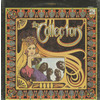
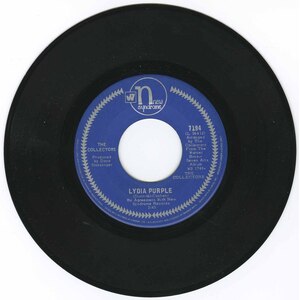
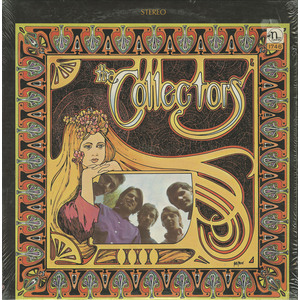
Their self-titled debut album, The Collectors, was released in 1968 on Warner Bros.-Seven Arts in the United States and New Syndrome in Canada. Produced by Dave Hassinger, the album captured the group’s elaborate sense of structure. Its best-known track, ‘Lydia Purple,’ written by Don Dunn and Tony McCashen, became one of their signature recordings, while the extended ‘What Love (Suite)’ filled the second side and showed the band’s willingness to build a rock record around a sustained, multi-section composition rather than a standard sequence of singles.
That long-form instinct also led The Collectors into Canadian film. Between 1968 and 1969, the group contributed music to Don’t Let The Angels Fall, Canada The Land, and The Land, placing them at the edge of a Canadian screen-music world that was still forming. Their work showed that psychedelic rock could serve narrative, atmosphere, and dramatic purpose rather than only stage performance or radio play.
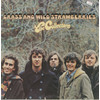
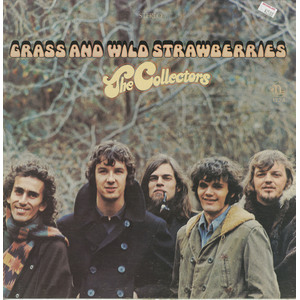
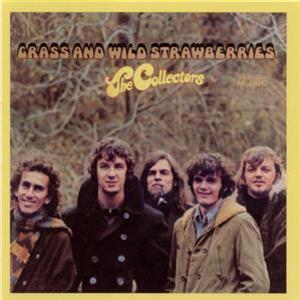
The Collectors’ second album, Grass and Wild Strawberries, released in 1969, was even more unusual. Created in collaboration with playwright George Ryga, the album grew out of Ryga’s stage work of the same name. Ryga supplied the literary framework and lyrics, while The Collectors composed and arranged the music. BC Book Awards lists Grass and Wild Strawberries as a 1969 Ryga production “with music by The Collectors,” confirming its place in his theatre work.
The project opened at the Vancouver Playhouse in April 1969 and brought together theatre, music, movement, film clips, recorded sound, and live performance. It was not simply a soundtrack album but a rare Canadian example of rock music being integrated directly into contemporary theatre. A later BC BookLook piece notes that Grass & Wild Strawberries was a major British Columbia success, with original music from The Collectors, who later became Chilliwack.
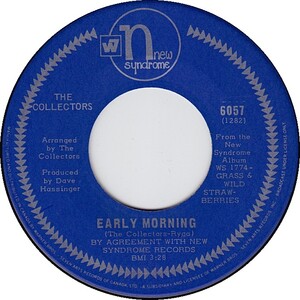
As an album, Grass and Wild Strawberries revealed a darker, more literary, and more dramatically shaped side of the band. Where the debut showcased their psychedelic and improvisational reach, the second album demonstrated their ability to serve text, mood, and theatrical architecture. Tracks such as ‘Prelude,’ ‘Grass & Wild Strawberries,’ ‘Seventeenth Summer,’ ‘The Long Rain,’ ‘Dream Of Desolation,’ and ‘Early Morning’ moved through folk-rock, jazz colour, dramatic narration, and progressive structure. ‘Early Morning’ reached number 84 on the RPM chart in 1969, but the album’s deeper importance lies in its ambition and its place in Canadian interdisciplinary music history.
The Collectors also had a brief but notable connection to the American psychedelic studio world. During the period when Dave Hassinger was producing the group, members of The Collectors, especially Howie Vickers and Bill Henderson, were involved in completing Mass in F Minor by The Electric Prunes. That episode has sometimes overshadowed the band’s own work among collectors, but it mainly underlines the level at which they were operating: Canadian musicians trusted inside a major-label American psychedelic project while still developing their own more personal and ambitious material.
By 1969, the group was changing. Howie Vickers left, and the remaining members — Bill Henderson, Claire Lawrence, Glenn Miller, and Ross Turney — continued briefly as The Collectors before emerging in 1970 as Chilliwack. The Canadian Encyclopedia confirms this direct transition, identifying The Collectors lineup and noting that Chilliwack grew out of that group, with Henderson becoming the central lead vocalist and songwriter.
In retrospect, The Collectors occupy a crucial place in Canadian music history. They began in the disciplined world of Vancouver radio, television, and club performance; became one of the country’s most convincing psychedelic groups; recorded for major American labels; contributed to film and theatre; collaborated with George Ryga; and then transformed into one of Canada’s most enduring rock bands. Their recording career was brief, but unusually dense. Few Canadian groups of the era moved so confidently between pop singles, extended suites, soundtrack work, theatre music, and progressive rock.
Their later rediscovery through reissues, compilations, and Chilliwack’s continuing legacy has helped restore their importance, but The Collectors remain more than a footnote. They were the moment when Vancouver rock became ambitious enough to imagine itself on a larger stage: musically fluent, intellectually curious, open to collaboration, and willing to make Canadian rock sound bigger, stranger, and more expansive than it had before.
-Robert Williston
Tracks
28 tracks
-
Listen to the Words
-
Fisherwoman
-
Looking at a Baby
-
Old Man
-
Lydia Purple
-
She (Will-O'-The Wind)
-
What Is Love
-
She (Will-O-The-Wind)
-
Howard Christman's Older
-
Lydia Purple
-
One Act Play
-
What Love (Suite)
Grass and Wild Strawberries (1969)
Showing 10 of 12 tracks
-
Prelude
-
Grass & Wild Strawberries
-
Things I Remember
-
Don't Turn Away (From Me)
-
Teletype Click
-
Seventeenth Summer
-
The Long Rain
-
My Love Delights Me
-
Dream of Desolation
-
Rainbow of Fire
-
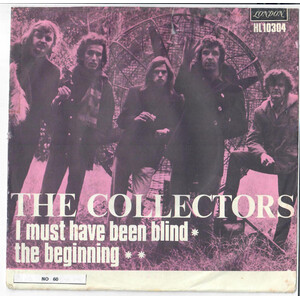
I Must Have Been Blind
-
The Beginning
-
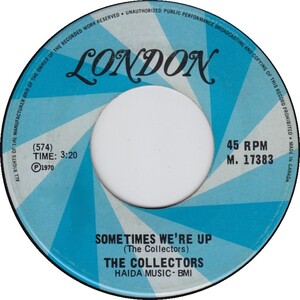
Sometimes We're Up
-
We Can Make It
Discography
Featured Titles

Albums

Singles

Compilation Tracks
Gallery
Images
17 images
View All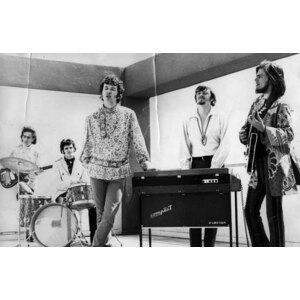
The Collectors in the promo for 'Lydia Purple' (1968)
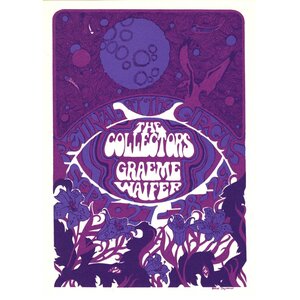
Handbills for appearances by The Collectors at Vancouver's Retinal Circus in 1968
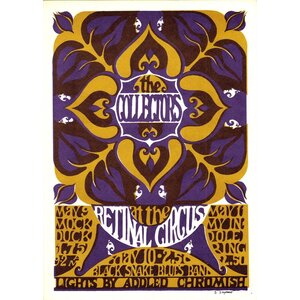
Handbills for appearances by The Collectors at Vancouver's Retinal Circus in 1968
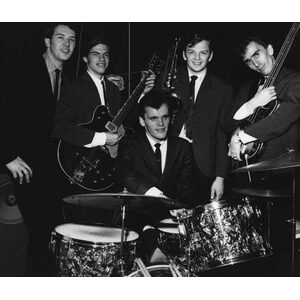
The Collectors just starting out...
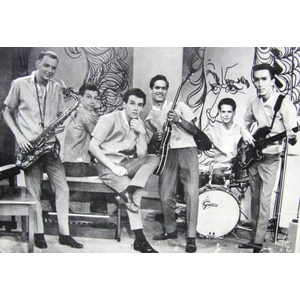
Above : On the left, the band line up for 'Let's Go' / 'Where It's At' from left to right : Claire Lawrence, Tom Baird, Howie Vickers, Brian Russell, Gary Taylor, Glenn Miller.
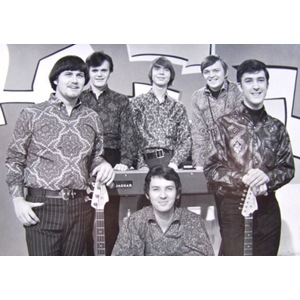
On the right, a new line-up of Probably Us, the 'Let's Go' house band, in 1967 featuring Doug Edwards, Ross Turney, Bob Buckley, Claire Lawrence Terry Frewer & Howie Vickers.

The Collectors, 1968: From front to back: Howie Vickers, Glenn Miller, Claire Lawrence, Ross Turney and Bill Henderson
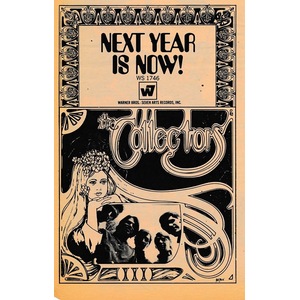
Advert for The Collectors first LP
Media
Videos
2 videos