Breen, Michael
Websites:
No
Origin:
Montréal, Québec, 🇨🇦
Biography:
Michael Breen (born Michel Pépin, 1960, Nicolet, Québec) is a Canadian singer, songwriter, guitarist, and studio musician whose career spans a brief period of national visibility in the late 1980s followed by a long and respected life as a behind-the-scenes collaborator within Canada’s recording industry.
Born in central Québec, Pépin grew up bilingual and largely self-taught as a musician, developing his skills on guitar and piano while still young. As a teenager he gravitated toward Anglo-American rock and pop rather than the chanson tradition dominant in Québec at the time, a direction that would shape his later career. At age seventeen he relocated to Montréal, then one of the country’s most active recording centres, to pursue music professionally.
During the early 1980s, Pépin worked within Montréal’s studio and live music circuit, gaining experience as a performer, songwriter, and session player. By the middle of the decade, he had begun focusing deliberately on English-language material aimed at the national market. Adopting the stage name Michael Breen, he positioned himself for crossover success at a time when Canadian radio and video exposure were increasingly centralized around FM playlists and MuchMusic rotation.
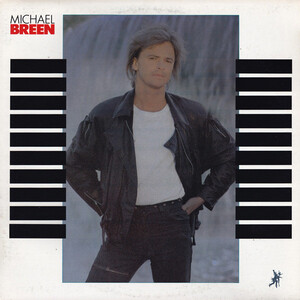
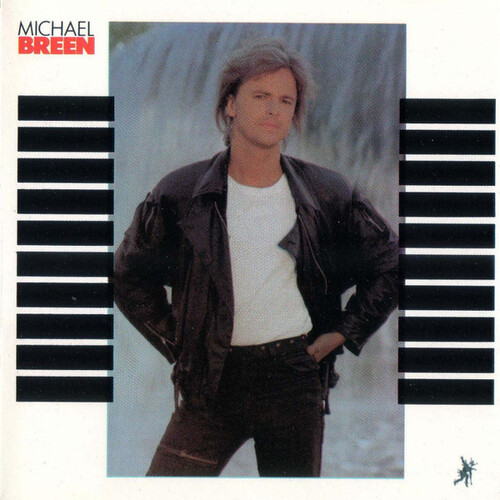
Breen came to the attention of Alert Records, one of Canada’s most influential independent labels of the era, and signed with the company in the mid-1980s. Working with producer Pierre “Bazz” Bazinet, he recorded his self-titled debut album, Michael Breen, which was released in the fall of 1987. The album reflected the polished AOR-leaning pop-rock sound of the period, balancing contemporary production with melodic songwriting.
The lead single, “Rain,” co-written by Sass Jordan, became Breen’s breakthrough recording. Supported by national radio airplay and regular MuchMusic video rotation, the song entered the RPM Top 40, peaking at No. 33 in November 1987. Its accompanying video received a Prix Félix nomination for Best Video, marking a rare crossover recognition for a Québec-born English-language pop artist. A second single, “How Will I Know,” followed in early 1988, further establishing Breen’s presence on Canadian radio.
Although the album charted modestly, Breen’s momentum culminated in a Juno Award nomination for Most Promising Male Vocalist at the 1989 Juno Awards. Despite this recognition, he chose not to pursue a second solo album. As musical trends shifted and label priorities changed toward the end of the decade, Breen stepped away from the front-person role and redirected his career toward studio and collaborative work.
Reverting to his birth name, Michel Pépin, he became an in-demand session guitarist and contributor, valued for his versatility and musical sensitivity. Over the following years he worked with a wide range of artists across pop, folk, roots, and alternative music, including Luba, Kate and Anna McGarrigle, Sarah McLachlan, Martha Wainwright, Emmylou Harris, and Jean Leloup. His work during this period emphasized ensemble support and songcraft rather than individual visibility.
Michael Breen’s solo recording career occupies a relatively brief chapter in Canadian pop history, yet it captures a distinct moment in the country’s late-1980s music landscape. His longer legacy lies in his sustained contribution as a working musician—one of many Canadian artists whose most enduring impact was made not in the spotlight, but within the collaborative fabric of the nation’s recording culture.
-Robert Williston