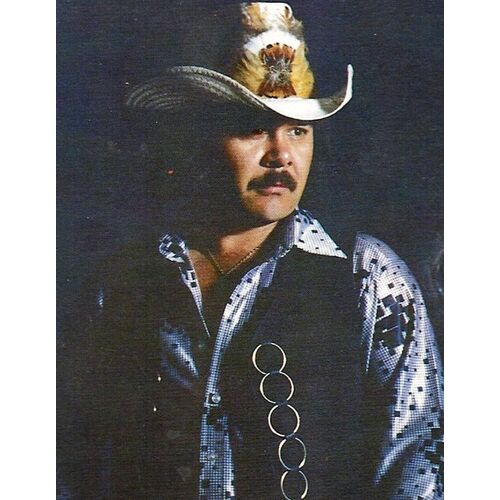
Brass, Robbie
Websites:
No
Origin:
Birch River, Manitoba, 🇨🇦
Biography:
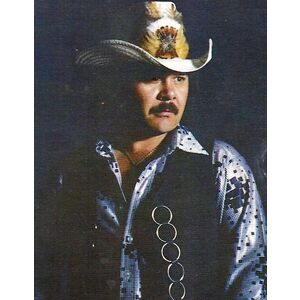
Robbie Brass was one of Manitoba’s most beloved country voices, a singer whose warm baritone, easy stage presence, and deep connection to Indigenous and prairie audiences made him a lasting figure in western Canadian music. Though never fully absorbed into the mainstream country industry, Brass built a remarkable career from the 1970s onward as both a recording artist and a tireless live performer, earning respect across Manitoba’s club circuit, northern community halls, and major concert stages. His legacy lives not only in his recordings, but in the cultural space he helped carve out for Indigenous country music in Canada.
Born March 8, 1951, in Birch River, Manitoba, Robbie Brass grew up in the province’s rich mix of rural, Métis, First Nations, and small-town musical traditions. Like many prairie singers of his generation, his musical instincts were shaped as much by lived experience as by formal ambition. Before music became his full-time calling, Brass worked as a truck driver, but by the mid-1970s his voice and charisma had begun opening doors in Winnipeg’s country scene.
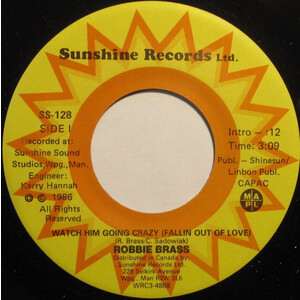
His professional break came in 1974, when Norman Genaille and Ray LeClaire invited him to fill in at the Merchants Hotel on Selkirk Avenue in Winnipeg, a venue that served as an important proving ground for local talent. The chemistry was immediate, and within a year producer Stephen Bandura and musician Billy Valentine helped shape the act into Red Wine, the band most closely associated with Brass during his breakthrough years. In 1975, Robbie Brass and Red Wine released their debut single, ‘Mama’s Waiting’ backed with ‘Teach Me to Forget’, establishing the foundation of a career that would span decades.
Red Wine quickly became a fixture on the Manitoba country circuit. Rooted in the honky-tonk and dancehall traditions that flourished in Winnipeg and throughout the province, the band blended straightforward country storytelling with the emotional directness and melodic warmth that made Brass such a compelling frontman. Early lineups associated with the group included Norman Genaille, Vic Monkman, and Wayne Link, and together they built a following that extended well beyond the city, performing not only in bars and clubs but across rural and northern communities where live country music remained a vital social and cultural force.
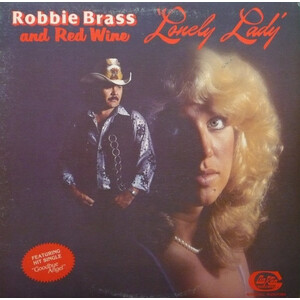
During the late 1970s, Robbie Brass and Red Wine entered the studio for a run of recordings that helped secure their place in Manitoba country music history. Their first full-length album, I Love Red Wine and Country Music (1977), captured the easygoing spirit and prairie authenticity that defined the band’s appeal. A second Sunshine Records LP, Come & Go, followed soon after, further cementing Brass’s standing as one of Manitoba’s most recognizable independent country performers. By the turn of the 1980s, Brass was still recording, and in 1981 Red Wine issued a third LP, Lonely Lady, released on Linkon Records and produced by Ron Halldorson. Songs associated with Brass and Red Wine from this era and beyond included ‘Mama’s Waiting’, ‘Teach Me to Forget’, ‘I Love Red Wine and Country Music’, ‘Come and Go’, and ‘Lonely Lady’, along with a broader repertoire that ranged from original material to country standards and audience favourites.
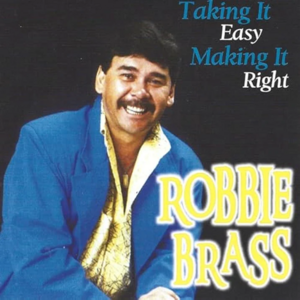
At some point in the early 1980s, Brass also stepped forward with a solo album, Taking It Easy, Making It Right, a Sunshine Records release generally dated to the period circa the late 1970s to early 1980s. Produced by his longtime friend and bandmate Wayne Link, the album marked a natural extension of the musical identity he had already established with Red Wine: unpretentious, heartfelt country music built around strong melodies, lived-in vocals, and the emotional directness that had long been his trademark. Whether fronting a band or recording under his own name, Brass always projected the same sense of familiarity and sincerity that made audiences feel they already knew him.
Brass was first and foremost a performer. Over the years he toured extensively across Manitoba and western Canada, especially in the province’s northern and Indigenous communities, where he became a familiar and much-loved presence. He was equally at home in a neighbourhood hotel lounge, a community dance, or a formal concert setting, and his career reflected that unusual versatility. In addition to Winnipeg’s live country venues, he performed at major stages such as Rainbow Stage, the Winnipeg Convention Centre, and Centennial Concert Hall, bringing the same grounded sincerity to every setting.
As his reputation grew, Brass shared stages with or performed alongside an impressive list of country and Canadian music figures. Contemporary accounts connect him with artists including Tommy Hunter, Carol Baker, George Strait, Eddie Raven, Al Cherny, and Burton Cummings, a testament to the respect he commanded both within Manitoba and beyond it. While he may not have been marketed as a national star in the conventional industry sense, among musicians and audiences who knew the western circuit, Robbie Brass was the real thing: dependable, expressive, and instantly recognizable.
His importance becomes even clearer when viewed within the wider history of Indigenous country music in Manitoba. Brass belonged to the same broad musical world that produced artists and groups such as C-Weed, Ernest Monias, and the Harvey Henry Band—performers who built powerful regional followings and helped establish a distinctly Indigenous presence in Canadian country music long before the industry properly acknowledged it. In this context, Brass stands as part of an essential lineage: artists who brought country music into Indigenous community life not as imitation, but as lived expression, adapting the genre to local experience, northern touring realities, and prairie storytelling traditions.
He remained active well into later decades and became something of an institution in Manitoba country circles—an artist whose voice carried memory, resilience, humour, and hard-earned tenderness. He was also a member of the Manitoba Country Music Association, where he was reportedly honoured with the organization’s Golden Award, recognition of the esteem in which he was held by his peers.
In the final years of his life, Robbie Brass received one of the most meaningful acknowledgements of his cultural significance. In September 2005, he was inducted into the Manitoba Aboriginal Hall of Fame, a fitting tribute to a musician whose career had done so much to represent Indigenous talent on Manitoba stages. Tragically, he passed away from cancer in Winnipeg on September 26, 2005, only shortly after that honour was bestowed. Manitoba’s Minister of Culture, Heritage and Tourism, Eric Robinson, publicly acknowledged Brass’s contribution, noting that he would be remembered for a vocal gift that had only recently been celebrated at Centennial Concert Hall.
Robbie Brass left behind more than a handful of well-loved country recordings. He left a body of work and a performance legacy tied to a specific place, a specific audience, and a specific chapter in Canadian music history—one where Manitoba’s Indigenous country singers carried the dancehalls, the highways, the hotel lounges, and the northern stages with pride. His records remain treasured by those who know them, but it was in the rooms themselves—in the communities, the late-night sets, the jukebox requests, and the familiar opening lines of songs like ‘Mama’s Waiting’—that Robbie Brass became unforgettable.
-Robert Williston