Artist / Band
Dobb And Dumela
Biography
Dobb and Dumela grew out of the Vancouver folk and roots scene at the end of the 1980s, bringing together the songwriting of Alberta-born brothers Allen Dobb and Cameron Dobb with rhythms and musical ideas Allen had absorbed during several years living and working in southern Africa.
Allen was raised on a farm near Beaverlodge, Alberta, and began playing guitar as a teenager. By his mid-teens he was already performing in lounges and bars. His studies eventually took him to Wyoming and Washington State, where he pursued work in range management. During the 1980s he spent approximately three years in Lesotho, working with rural communities on grazing-land development while becoming closely involved with the country's music and culture. He played with local musicians and came into contact with members of Sankomota, one of southern Africa's better-known bands of the period.
After returning to Canada, Allen settled in Vancouver. Cameron, who had studied classical piano and later jazz, joined him there, adding piano, organ, keyboards and accordion to the developing group. By 1989, Dobb and Dumela were appearing on Vancouver's folk circuit, including shows associated with the Rogue Folk Club. An early 1990 edition of CiTR's B.C. Folk also featured Allen Dobb and Dumela, and in March of that year they opened for They Might Be Giants at the Vancouver East Cultural Centre.
The name Dumela came from Allen's time in Lesotho. A 1993 Driftwood profile described it as a local expression associated with both greeting and belief, reflecting the African connection that remained part of the band's identity. Contemporary writers frequently described Dobb and Dumela as world beat, though their music also drew heavily from folk, rock and singer-songwriter traditions, with Cameron's accordion giving many of the arrangements a distinctive character.
In 1990, Dobb and Dumela appeared on Molson Canadian Homegrown Volume IV with three songs, “Like The Crow Flies,” “Johnny Don't Go” and “The Same Heartbeat.” Bill Henderson was involved in the production. “Johnny Don't Go,” written by Allen Dobb, did not appear on either of the band's later albums, while “Like The Crow Flies” and “The Same Heartbeat” resurfaced on their first CD.
By the early 1990s the band had developed into a working ensemble around Allen and Cameron. Bassist Scott Holder joined in 1992, while drummer Sherri Leigh, who had studied at the Drummers Collective in New York, became part of the group's rhythm section. Shelley Campbell also contributed vocals and percussion during the band's later period.
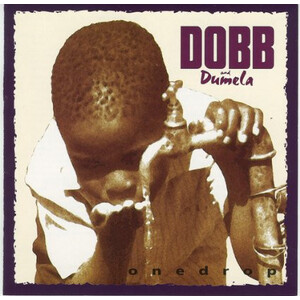
Dobb and Dumela released their first CD, One Drop, on Resource Records in 1992. Recorded and mixed at Vancouver's Mushroom Studios, the album contained eleven songs, including “Indigo,” “Get Down Low,” “Snake In The Grass,” “One Drop,” “The Same Heartbeat” and “Like The Crow Flies.” Allen and Cameron Dobb produced the album, with Bill Henderson co-producing “Indigo,” “Like The Crow Flies” and “The Same Heartbeat.” A promotional video for “Indigo” was directed by Alain Ouellette and produced by The New Picture Crew.
The release was followed by a busy period of touring. Dobb and Dumela appeared at the Winnipeg Folk Festival and Mariposa Folk Festival in 1993, as well as the Salt Spring Festival of the Arts. A contemporary Salt Spring newspaper feature described the group's mixture of North American songwriting and African-influenced rhythms and traced those influences directly to Allen's years in Lesotho. The band also played dates in the United States, including an October 1993 appearance at Western Washington University.
Allen had already appeared at the Edmonton Folk Music Festival in 1991, and later accounts of Dobb and Dumela's touring also place the group at Bumbershoot in Seattle. Cameron Dobb later recalled opening dates with artists including Shawn Colvin, The Philosopher Kings and Ziggy Marley during the band's active years.
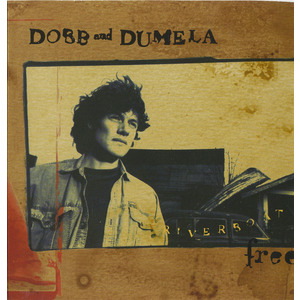
Their second album, Riverboat Free, appeared on Resource Records in 1994. Again recorded in Vancouver, the album featured Allen on vocals, acoustic and electric guitars and percussion; Cameron on accordion, organ, piano and keyboards; Scott Holder on bass; and Shelley Campbell on vocals and percussion. Drummers Jamie Kauffmann, Sherri Leigh and Ronald Jones appeared across the sessions, with Jones also sharing production duties with Allen and Cameron.
Riverboat Free was recorded at Mushroom Studios, engineered and mixed by Blair Calibaba, with additional mixing at Machine Works in West Vancouver and mastering by Greg Reely at Gotham City Recording. The album included “Tin Town,” “Quicksand,” “Skipping Stones,” “Dissing the Manhole,” “Machine Boy,” “Riverboat Free,” “Be Someone,” “The Picture's Perfect,” “Novelty Song” and “Whispers (Speak Up Your Mind).”
“Whispers (Speak Up Your Mind)” incorporated portions of Ziggy Marley's “Tomorrow People” and “Whispers in the Deep” by Roy Hill and Ashley Slater, with additional words and music by Allen and Cameron Dobb.
Dobb and Dumela continued performing during 1994, including an appearance at the Dawson City Music Festival in Yukon. By this point the group had spent roughly six years together, moving from Vancouver clubs and folk stages to major Canadian festivals while releasing two independently produced albums.
The group eventually came to an end, but Allen and Cameron Dobb both remained active in music. Allen continued writing and performing as a solo artist, while Cameron pursued his own work as a songwriter and multi-instrumentalist. Their two albums and the earlier Molson Canadian Homegrown recordings document Dobb and Dumela's distinctive mixture of folk songwriting, rock instrumentation, accordion and African-influenced rhythms.
-Robert Williston
Tracks
10 tracks
Riverboat Free (1994)
10 tracks
-
Tin Town
-
Quicksand
-
Skipping Stones
-
Dissing the Manhole
-
Machine Boy
-
Riverboat Free
-
Be Someone
-
The Picture's Perfect
-
Novelty Song
-
Whispers (Speak Your Mind)
Discography
Featured Titles
Albums
Gallery
Images
0 images
No photos available for this artist.
Media
Videos
1 video